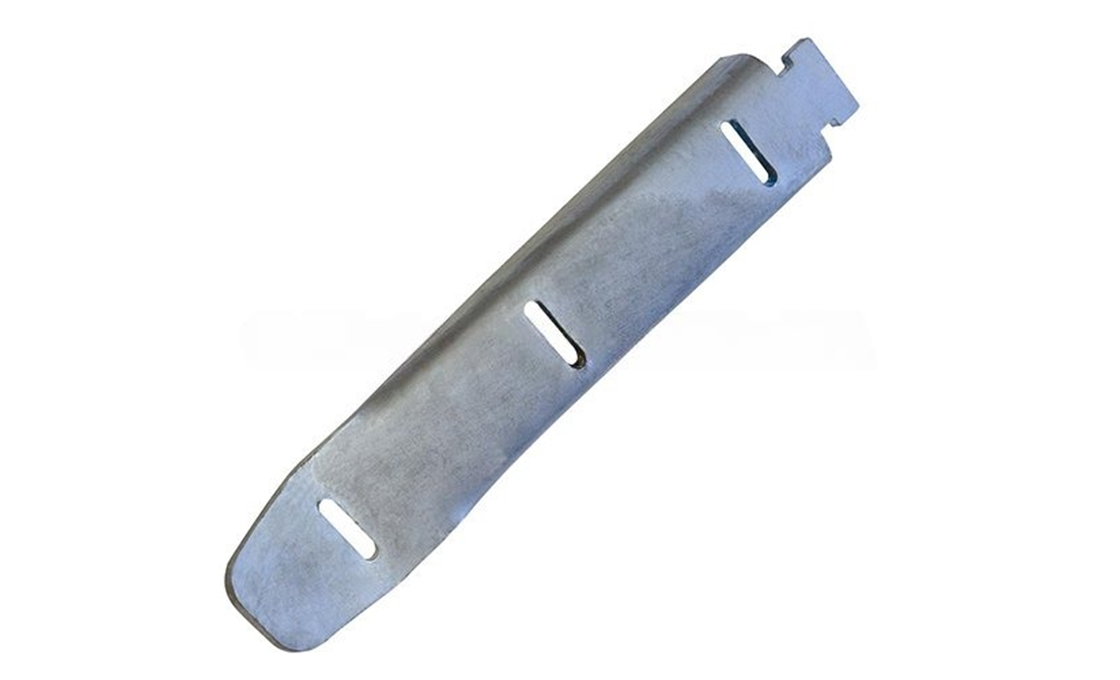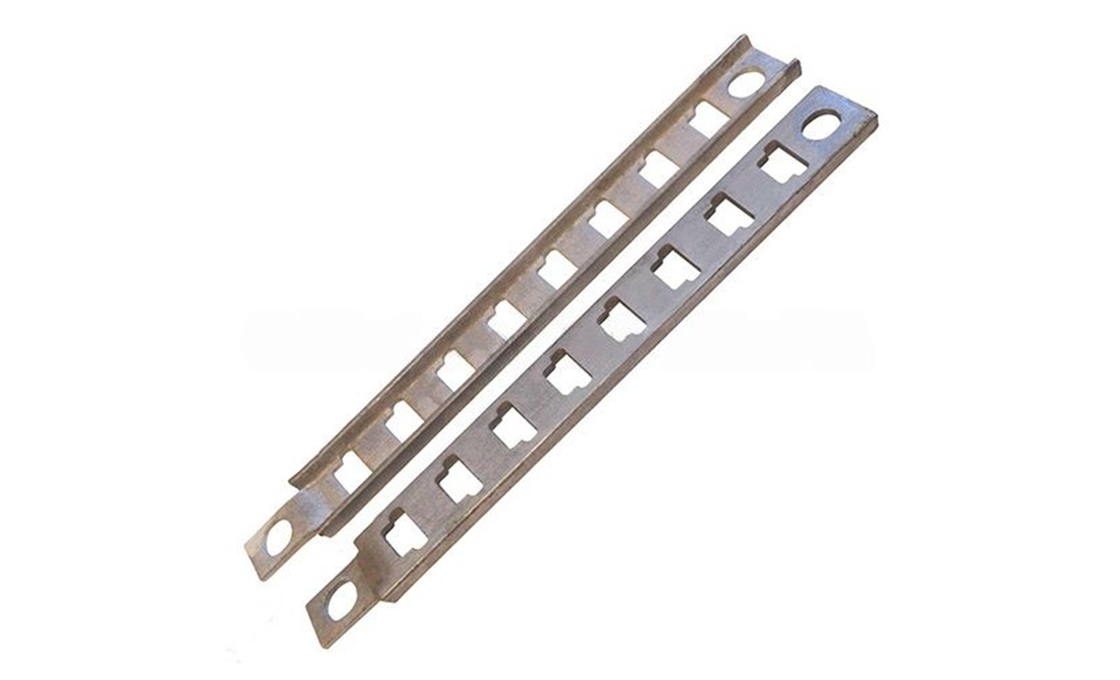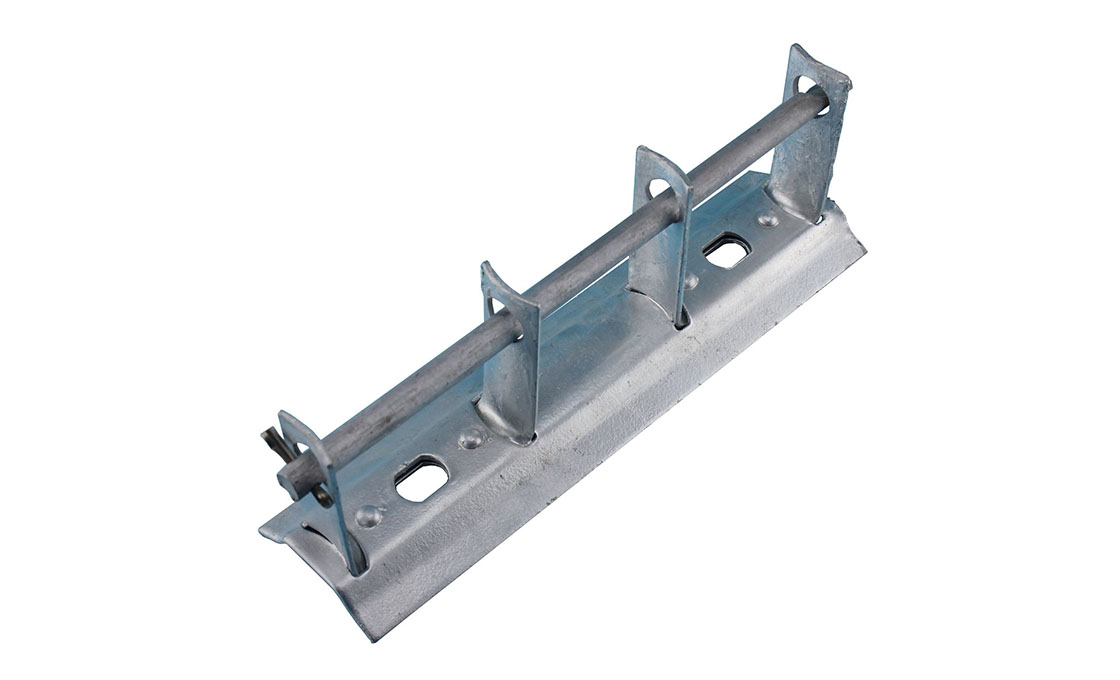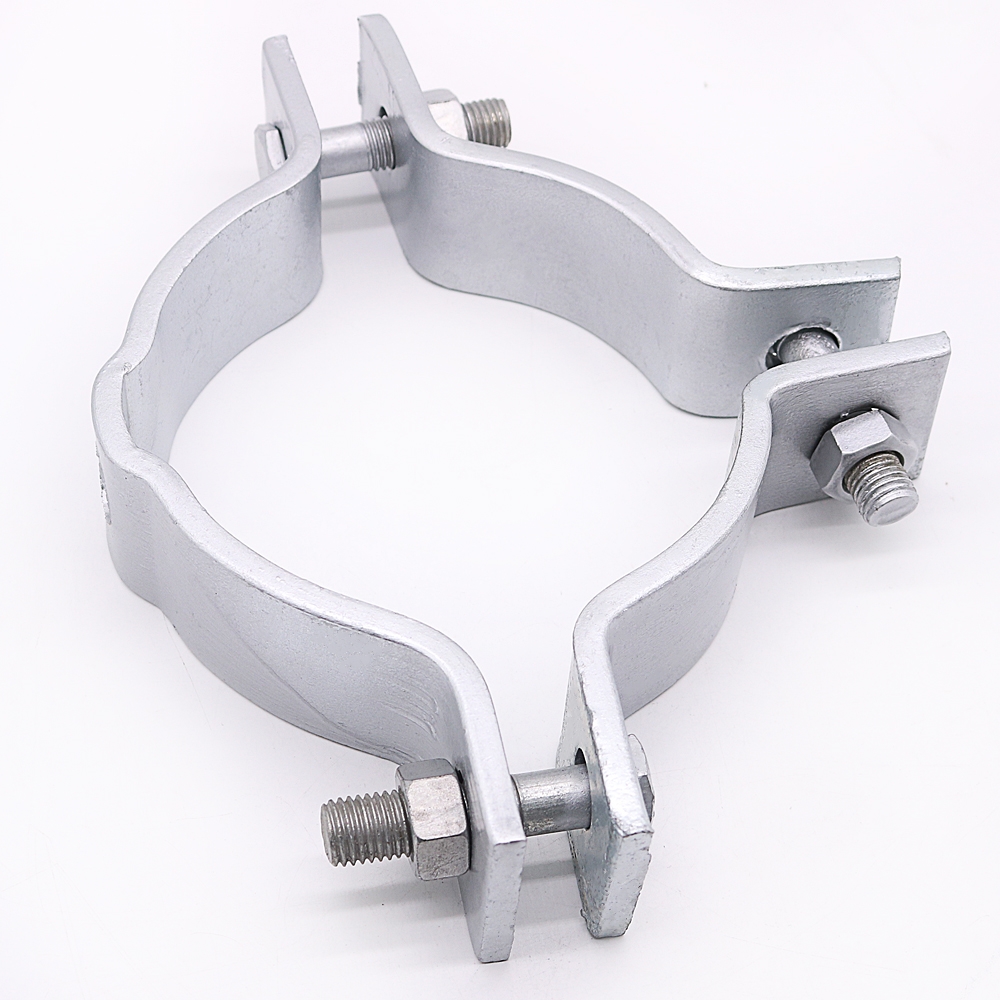
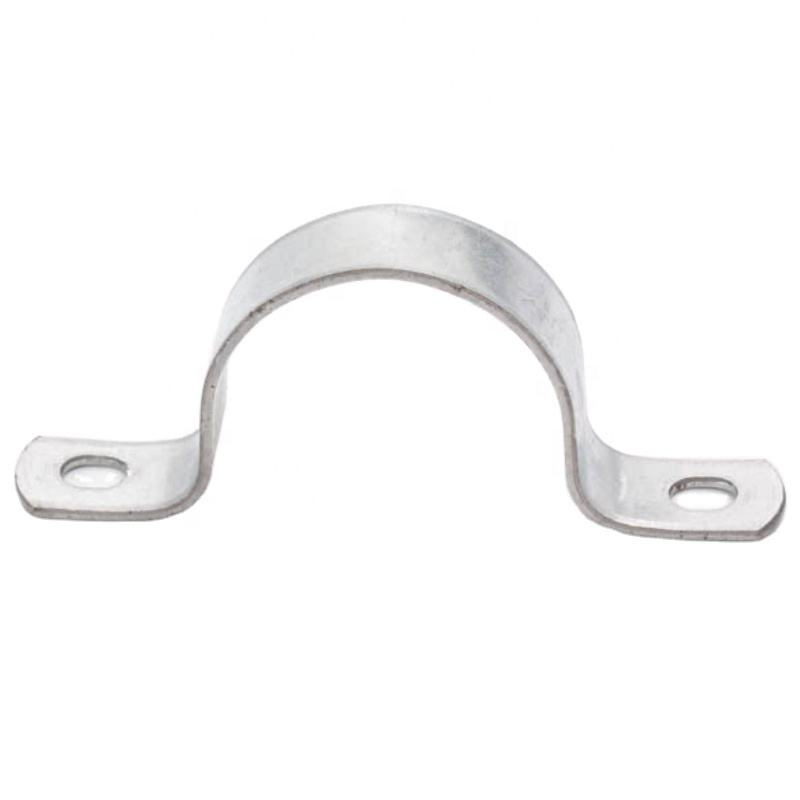
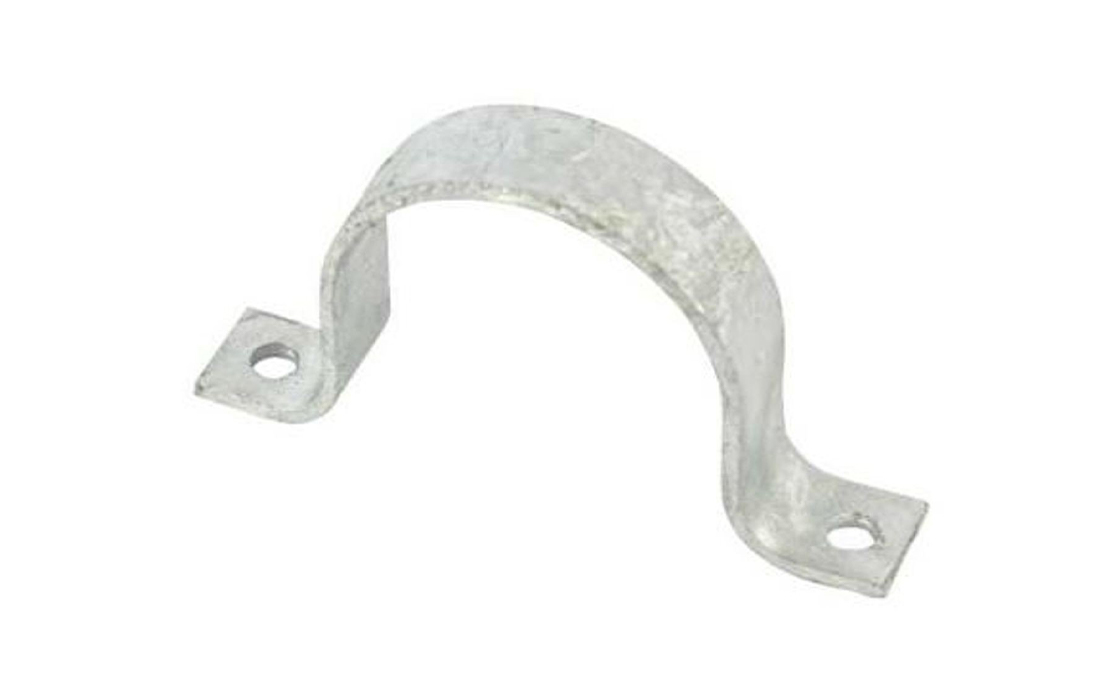
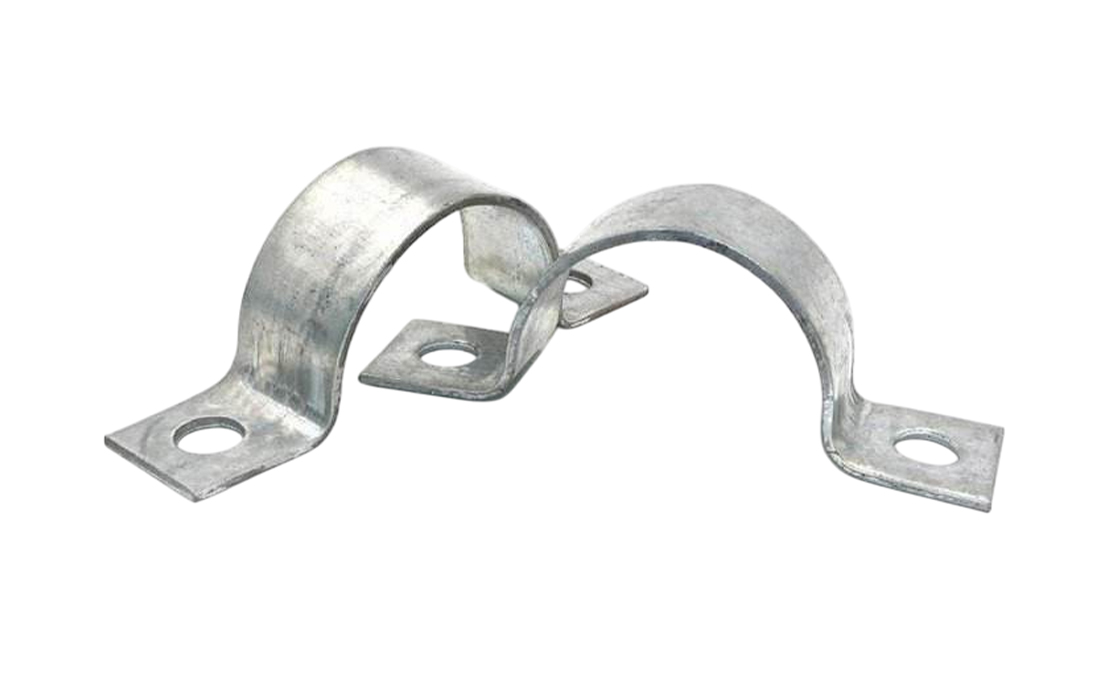
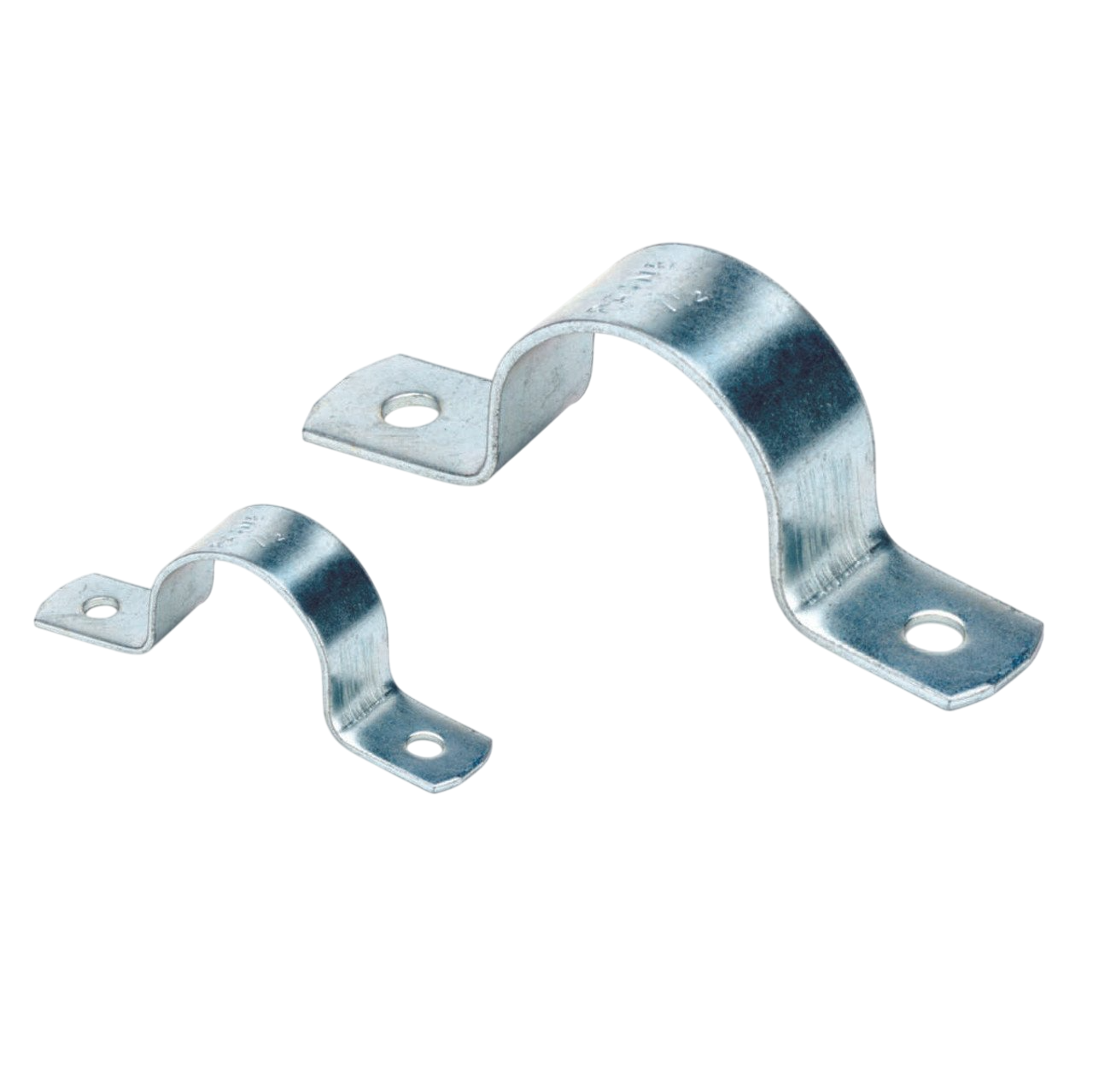
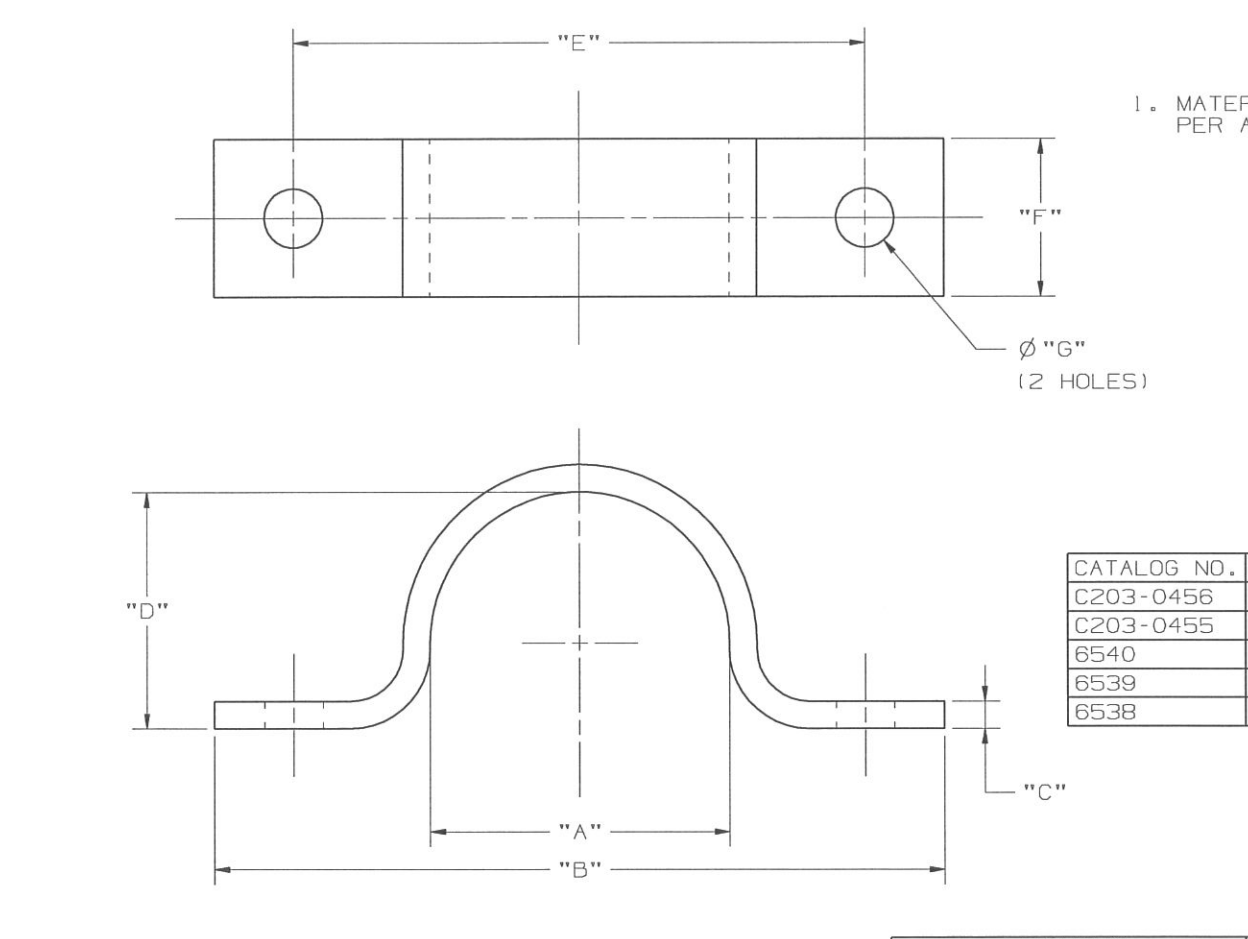
Cable Guard Strap
- Two-hole formed steel saddle clamp that secures protective cable guard / riser conduit to a wood pole face or wall
- 6 types covering 1/2″ to 2″ trade-size conduit (matches Hubbell SP-20–SP-25 / C203 series)
- Two-hole mounting pattern accepts 3/8″ HDG lag screws or 5/16″ expansion anchors
- Hot-dip galvanized stamped steel per ASTM A153; saddle profile matches standard EMT / RMC outer diameters
Technical Specifications
| Catalog | Trade Size | Conduit OD Fit | Strap Width | Mounting Holes | Hubbell Eq. | Wt (kg / 100 pcs) |
|---|---|---|---|---|---|---|
| RAX-CGS-12 | 1/2″ | 0.84″ OD (EMT/RMC) | 3/4″ | 2 × 3/8″ | SP-20 / C203-0451 eq. | 3.5 |
| RAX-CGS-34 | 3/4″ | 1.05″ OD | 3/4″ | 2 × 3/8″ | SP-21 / C203-0452 eq. | 4.2 |
| RAX-CGS-1 | 1″ | 1.32″ OD | 7/8″ | 2 × 3/8″ | SP-22 / C203-0453 eq. | 5.5 |
| RAX-CGS-114 | 1-1/4″ | 1.66″ OD | 7/8″ | 2 × 3/8″ | SP-23 / C203-0454 eq. | 6.8 |
| RAX-CGS-112 | 1-1/2″ | 1.90″ OD | 1″ | 2 × 3/8″ | SP-24 / C203-0455 eq. | 8.2 |
| RAX-CGS-2 | 2″ | 2.38″ OD | 1″ | 2 × 3/8″ | SP-25 / C203-0456 eq. | 10.5 |
Application & Installation

Where it is used
- Securing rigid metal conduit (RMC) or EMT riser pipe to the face of a wood distribution pole, between grade and the service drop attachment height
- Mounting protective cable guard / pole guard (the U-channel that shields underground feeder cable where it transitions up the pole face)
- Fastening secondary service entrance conduit to building walls (residential service entrance, small commercial buildings)
- Industrial cable tray riser supports where individual conduits feed off a vertical raceway up the pole or building
- Retrofit / replacement of corroded straps on aged distribution infrastructure during pole inspection cycles
Installation sequence (RAX-CGS-1 securing 1″ RMC riser to wood pole)
- Confirm conduit positioning: riser should be aligned vertically and held flush against the pole face by an assistant before strap install.
- Mark strap positions along the conduit: maximum spacing 3 feet between straps for 1″ conduit per NEC 358.30 (Article 358 for EMT, 344 for RMC).
- Pilot-drill 1/4″ holes 2-3/4″ deep at each mark for the 3/8″ lag screws (Western Red Cedar / Southern Yellow Pine standard pole stock).
- Position the strap over the conduit with both mounting tabs flush against the pole; insert 2 × 3/8″ × 3″ HDG lag screws + flat washers into the pilot holes.
- Tighten alternately (left, right, left, right) to 40 ft·lb torque — strap saddle should make full contact with conduit without crushing the wall.
- Repeat for each subsequent strap up the riser; verify conduit remains plumb after all straps installed.
Buyer’s Guide: Cable Guard Strap
1. What the Cable Guard Strap Actually Does — Conduit Anchoring on Poles
A Cable Guard Strap (also called a two-hole pipe strap or saddle clamp) is the simple but essential bracket that fastens vertical conduit risers to the face of a wood utility pole or building wall. On utility poles, the conduit it secures is typically protective cable guard (the U-channel or pipe that shields underground service feeder cable where it transitions from below grade up to the service drop attachment point). Without straps at proper spacing, the conduit sags under thermal cycling, vibrates loose in wind, and eventually pulls away from the pole — exposing the feeder cable to impact damage. Per NEC Article 358 (EMT) and 344 (RMC), straps are CODE-REQUIRED at maximum 3-foot intervals for residential and small commercial risers, 10-foot for heavy industrial.
2. Selecting by Conduit OD (NOT Trade Size)
This is the most-confused spec in the entire product line: match the strap to the conduit's actual outside diameter, not its trade size. Example: a "1-inch trade size" rigid metal conduit (RMC) actually has a 1.32″ OD; an EMT of the same "1-inch" trade size has the same 1.32″ OD; but a "1-inch" PVC conduit has a 1.31″ OD. All three need the RAX-CGS-1 strap (sized for 1.32″ OD conduit fit), not a strap labeled "1 inch" from a different manufacturer that might be sized for the OD instead of trade size. The type table's "Conduit OD Fit" column is the definitive sizing reference — verify with calipers if there's any uncertainty about which conduit you have.
3. EMT vs RMC vs PVC Conduit Compatibility
Same trade size = same OD across the three common conduit materials, so the strap fits all three identically. EMT (electrical metallic tubing): thin-wall, lightest, common for residential service entrance; use straps at 3 ft max spacing per NEC 358.30. RMC (rigid metal conduit): heavy-wall, threaded ends, used on commercial and industrial risers; use straps at 3 ft for sizes 1/2″–1″, 5 ft for 1-1/4″–2″. PVC (rigid nonmetallic): lightest, easiest to bend, common for underground-to-aboveground transitions; use straps at 4 ft for 1/2″–1″, 5 ft for 1-1/4″–2″ per NEC 352.30 — PVC needs CLOSER strap spacing than RMC despite lighter weight, because PVC sags more under temperature cycling.
4. Hubbell SP-20 Series & C203 Catalog Cross-Reference
Cable guard straps are commodity hardware; most North American utility specs reference Hubbell's SP-20 to SP-25 series (the "Steel Pipe Strap" catalog numbers) or the equivalent C203-0451 through C203-0456 long-form catalog numbers. The Raxsteel type table maps 1:1: RAX-CGS-12 = SP-20 = C203-0451 (1/2″); through RAX-CGS-2 = SP-25 = C203-0456 (2″). All Raxsteel straps are dimensionally identical to the Hubbell equivalents (saddle width, hole spacing, strap height) and ship with mill certification cross-referencing the Hubbell catalog number. Direct drop-in replacement on any utility's pole stock.
5. Mounting Hardware Selection — Lag Screw vs Expansion Anchor
The two mounting holes accept either 3/8″ lag screws (wood poles) or 5/16″ expansion anchors (concrete poles, masonry walls). For wood poles (most common): use 3/8″ × 3″ HDG lag screws with flat washers; pilot-drill 1/4″ holes to 75% of lag length for proper hold. For poles older than 30 years or with visible rot at the strap mounting depth, step up to 3/8″ × 4″ lags. For concrete poles or masonry walls: use 5/16″ × 2-3/4″ sleeve-type expansion anchors with 1/2″ pilot hole. For fiberglass composite poles: check with the pole manufacturer; some require self-tapping screws with sealing washers to maintain warranty.
6. Galvanizing for Outdoor Riser Service
Standard Raxsteel cable guard straps ship at 110 μm HDG (Class B+) — ~28% above the ASTM A153 Class B floor of 86 μm. The reason: straps mounted on the pole face see the most aggressive weather exposure of any pole-line hardware — direct rain runoff funnels down the conduit-pole interface, road salt spray accumulates at the lower strap positions, and the strap-pole contact zone holds moisture much longer than open hardware. At 110 μm, expect 25–30 year service life in C2–C3 atmospheric environments. For coastal (within 1 mile of saltwater) or road-salt zones (Northeast US winter belt), specify duplex coating (HDG + epoxy paint, +$0.40/strap) for 40+ year life; the cost premium pays back within the first replacement cycle.