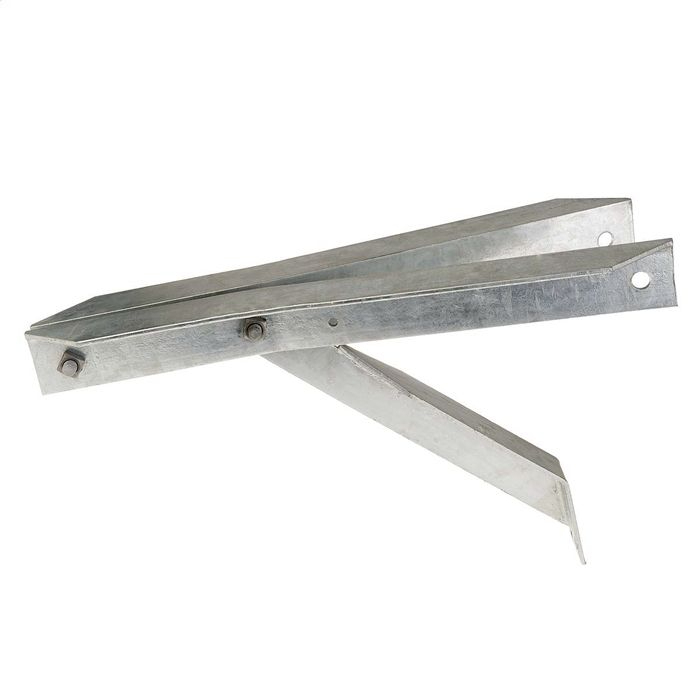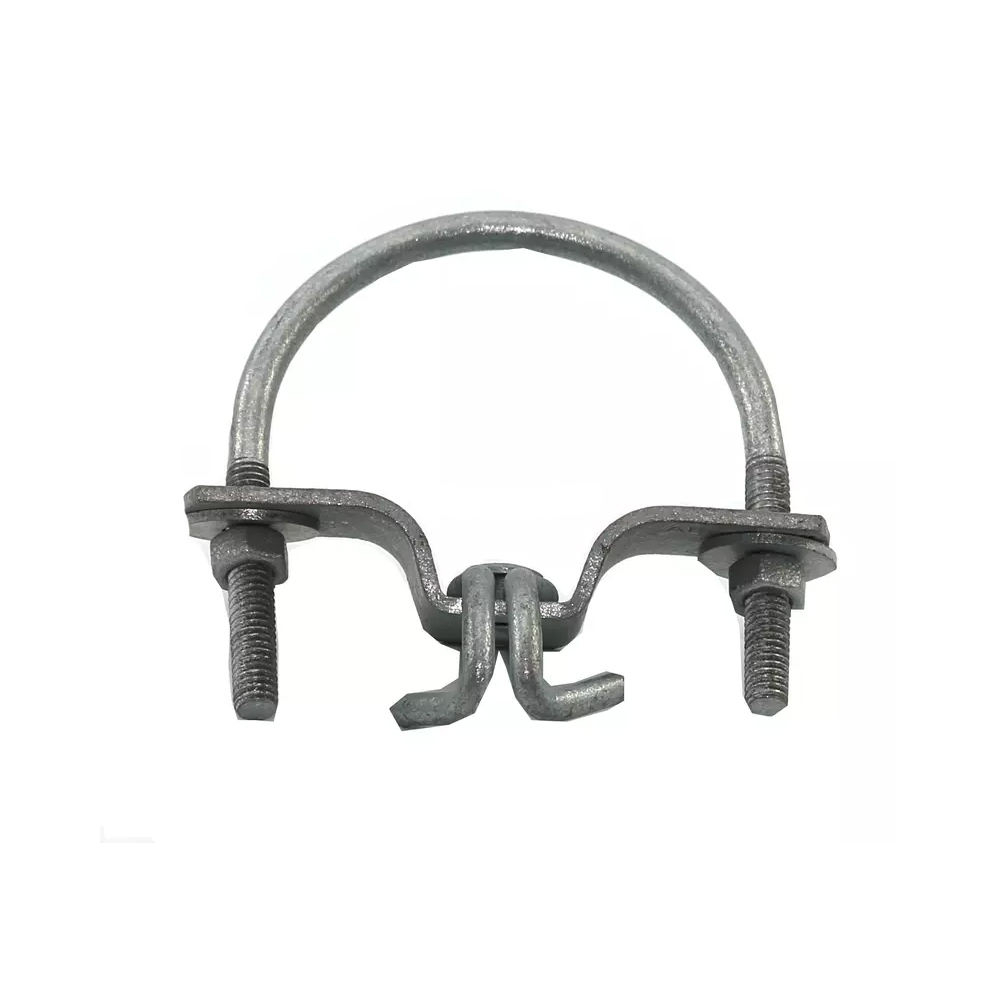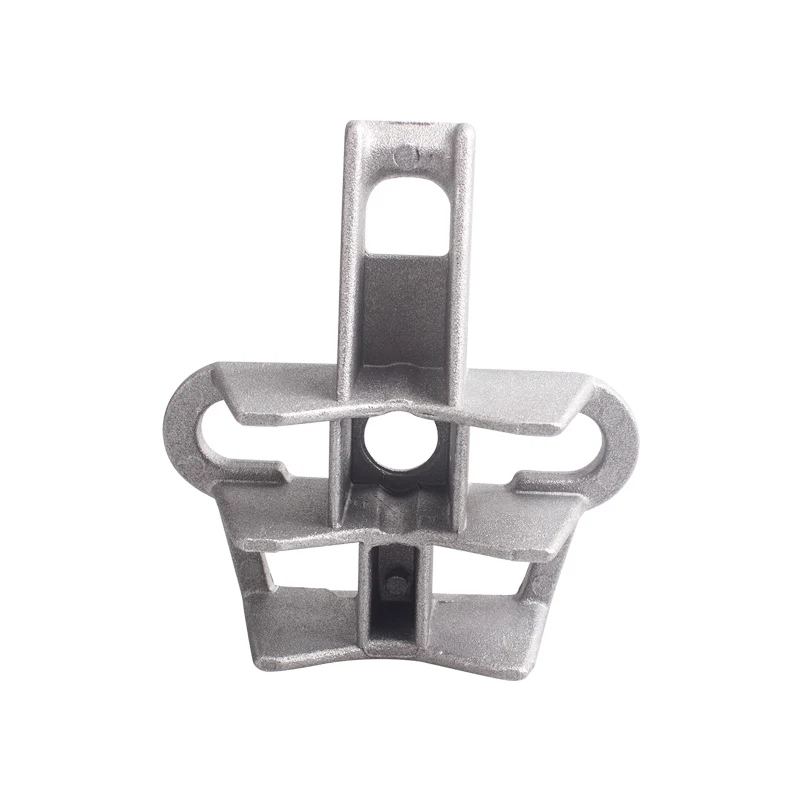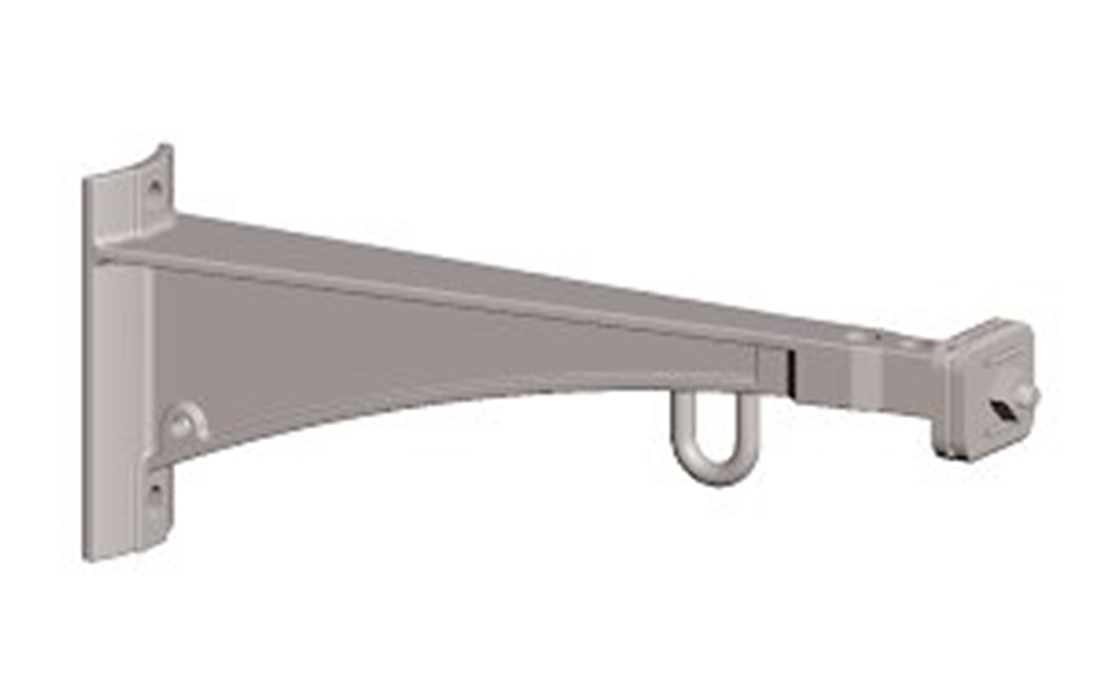
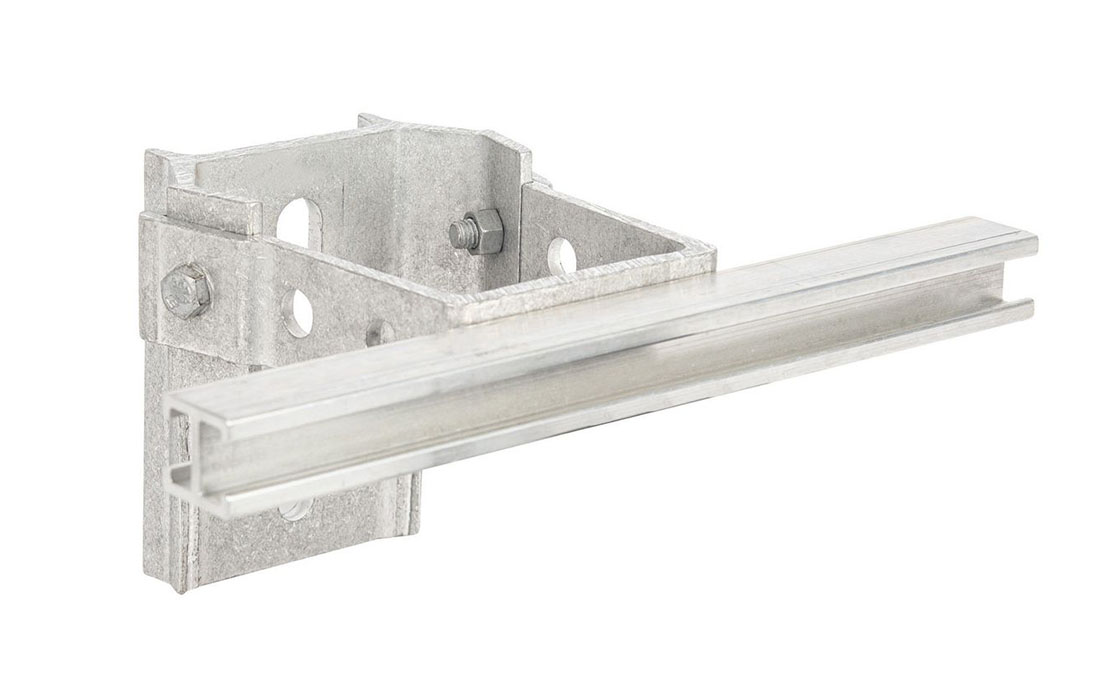
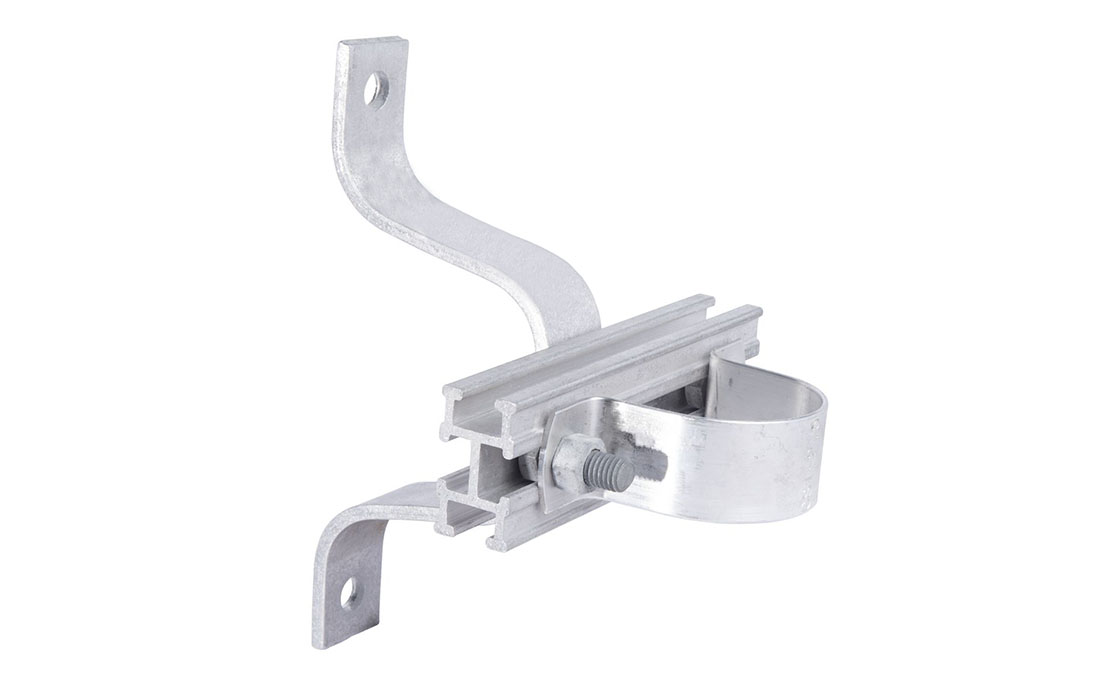
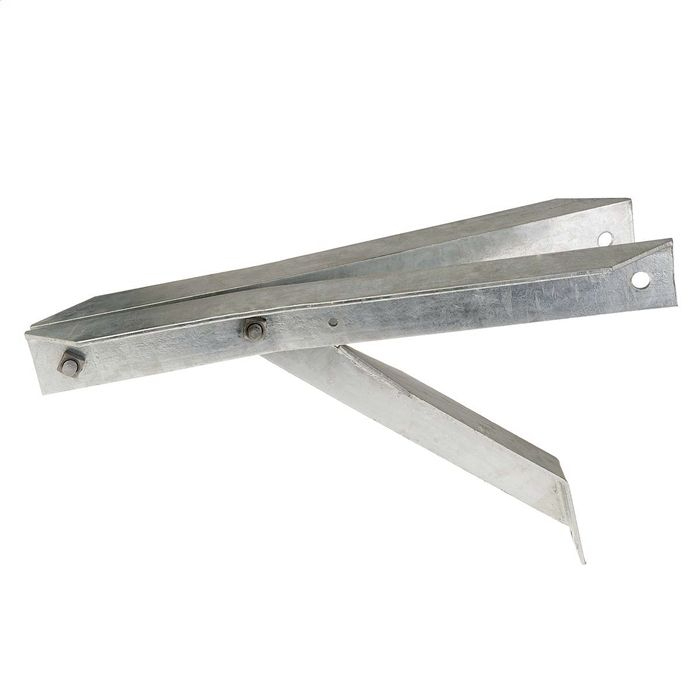
Conduit Standoff Bracket
- Holds conduit pipe clear of the pole surface — prevents abrasion, allows water drainage
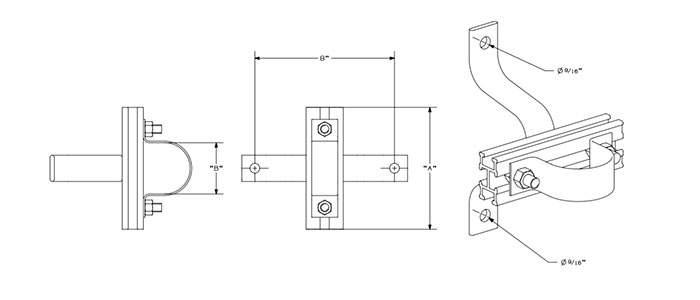
- Three sizes (50 / 75 / 100 mm standoff) covering 1 to 4 inch conduit
- Hot-dip galvanized to ASTM A-123 (≥86 μm)
- Saddle-style strap accepts PVC, EMT, or rigid steel conduit
Technical Specifications
| Catalog No. | Standoff (mm) | Conduit Range | Bolt | Weight (kg) | Surface |
|---|---|---|---|---|---|
| RAX-CSB-50 | 50 | 1 in (27 mm)–1.5 in (40 mm) | M12 | 0.6 | HDG |
| RAX-CSB-75 | 75 | 2 in (50 mm)–3 in (75 mm) | M12 | 0.9 | HDG |
| RAX-CSB-100 | 100 | 3.5 in (90 mm)–4 in (100 mm) | M16 | 1.3 | HDG |
Application & Installation
Where it is used
- Conduit runs carrying service drops or telecom cable up or down a pole
- Risers from underground service to overhead distribution
- Light-fixture wiring conduit on streetlight poles
- Equipment grounding conduit at substations and transformer poles
- Joint-use poles with separate conduit for primary vs telecom
Installation sequence
- Mark the pole at the conduit elevation per drawing; mount brackets every 3–5 ft along the run.
- Through-bore at 9/16 in (M12) or 11/16 in (M16) for the mounting bolt.
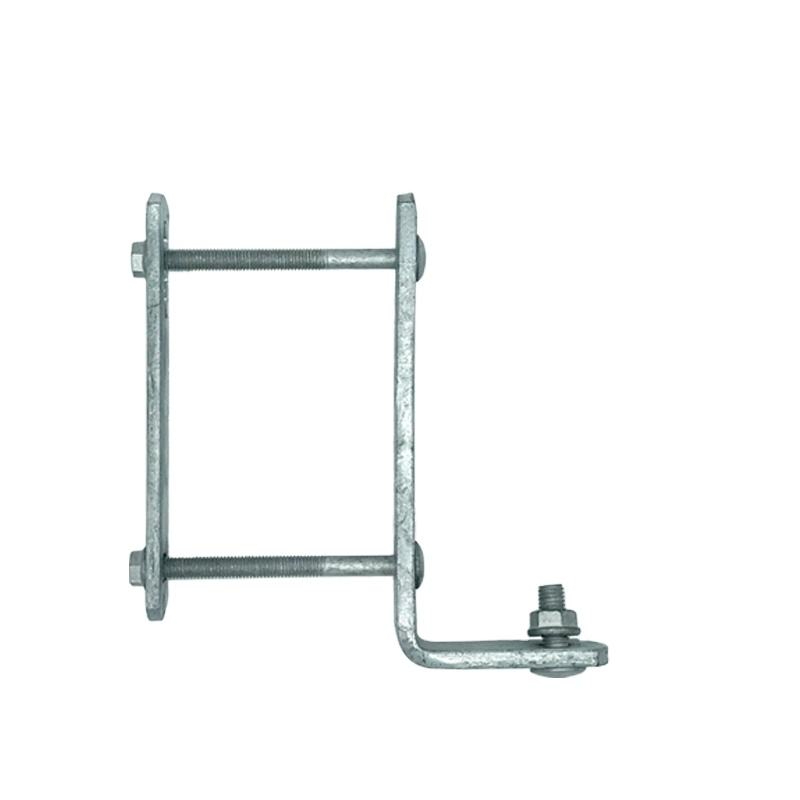
- Install the bracket with a square washer on the back side of the pole.
- Open the saddle clamp, slip the conduit into position, and close the clamp.
- Tighten the saddle clamp until snug — do not over-torque, the conduit should not be crushed.
Buyer’s Guide: Conduit Standoff Bracket
1. When Do You Need a Conduit Standoff Bracket?
A conduit standoff bracket holds an electrical or telecom conduit pipe at a fixed distance from the pole surface. The standoff prevents the conduit from abrading the pole over time (a real failure mode on wood poles where moisture wicks into the contact area), and lets water drain freely around the pipe rather than pooling against it. The saddle-style design accommodates PVC, EMT, or rigid steel conduit, with a rubber-gasketed interior that prevents galvanic corrosion when dissimilar metals contact (e.g., galvanized bracket vs aluminum EMT).
Standard practice is to install brackets at 3–5 ft intervals along the conduit run, with extra brackets at any direction change. NEC Article 344 specifies maximum spacing for rigid steel conduit; refer to local code for the exact requirement in your jurisdiction. The 50 mm standoff handles routine service-drop conduit; 75 mm is the most common for primary feeder conduit; 100 mm with the heavier M16 bolt is for transmission-grade or substation applications.
2. How to Choose the Right Size
Pick by conduit diameter.
- RAX-CSB-50 — 1 to 1.5 inch conduit, service drops
- RAX-CSB-75 — 2 to 3 inch conduit, primary feeders (most-ordered)
- RAX-CSB-100 — 3.5 to 4 inch conduit, transmission / substation
Custom standoff distances and saddle diameters (covering 1/2 in to 6 in conduit) available with 5–7 day tooling, 200-piece minimum.