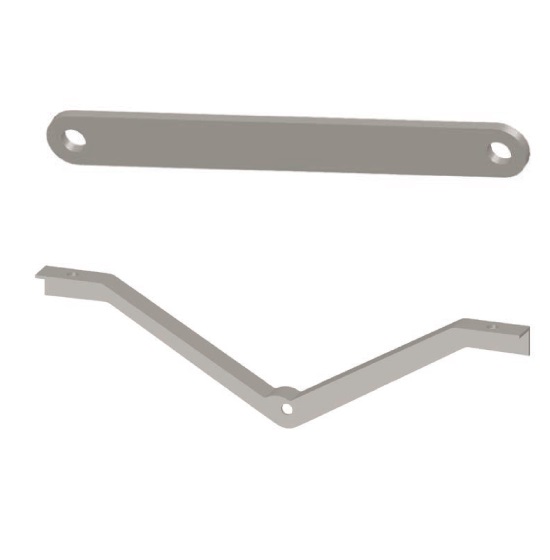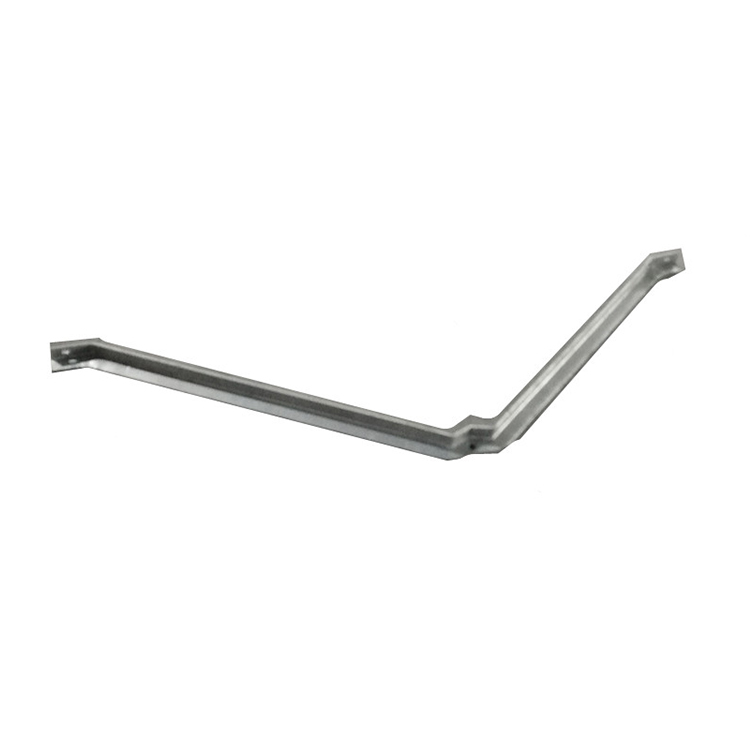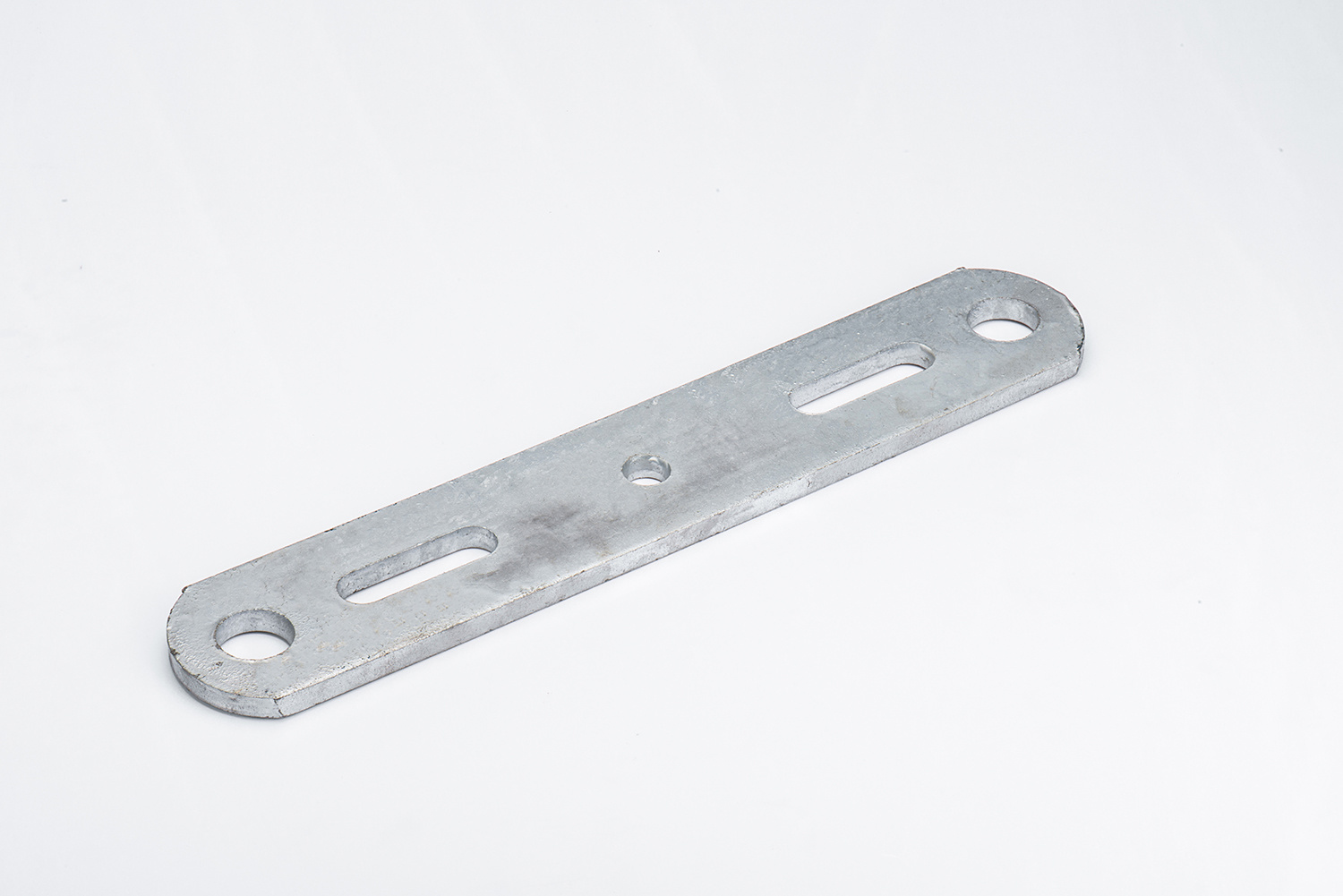
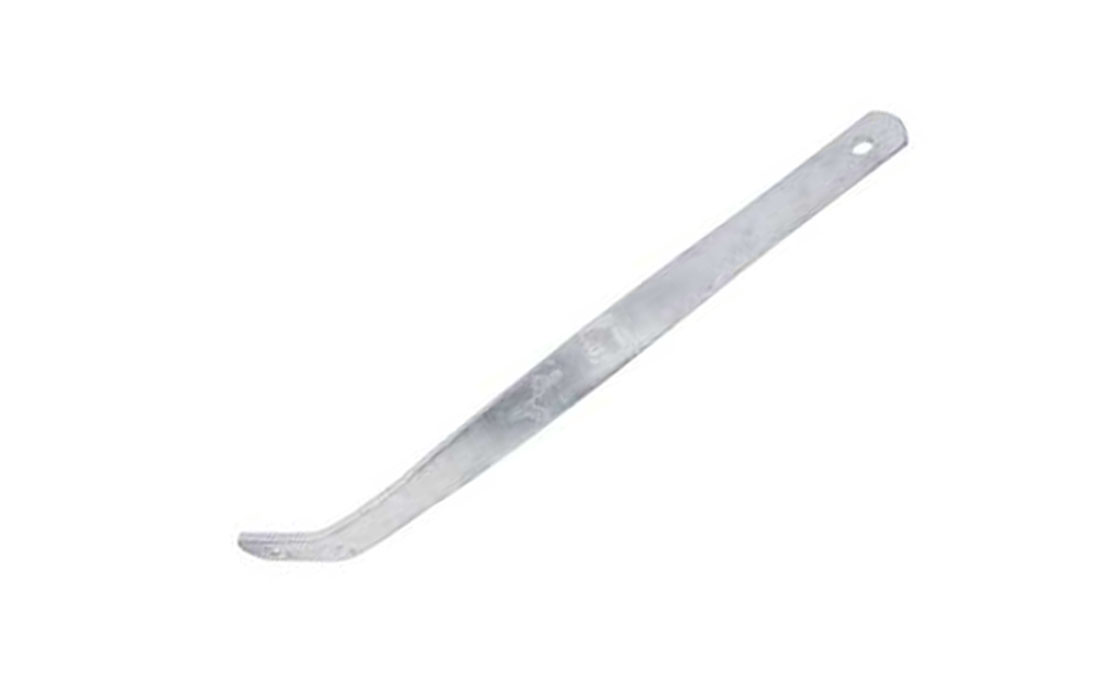
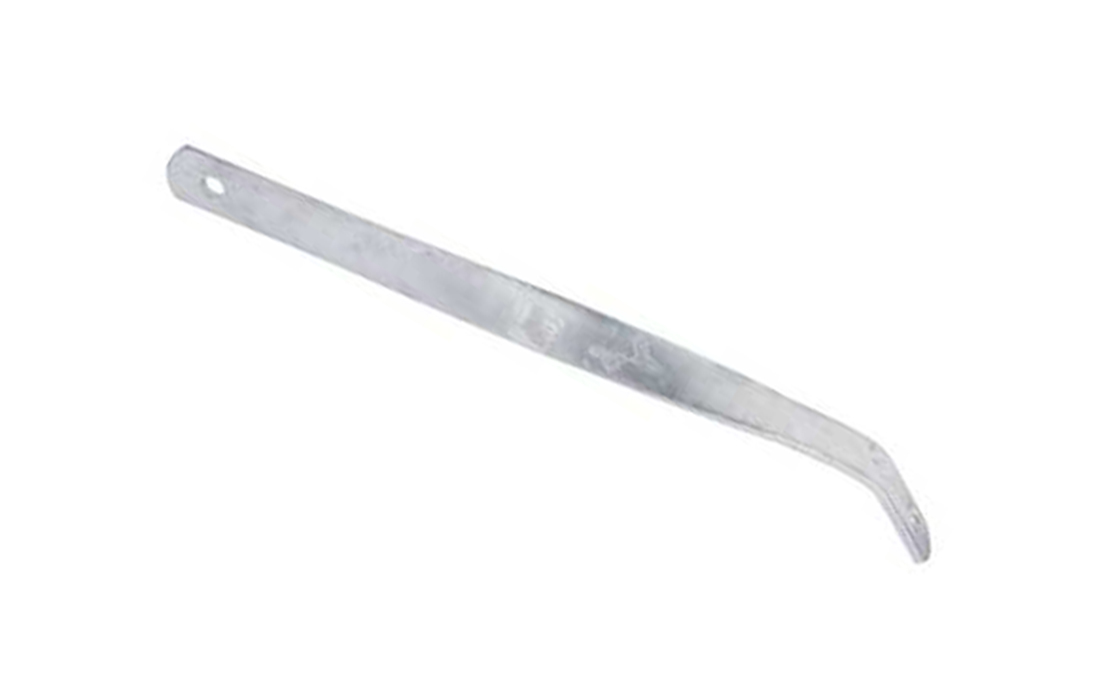
Guard Arm Brace
- Short flat-steel brace for supporting a guard arm above the main crossarm
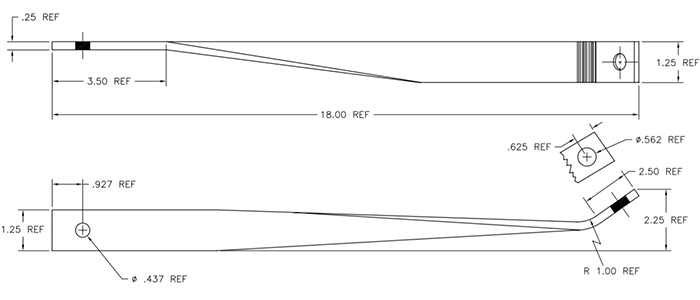
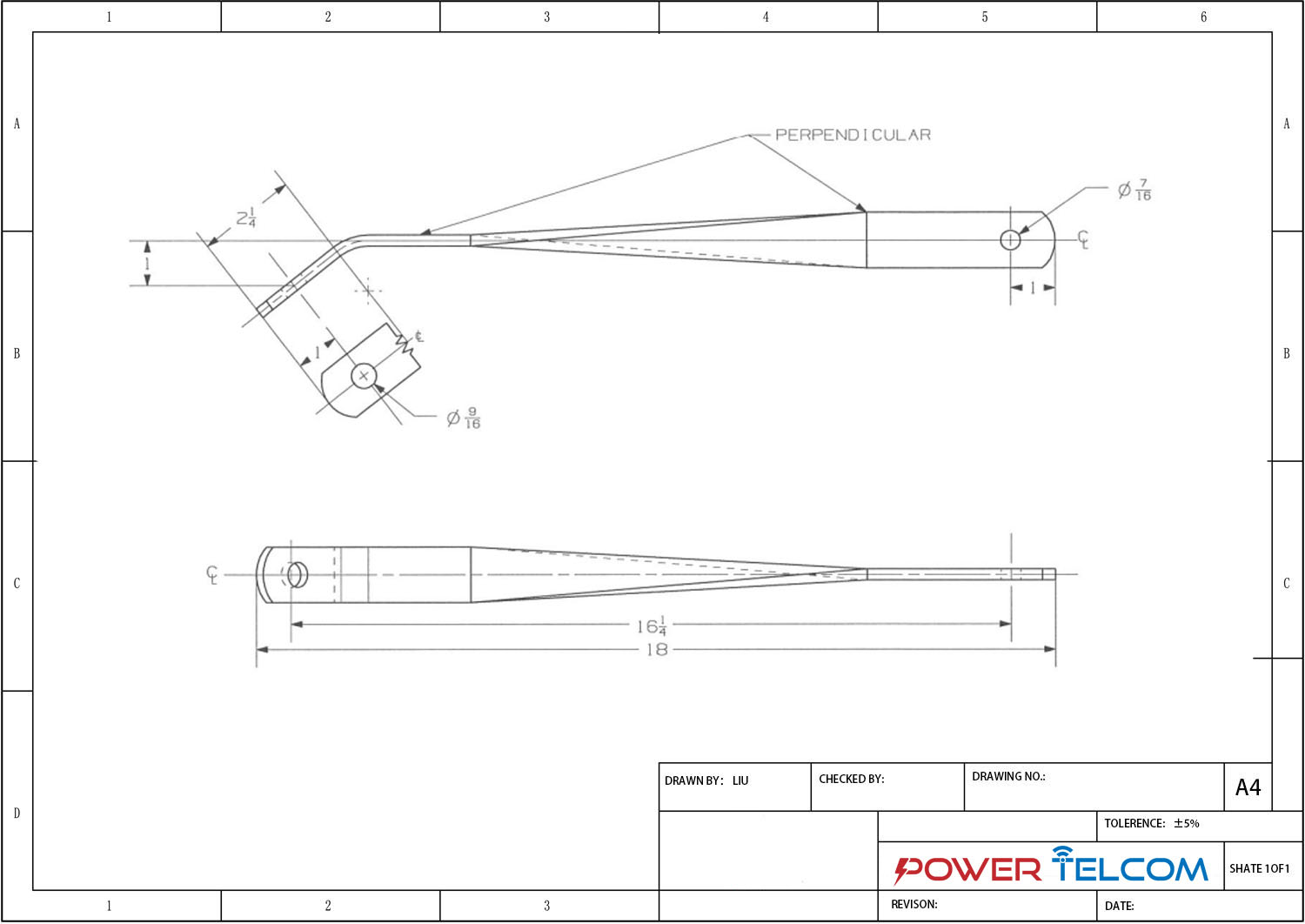
- Standard 18 inch (Hubbell DB9M1 / MacLean J8240 equivalent) + 28 inch long variant
- Hot-dip galvanized to ASTM A-153 (≥86 μm)
- Telecom + light distribution applications
Technical Specifications
| Catalog No. | Length (in / mm) | Hole Spacing | Material Section | Weight (kg) | US Equivalent |
|---|---|---|---|---|---|
| RAX-GAB-18 | 18 / 457 | 16-1/4 in | 1/4" × 1-1/4" | 0.75 | Hubbell DB9M1 / MacLean J8240 |
| RAX-GAB-28 | 28 / 711 | 26 in | 1/4" × 1-1/4" | 1.20 | (Hubbell J7128 variant) |
Application & Installation
Where it is used
- Telecom & cable-TV drop-wire support — the most common use
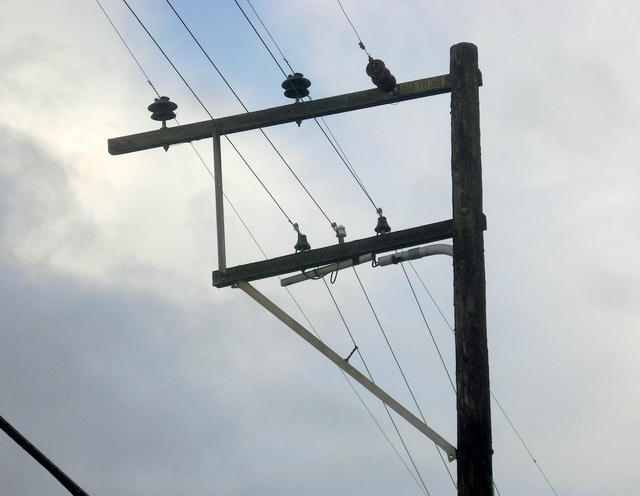
- Light distribution guard-arm reinforcement above the main crossarm
- Service entrance guard arms preventing conductor swing into the pole
- Secondary service drops and meter pole guards
- Any application where a short, light-duty brace is sufficient
Installation sequence
- Position the guard arm on the pole above the main crossarm (typ. 12–18 in clearance).
- Mark the brace’s pole-mounting point 8–14 in below the guard arm.
- Through-bore the pole at 9/16 in (or drive a 1/2 in lag screw).
- Install the brace flat against the pole, 7/16 in hole upward.
- Drive 3/8 in crossarm bolt through 7/16 in hole into guard-arm underside.
- Tighten and verify the brace is square to the pole; final torque 50–80 ft-lb.
Buyer’s Guide: Guard Arm Brace
1. When Do You Need a Guard Arm Brace?
A guard arm brace is a short flat-steel brace sized to support a guard arm — a small horizontal arm mounted above the main crossarm to keep conductors clear of the pole during wind or ice swing. Most common in telecom drop-wire construction and light distribution.
The guard arm itself is a short auxiliary arm, typically 24–36 inches long, mounted 12–18 inches above the main crossarm. Its purpose is geometric: it positions a secondary insulator pin further from the pole face, preventing the secondary conductor (a service drop, neutral, or telecom messenger) from swinging into the pole during wind loading. Because the secondary conductor carries far less mechanical load than a primary conductor, the brace supporting it can be much shorter and lighter — the 18 inch RAX-GAB-18 is the universal standard. Same flat-steel manufacturing as the full crossarm brace, just shorter cut. The 18-inch RAX-GAB-18 is a direct dimensional equivalent of Hubbell DB9M1 and MacLean J8240.
2. How to Choose the Right Size
Two standard sizes cover almost all installations.
- RAX-GAB-18 — the universal standard, telecom and light distribution (Hubbell DB9M1 match)
- RAX-GAB-28 — extended-length variant for heavier guard arms or longer pole-end drop
RAX-GAB-18 fits standard 12–14 inch guard-arm to crossarm spacing, which is what 95% of US telecom and light distribution construction uses. The 28-inch RAX-GAB-28 handles deeper guard-arm-to-crossarm drops (16–20 inches) typical of vertical-stack pole configurations where multiple service drops sit on the same pole. Avoid using a guard arm brace for primary distribution; the 18-inch length is below the load class for ACSR primary conductors. Custom lengths (12–30 in) and non-standard hole patterns available with 5–7 day tooling, 500-piece minimum.