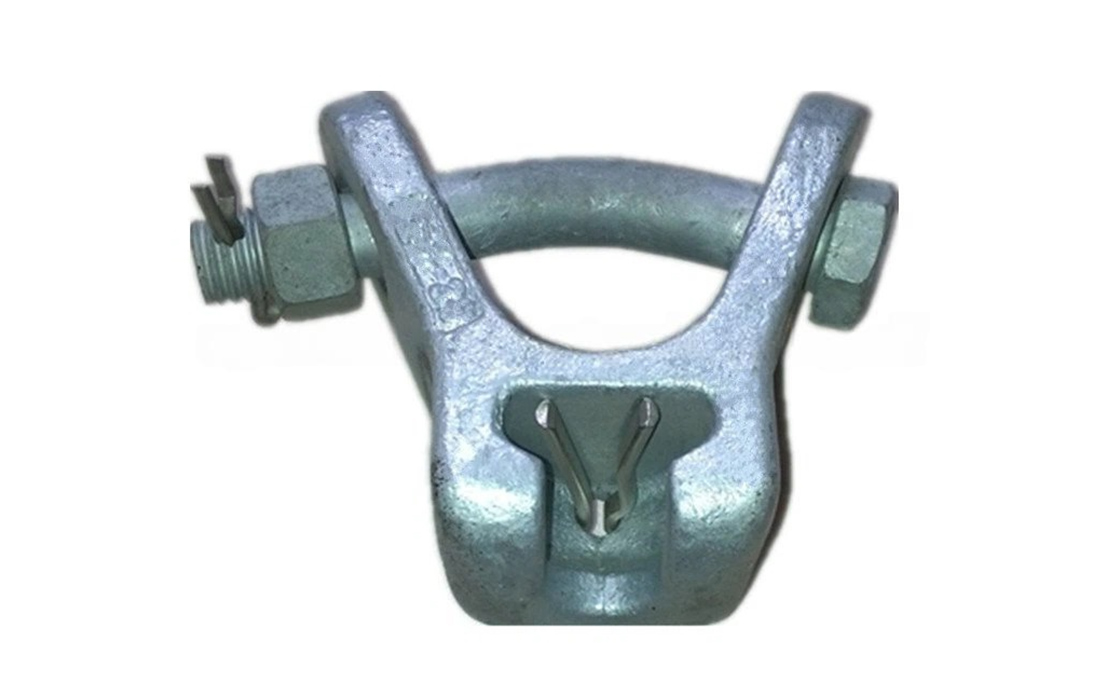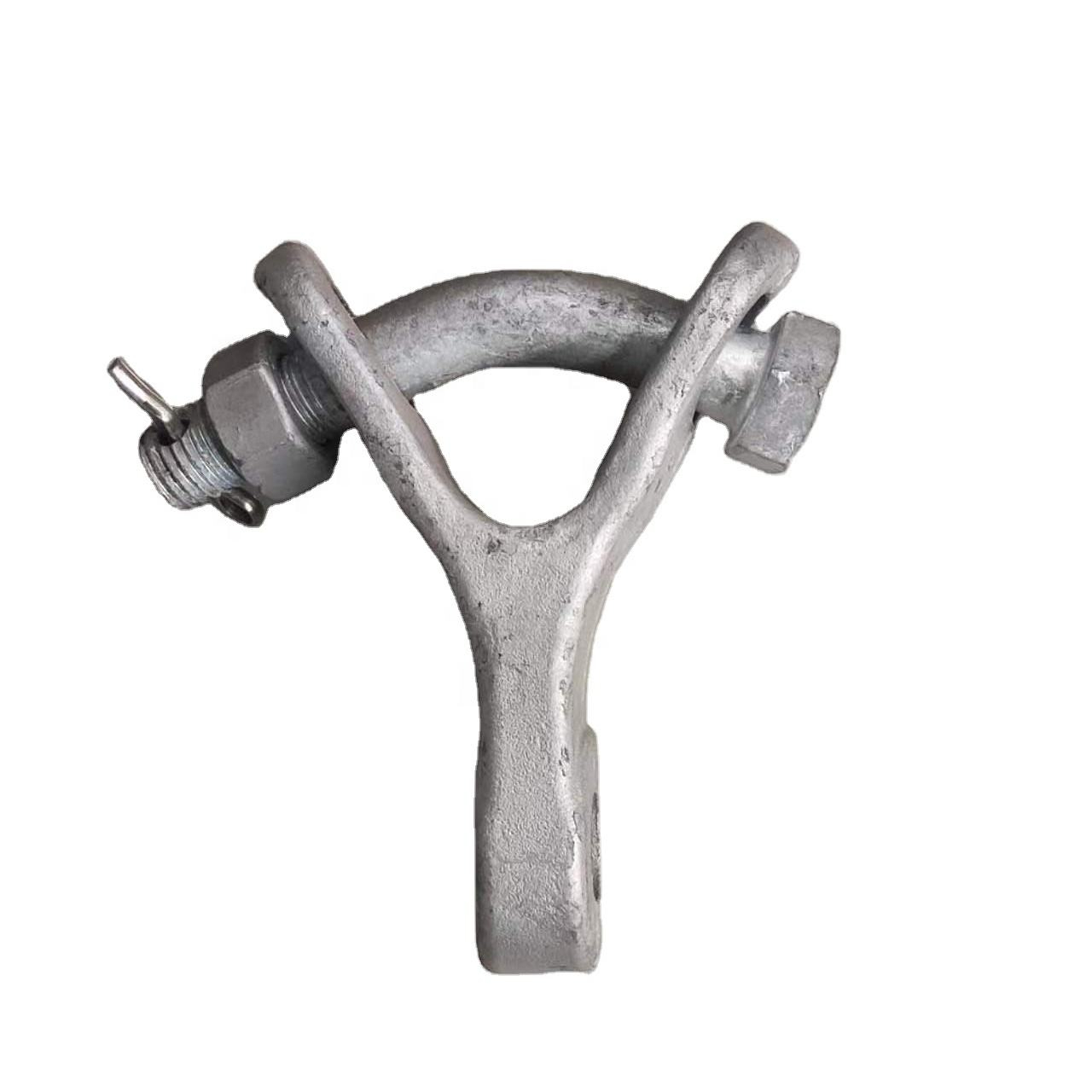
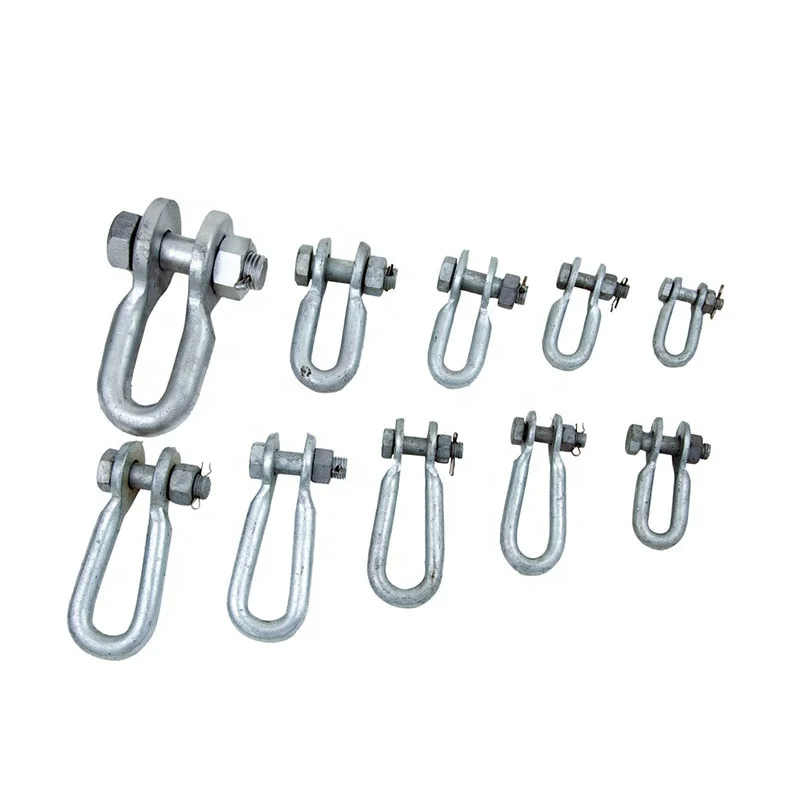
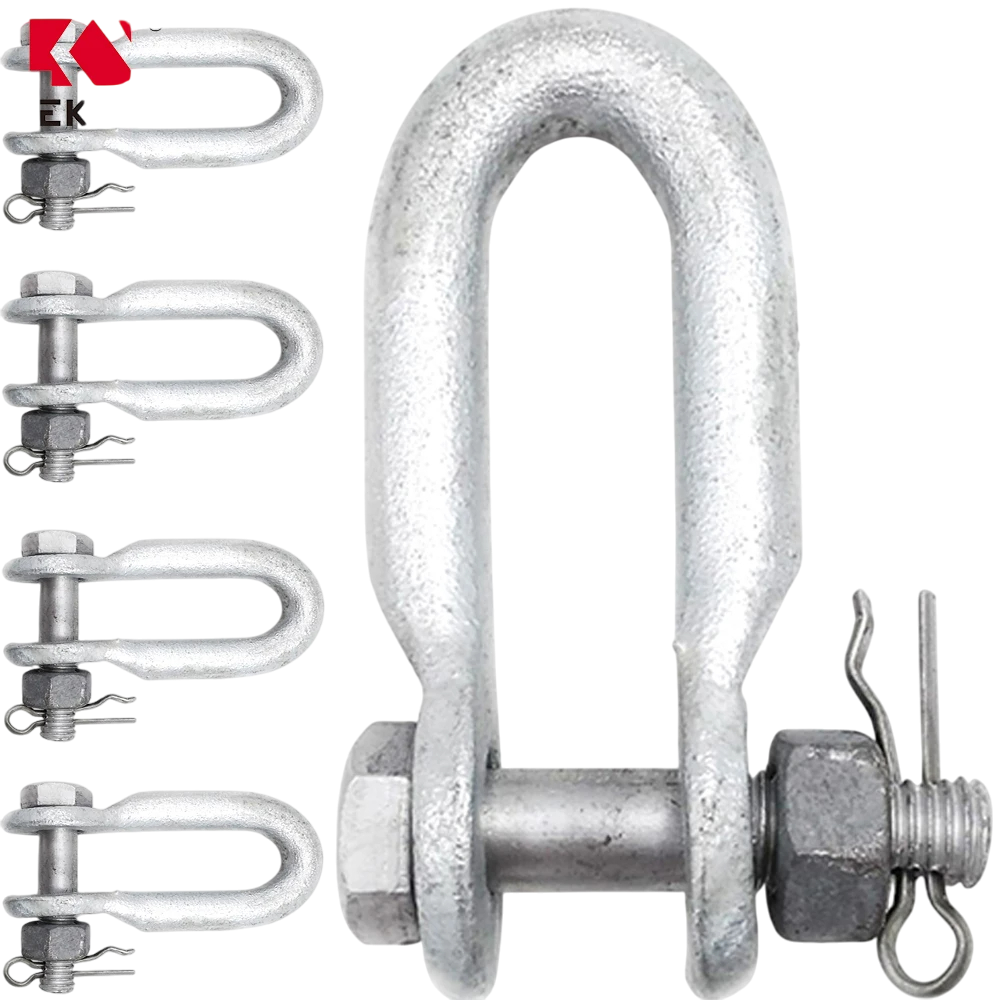
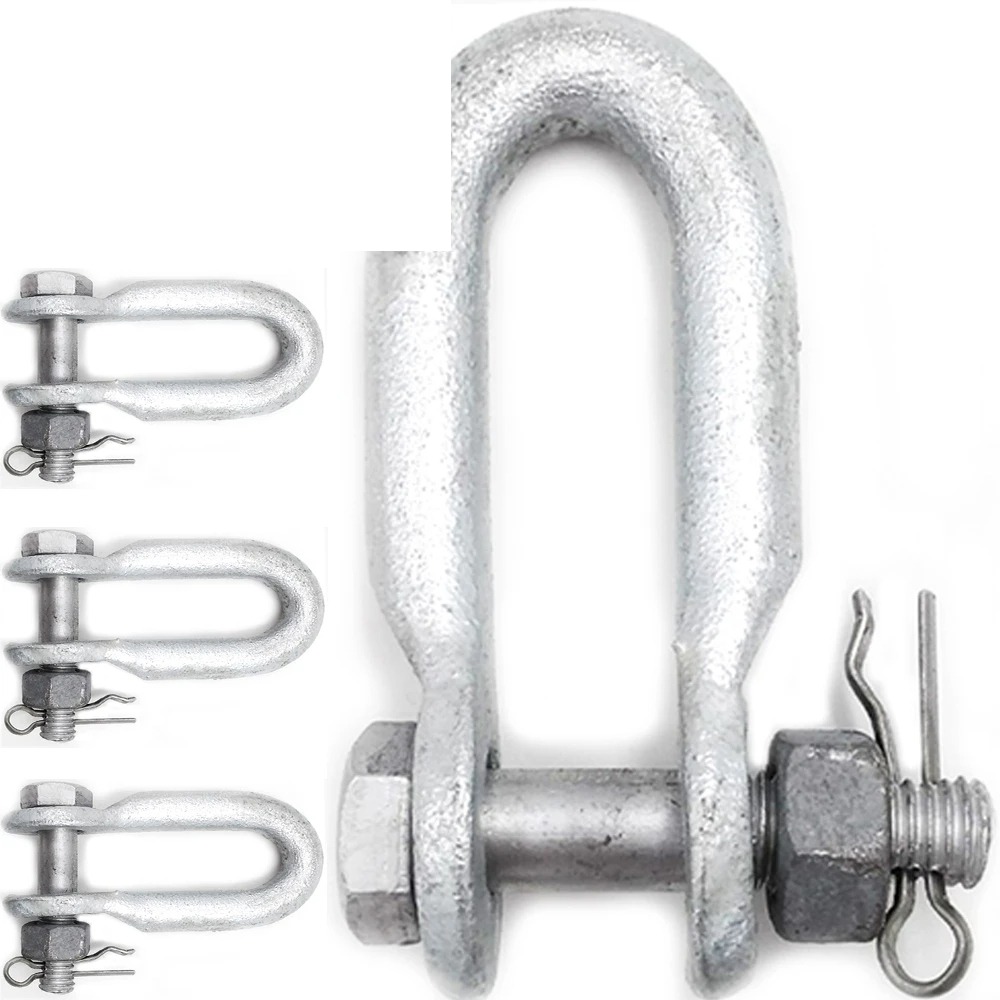
U Clevis
- Clevis-to-clevis link — bent U-body with a clevis pin at each working point
- Joins tongue / clevis fittings in transmission insulator strings
- Rated failing load 70–320 kN across the U / UK series
- Drop-forged steel, stainless cotter pins, hot-dip galvanized to ISO 1461
- Standard 16 / 20 mm clevis pins; tongue (T) variants available
- Built to GB / IEC link-fitting dimensions, ANSI-string compatible
Technical Specifications
| Catalog | Failing Load (kN) | Pin d (mm) | Gap M (mm) | Height H (mm) | Radius R (mm) | Surface |
|---|---|---|---|---|---|---|
| U-7 | 70 | 16 | 16 | 80 | 10 | HDG |
| U-10 | 100 | 18 | 18 | 85 | 11 | HDG |
| U-12 | 120 | 20 | 22 | 90 | 12 | HDG |
| U-16 | 160 | 22 | 24 | 95 | 13 | HDG |
| U-21 | 210 | 24 | 27 | 100 | 15 | HDG |
| U-25 | 250 | 26 | 30 | 110 | 17 | HDG |
| U-30 | 300 | 30 | 36 | 130 | 19 | HDG |
| UK / T series | Wider-jaw (UK) and tongue (T) variants 70–320 kN — specify your mating fitting | |||||
Application & Installation
Where it is used
The U clevis is a clevis-to-clevis link used to connect two tongue or clevis fittings in an insulator string — for example joining a yoke plate to a suspension clamp, or extending a dead-end string. Its bent U-body adds an articulation point so the string can align under load on angle and dead-end structures.
Installation sequence
- Select the U size so its failing load meets the string's mechanical rating.
- Align the U jaw with the mating clevis / tongue.
- Insert the clevis pin and fit the stainless cotter.
- Repeat for the second connection point.
- Check both cotters are spread before tensioning.
Buyer’s Guide: U Clevis
1. What a U Clevis Does in a String
A U clevis (clevis-clevis link) is a bent steel U with a pin hole at each end, used to couple two clevis / tongue fittings together. It is the general-purpose link that lets you join, extend or re-angle parts of an insulator or guy string that would otherwise not mate directly.
2. Sizing by Failing Load
The U / UK series runs from 70 kN (U-7) to 320 kN (UK-32). Pick the size whose rated failing load is at least the string's mechanical rating, allowing for ice and wind on dead-ends. The pin diameter grows with load — 16 mm on U-7, up to 30 mm on U-30.
3. Standard U vs Wide-Jaw UK vs Tongue T
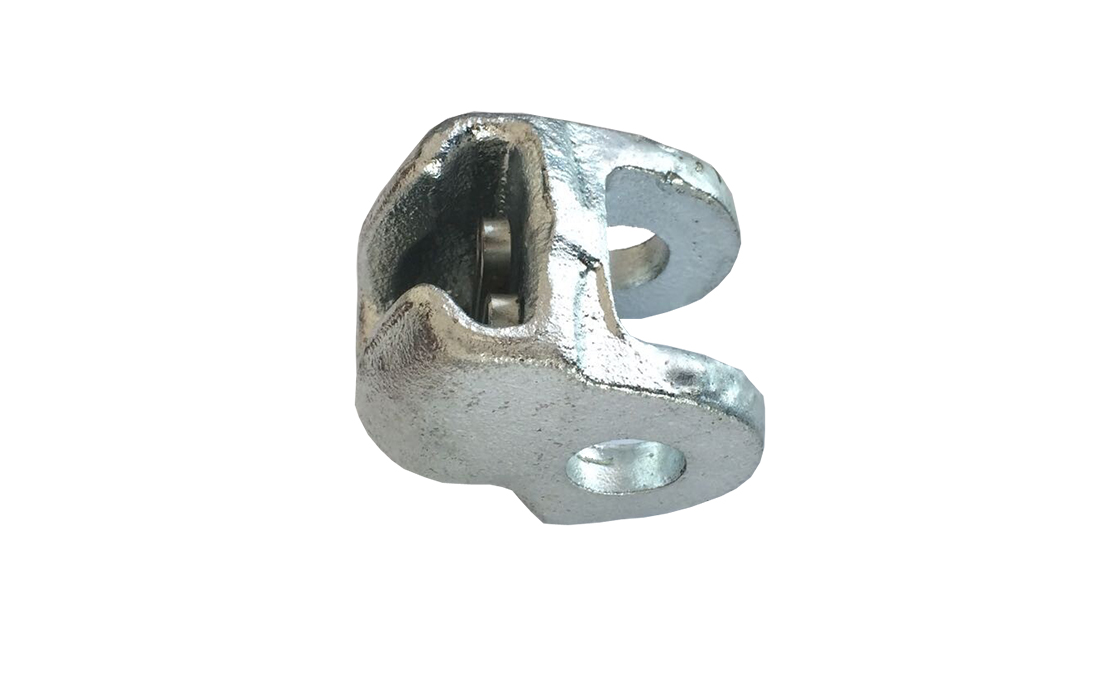
The standard U fits a normal clevis jaw. The UK variants open a wider jaw (larger C) for thicker mating tongues, and the T variants present a tongue instead of a jaw on one end. Choose by the fitting you are mating to so the pin and jaw line up.
4. Forged Steel & Galvanizing
U clevises are drop-forged carbon steel for impact strength at the pin, then hot-dip galvanized to ISO 1461. Cotter pins are stainless steel so the joint can be opened years later for maintenance without seizing.
5. Pin and Cotter — the Maintenance Point
Each working point is a clevis pin held by a split cotter. Using a stainless cotter and a galvanized pin keeps the joint serviceable; always carry the matching pin size (16 or 20 mm) when ordering U clevises so field crews are not improvising.
6. Where the U Clevis Fits the String
It is the connective tissue of a string — between yoke plate and clamp, between two clevis fittings, or as a short extension on a dead-end. Order it alongside the clevis-ended fittings it will join so jaw widths and pins all match.