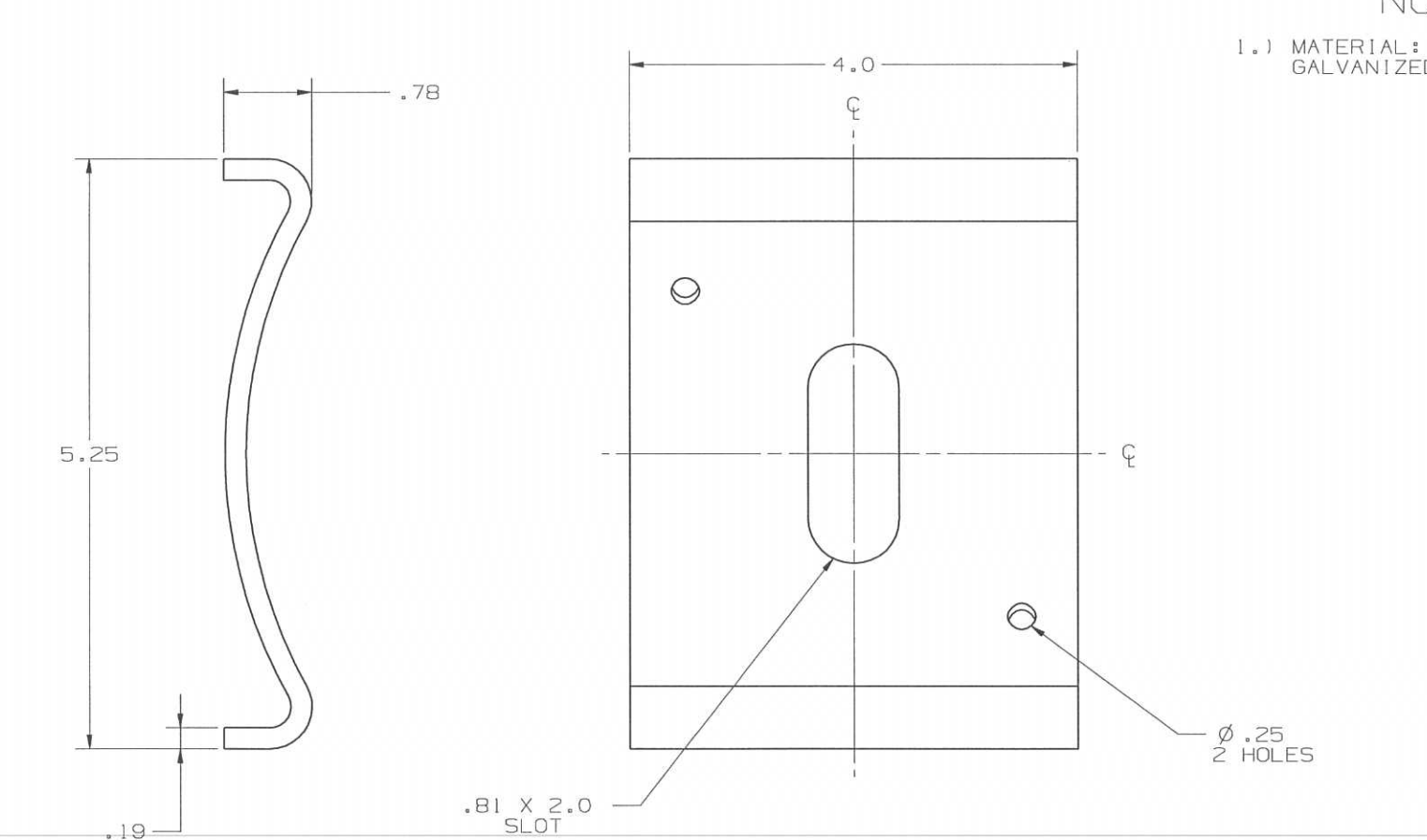
Pole Gain
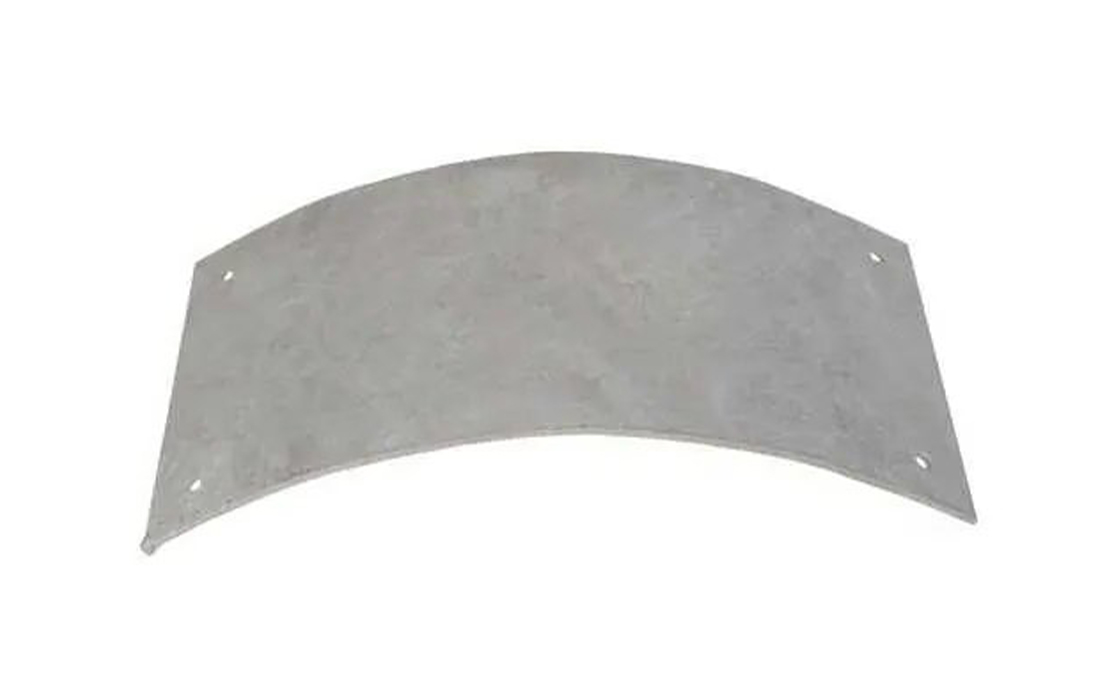
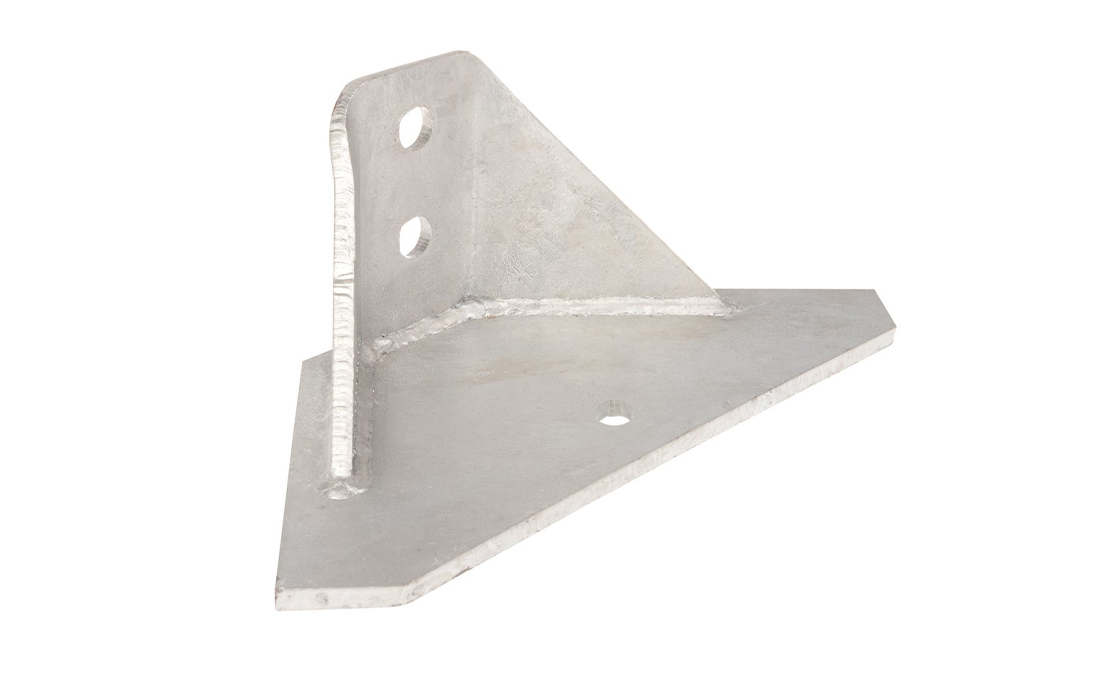
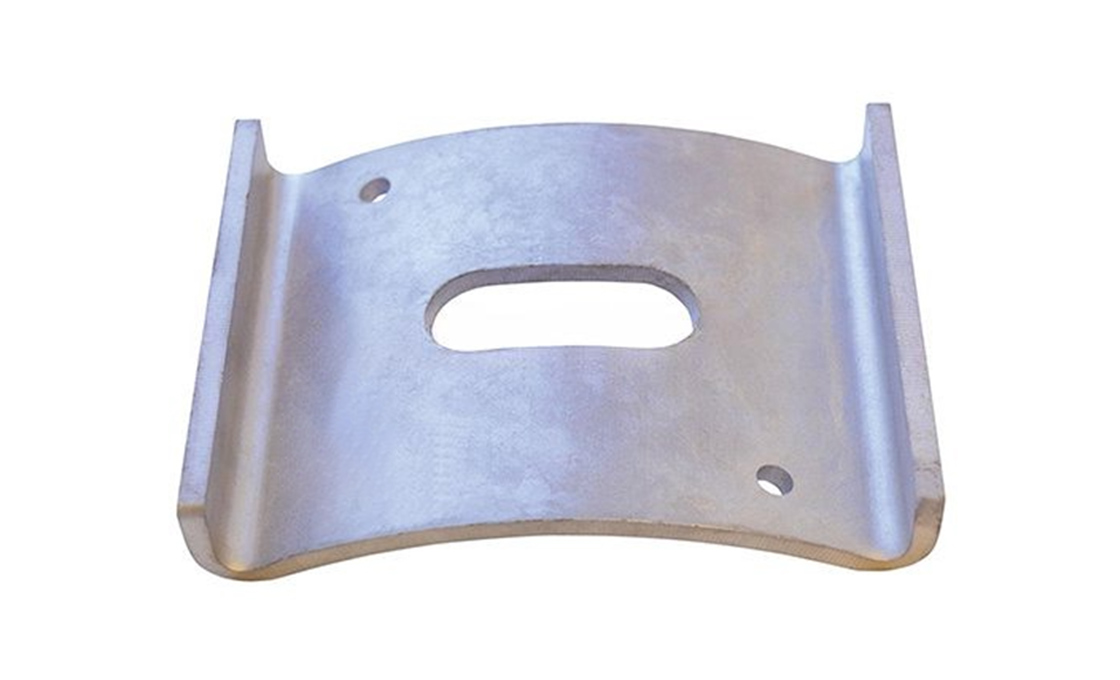
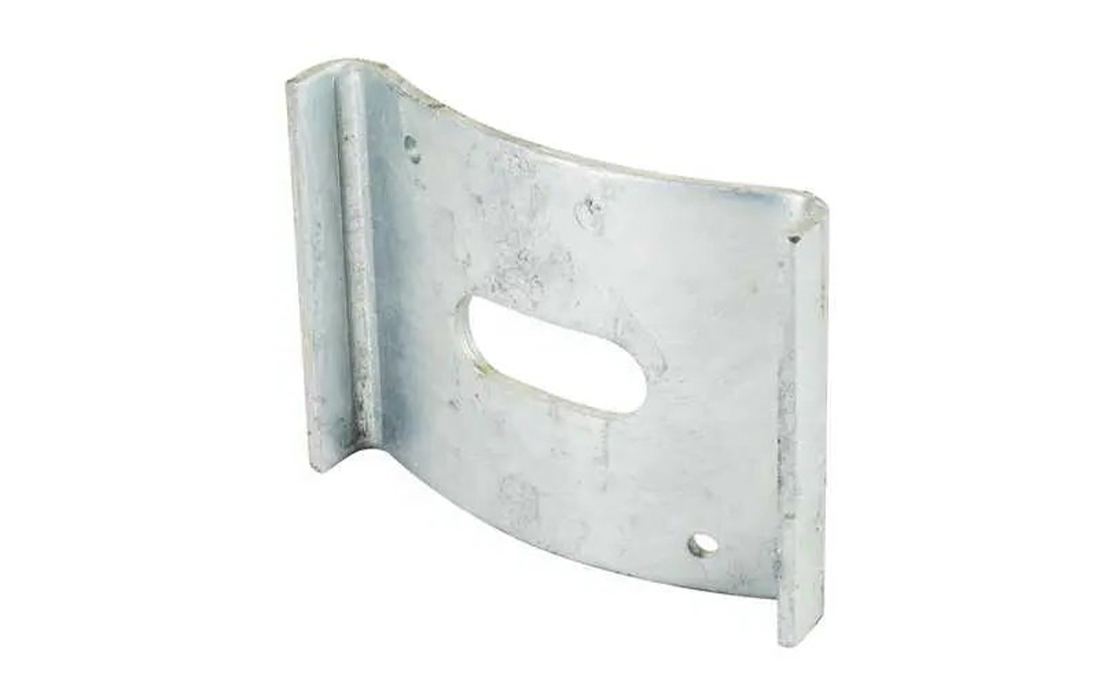
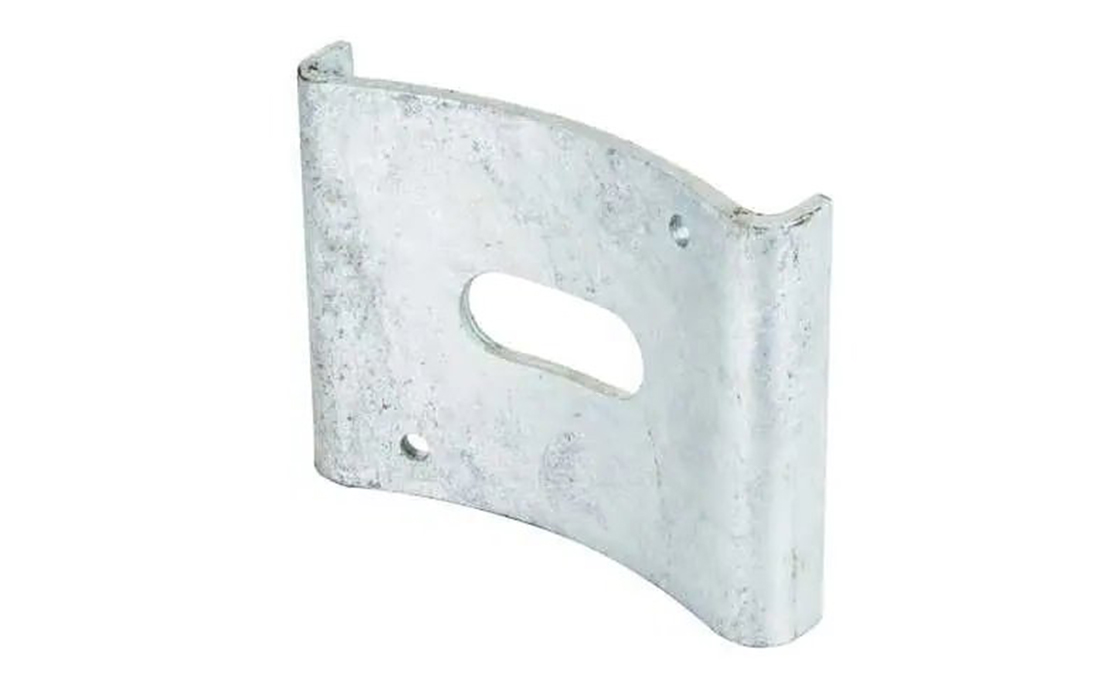
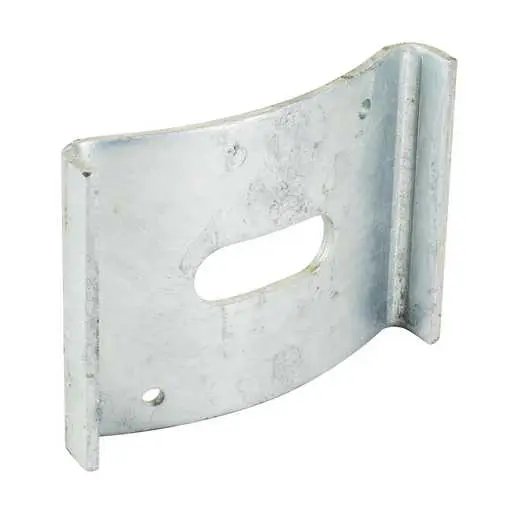
- Curved stamped-steel bracket creating a flat mounting surface on a round / tapered wood pole face
- 5 types: 4″×4″ / 4″×6″ / 5″×8″ / 6″×8″ / 8″×12″ covering small bracket through transformer-class mounts
- Drilled / slotted to accept post insulator brackets, secondary racks, transformer hangers, dead-end clevises
- Hot-dip galvanized per ASTM A153 Class B (Allied Bolt ABI 4078 / Hubbell curved-base eq.)
Technical Specifications
| Catalog | Plate Size (W × H) | Thickness | Center Slot | Mount Holes | Hubbell / ABI Eq. | Wt (kg) |
|---|---|---|---|---|---|---|
| RAX-PGN-44 | 4″ × 4″ (102 × 102 mm) | 3/16″ | 3/4″ × 1-3/4″ | 2 × 1/4″ | Allied ABI 4044 | 0.45 |
| RAX-PGN-46 | 4″ × 6″ (102 × 152 mm) | 3/16″ | 13/16″ × 2″ | 2 × 1/4″ | Allied ABI 4078 eq. | 0.65 |
| RAX-PGN-58 | 5″ × 8″ (127 × 203 mm) | 1/4″ | 13/16″ × 2-1/2″ | 2 × 5/16″ | Hubbell C2060162 eq. | 1.20 |
| RAX-PGN-68 | 6″ × 8″ (152 × 203 mm) | 1/4″ | 13/16″ × 3″ | 4 × 5/16″ | Hubbell C2060209 eq. | 1.65 |
| RAX-PGN-812 | 8″ × 12″ (203 × 305 mm) | 5/16″ | 1″ × 4″ | 4 × 3/8″ | Hubbell LB18B3 eq. | 3.40 |
Application & Installation

Where it is used
- Side-mount post-type insulator brackets on wood distribution poles (small types: RAX-PGN-44 / -46)
- Secondary rack mounting on tapered wood poles where the rack's flat back doesn't seat against the round pole face (medium: RAX-PGN-58)
- Transformer-hanger backing plate — spreads the transformer's lag-bolt load over a wider pole area, prevents bolt walk-out (large: RAX-PGN-68 / -812)
- Dead-end clevis backing where the strain pull line tries to cleave the wood pole at the bolt-through point
- Repair / reinforcement on aged poles where the original hardware enlarged its mounting holes through cyclic loading
Installation sequence (5″×8″ gain, post insulator bracket mount)
- Mark the pole face at the design mounting height; offset 1-1/2″ from the pole centerline (typical for side-mount insulator brackets).
- Position the gain plate against the pole with the curved side seated flush; mark the 2 mounting hole positions through the gain's holes.
- Drill 11/16″ (17 mm) through-holes for 5/8″ HDG machine bolts.
- Bolt the gain through the pole using 5/8″ × 12″ machine bolts with curved washers + lock nuts on the back side; torque to 70 ft·lb.
- Run the insulator bracket / equipment mounting bolt through the gain's center slot — the slot allows ±1″ vertical adjustment for plumbing.
- Final-torque the equipment bolt to manufacturer spec; verify the equipment is plumb and the gain remains flush against the pole.
Buyer’s Guide: Pole Gain
1. What a Pole Gain Actually Does — The Flat-Surface Problem
A wood distribution pole is round and tapered; almost everything you mount to it (insulator brackets, secondary racks, transformer hangers, dead-end clevises) is designed to sit flat against a flat mounting face. Without a gain plate, the flat hardware contacts the round pole at only two narrow line-edges of the flat back, concentrating the entire mounting load on those edges. The result is progressive crushing of the wood under the edges within 2–5 years, hardware loosening, and eventually a fall-off event. A Pole Gain Plate solves the geometry: the curved underside seats flush against the round pole face (distributing pressure over the full contact area), and the flat outer side gives the hardware a true flat seat. Every wood-pole utility spec calls for a gain under insulator brackets and transformer hangers — the plate is not optional.
2. Sizing the Gain — Hardware Footprint Plus 1 Inch Per Edge
Pick the gain size by the footprint of the hardware bolted to it: the plate should extend at least 1 inch beyond the hardware on every side to spread load away from the hardware's edge contact. Post insulator brackets (Hubbell IB4 / similar) have a 3″×3″ footprint → use RAX-PGN-44 (4″×4″) or RAX-PGN-46 if vertical clearance is tight. Secondary racks (RAX-SCR-3W) have 7″ vertical mounting hole spacing → use RAX-PGN-58 (8″ tall). Pad-mount transformer hangers have 6″×10″ footprint → use RAX-PGN-812 (8″×12″). Under-sizing causes wood crushing at the hardware edge; over-sizing wastes steel + adds wind drag. Cross-check with your hardware's installation drawing before ordering.
3. Slot Geometry — Why the Center Slot, Not Holes
Notice that every Raxsteel gain has a vertical center slot, not a round hole. The slot does two things a fixed hole cannot. First, it gives the equipment installer ±1″ of vertical adjustment to plumb the equipment after the gain's mounting bolts are already torqued — critical for insulator brackets that must be precisely level. Second, it accommodates seasonal pole movement: wood poles swell and shrink up to 0.5″ with humidity cycles, and a rigid hole would crack the gain or strip the bolt threads through these cycles; the slot lets the bolt slide minimally without binding. The slot opening (typically 13/16″ wide) sets the bolt diameter compatibility: 5/8″ standard, 3/4″ max. For larger fasteners specify the wider-slot variant at order.
4. Curvature — Matching the Pole Diameter Without Shimming
The gain's back-side curvature is set during stamping at the factory and must match your pole's diameter at the mounting height. Standard curvature on Raxsteel gains fits poles 6″ to 14″ butt diameter — this covers Class 6 through Class 1 distribution poles (the vast majority of US distribution stock). For oversized poles (Class H1 through H6 transmission stock, 14″–26″ butt) specify the shallow-curve variant (suffix -SC) which has a flatter back to seat against the larger radius. Don't shim a mismatched gain — wood shims compress unevenly within months, the gain rocks under cyclic load, and the wood crushes at the rocking edges. Order the right curvature instead.
5. Allied Bolt ABI 4078 & Hubbell C2060 Cross-Reference
Pole gains are commodity hardware and most North American utility specs reference one of two catalog series. Allied Bolt Products LLC ABI 4078 is the dominant 4″×6″ standard gain — matched dimensionally by RAX-PGN-46 (same 5-1/4″ height, 0.78″ curve depth, 13/16″×2″ slot, two 1/4″ mounting holes). Hubbell's C2060 series covers the larger sizes (C2060162 for 4″ pole offset, C2060209 for 8-3/4″ pole offset) — matched by RAX-PGN-58 and -68 respectively. If your utility spec calls out either reference, the matching Raxsteel type is a drop-in replacement; mill cert + dimensional inspection report included on every shipment.
6. Galvanizing & Bolt Compatibility — HDG Plus HDG, Not HDG Plus Plain
The gain ships hot-dip galvanized per ASTM A153 Class B. Pair it with HDG bolts, not plain or zinc-plated. Mixing HDG hardware with plain steel bolts creates a galvanic cell at the bolt-to-gain interface — the bolt's plain steel becomes the anode and corrodes 3–5× faster than it would in isolation, while the gain's zinc plating sacrificially extends but also depletes faster. Within 8–12 years the bolt rusts through at the gain interface and the equipment falls. The cost premium for HDG bolts vs plain is $0.30 per bolt — not optional in the field, and not optional on Raxsteel quotes (we ship HDG bolts only). For stainless 316L applications (coastal substations), the gain stays steel HDG and the bolts switch to 316L — passivated stainless against HDG is a smaller mismatch than plain against HDG.