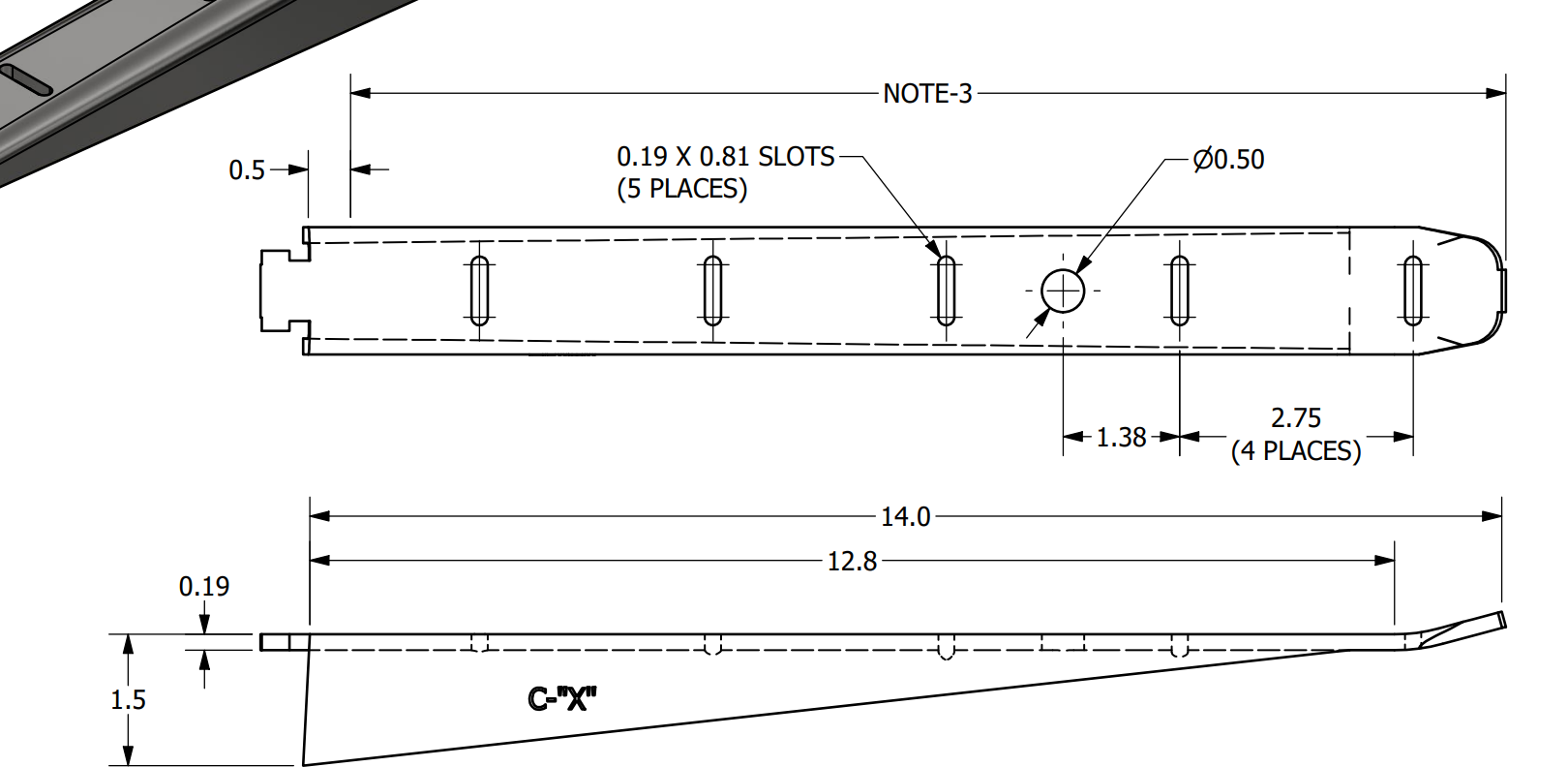
Cable Rack Hook
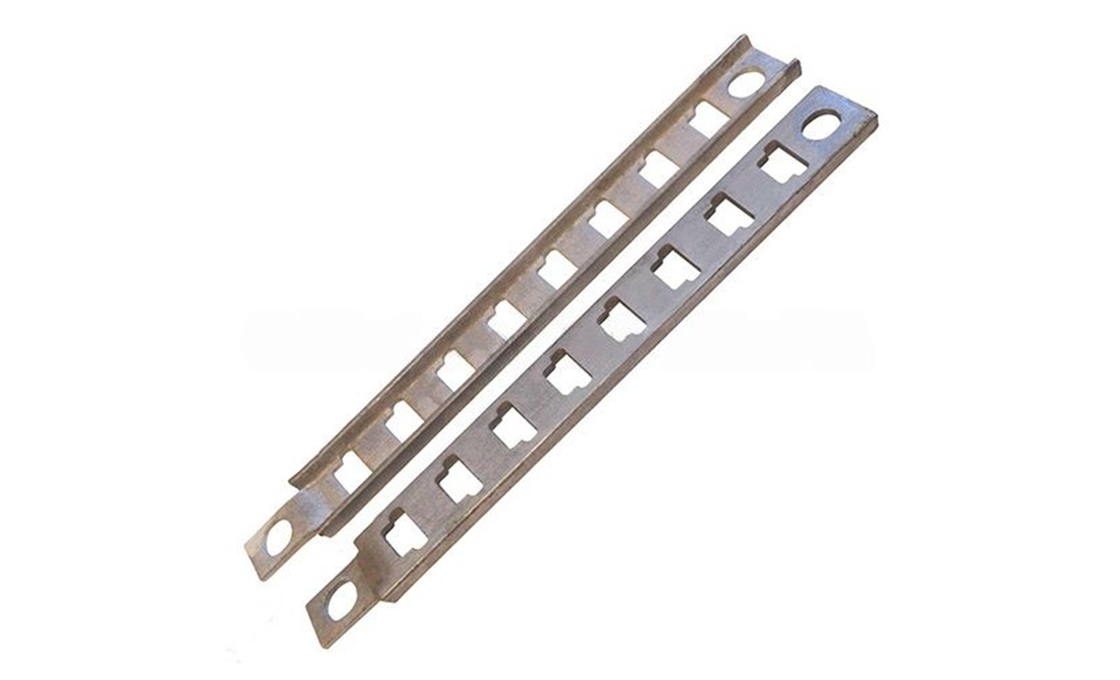
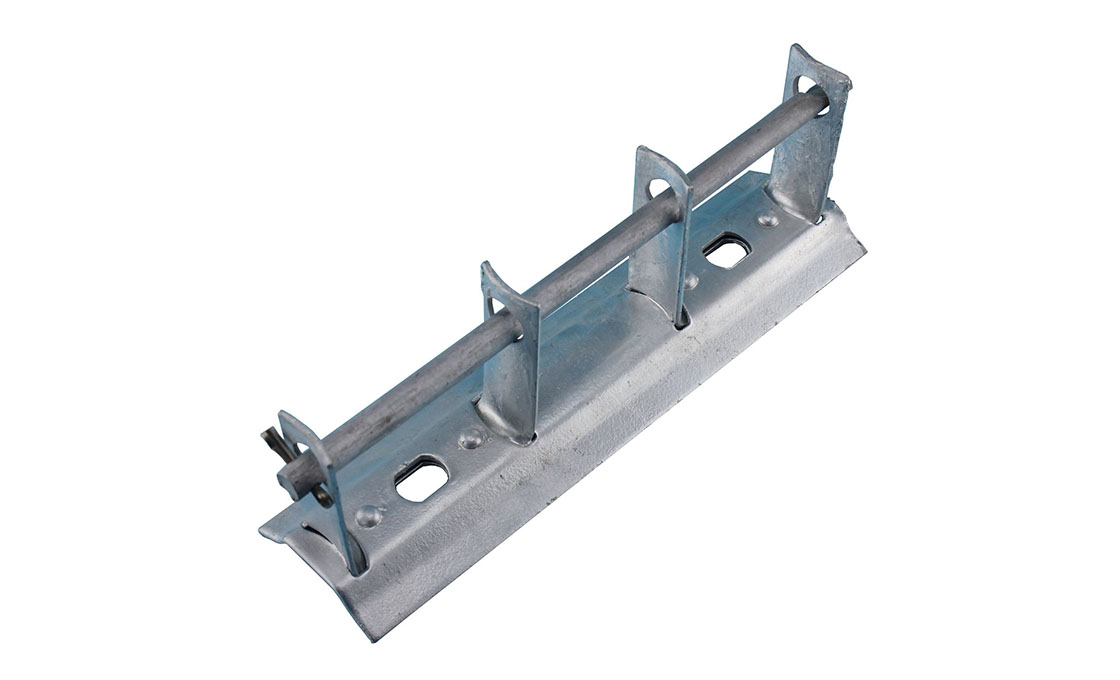
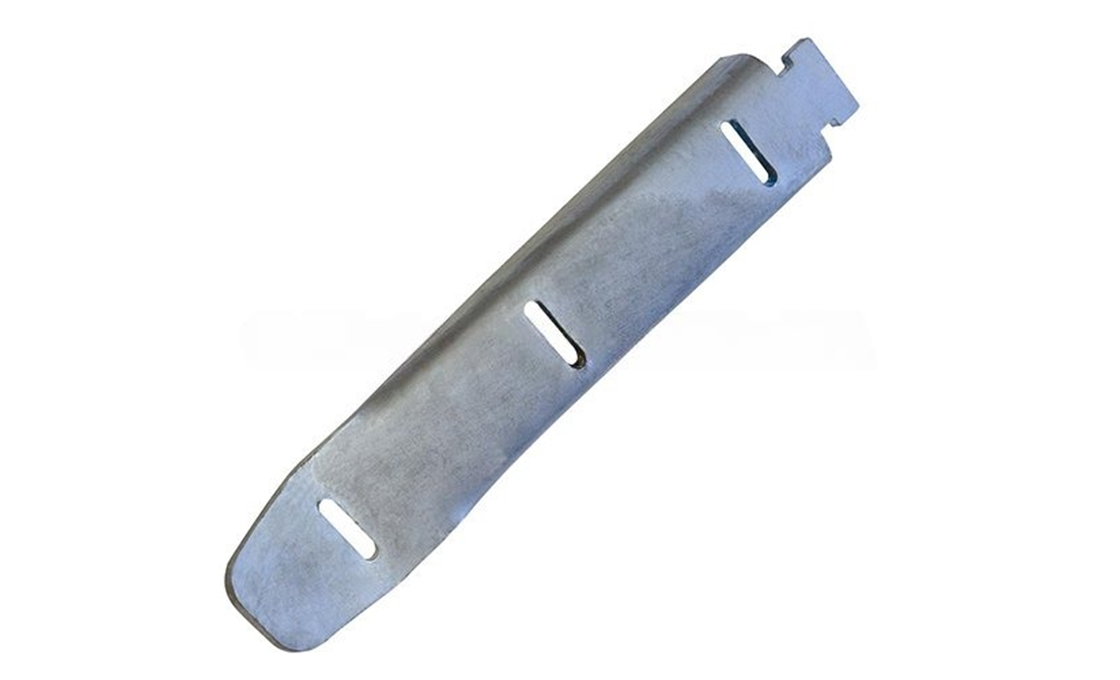
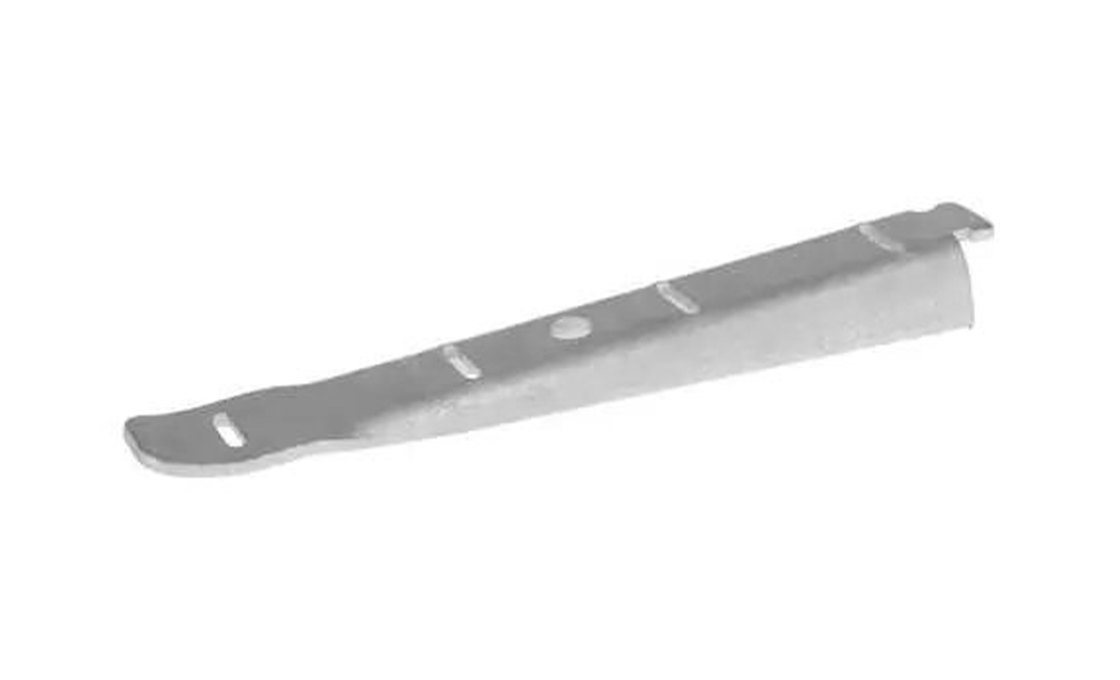
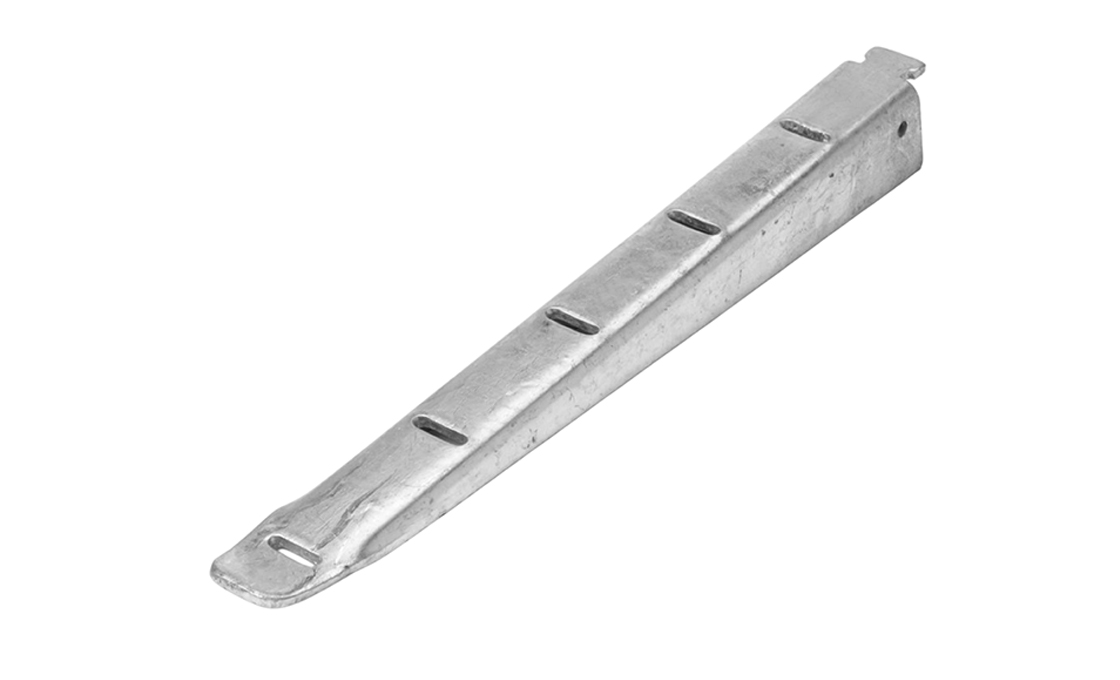
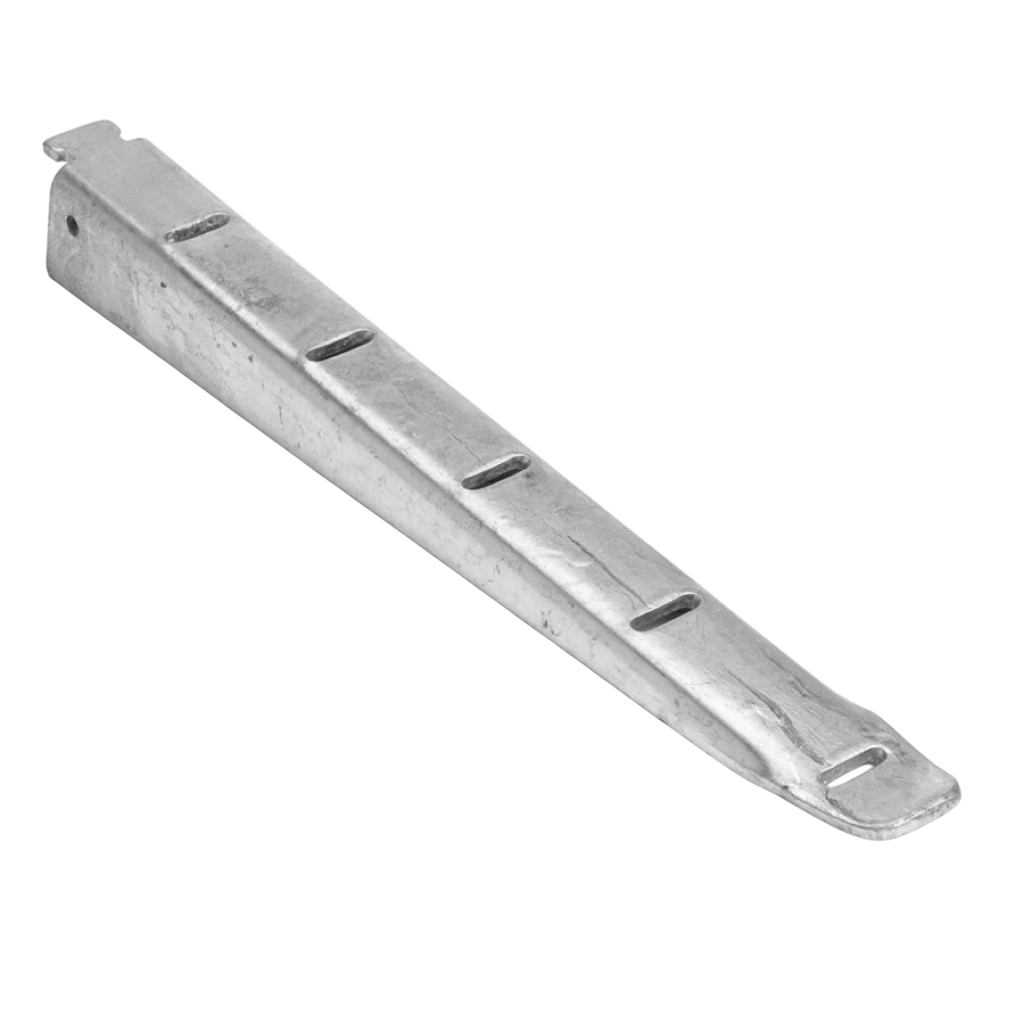
- Stamped-steel cantilever hook that mounts in the T-slot of an underground cable rack to support 1–6 cables in vaults / manholes
- 6 types covering single-cable through 6-cable multi-slot configurations, 8″ to 16″ cantilever length
- 0.50″ mounting eye + tapered profile clears cable bending radius; integral 0.19″ cable slots prevent slip-out
- Hot-dip galvanized per ASTM A153; T-slot mating tab fits any Inwesco 10A / Hubbell T-Section rack (1-1/2″ pitch)
Technical Specifications
| Catalog | Cable Slots | Overall Length | Slot Spacing | Max Cable OD | Hubbell / Inwesco Eq. | Wt (kg) |
|---|---|---|---|---|---|---|
| RAX-CRH-S1 | 1 (single) | 8″ (203 mm) | n/a | 2.5″ (64 mm) | Hubbell DU1S2 | 0.35 |
| RAX-CRH-M2 | 2 | 10″ (254 mm) | 2-3/4″ | 2.0″ (51 mm) | Hubbell DU5S3 | 0.50 |
| RAX-CRH-M3 | 3 | 12″ (305 mm) | 2-3/4″ | 1.75″ (44 mm) | Inwesco 9A12 | 0.65 |
| RAX-CRH-M4 | 4 | 13″ (330 mm) | 2-3/4″ | 1.5″ (38 mm) | Inwesco 9A13 | 0.75 |
| RAX-CRH-M5 | 5 | 14″ (356 mm) | 2-3/4″ | 1.5″ (38 mm) | Inwesco 9A14 | 0.85 |
| RAX-CRH-M6 | 6 | 16″ (406 mm) | 2-3/4″ | 1.25″ (32 mm) | Inwesco 9A16 | 0.95 |
Application & Installation

Where it is used
- Concrete vault and precast manhole installations where multiple cables share a wall and need controlled vertical separation
- Splice vaults where in-coming and out-going feeders need bend-radius management at the splice transition
- Substation manhole cable routing in 12–35 kV primary distribution (use multi-slot types M3+ for high cable count)
- Telecom / CATV vaults supporting fiber-optic and coaxial trunks (single-cable RAX-CRH-S1 is the dominant type here)
- Replacement / retrofit of damaged hooks on existing in-service racks (T-slot tab is backward-compatible with 30+ year-old racks)
Installation sequence (multi-cable M3, in-service vault)
- Confirm the rack's T-slot pitch matches the hook's mating tab (1-1/2″ is the universal standard; legacy 1-1/4″ racks need the older H-style hook).
- Position the hook's back tab at the desired vertical T-slot opening; insert the tab horizontally (90° rotation from final position).
- Rotate the hook 90° clockwise — the T-tab's shoulder catches the back of the rack channel, locking the hook in place.
- Verify the hook's tip is level (not tilted up/down); if the hook came loose during install, the tab didn't fully engage — remove and re-seat.
- Lay cables one at a time into the hook's slots, starting from the back (closest to wall) toward the tip; do not stack two cables in one slot.
- For long-term installations, optionally cable-tie the cables to the hook at each slot using UV-stable polypropylene ties (prevents slip-out during seismic events).
Buyer’s Guide: Cable Rack Hook
1. What a Cable Rack Hook Actually Does in a Vault
A Cable Rack Hook is a stamped-steel cantilever arm that mounts into the T-slot of a wall-fixed cable rack (see Underground Cable Rack) and physically supports the weight of one or more cables off the vault floor. Each slot in the hook cradles one cable, with the slot's rolled edges protecting the cable jacket from cutting under load. The hook is the actual load-bearing element of the cable management system — the rack alone just provides the mounting framework. Per IEEE 386 and most utility specs, in-vault cables must rest on engineered hooks with rated load capacity — never field-fabricated hooks, never improvised supports, never the vault floor itself.
2. Sizing the Hook — Cable Count and Diameter Math
Pick the hook by counting the cables it must support AND verifying each cable fits the slot opening. Single-cable hooks (RAX-CRH-S1, 2.5″ slot) for telecom / CATV trunks or single primary distribution feeders. Multi-cable hooks (RAX-CRH-M2 through -M6) for distribution / substation runs with multiple parallel circuits — each cable in its own slot. Match slot width to cable OD with 1/8″ clearance: cables wider than the slot won't seat; cables narrower than 50% of slot width slip out under thermal cycling. For mixed cable sizes (uncommon), use the M3 or M4 hooks where the slot spacing accommodates moderate diameter variation.
3. T-Slot Compatibility — Why the 1-1/2″ Pitch Standard
The hook's back-side T-tab (0.5″ offset × 1.38″ engagement) is sized for the 1-1/2″ T-slot pitch that has been the North American standard since the 1960s. Every Inwesco 10A-series rack, Hubbell T-Section rack, UDI rack, and Walter Kidde rack uses this same pitch — the Raxsteel hooks drop into all of them without modification. Legacy racks (pre-1960s installations, rare today) use 1-1/4″ pitch with a different T-tab shape; for these, specify the H-style hook variant (RAX-CRH-H) at order. Verify pitch before ordering by measuring center-to-center distance between two adjacent T-slot openings on the existing rack.
4. Load Rating — Per-Hook vs Per-Cable Limits
Each hook is rated for 75 lb cantilever load, evenly distributed — that's the engineering limit; exceeding it causes the hook tip to droop, then bend, then fail. For practical cable planning: a single 1,000 kcmil XLPE distribution cable weighs ~3.5 lb per linear foot, so one hook supports a ~21 ft cable span between hooks. For a 1,500 kcmil paper-insulated lead-sheath cable weighing ~7.5 lb per foot, span drops to ~10 ft. Multi-cable hooks (M3, M4, M5) distribute the 75 lb across multiple cables, so per-cable allowable weight drops proportionally — the 5-slot M5 hook can't support 5 cables at 75 lb each, it supports 5 cables at 15 lb each. Cross-check your cable plan's cumulative weight against the hook count.
5. Coating Selection — HDG vs PVC-Coated vs Stainless
Three coating options match three vault environments. Hot-dip galvanized (default) for dry vaults and infrequently-flooded sites — 25–30 year service life. PVC-coated over HDG (+$0.40/hook) for vaults with chloride contamination (road salt zones, coastal sites), acid vapors, or chronic standing water — the PVC adds 15–20 years AND protects the cable jacket if the hook's zinc coating ever fails (some old hooks have rough edges that cut into cable jacket; PVC prevents this). Stainless 316L (+$2.50/hook) for marine substations and any inspection-critical site where rust is unacceptable — 50+ year service life with zero maintenance.
6. The Cable Slip-Out Problem — Slot Engagement vs Cable Tying
The hook's slot is intentionally open at the top — this lets installers drop cables in from above (faster than threading through a closed loop). The downside: under seismic events, thermal cycling, or vibrating cable trays from nearby pumps, cables can walk out of the open slot. Two solutions. For normal vaults: rely on cable mass + the 0.19″ slot depth to retain cables; this works for ~95% of installations. For seismic zones (CA, AK, mountain WA), high-vibration sites, or any cable run carrying critical loads: cable-tie each cable to the hook at the slot using UV-stable polypropylene ties; one tie per cable per hook is sufficient. Don't use metal tie wire (corrosion path between cable jacket and bare wire shortens cable life).