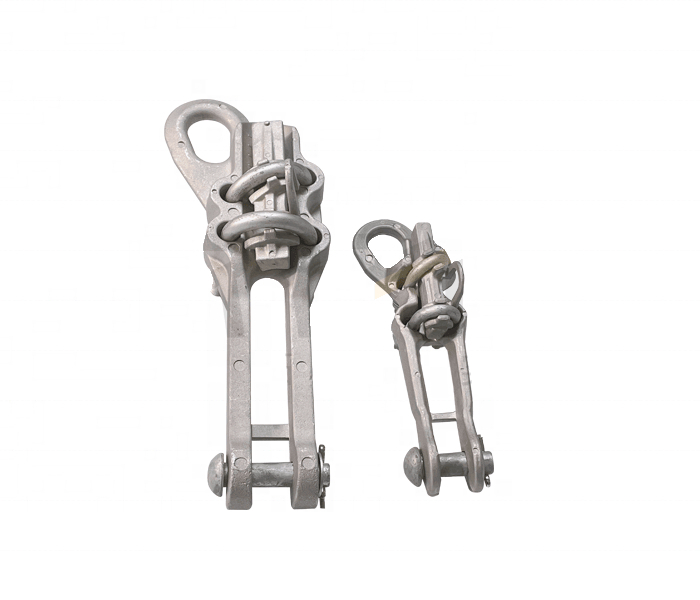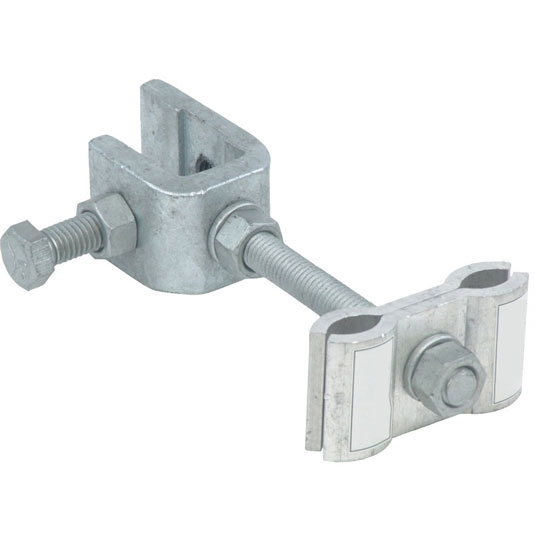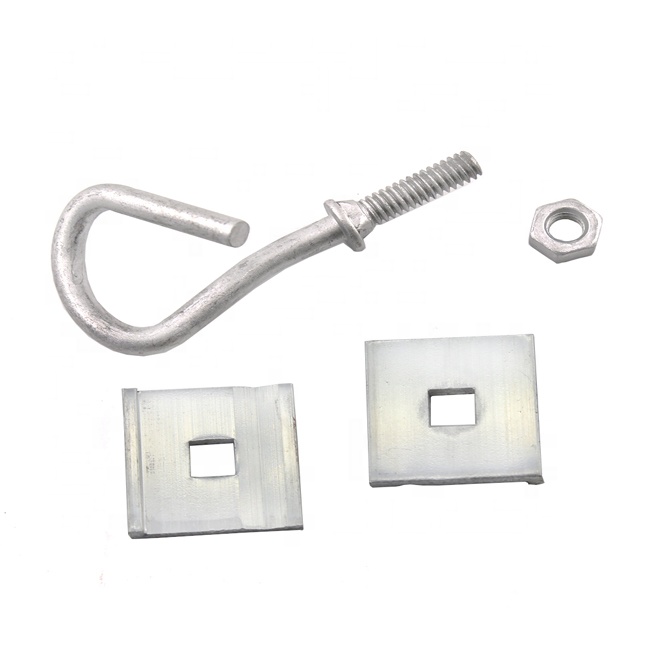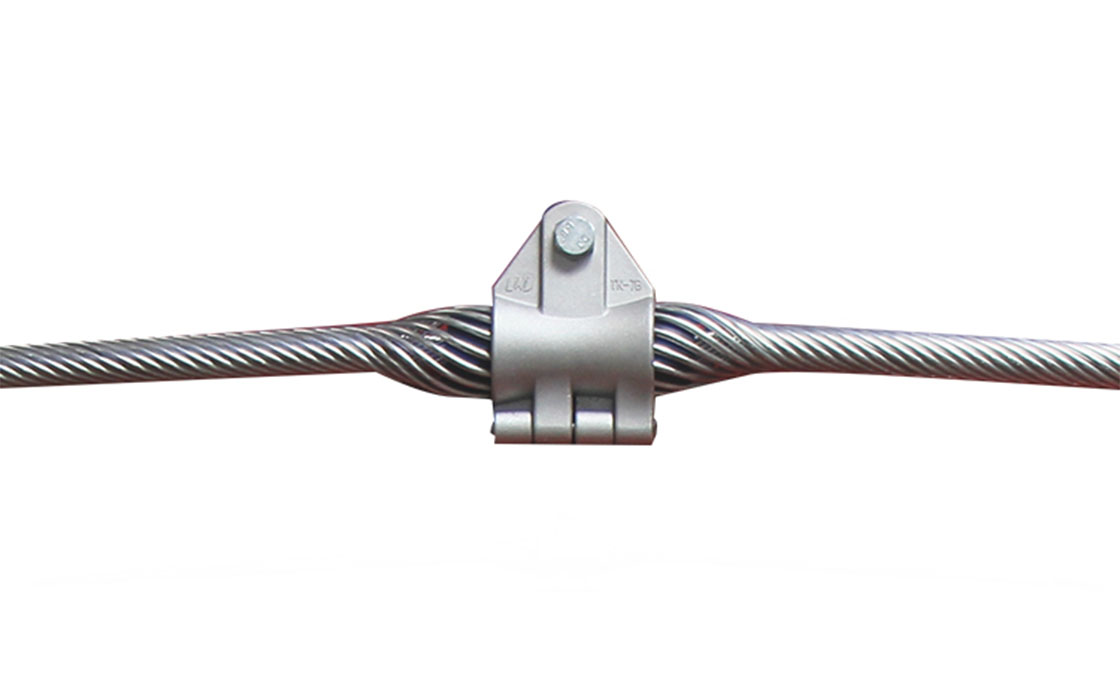
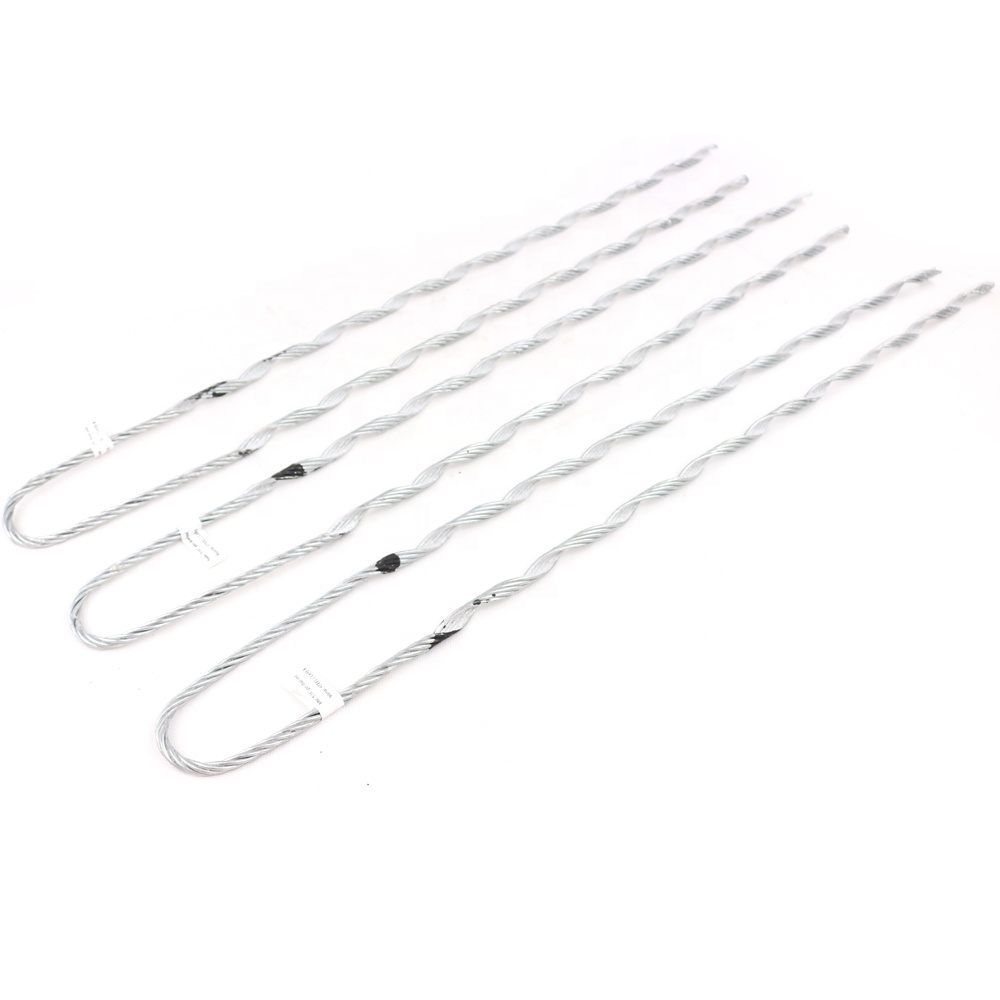
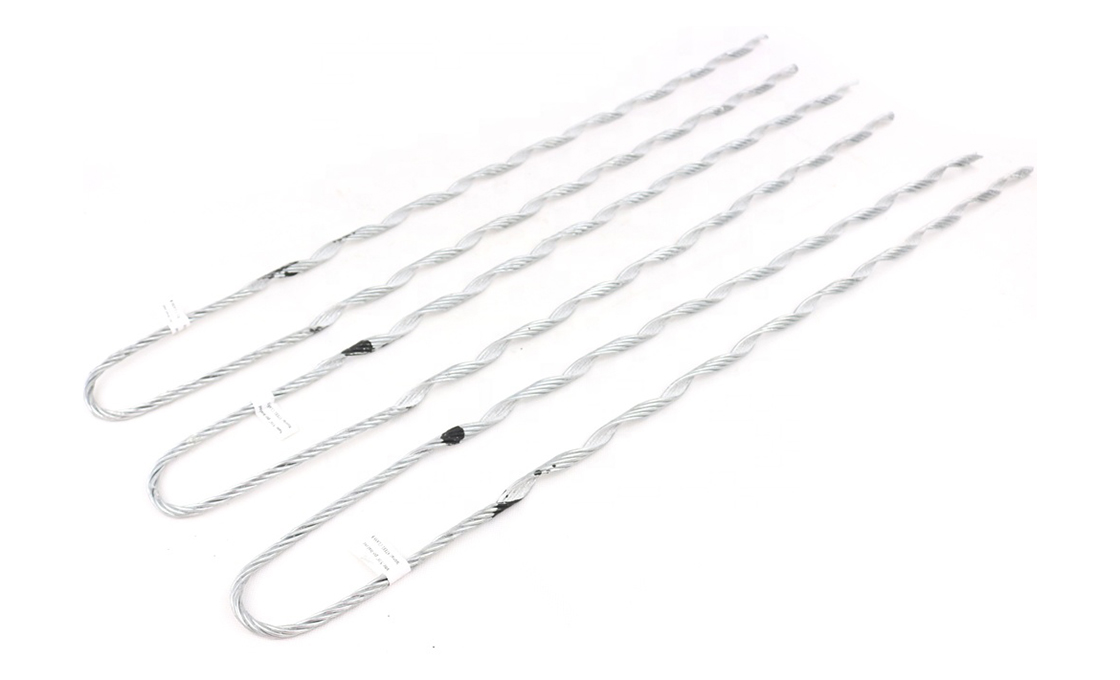
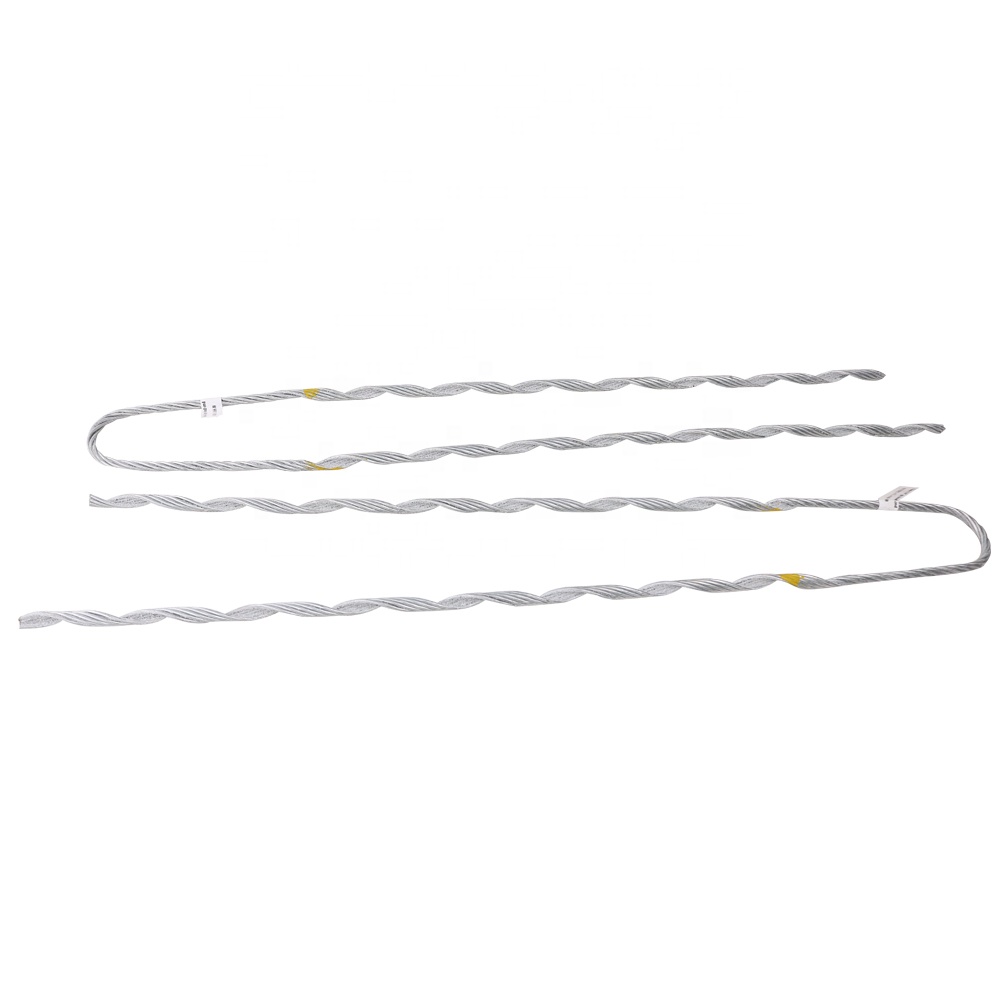
Tension Clamp
- Dead-ends (terminates) the conductor at angle, terminal and section poles
- Bolt-type (NLD / NLL) and compression (NY) constructions
- Holds 90–95% of conductor RTS; conductor 10–36 mm
- Malleable iron or aluminium alloy body, galvanized U-bolts
- Transfers full line tension into the insulator string / structure
- GB / DL/T, BS 3288 compatible
Technical Specifications
| Catalog | Type | Conductor Ø (mm) | Holding (% RTS) | Body | Bolts | Surface |
|---|---|---|---|---|---|---|
| NLD-1 | Bolt | 10.6–14.5 | 90 | Malleable iron | 2 | HDG |
| NLD-2 | Bolt | 14.5–19 | 90 | Malleable iron | 3 | HDG |
| NLD-3 | Bolt | 19–26 | 95 | Malleable iron | 3 | HDG |
| NLL-3 | Bolt | 19–26 | 95 | Aluminium | 3 | Al / HDG |
| NY-300 | Compression | per conductor | 95 | Al + steel | — | Al / HDG |
| Custom | Other conductor sizes / compression dies — send your conductor type & RTS | |||||
Application & Installation
Where it is used
The tension (dead-end) clamp terminates the conductor at angle, terminal and section structures, transferring the full line tension into the insulator string and tower. Bolt-type clamps grip the conductor between body and keeper plates; compression clamps are pressed onto the conductor with a hydraulic die for the highest holding.
Installation sequence
- Select bolt or compression type and the size for your conductor.
- Lay the conductor into the clamp (or slide the compression barrel on).
- Torque the U-bolts evenly — or press the compression dies in sequence.
- Connect the clamp eye to the dead-end string / yoke.
- Verify the jumper terminal and check holding before final sag.
Buyer’s Guide: Tension Clamp
1. What a Tension Clamp Does
A tension clamp — also called a dead-end or strain clamp — terminates the conductor and carries the full longitudinal line tension into the string and structure. Unlike a suspension clamp, which lets the conductor pass and swing, the tension clamp grips it permanently at the end of a tension section.
2. Bolt-Type vs Compression
Bolt-type clamps (NLD malleable iron, NLL aluminium) grip the conductor with U-bolts and are field-installable with hand tools — ideal for distribution and smaller transmission. Compression clamps (NY) are hydraulically pressed for the highest, most reliable holding on large transmission conductors. Choose by conductor size and the tooling you have.
3. Holding Strength vs RTS
A dead-end must hold 90–95% of the conductor's rated tensile strength so the conductor — not the clamp — is the limiting element. Match the clamp series to the conductor RTS; undersizing risks slip, oversizing wastes weight and cost.
4. Sizing by Conductor Diameter
Each NLD / NLL size covers a conductor OD band (10.6–26 mm and up). The groove and bolt count grow with size. Order by the exact conductor type and stranded diameter, not a nominal size.
5. Body Material: Malleable Iron vs Aluminium
Malleable iron (NLD) is strong and economical for galvanized-steel and ACSR lines; aluminium (NLL) avoids bimetallic corrosion on all-aluminium conductors and is lighter. Pick to match the conductor metallurgy.
6. The Jumper Terminal
Most tension clamps include or accept a jumper terminal pad to carry the loop around the dead-end. Confirm the terminal bolt pattern matches your jumper / parallel-groove hardware so the electrical connection is as sound as the mechanical one.