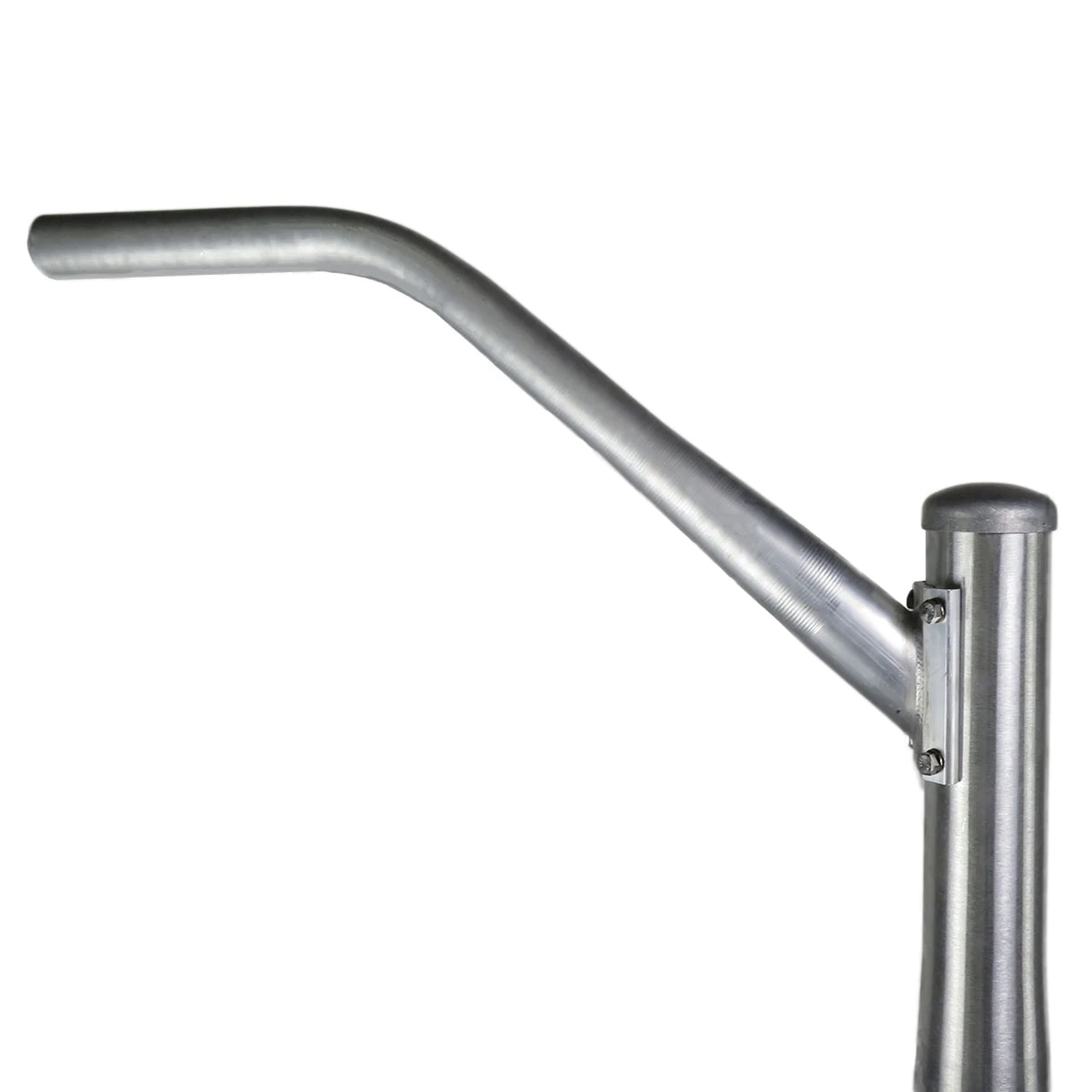
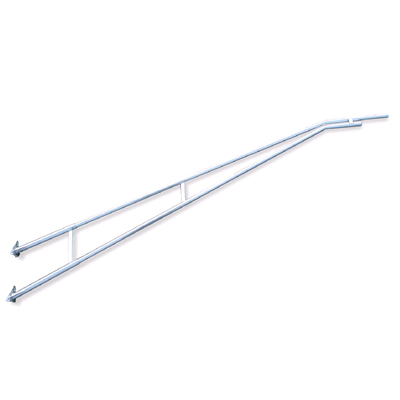
Mast Arm
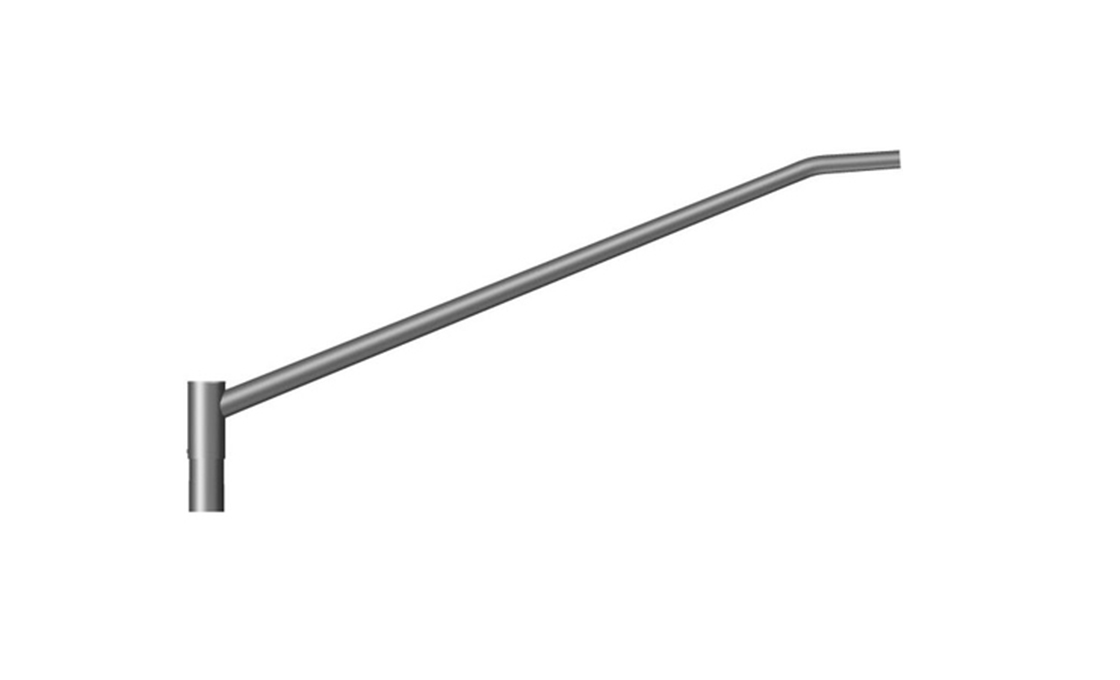
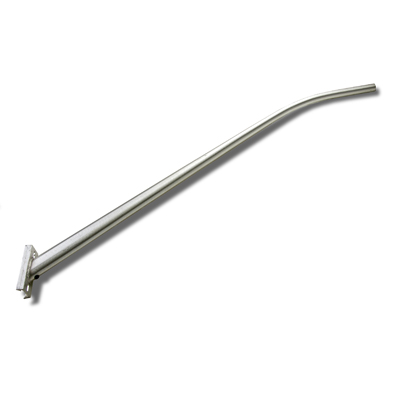
- Tapered steel or aluminum arm extending horizontally from the pole to support a luminaire 6–12 ft from pole face
- 6 types spanning 4–12 ft arm length × side-bolt / clamp / pole-top mount × carbon steel or aluminum
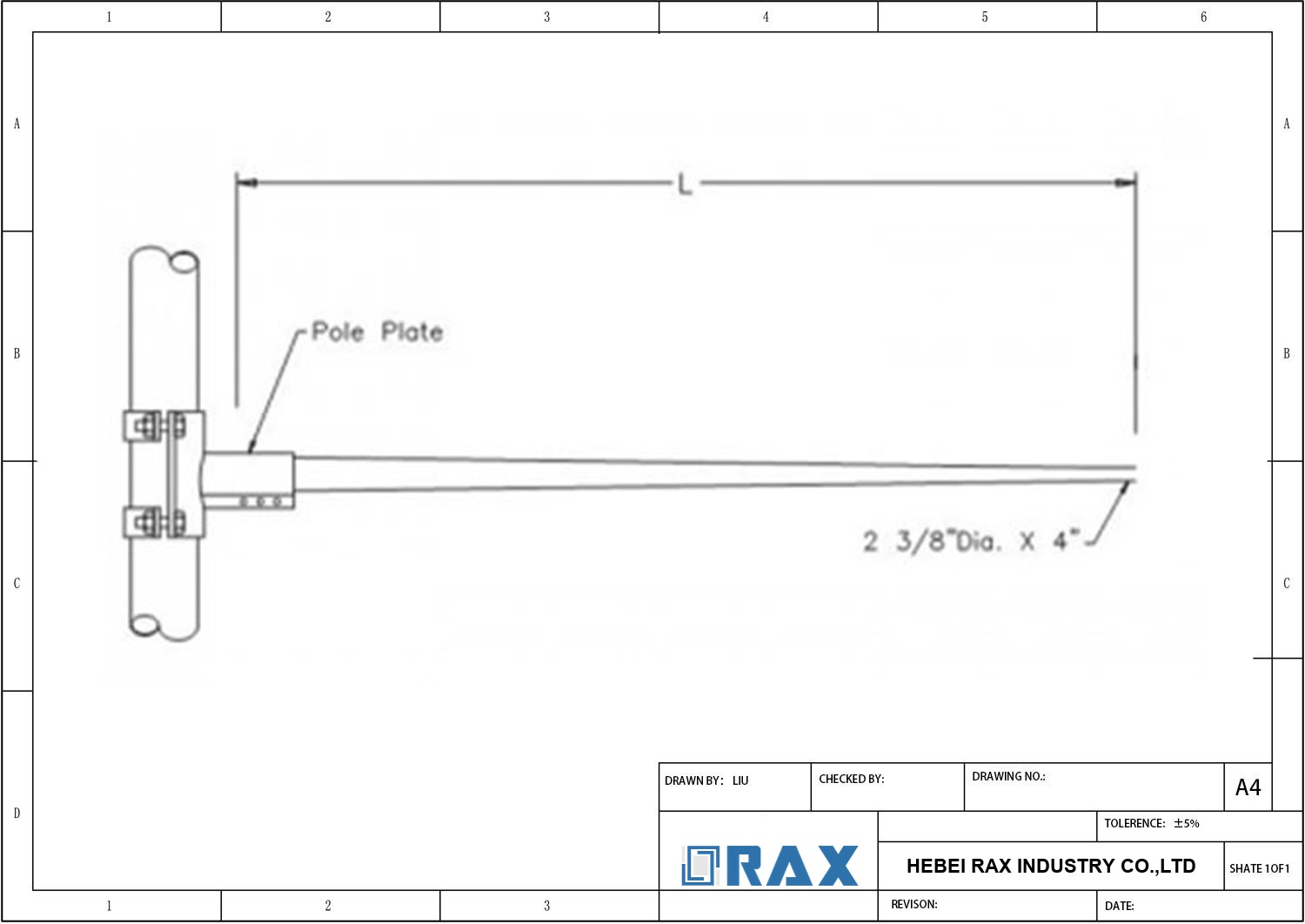
- Standard 2-3/8″ OD × 4″ tenon end accepts any slip-fit luminaire per ANSI C136.13
- Hot-dip galvanized per ASTM A123 (steel) or anodized 6063-T6 (aluminum), 25+ year service life
Technical Specifications
| Catalog | Arm Length | Material | Mount Style | Tenon | Max Luminaire Weight | Weight (kg) |
|---|---|---|---|---|---|---|
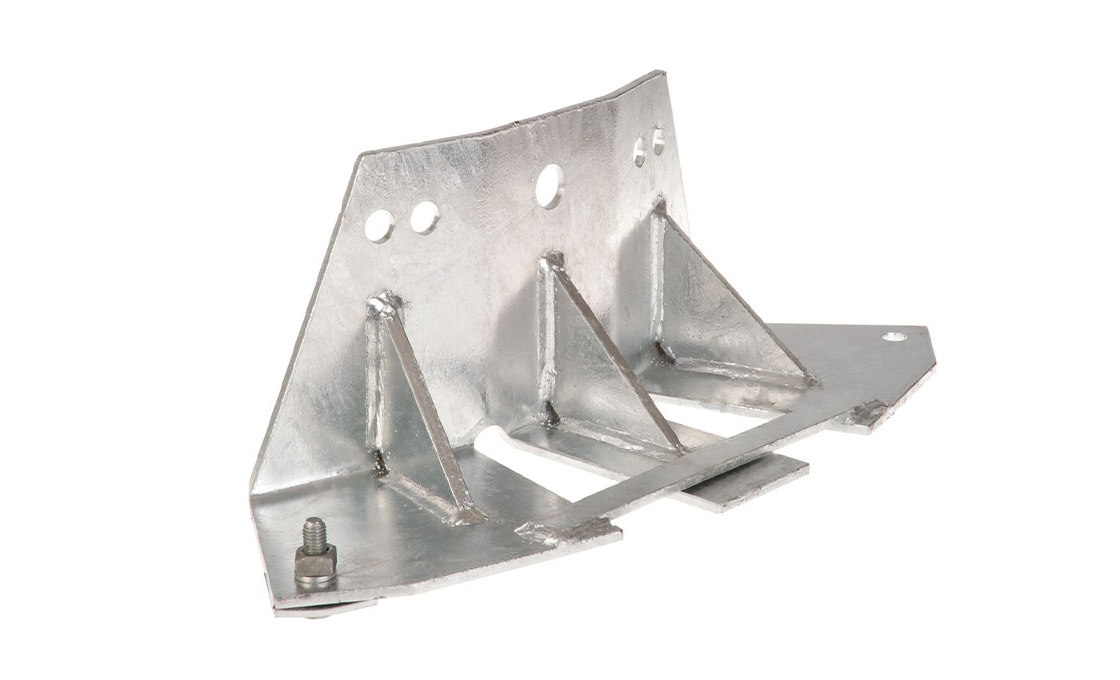
| RAX-MA-6-SB | 6 ft (1.83 m) | Steel Sch 40, HDG | Side bolt + pole plate | 2-3/8″ × 4″ | 50 lb (23 kg) | 9 |
| RAX-MA-8-SB | 8 ft (2.44 m) | Steel Sch 40, HDG | Side bolt + pole plate | 2-3/8″ × 4″ | 55 lb (25 kg) | 11 |
| RAX-MA-10-SB | 10 ft (3.05 m) | Steel Sch 40, HDG | Side bolt + pole plate | 2-3/8″ × 4″ | 50 lb (23 kg) | 14 |
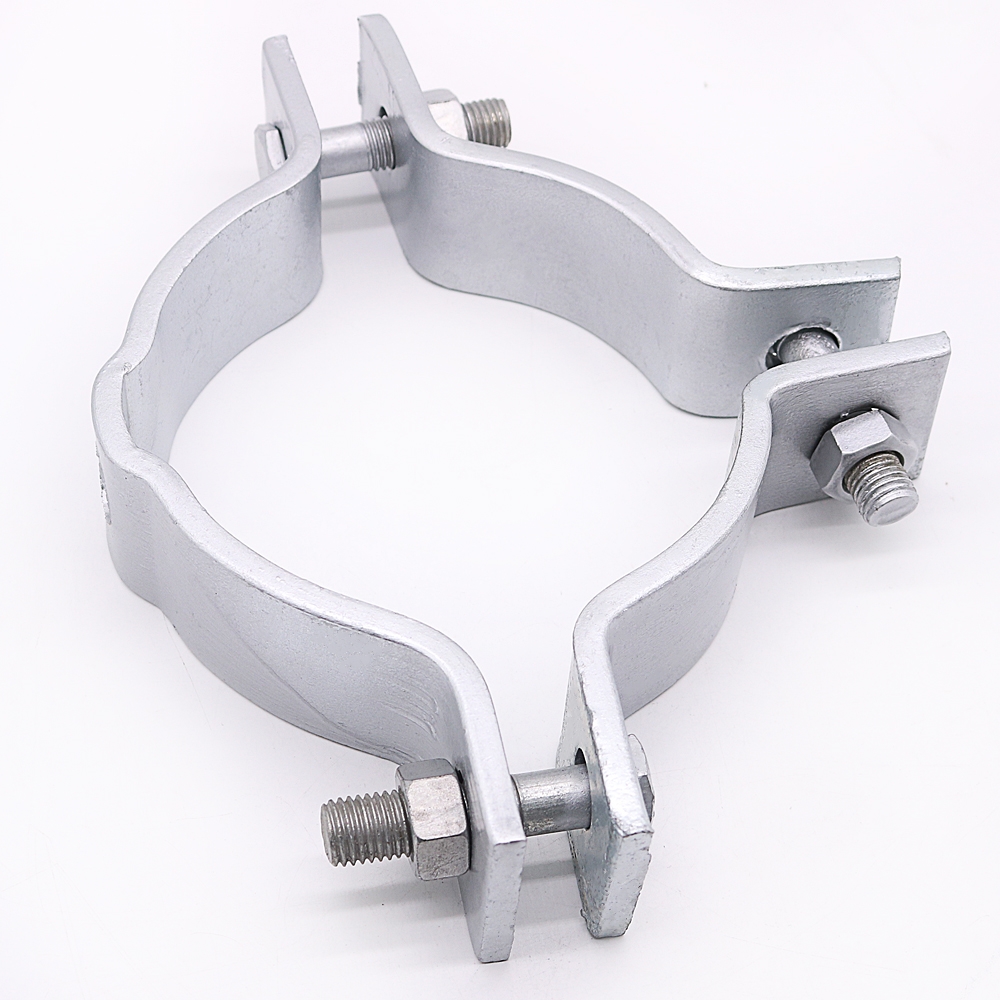
| RAX-MA-6-CL | 6 ft (1.83 m) | Steel Sch 40, HDG | Clamp (no-drill) | 2-3/8″ × 4″ | 50 lb (23 kg) | 10 |
| RAX-MA-180-2 | 2 × 6 ft @ 180° | Steel Sch 40, HDG | Pole top hub mount | 2 × 2-3/8″ × 4″ | 50 lb each (23 kg) | 22 |
| RAX-MA-8-AL | 8 ft (2.44 m) | Aluminum 6063-T6 | Side bolt + pole plate | 2-3/8″ × 4″ | 40 lb (18 kg) | 5.5 |
Application & Installation

Where it is used
- Roadway streetlights on wood / concrete / fiberglass distribution poles — the dominant mast arm application (6–10 ft arms cover most US residential streets)
- Parking lot perimeter lighting where pole-side mounting beats pole-top for fixture serviceability (8 ft side-bolt is the workhorse)
- Industrial yard / loading dock illumination requiring 12 ft arm reach over container lanes (RAX-MA-10-SB or custom 12 ft)
- Median-strip streetlights with dual luminaires opposing each other (RAX-MA-180-2 saves a second pole and trenching)
- Coastal / salt-spray sites (boardwalks, marinas, oil terminals) where aluminum 6063-T6 (RAX-MA-8-AL) outlasts hot-dip steel by 2×
Installation sequence (side-bolt mount, wood pole)
- Confirm pole class (Class 4 minimum) and circumference at the mount height — mast arm leverage adds significant lateral load; under-sized poles fail in wind events.
- Position the arm at the design mounting height (typically 25–30 ft above grade for residential, 35–40 ft for arterial roads) with the tenon end pointing toward the roadway centerline.
- Drill 11/16″ (17 mm) through-holes per the pole plate's 2- or 4-bolt pattern (4-bolt for arms over 8 ft).
- Bolt the pole plate through using 5/8″ × 14″ HDG machine bolts with curved washers + lock nuts on the back side — do not use lag bolts for arms supporting LED luminaires (vibration loosens them within 5 years).
- Pull the luminaire feeder cable from the pole's lower handhole through the arm's drilled grommet; allow 18″ service loop inside the tenon.
- Slip-fit the luminaire onto the tenon, tighten the luminaire's set-screws to manufacturer torque (typically 25 ft·lb), connect feeder + ground.
Buyer’s Guide: Mast Arm
1. What the Mast Arm Actually Does in a Streetlight Run
A Mast Arm is the horizontal (or slightly upward-curving) steel or aluminum arm that extends out from the side of a wood, concrete, or steel pole to position a roadway luminaire over the lane it's lighting. Without it, the luminaire would sit directly against the pole face — useless for roadway illumination because the light cone wouldn't reach the lane center. The arm length determines the luminaire-to-pole-face offset: a 6 ft arm puts the light over a single residential lane; 8 ft handles a parking strip + one lane; 10 ft reaches the centerline of a two-lane arterial. The arm also acts as a conduit raceway — the luminaire's feeder cable runs from the pole's handhole, through the arm, and out the tenon end where it connects to the luminaire's ballast or LED driver. Pole-line hardware catalogs treat the mast arm as a specialty item separate from cross arms (which carry conductors) and brackets (which mount transformers).
2. Arm Length Selection by Roadway Geometry
Arm length is set by three factors: the pole offset from the curb (typically 2–3 ft), the lane(s) the luminaire must illuminate, and the IES (Illuminating Engineering Society) light distribution pattern of your chosen luminaire. As a rule: residential streets with 24-ft pavement width use 6 ft arms; collector roads with 36-ft pavement use 8 ft arms; 2-lane arterial with parking, 48-ft total width uses 10 ft arms; 4-lane divided arterial uses 12 ft arms on each side OR mid-median 6 ft arms on every other pole. Over-spec'ing arm length wastes steel and increases wind moment on the pole; under-spec'ing leaves dark edges in the roadway photometric pattern. Cross-reference IES RP-8 lighting design tables with your chosen luminaire's IES file before locking in arm length.
3. Steel Sch 40 vs Aluminum 6063-T6 — When Each Wins
Carbon steel Schedule 40 (hot-dip galvanized) is the default mast arm material for ~90% of North American utility specs. It's cheap (~$55/arm for 6 ft), strong enough for any standard luminaire weight, and corrosion-resists for 25+ years in C2–C3 atmospheric environments. The downside is weight (a 10 ft steel arm weighs ~14 kg, requires 2-person install) and visible rust at the galv-bath joints after 20 years — aesthetic, not structural. Aluminum 6063-T6 (mill-anodized) wins in three scenarios: (a) coastal / marine sites where steel rusts in 5–7 years no matter the galv thickness; (b) historic / aesthetic districts where matte-silver aluminum blends with restored cast-iron poles; (c) truck-served retrofit where the 60% weight reduction enables 1-person bucket-truck install. Aluminum costs ~2× the steel equivalent and has 30% lower load rating for the same wall thickness — size up one length class if luminaire weight is borderline.
4. Mount Style: Side-Bolt vs Clamp vs Pole-Top Hub
Three mount styles cover all field conditions. Side-bolt with pole plate (RAX-MA-N-SB) is the workhorse: a flat steel plate bolts to the side of a wood or concrete pole, the arm welds to the plate at the design rise angle. Drilling is required — not a fit for utilities that prohibit pole drilling. Clamp mount (RAX-MA-N-CL) wraps a 2-piece banded clamp around the pole and the arm bolts to the clamp — no drilling, so used on steel and composite poles where drilling voids warranty, also for fast retrofit. Pole-top hub mount places the arm(s) on a hub that slips over the top of the pole; used for streetlight-only poles (no power conductors above the arm) and for dual-arm configurations (RAX-MA-180-2 puts two arms at 180° on a single hub). Choose by pole material first, then by drilling policy.
5. The 2-3/8″ × 4″ Tenon Standard (ANSI C136.13)
Every mast arm in this catalog ends in a tenon: a smaller-diameter pipe stub onto which the luminaire's slip-fitter clamps and tightens. The dimension 2-3/8″ outside diameter × 4″ long isn't arbitrary — it's the ANSI C136.13 standard for North American outdoor luminaire slip-fitters and is universal across Acuity, Cooper, GE, Hubbell, Philips, RAB, and Cree roadway fixtures. The 4″ length gives the luminaire's set-screws (typically 2 screws spaced 1-1/2″ apart) full purchase on the tenon wall; shorter tenons risk fixture rotation under wind. Don't modify the tenon dimensions — cutting it shorter to fit a tight cable bend will void the luminaire warranty AND fail the wind-load certification. Custom luminaires (decorative acorn fixtures, ornamental post-tops) sometimes spec a 3″ or 4-1/2″ tenon — we can supply alternative tenon diameters as a custom build with 5-day tooling.
6. Galvanizing, Powder Coat & the LED-Era Vibration Problem
Standard steel mast arms ship hot-dip galvanized per ASTM A123 at ~50 μm zinc coating — sufficient for 25-year service in C2–C3 environments. For aesthetic districts where the silver-galv finish is objectionable, powder coat over HDG (any RAL color from your spec) is available at +$25/arm. The powder coat itself doesn't add corrosion protection — it's purely visual — but it shields the underlying zinc from UV chalking. There's a newer concern unique to the LED era: LED luminaires weigh 40% less than legacy HPS / Metal Halide fixtures, so the arm's natural vibration frequency shifts upward, often into the 15–25 Hz range where wind-induced oscillation excites resonance. Specify dual-bolt pole plates (RAX-MA-10-SB ships with 4 bolts, not 2) on arms over 8 ft to suppress resonance; if your site has chronic wind (mountain passes, coastal bluffs), add a tuned-mass damper at the arm midpoint — we can quote.