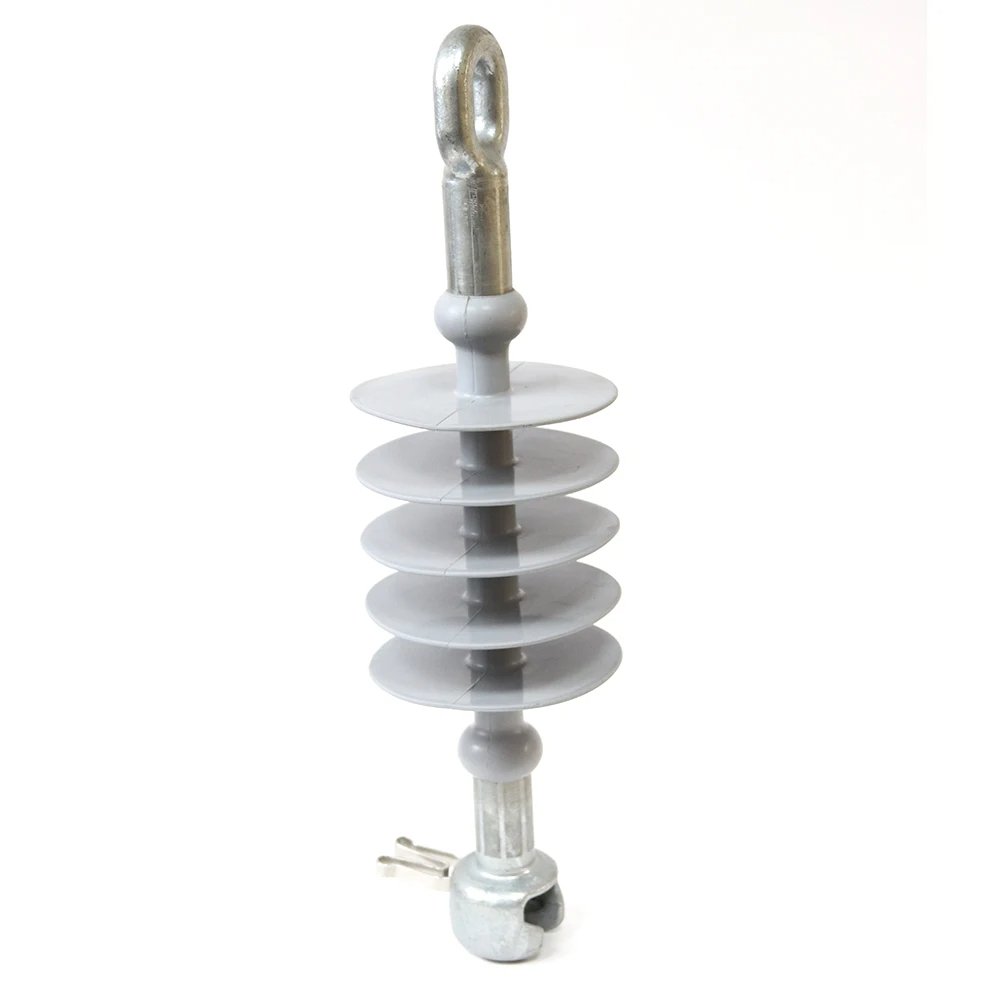
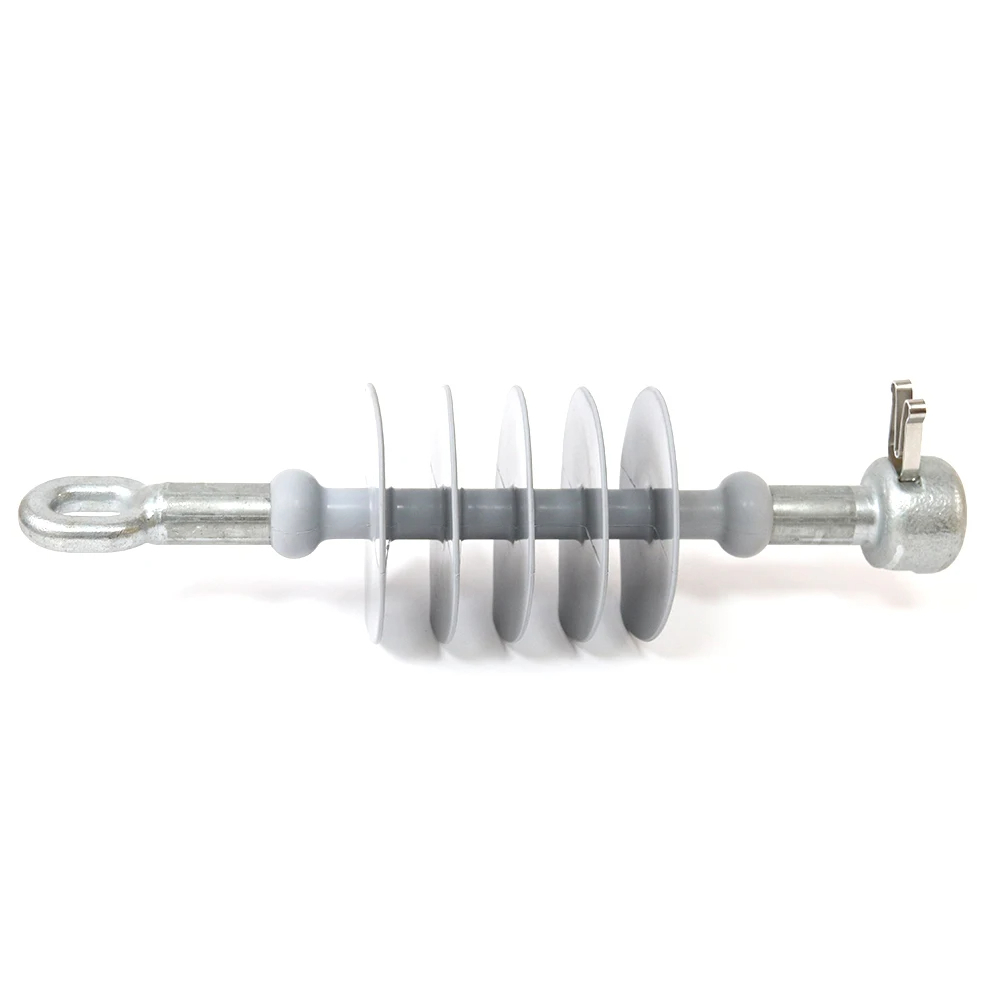
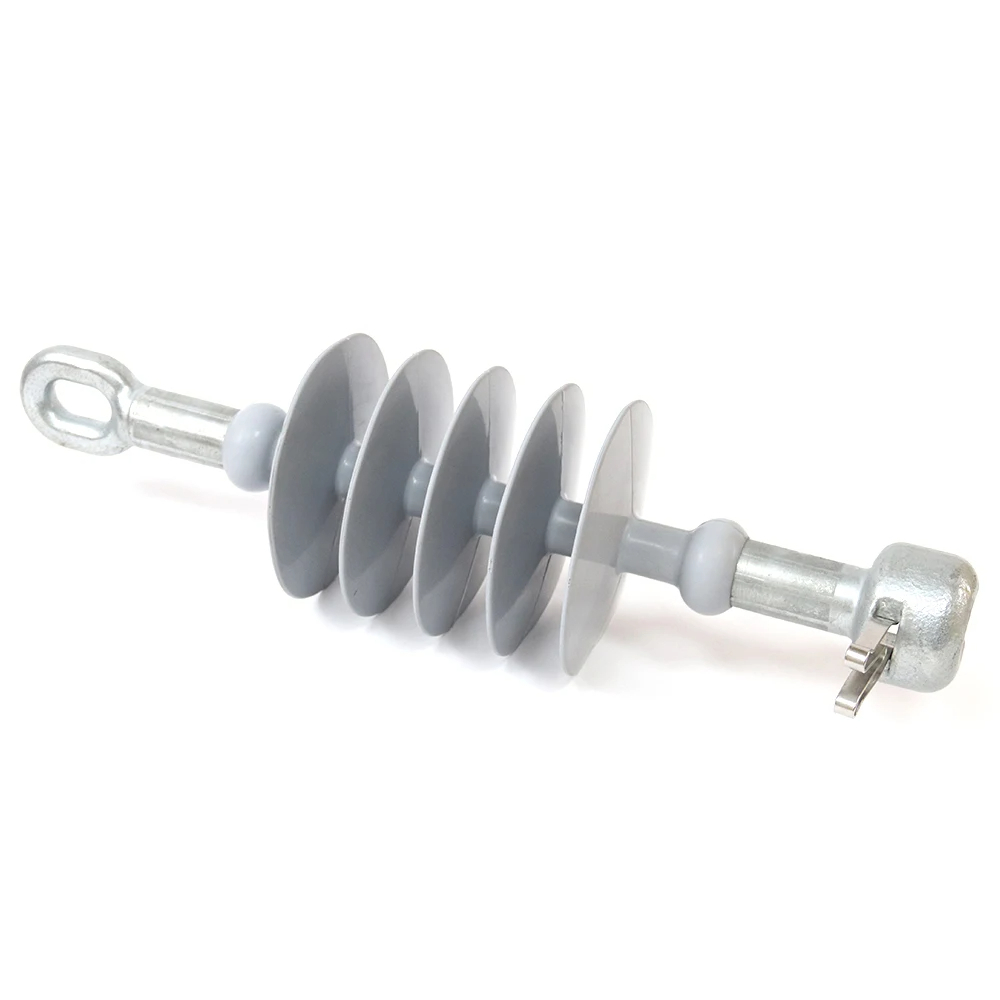
Deadend Insulator
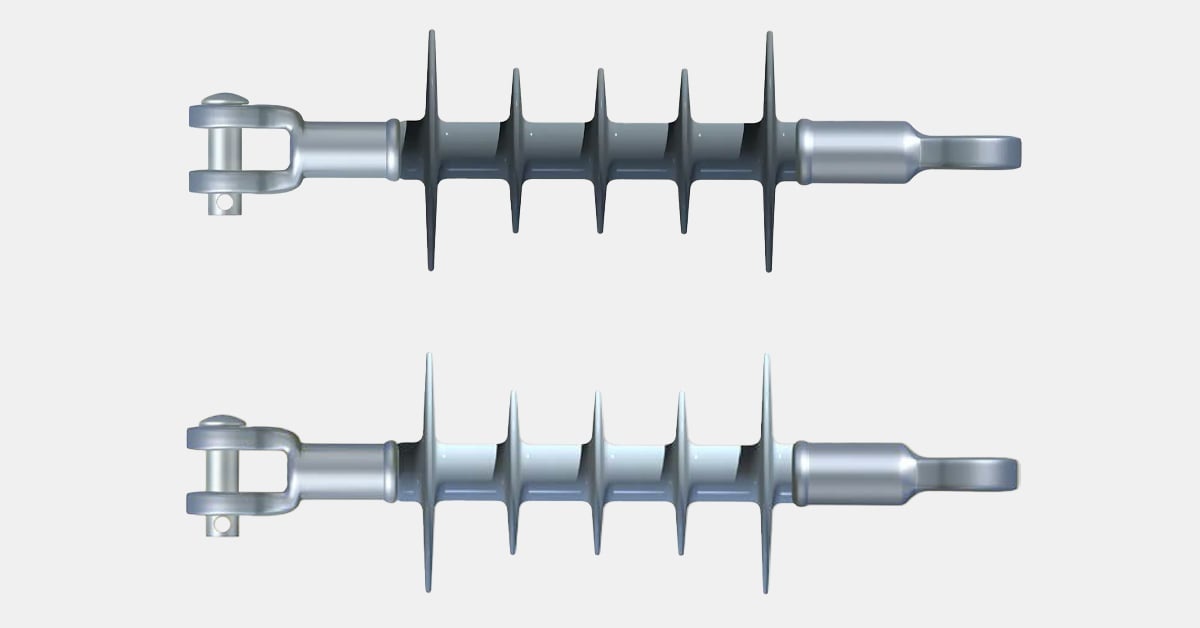
- Strain / dead-end disc string that terminates the conductor at tension
- Same ball-and-socket discs as suspension, arranged horizontally for pull
- ANSI 52-3 / 52-5 M&E, stacked to the voltage
- Takes full line tension through the string into the tower
- Porcelain or glass discs; clevis / tongue end fittings
- For angle, terminal and section structures
Technical Specifications
| Catalog | ANSI Class | M&E (kN) | System kV | Discs (typ.) | Material |
|---|---|---|---|---|---|
| RAX-DE-70 | 52-3 | 70 | 33 | 3 | Porcelain / glass |
| RAX-DE-120 | 52-5 | 120 | 69 | 5 | Porcelain / glass |
| RAX-DE-120H | 52-5 | 120 | 132 | 9 | Porcelain / glass |
| RAX-DE-160 | 52-8 | 160 | 220 | 14 | Porcelain / glass |
| Custom | Other sizes / configurations — send your conductor & structure spec | ||||
Application & Installation
Where it is used
The dead-end (strain) insulator is a disc string arranged horizontally to terminate the conductor and carry the full line tension into the tower at angle, terminal and section structures. It uses the same ANSI cap-and-pin discs as a suspension string, coupled to a tension clamp at the conductor end and a clevis or yoke at the structure.
Installation sequence
- Select the disc class (M&E) for the line tension.
- Count the discs for the system voltage and pollution.
- Couple the discs into the strain string with locking keys.
- Anchor the structure end via a clevis / yoke / shackle.
- Fit the tension (dead-end) clamp at the conductor end.
Buyer’s Guide: Deadend Insulator
1. What a Dead-End Insulator String Is
A dead-end (strain) insulator string is a horizontal run of cap-and-pin discs that terminates the conductor. It does the same insulating job as a suspension string, but takes the full longitudinal line tension — so its mechanical class and end fittings are chosen for pull, not just hang.
2. Why Horizontal
At a dead-end the conductor pulls along the line, so the string lies roughly horizontal from the tower to the tension clamp. Every disc and coupling carries the full tension, which is why the M&E class must cover the line's maximum pull with margin.
3. M&E Class & Disc Count
Use 52-3 (70 kN) for distribution dead-ends, 52-5 (120 kN) or 52-8 (160 kN) for transmission. Disc count follows the system voltage and pollution, as with suspension strings.
4. Porcelain or Glass
Either disc type works; glass gives ground-level failure detection on the more critical dead-end structures. Both use the same ANSI classes and IEC 60120 coupling.
5. End Fittings
The structure end takes a clevis, yoke or shackle; the conductor end takes a tension / dead-end clamp via a socket fitting. Specify both so the string mates to your hardware.
6. Pairing
Order with the tension clamp, ball / socket clevises and yoke plate — the complete dead-end assembly in matching coupling size.