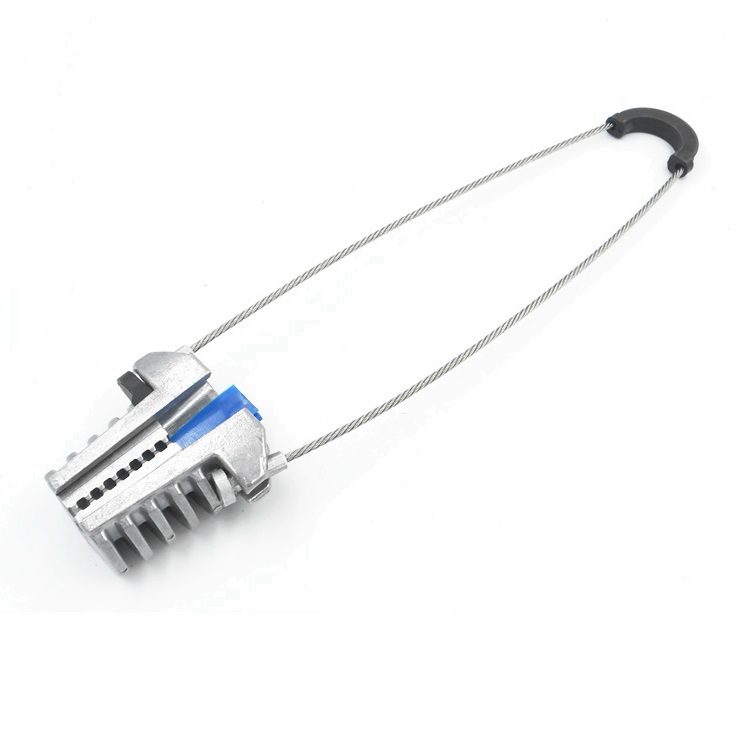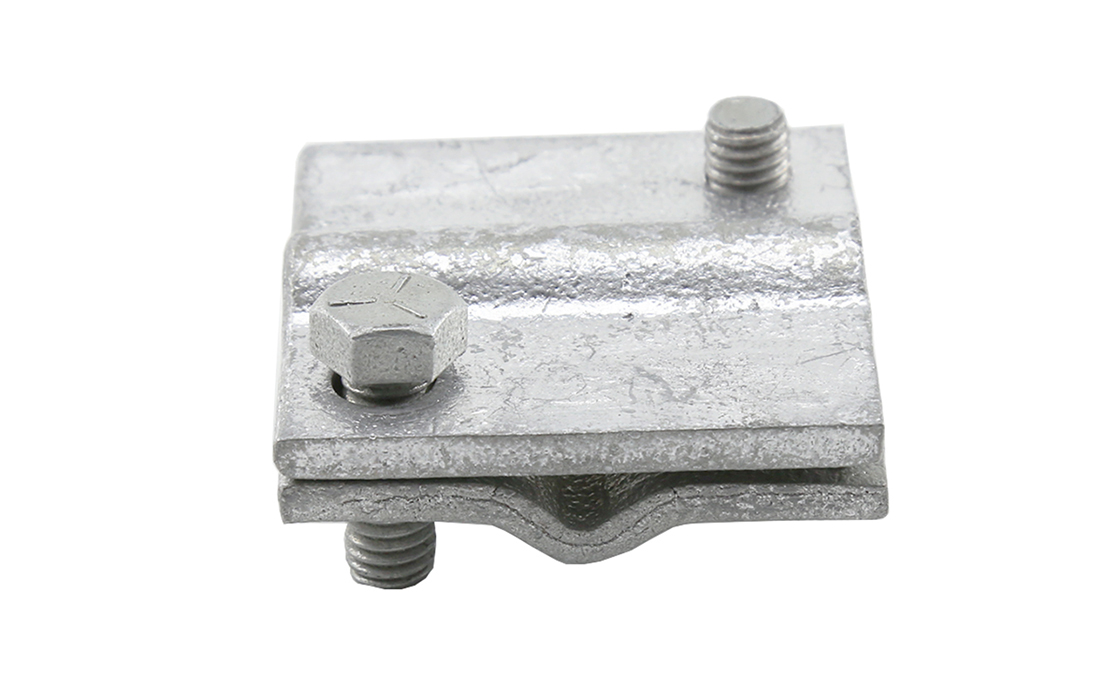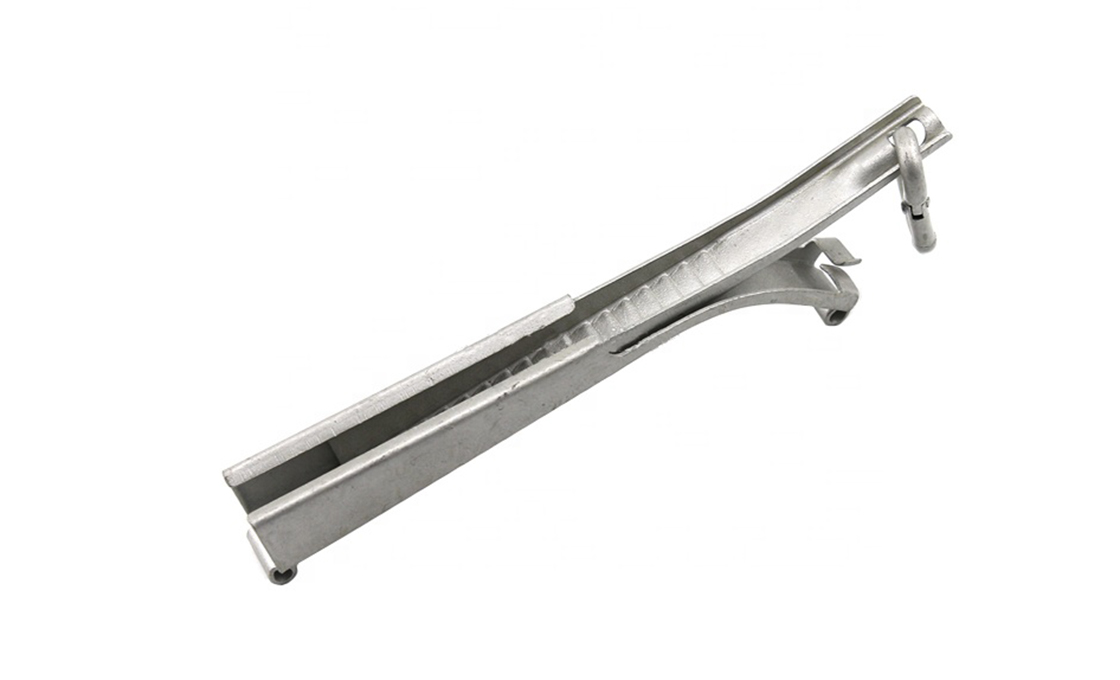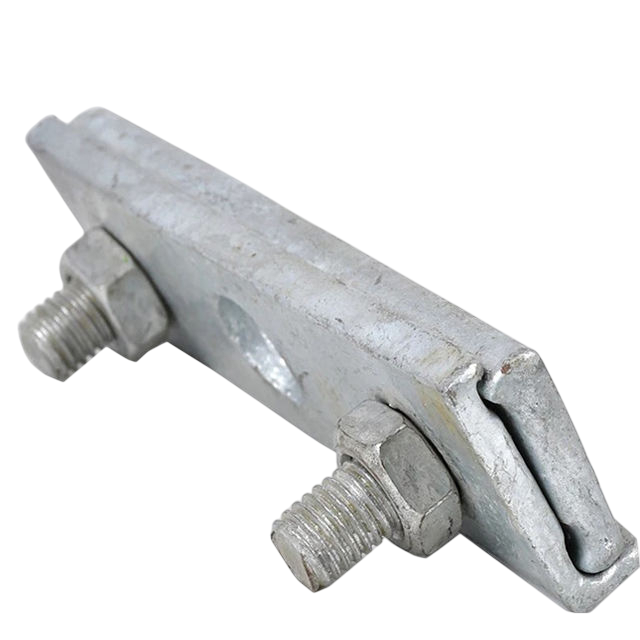
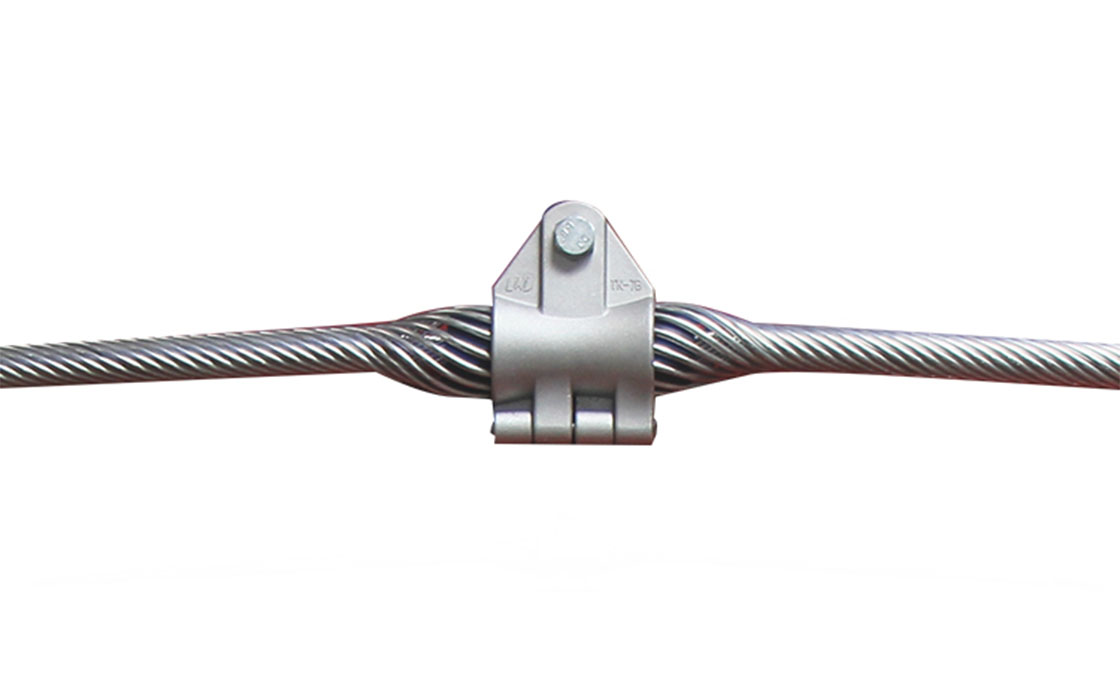
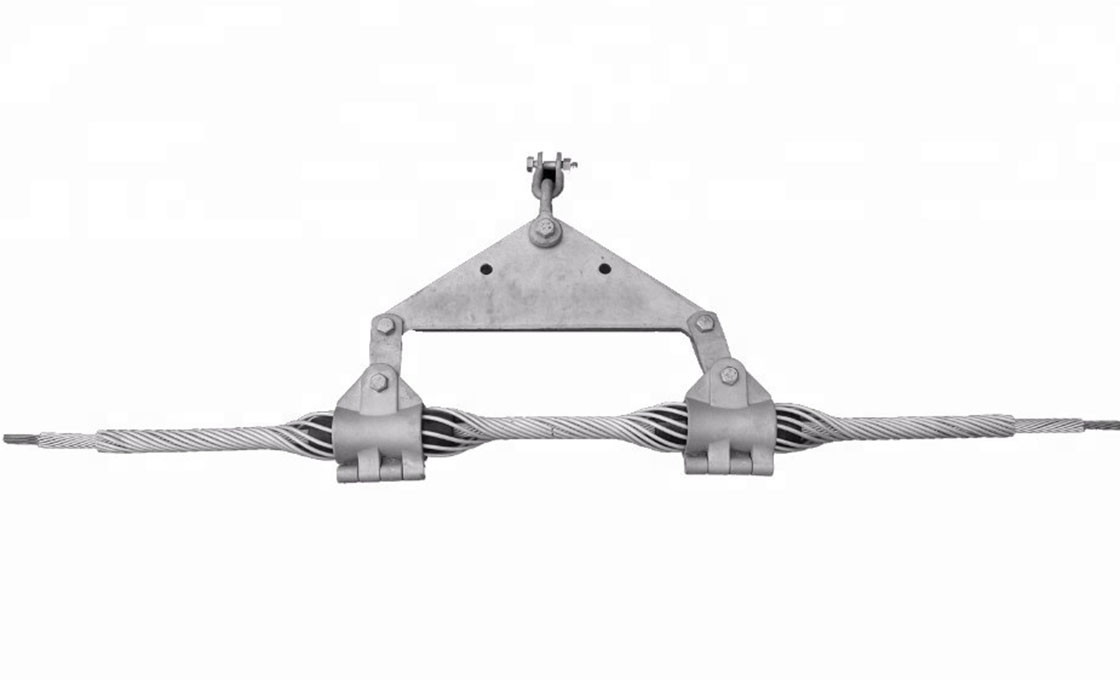
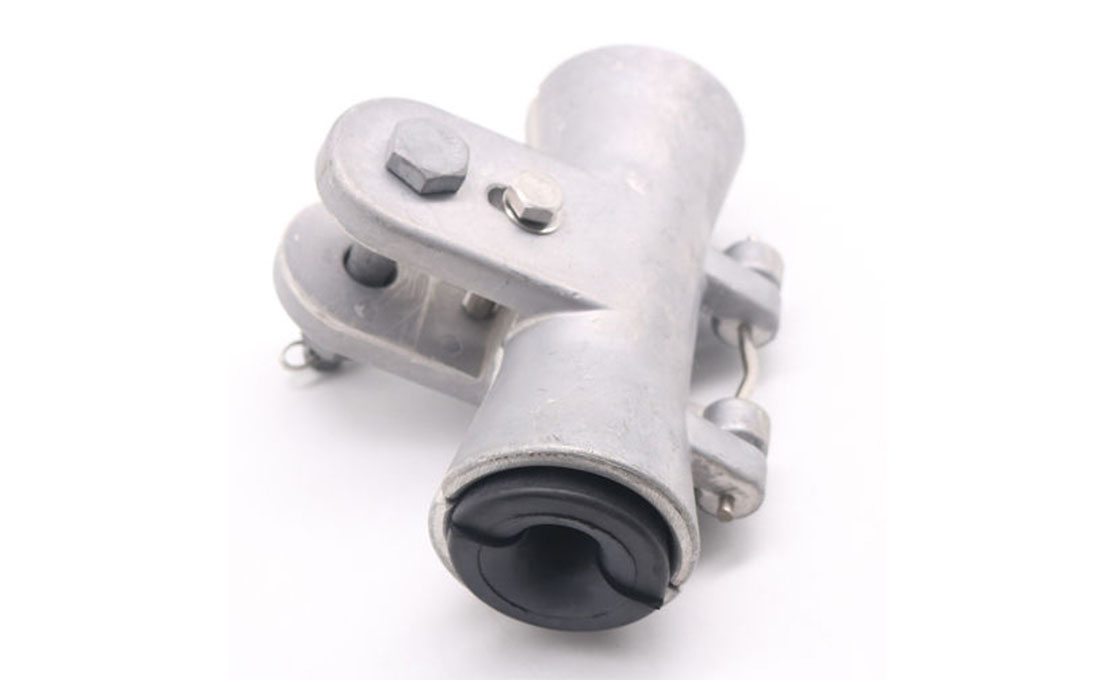
Armor Grip Suspension
- Preformed suspension for ADSS / OPGW and conductors — protects against bending fatigue
- Inner armor rods + elastomer insert cushion the cable at the support
- Vertical grip 30 kN single / 100 kN breaking double suspension
- Cable range .272–2.233 in (6.9–56.7 mm)
- Galvanized steel or aluminium housing; HT version to 250°C
- For spans 100–200 m and vibration-prone sections
Technical Specifications
| Catalog | Cable Ø (mm) | Vertical Grip (kN) | Type | Housing | Temp | Surface |
|---|---|---|---|---|---|---|
| RAX-AGS-S | 6.9–12.7 | 30 | Single | Galv. steel stamp | 200°C | HDG |
| RAX-AGS-M | 12.2–25.0 | 30 | Single | Al alloy cast | 200°C | Al |
| RAX-AGS-L | 25.0–56.7 | 30 | Single | Al alloy cast | 200°C | Al |
| RAX-AGS-D | 12.2–38.0 | 100 (break) | Double | Al alloy cast | 200°C | Al |
| RAX-AGS-HT | 12.2–38.0 | 30 | Single HT | Al alloy cast | 250°C | Al |
| Custom | Other cable diameters / double for long spans — send your ADSS / OPGW spec | |||||
Application & Installation
Where it is used
The armor grip suspension (AGS) supports ADSS / OPGW fibre cable and conductors at tangent towers, using preformed inner armor rods and an elastomer insert to cushion the cable. It distributes the support load over a long contact length, protecting the cable from the bending, compression and vibration fatigue a rigid clamp would cause.
Installation sequence
- Apply the inner armor rods over the cable at the support point.
- Seat the elastomer insert and armor rods into the housing.
- Close the housing and fit the bolts / keeper.
- Hang the assembly from the tower via the clevis / Y-clevis.
- For 100–200 m spans confirm the inner grip is fully wrapped.
Buyer’s Guide: Armor Grip Suspension
1. What Armor Grip Suspension Does
An AGS is a preformed suspension that cradles ADSS / OPGW cable in armor rods and a rubber insert instead of clamping it directly. By spreading the support over a long, compliant length it removes the stress concentration that causes fibre cable to fatigue and fail at rigid supports.
2. Why Not a Plain Suspension Clamp
Fibre cables (ADSS / OPGW) are sensitive to bending and crushing. A metal clamp groove concentrates stress at one point; the AGS armor rods plus elastomer insert distribute it, which is why PLP and the standards recommend AGS over armor-clamp combinations for fibre and long-span conductors.
3. Single vs Double Suspension
Single AGS gives 30 kN vertical grip for normal tangent towers and spans under ~200 m. Double suspension (two housings on a yoke) raises the breaking load to 100 kN for heavy angles, long spans and crossings. Choose by span length and tower loading.
4. Cable Range & Housing Material
Galvanized-steel stamped housings cover small cables (6.9–12.7 mm); aluminium-alloy castings cover the full range to 56.7 mm. Match the housing and armor-rod set to the exact cable OD — the rods are preformed to diameter.
5. Standard vs High-Temperature
The standard insert is rated to 200°C continuous; the HT version withstands 250°C for high-temperature conductors. Specify HT where the conductor runs hot so the elastomer does not degrade.
6. Span Guidance
For spans under 100 m a preformed suspension without the inner armor grip can suffice; for 100–200 m use the full AGS with inner armor grip, rubber, aluminium clad and bolt set. Above that, move to double suspension.