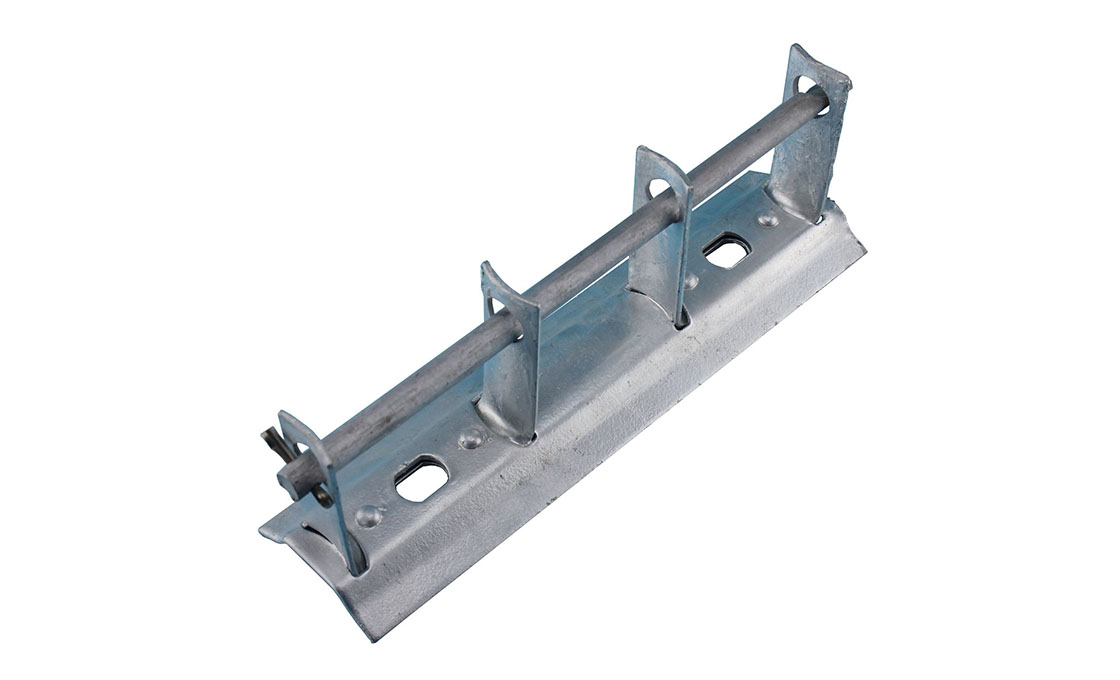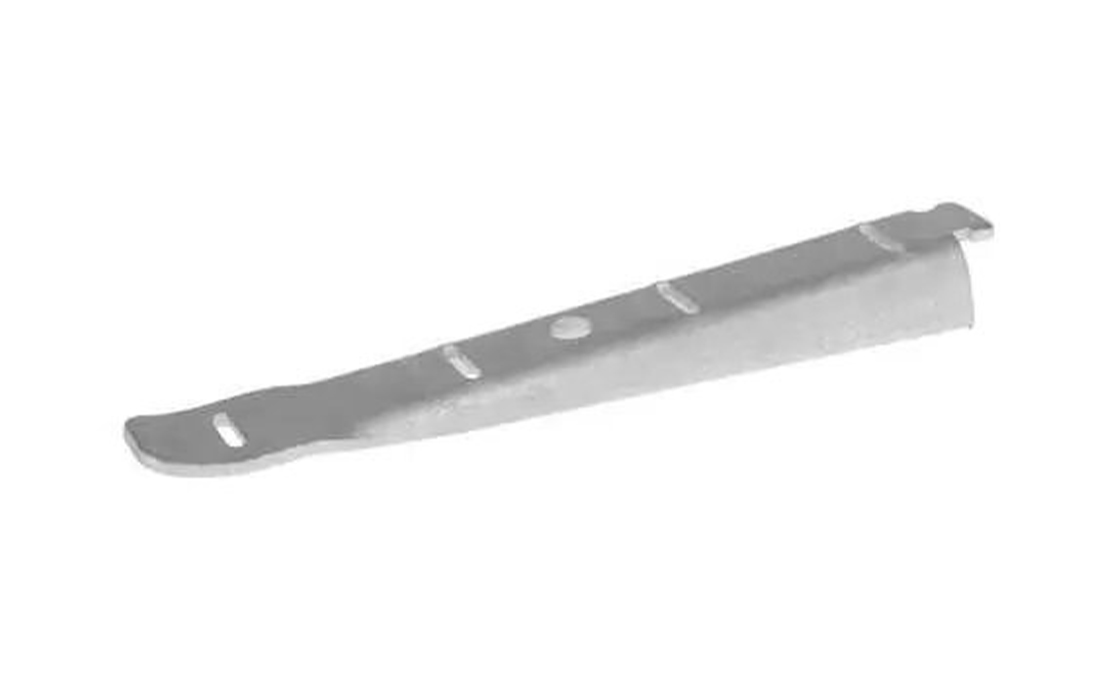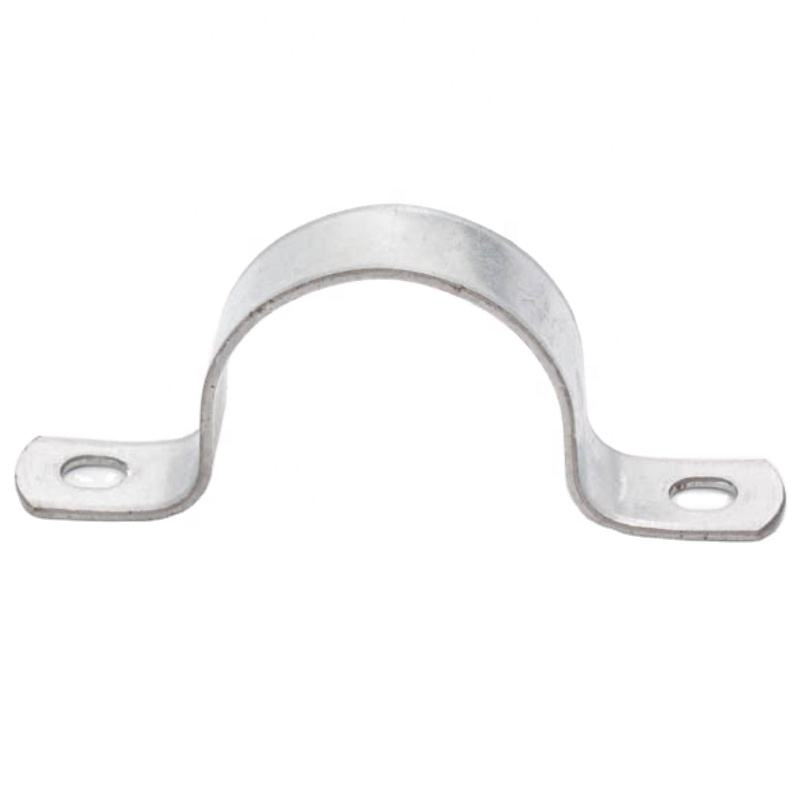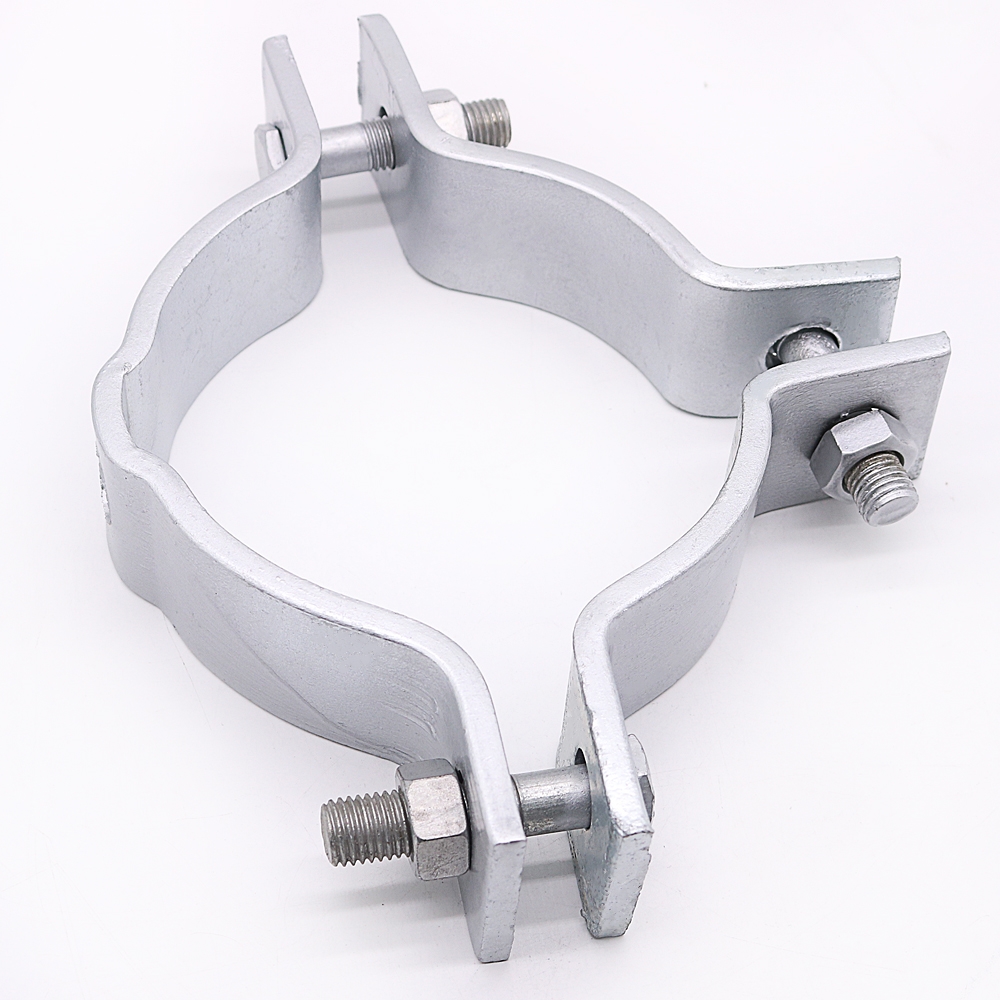
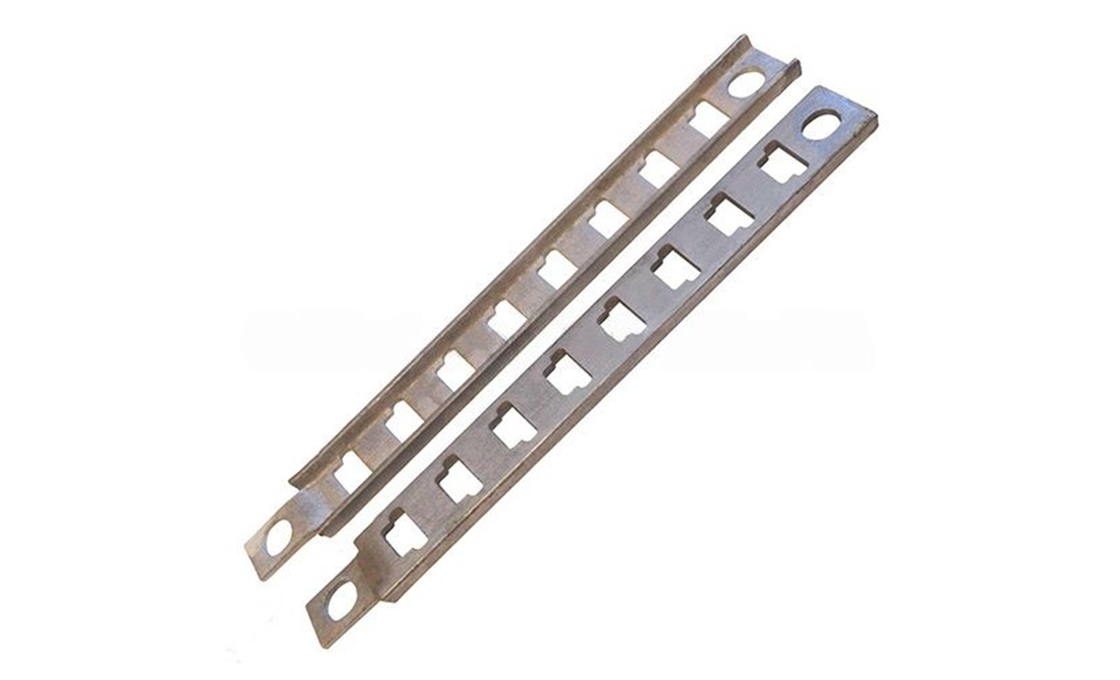
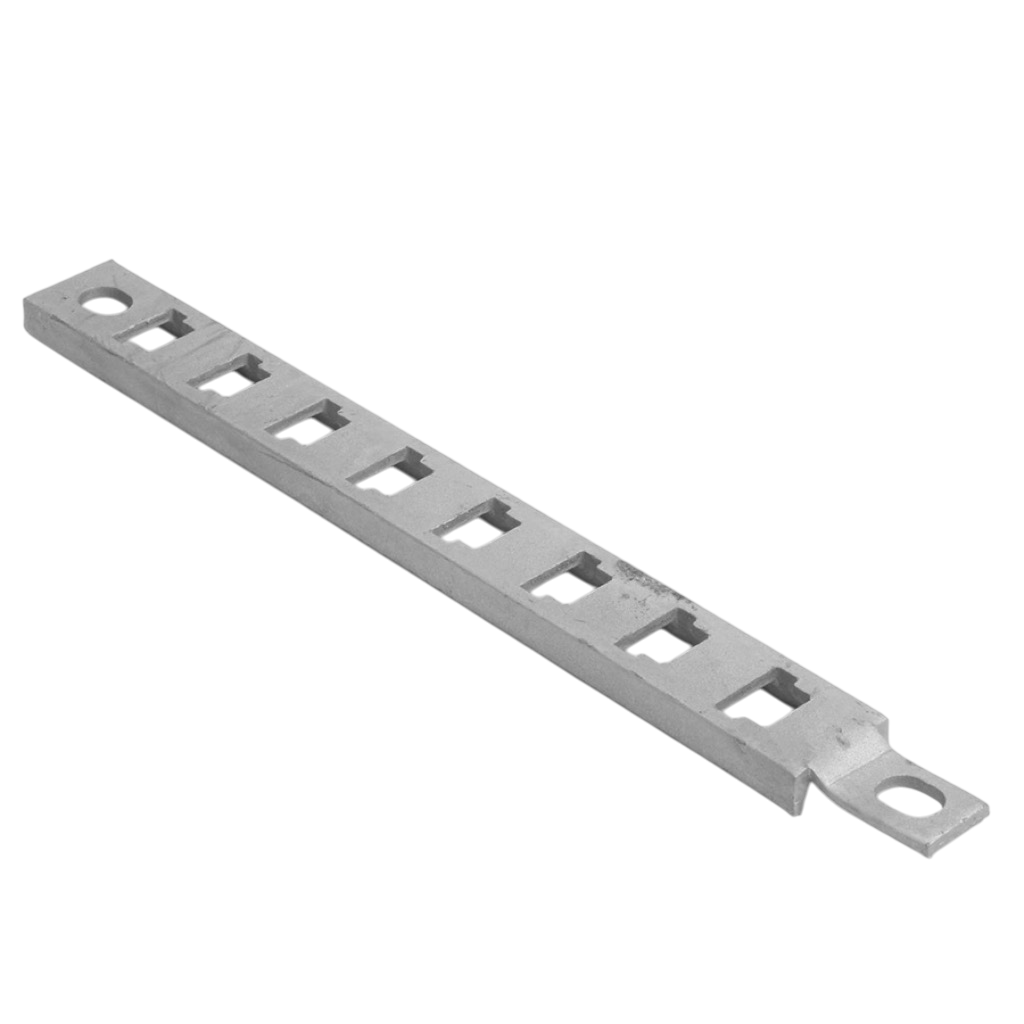
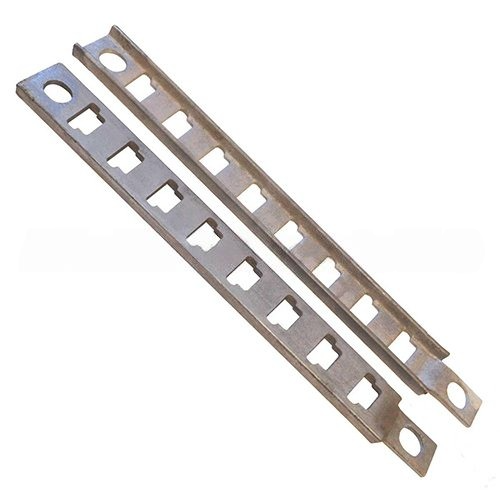
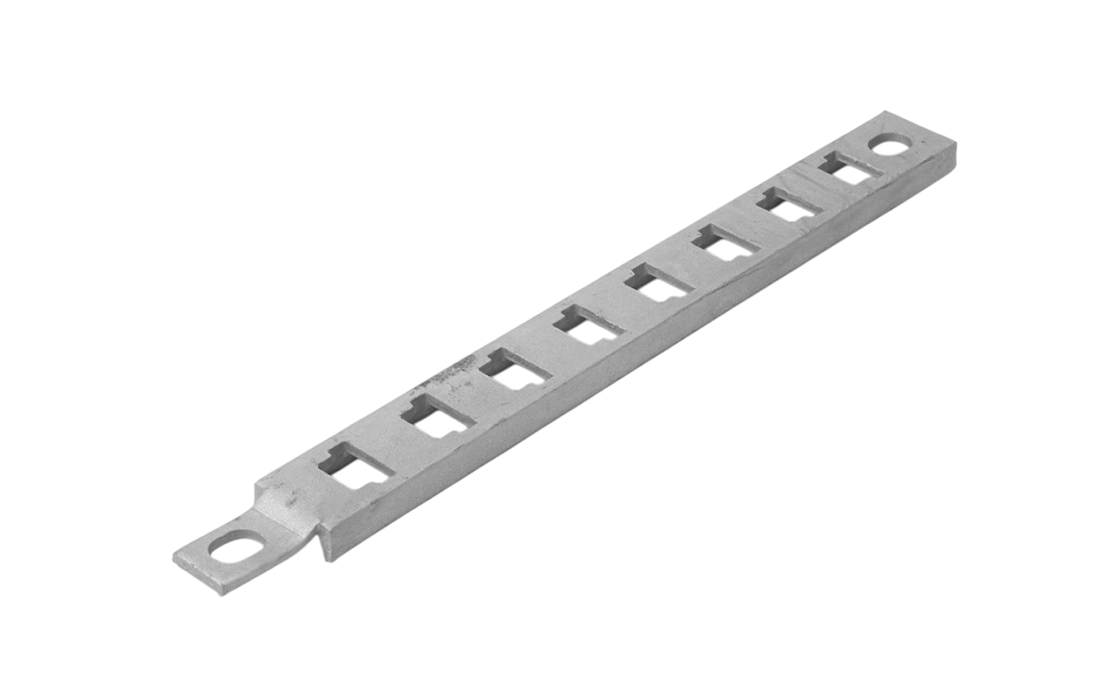
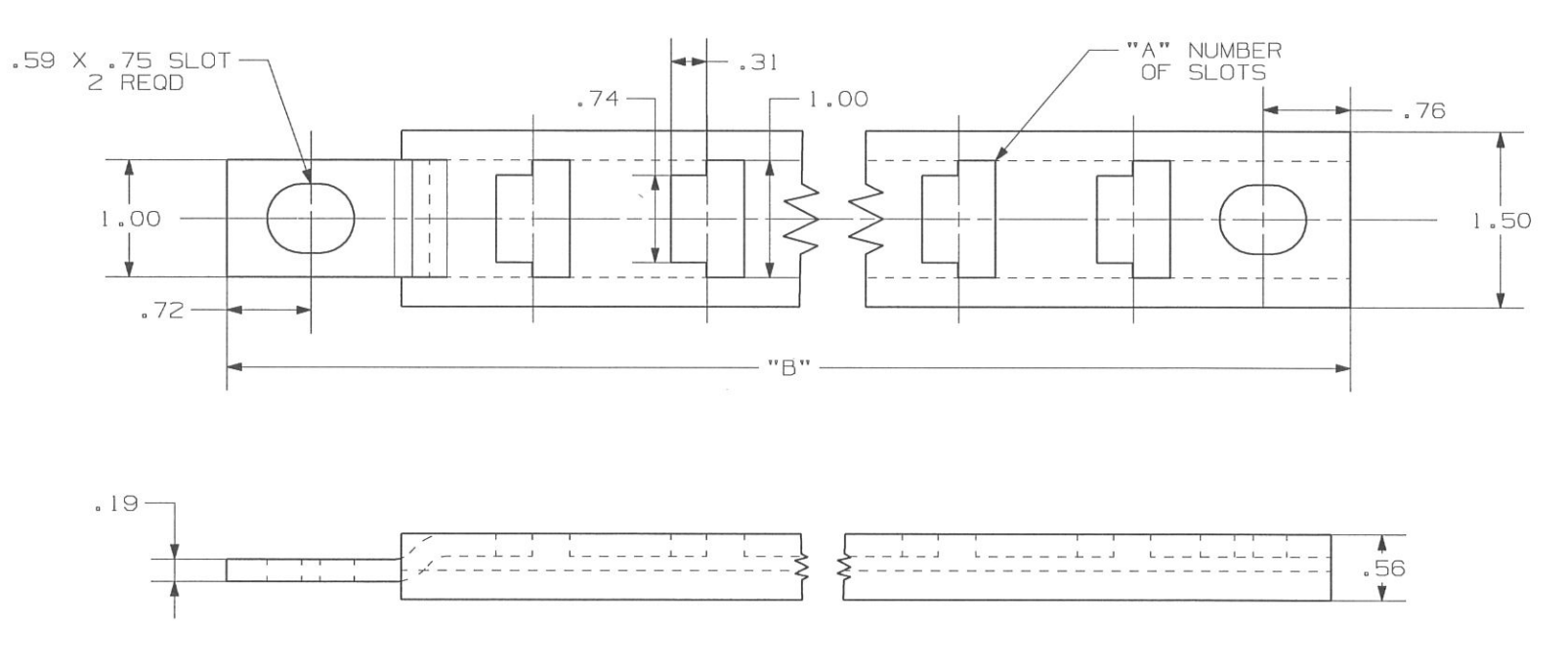
Underground Cable Rack
- T-slot channel stanchion mounted on vault / manhole walls to support electric or communications cables in horizontal runs
- 6 types covering 8–39 support hole counts (15″ to 58-1/4″ overall length, 1-1/2″ T-slot pitch)
- Inwesco 10A05–10A17 catalog series equivalent — direct utility cross-spec
- Hot-dip galvanized 1-1/2″ × 9/16″ × 3/16″ hot-rolled steel channel per ASTM A153
Technical Specifications
| Catalog | Support Holes | Overall Length | Mount Hole Spacing | Ship Wt (per 100 pcs) | Inwesco Eq. | Application |
|---|---|---|---|---|---|---|
| RAX-UCR-08-15 | 8 | 15″ (381 mm) | 13-1/2″ | 139 lb (63 kg) | 10A05 | Small comms vault |
| RAX-UCR-14-24 | 14 | 24″ (610 mm) | 22-1/2″ | 230 lb (104 kg) | 10A08 | Standard distribution vault |
| RAX-UCR-18-30 | 18 | 30″ (762 mm) | 28-1/2″ | 290 lb (132 kg) | 10A11 | Large distribution vault |
| RAX-UCR-25-37 | 25 | 37-1/4″ (946 mm) | 35-3/4″ | 376 lb (171 kg) | 10B12 | Heavy distribution / transmission vault |
| RAX-UCR-32-47 | 32 | 47-1/4″ (1200 mm) | 45-3/4″ | 482 lb (219 kg) | 10A14 | Substation vault |
| RAX-UCR-39-58 | 39 | 58-1/4″ (1480 mm) | 56-3/4″ | 588 lb (267 kg) | 10A17 | Large substation vault |
Application & Installation

Where it is used
- Concrete vault and precast manhole walls in underground primary distribution networks (15–35 kV)
- Splice vaults and pull boxes where outgoing feeders need controlled separation and bend-radius management
- Substation manholes carrying multiple 500–1,500 kcmil paper-insulated or XLPE primary cables
- Telecom and CATV duct termination vaults supporting fiber-optic and copper trunk cables
- Industrial plant cable trays where in-vault routing must transition from horizontal duct to vertical riser
Installation sequence (concrete vault, new construction)
- Lay out rack positions on the vault wall per the cable plan — typical spacing is 24-36″ horizontal between racks with the rack's long axis vertical.
- Mark the 2 mounting hole positions per rack (top and bottom slot positions); ensure the rack is plumb before final marking.
- Drill 1/2″ expansion anchor holes 2-3/4″ deep into concrete using a hammer drill with carbide bit; clean dust from holes with compressed air.
- Set 1/2″ HDG expansion anchors flush with the concrete face; insert 1/2″ HDG bolts with curved washers through the rack's slotted mounting holes, finger-tight.
- Plumb the rack with a level, snug-torque the top bolt first, then the bottom bolt to 25 ft·lb.
- Install T-slot cable hooks (sold separately, see DU-series or Inwesco 9A-series) at the desired cable elevations; rotate each hook 90° into the T-slot to lock.
Buyer’s Guide: Underground Cable Rack
1. What an Underground Cable Rack Actually Does in a Vault
An Underground Cable Rack is a vertical steel channel stanchion with regularly-spaced T-slot openings mounted on the wall of a concrete vault or precast manhole. Its job is mechanical: hold primary or secondary cables off the vault floor in controlled, fixed positions so the cable jacket isn't damaged by foot traffic, standing water, or thermal cycling against bare concrete. Each T-slot accepts a cable hook (sold separately) — the hook locks into the slot by rotating 90° into place, and the cable rests in the hook's upturned cradle. Per NEC 314.71 and most utility specs, primary distribution vaults require rack-mounted cable support; field-laid cables on the vault floor are a code violation that fails commissioning inspection.
2. Sizing by Vault Wall Height & Cable Count
Rack length must accommodate the full vertical range of cables in the vault, with each cable on its own hook. Standard primary distribution vaults have 6–8 ft interior wall height — a 30″ or 37-1/4″ rack covers the upper / middle / lower thirds of that wall. Don't over-spec: a 58-1/4″ rack in a 6 ft vault has unused slots that just collect dust and add weight. Don't under-spec either: cable hook spacing must be at least 1 cable diameter + 50% air gap for thermal dissipation (per IEEE 386 derating tables) — if you have 8 cables and 1-1/2″ T-slot pitch, you need 12″ of rack height minimum. Cross-reference your cable plan's vertical profile against the type table's overall-length column to pick.
3. T-Slot Channel vs Other Stanchion Profiles
Three rack profiles dominate underground cable management. T-slot channel (Raxsteel default, Inwesco 10A series, Hubbell T-Section) accepts hooks that rotate 90° into place — fast install, cheap hooks. Nob-Loc channel (Hubbell DU1 series) uses square-shouldered hooks that drop into the slot without rotation — faster install but the hooks must match Nob-Loc dimensions specifically. Heavy Channel (Hubbell H-slot) is for transmission-class cables 1,500 kcmil and above with hook ratings to 300 lb. Stick with T-slot unless your existing vault inventory is on a different system — T-slot has the broadest hook compatibility and the lowest hook cost ($1.50–$3.50 per hook vs $4.00–$8.00 for Nob-Loc).
4. Material & Coating: HDG vs PVC-Coated vs Stainless
Three coating options serve different vault environments. Hot-dip galvanized per ASTM A153 (default, ~$22 per 30″ rack) handles dry vaults and infrequently-flooded sites — gives 25–30 year service life in C2–C3 atmospheric vaults. PVC-coated over HDG (+$0.50 per inch) is the answer for vaults with chloride contamination (road salt runoff, coastal sites), acid vapors (rare, industrial chemical plants), or chronic standing water (low-lying vaults with poor drainage) — the PVC adds 15–20 years to corrosion service life. Stainless 316L (+$120 per 30″ rack) is for marine substations and chemical plant vaults where any rust visible on inspection triggers replacement — 50+ year service life with zero maintenance.
5. Mounting in Concrete: Expansion Anchors vs Cast-In Inserts
Two methods to fix the rack to the vault wall. Post-installed expansion anchors (1/2″ HDG sleeve type) are the field standard: drill 1/2″ hole 2-3/4″ deep into the cured concrete, install the anchor, bolt the rack through. Fast, no precision required, ~5 minutes per rack. Cast-in inserts (Hubbell type C8201 or equivalent) are embedded in the precast vault wall at the factory, threaded female sockets at the mounting positions — the rack bolts directly into the insert with no drilling. Cast-in inserts cost the precast manufacturer +$3 per insert but save 15 minutes per rack in field labor. For new vault construction, cast-in is preferred; for retrofit on existing vaults, expansion anchors are the only option.
6. Cable Hook Weight Ratings & Per-Hook Cable Limits
The rack itself is rated to 75 lb per support-hole position — the hooks (sold separately) are the actual weight-bearing element and have their own ratings: standard T-slot hooks at 30 lb each, Heavy Channel hooks at 75 lb, transmission-class hooks at 150 lb. For a typical 1,000 kcmil XLPE distribution cable (weighs ~3.5 lb per linear foot), one hook supports a ~9 ft span between hooks without exceeding the 30 lb limit. For a 1,500 kcmil paper-insulated lead-sheath cable (weighs ~7.5 lb per linear foot), one hook supports only ~4 ft span — use heavier hooks or closer spacing. Never share a single hook between two cables — the hook's cradle is sized for one cable diameter; doubling up causes jacket damage at the contact point within 18 months.