Corona Ring
- Grading / corona ring evens the voltage gradient at composite-insulator ends
- Suppresses corona discharge, RIV and end-fitting erosion on HV lines
- Recommended line-end above 230 kV, both ends above 500 kV
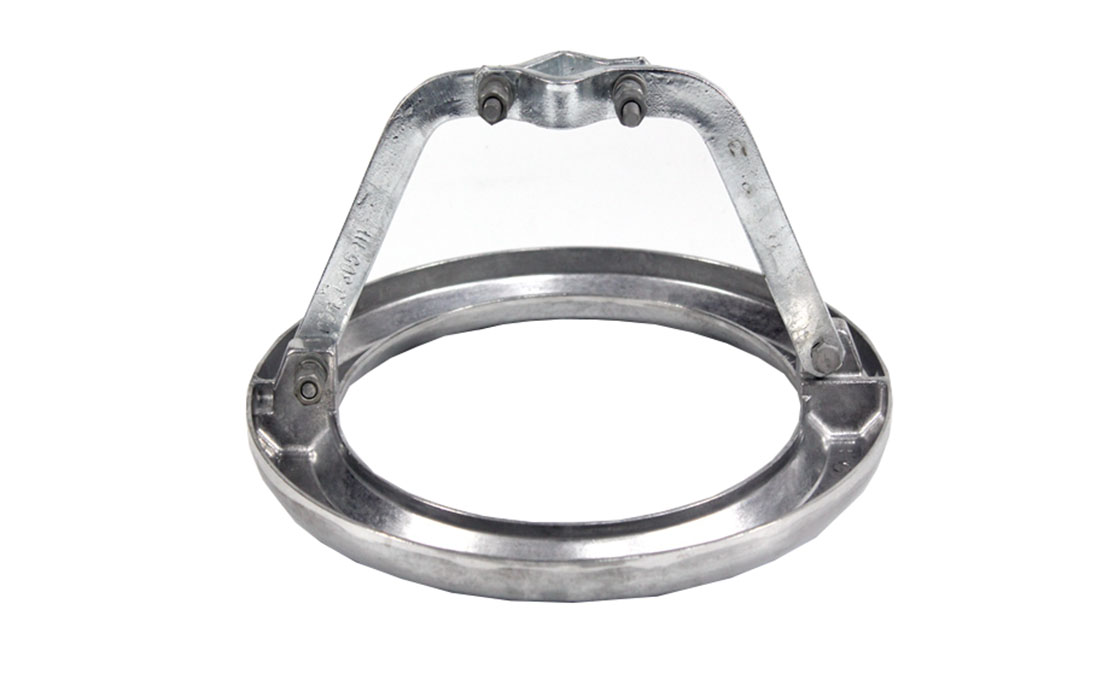
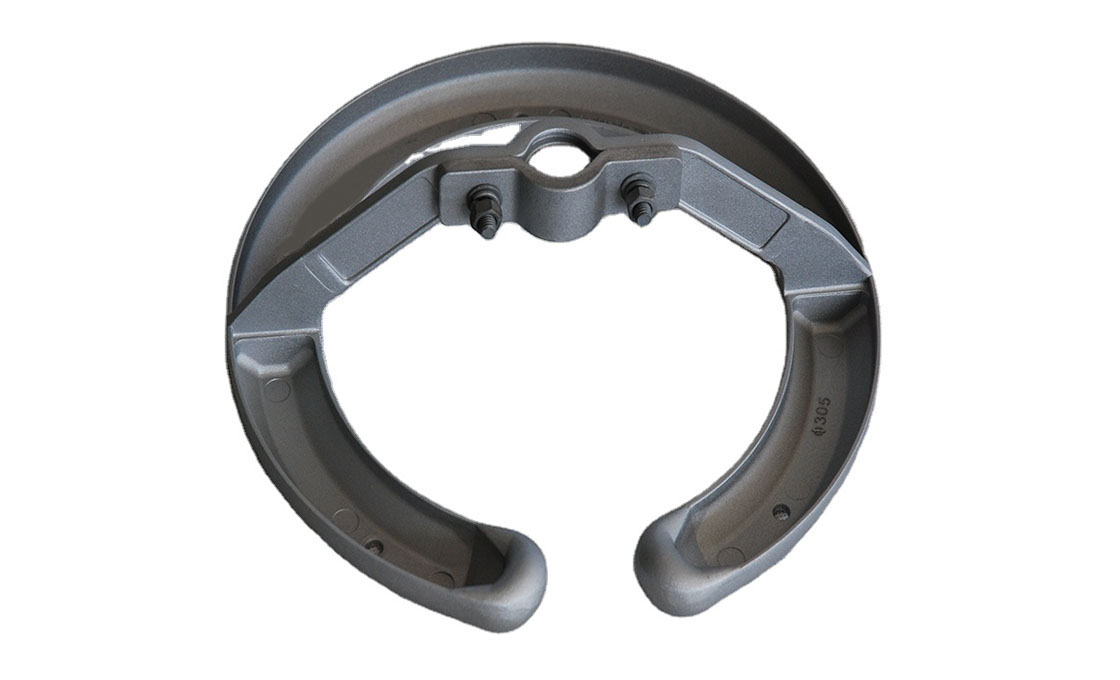
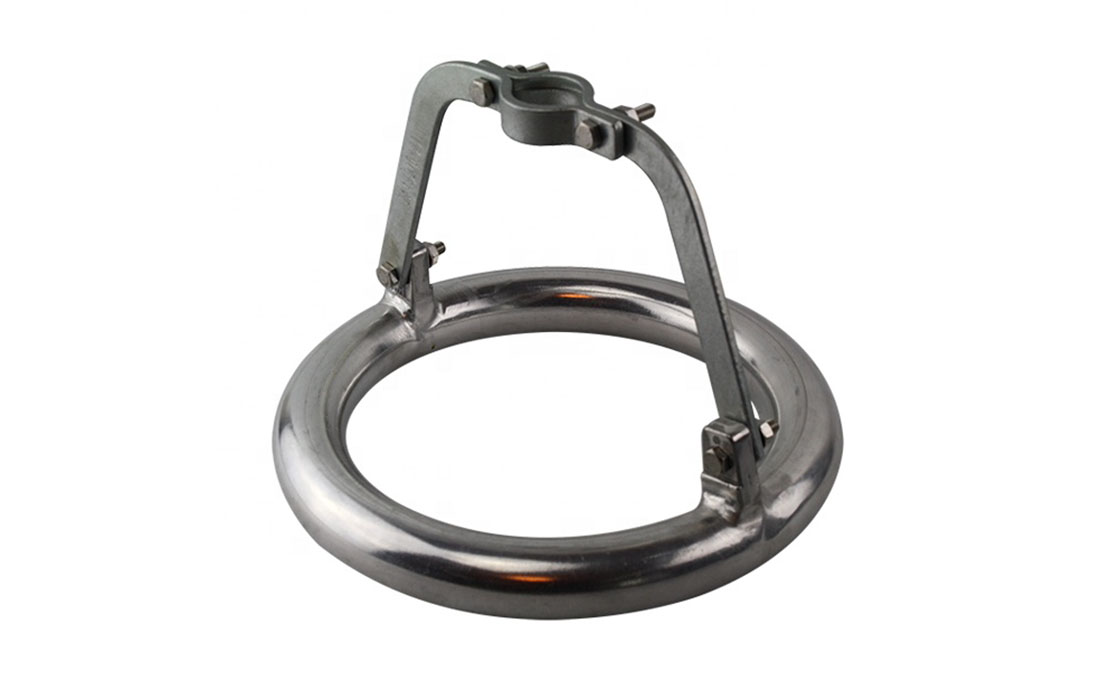
- 1060 aluminium tube ring; diameters D100–1000 mm
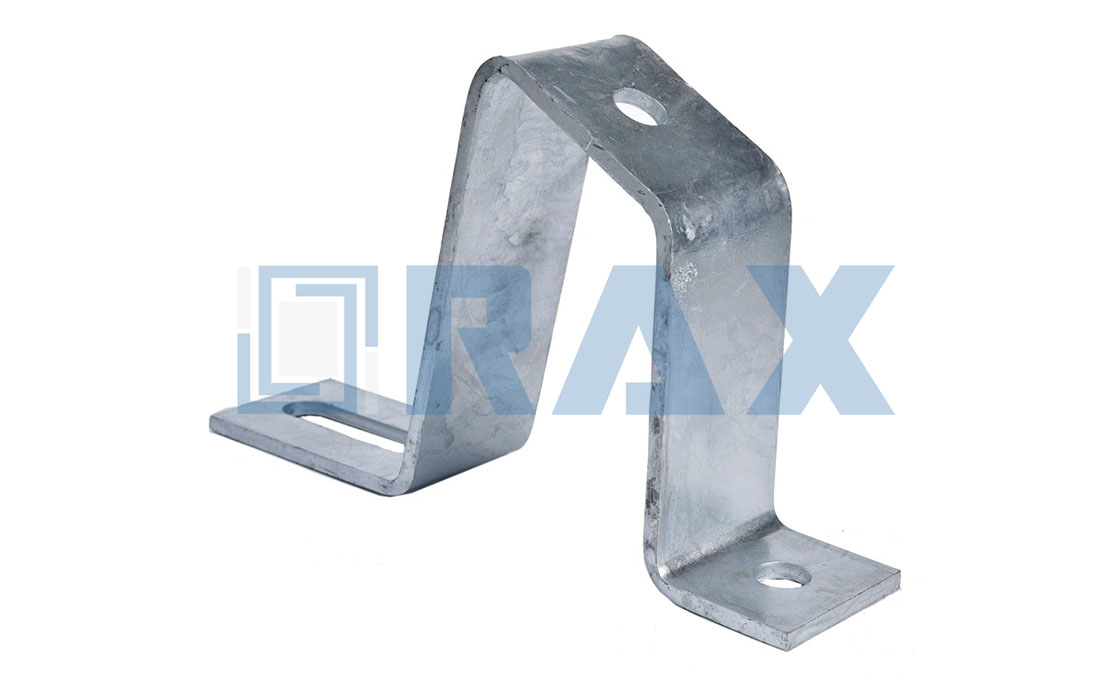
- Aluminium holding clamp, bolts to the insulator end fitting
- Sizes for 110 / 220 / 330 / 500 / 750 / 800 kV
Technical Specifications
| Voltage | Ring OD (mm) | Tube Ø (mm) | Application | Material | Ends Fitted |
|---|---|---|---|---|---|
| 110 kV | 160–220 | 40 | Composite suspension / tension | 1060 Al | Line end |
| 220 kV | 220–320 | 50 | Composite / glass string | 1060 Al | Line end |
| 330 kV | 320–450 | 50 | Transmission string | 1060 Al | Line end (both at 500 kV) |
| 500 kV | 450–700 | 50 | EHV transmission | 1060 Al | Both ends |
| 750–800 kV | 700–1000 | 50 | UHV transmission | 1060 Al | Both ends |
| Custom | Ring OD, tube and clamp matched to your insulator end fitting — send insulator type & kV | ||||
Application & Installation
Where it is used
The corona ring (grading ring) fits over the energised end fitting of a composite or glass insulator string on high-voltage transmission. By rounding the electric field at the metal-to-polymer junction it lowers the local voltage gradient, suppressing corona discharge, radio interference and the long-term erosion that corona causes at the insulator's end seal.
Installation sequence
- Select the ring diameter for the line voltage and insulator type.
- Fit the aluminium holding clamp around the insulator end fitting.
- Bolt the clamp so the ring is concentric with the end fitting.
- Set the ring projection per the insulator maker's drawing.
- For 500 kV and above, fit a ring at both ends.
Buyer’s Guide: Corona Ring
1. Why a Corona Ring Is Needed
At a composite insulator's energised end the electric field concentrates at the metal end fitting and the polymer seal. Above roughly 230 kV that concentration drives corona — visible discharge, radio interference, and slow erosion of the seal. A corona ring spreads the field over a smooth toroid, pulling the gradient down below the corona threshold.
2. When and Where to Fit One
Industry practice fits a ring at the line (energised) end above 230 kV, and at both ends above 500 kV where the earth-end field also matters. Below 230 kV most insulators need no ring. Always follow the insulator maker's recommendation for the specific unit.
3. Ring Diameter by Voltage
Ring diameter grows with voltage: roughly 160–220 mm at 110 kV up to 700–1000 mm at 750–800 kV. The larger ring is needed to hold the field gradient down as system voltage rises; undersizing leaves corona, oversizing adds wind load and cost.
4. 1060 Aluminium Construction
Rings are formed from 1060 aluminium tube (typically Ø40–50 mm) with an aluminium holding clamp — light, conductive and corrosion-resistant. Aluminium keeps the added weight off the string while presenting the smooth, conductive surface the grading function needs.
5. Concentric Mounting Matters
The ring must sit concentric with the end fitting at the projection the insulator drawing specifies. A skewed or mis-set ring grades the field unevenly and can be worse than none — set the clamp carefully before final tightening.
6. Corona Ring vs Grading Ring
The terms overlap: "corona ring" emphasises discharge suppression at the line end; "grading ring" emphasises even voltage distribution along the insulator. The same aluminium toroid does both — we supply them sized to your insulator and kV either way.