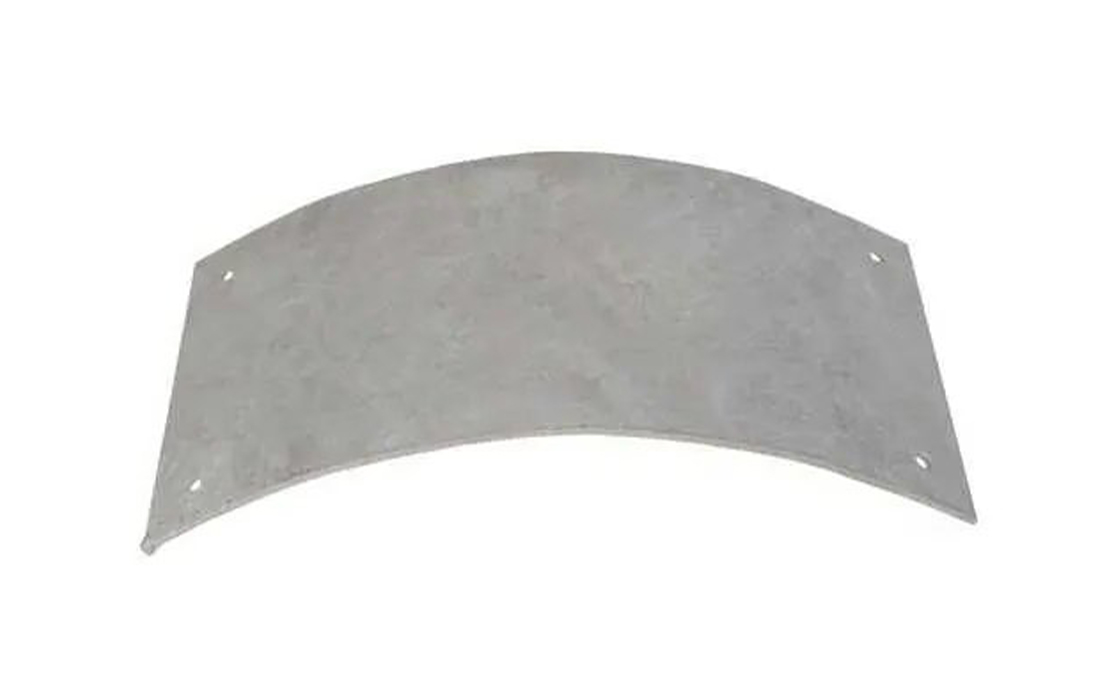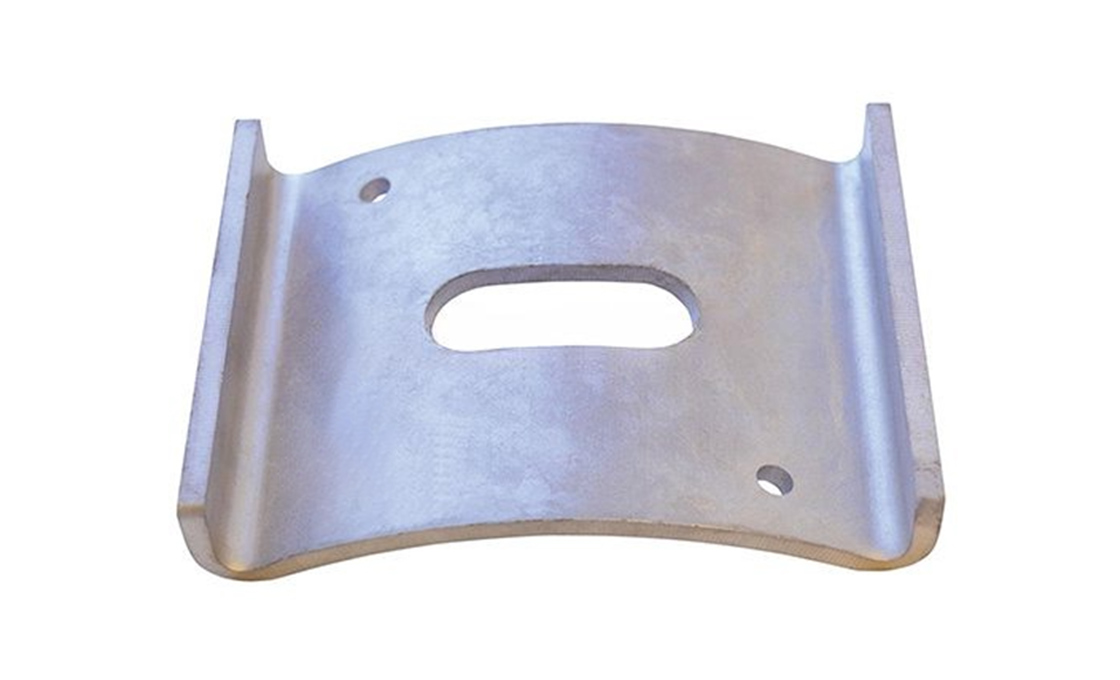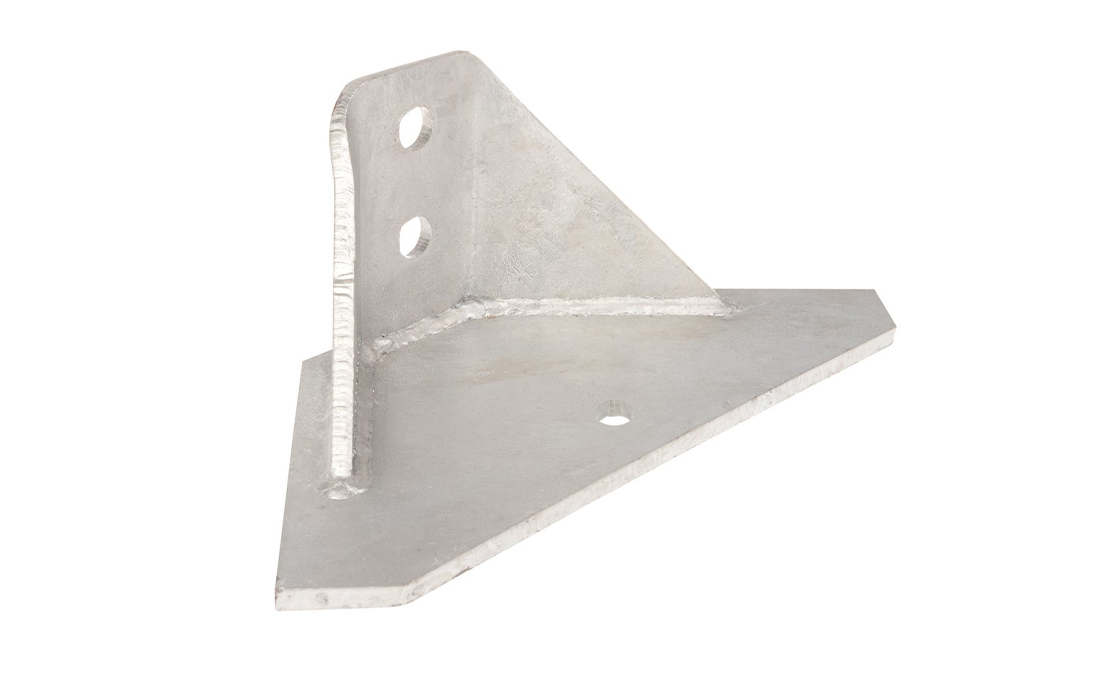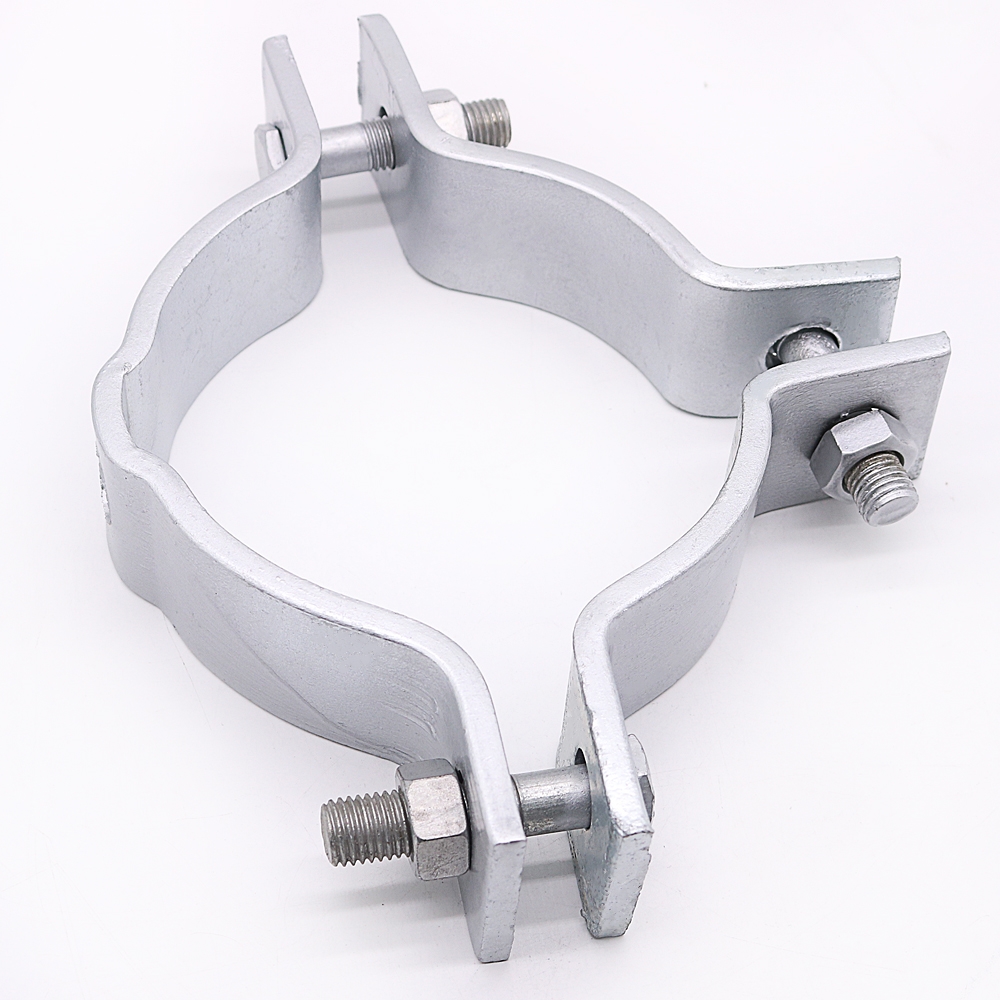
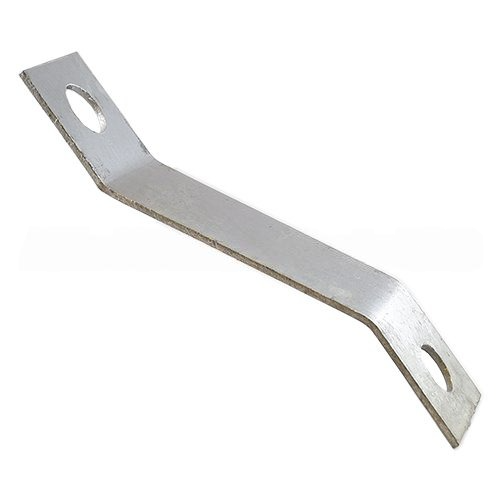
Reinforcing Strap
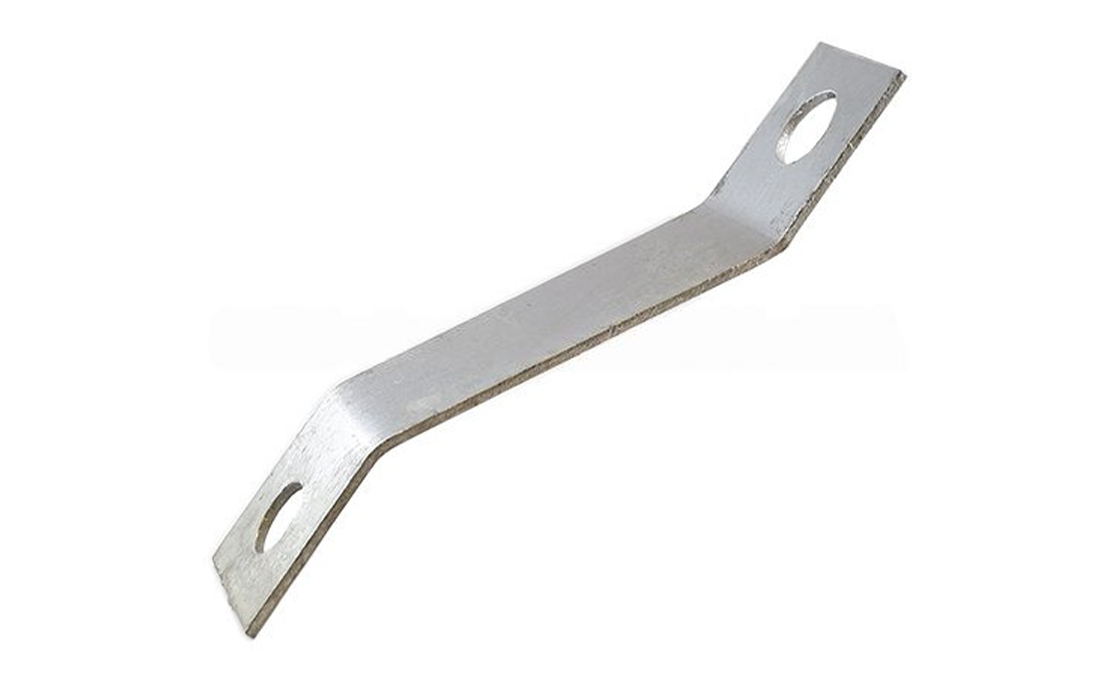
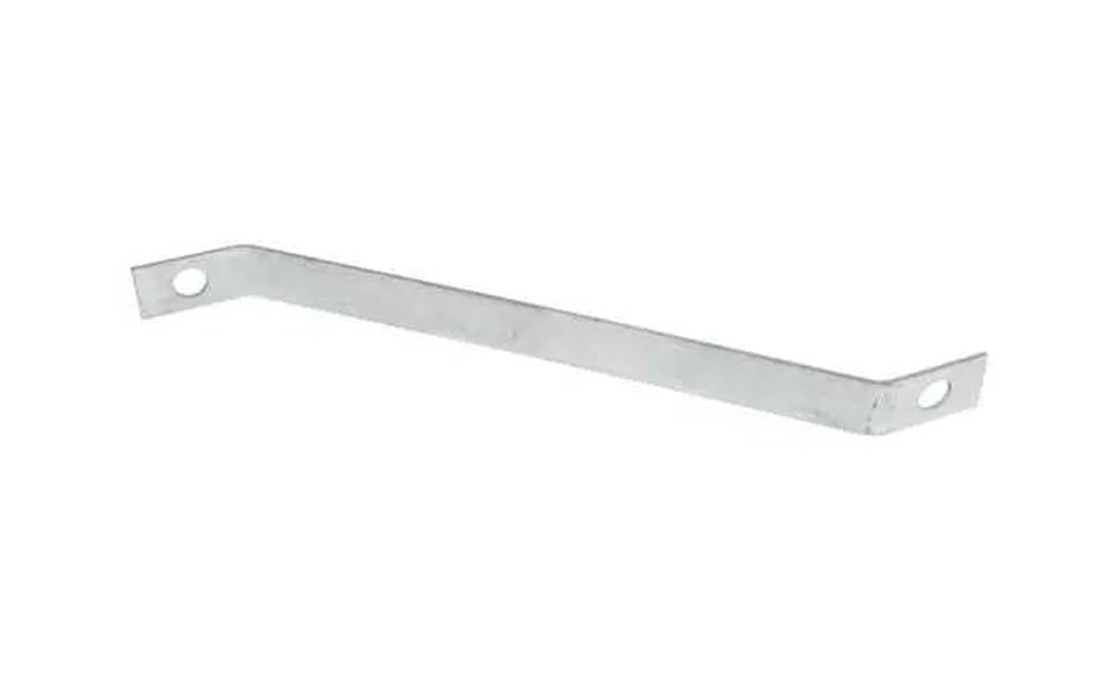
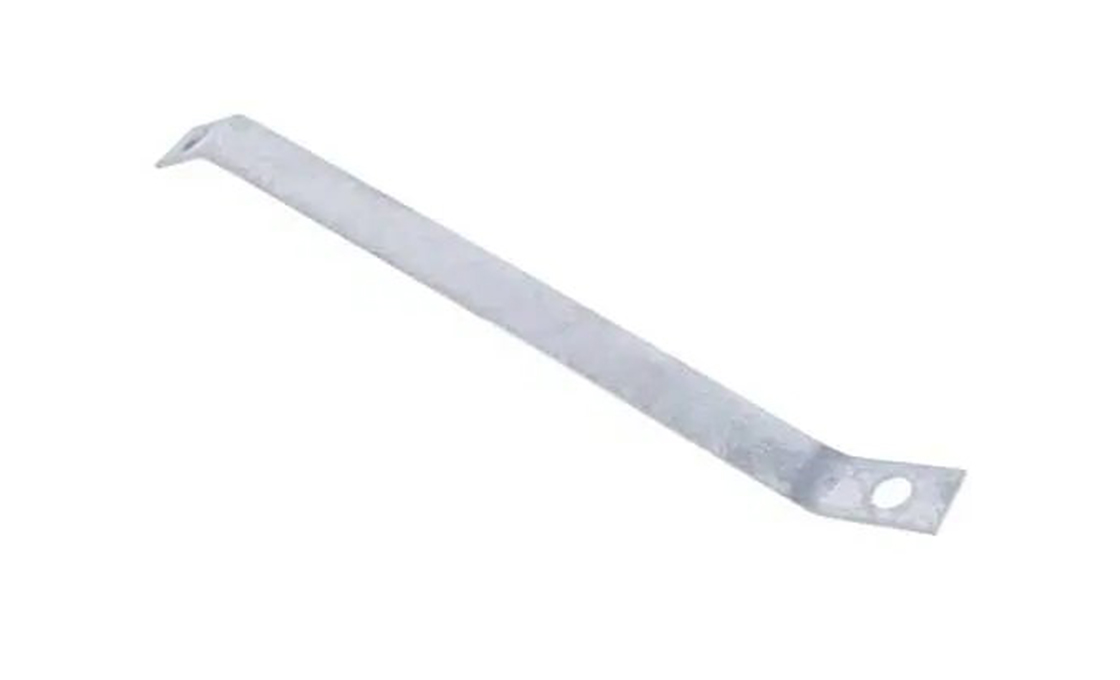
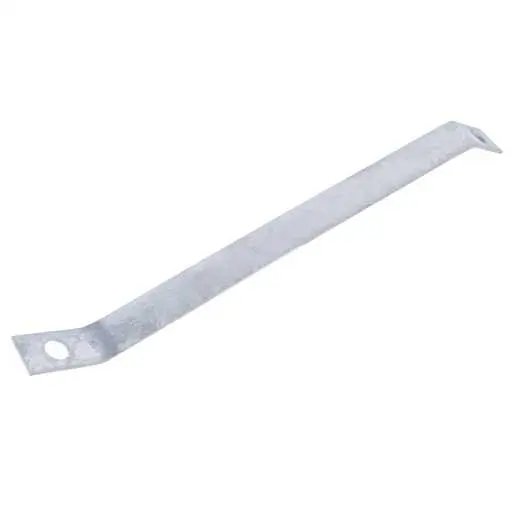
- Z-shaped flat steel strap that spans a cracked crossarm or split pole, pairing with an extension bolt to restore mechanical integrity without full replacement
- 6 types covering 9″ to 24″ spans for repairing distribution crossarms through transmission H-frame member splits
- Two 11/16″ thru-bolt holes per strap (11″ on-center for the 12″ standard); designed for 5/8″ extension bolts
- Hot-rolled steel 1-3/8″ wide × 1/4″ thick, HDG per ASTM A153 (Hubbell PSC208-0241 series eq.)
Technical Specifications
| Catalog | Overall Length | Hole Spacing | Strap Width | Thickness | Hubbell Eq. | Tensile Load Rating |
|---|---|---|---|---|---|---|
| RAX-RS-9 | 9″ (229 mm) | 7-3/4″ (197 mm) | 1-3/8″ | 1/4″ | PSC208-0181 eq. | 3,000 lb |
| RAX-RS-12 | 12-1/4″ (311 mm) | 11″ (279 mm) | 1-3/8″ | 1/4″ | PSC208-0241 eq. | 4,500 lb |
| RAX-RS-15 | 15″ (381 mm) | 13-3/4″ (349 mm) | 1-3/8″ | 1/4″ | PSC208-0291 eq. | 5,500 lb |
| RAX-RS-18 | 18″ (457 mm) | 16-3/4″ (425 mm) | 1-3/8″ | 1/4″ | PSC208-0353 eq. | 6,500 lb |
| RAX-RS-24 | 24″ (610 mm) | 22-3/4″ (578 mm) | 1-3/8″ | 1/4″ | PSC208-0471 eq. | 7,500 lb |
| RAX-RS-12-W | 12-1/4″ (311 mm) | 11″ (279 mm) | 2″ wide | 3/8″ | PSC208-0241H eq. | 8,000 lb |
Application & Installation

Where it is used
- Cracked or split wood crossarms where the crack runs longitudinally and the arm is otherwise structurally sound (RAX-RS-12 is the workhorse)
- Wood pole splits in the upper 1/3 of the pole, typically from lightning strikes, vehicle impact, or aged checking (RAX-RS-18 / -24)
- H-frame transmission member splits where one of the two parallel members has a longitudinal crack and full replacement requires an outage (RAX-RS-24)
- Crossarm reinforcement at the gain location where the original through-bolt has enlarged its hole over decades of cyclic loading
- Repair of split poles in remote / hard-to-replace locations where the cost of pole replacement exceeds the labor of in-place strap repair
Installation sequence (RAX-RS-12 on cracked crossarm)
- De-energize the affected circuit and visually inspect the crack: confirm it's a longitudinal split (not transverse fracture) and that the crossarm wood is still sound on both sides of the crack (no significant rot).
- Mark bolt positions on the crossarm: at least 4 inches from each end of the crack on the un-cracked sound wood; verify both positions clear existing hardware (insulator pins, deadend bolts).
- Drill 11/16″ through-holes for 5/8″ extension bolts; for a typical 4″×5″ wood crossarm, this is a 4″ deep hole.
- Position the strap on the side of the crossarm where the crack is most open (typically the underside on a sagging crossarm); insert two 5/8″ × 6″ HDG extension bolts from the opposite side through the crossarm and the strap.
- Add curved washers + lock nuts on the strap side; alternately torque each bolt to 120 ft·lb to gradually close the crack and pre-load the strap in tension.
- Re-energize after 24-hour settling period and verify no further crack propagation visible on the crossarm.
Buyer’s Guide: Reinforcing Strap
1. What a Reinforcing Strap Actually Does — The In-Place Repair Calculus
A Reinforcing Strap is a flat Z-bent steel strap bolted across a crack or split in a wood crossarm or pole. Its purpose is to restore the original member's tensile capacity without requiring full member replacement — which would mean de-energizing the circuit, swinging conductors, removing all hardware, replacing the member, and re-installing everything. Time math: full crossarm replacement = 8–12 person-hours + 4–6 hour outage; strap repair = 1–2 person-hours + 1 hour outage. Cost math: replacement = $800–$1,500 in materials + labor; strap repair = $25–$75 total. The strap is the economic answer to every "is this damage repairable?" question on aged distribution infrastructure.
2. When the Strap Works — Longitudinal Cracks vs Transverse Fractures
Reinforcing straps work for longitudinal splits (cracks running parallel to the wood grain, the dominant failure mode in aged distribution crossarms). They DON'T work for transverse fractures (cracks running perpendicular to the grain, typically from impact loading) — transverse failures have already separated the member into two pieces, and the strap can't restore the original cross-section's bending capacity. Pre-install inspection rule: lay the strap mentally across the damage; if both bolt positions land on continuous, sound wood that's on the same side of the crack from each other, the strap will work. If the bolts would land on two separated wood pieces, the member needs replacement.
3. Sizing by Crack Length, Not Member Size
The strap's length must span the crack with at least 4″ of sound wood on each side for the bolt-through to anchor in solid material. Map crack length to type: 1″–2″ crack → RAX-RS-9 (9″ strap, 4″ of sound wood per side); 3″–4″ crack → RAX-RS-12 (the dominant workhorse, 12-1/4″ strap); 6″–7″ crack → RAX-RS-15; 8″–10″ crack → RAX-RS-18; 12″–15″ crack → RAX-RS-24. Don't over-size — longer straps add wind drag and add stress concentration at the bolt-through points if the wood beyond the strap is starting to check. Don't under-size — insufficient wood beyond the bolt-through fails as a secondary split radiating from the bolt hole.
4. Z-Bend Geometry — Why It's Bent, Not Flat
The strap could be flat sheet steel (cheaper to make), but the Z-bend (1-inch downward bend at each end ear) exists for a specific reason: existing hardware clearance. When you bolt a repair strap across a damaged crossarm, the area you're spanning typically already has insulator pins, ground wire clips, or deadend bolts mounted. A flat strap would hit these and bend or sit askew, defeating its purpose. The Z-bend lifts the strap's body off the wood surface by 1 inch, clearing typical hardware heights. For unusually thick hardware (transformer hangers, large cable hooks projecting 1.5+ inches), specify the deep-Z variant (suffix -DZ) with 2″ ear bends at +$0.50/strap.
5. Extension Bolt Pairing — What Length to Order Separately
Reinforcing straps ship without bolts — the right bolt length depends on the wood member's thickness, which varies by application. Standard 4″×5″ wood crossarm: 6″ bolt (4″ wood + 1″ strap thickness + 1″ nut/washer). Wood pole repair (8-10″ butt diameter at upper pole): 12″ bolt. H-frame transmission member (12″×6″ member): 14″ bolt. Always order 5/8″ HDG "extension bolts" (specifically the type with a partially-threaded shank, NOT fully-threaded machine bolts) — partial threading prevents thread-stripping in soft wood and gives the bolt full shank tensile in the un-threaded mid-section.
6. Galvanizing for Pole Repair Service — Why 110 μm
Standard ASTM A153 Class B HDG (86 μm) gives 25–30 year service life on a strap that's mostly hidden from weathering between the strap and the wood member. The challenge: the strap is installed precisely BECAUSE the wood is damaged, and damaged wood holds moisture longer than sound wood — the strap's contact surface sees more chronic wetness than typical pole hardware. Raxsteel ships at 110 μm (Class B+) as the default to compensate. For repair in C4–C5 corrosion environments (coastal, road salt, industrial chemical), specify duplex coating (HDG + epoxy paint, +$1.50/strap) — the epoxy resists the chronic wet contact with damaged wood and extends repair service to 40+ years.