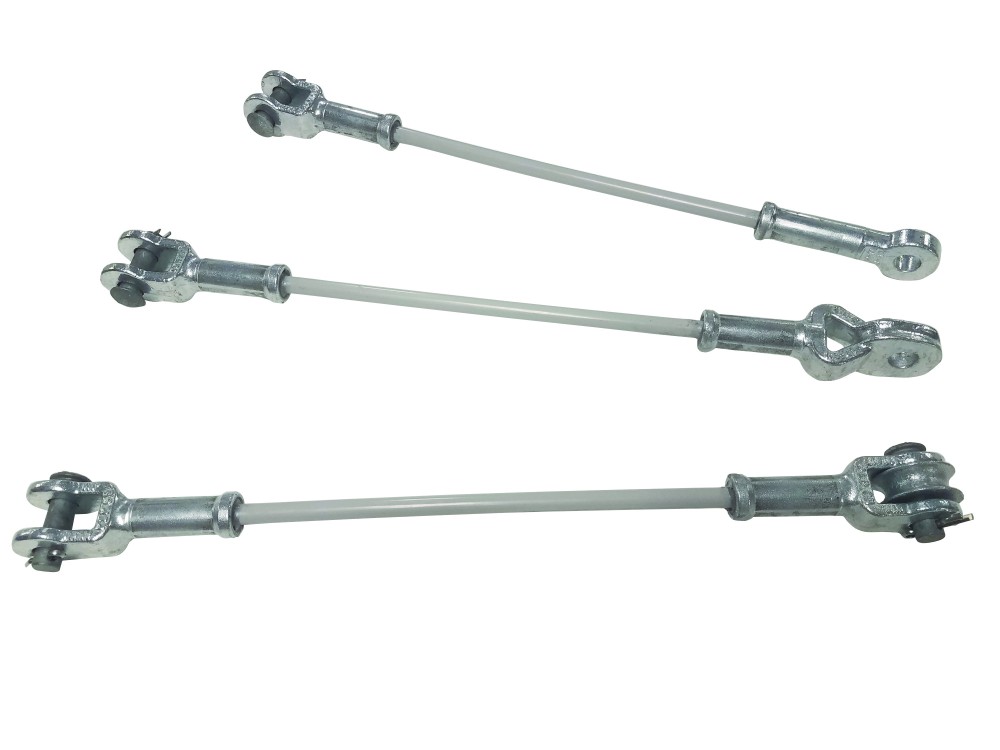
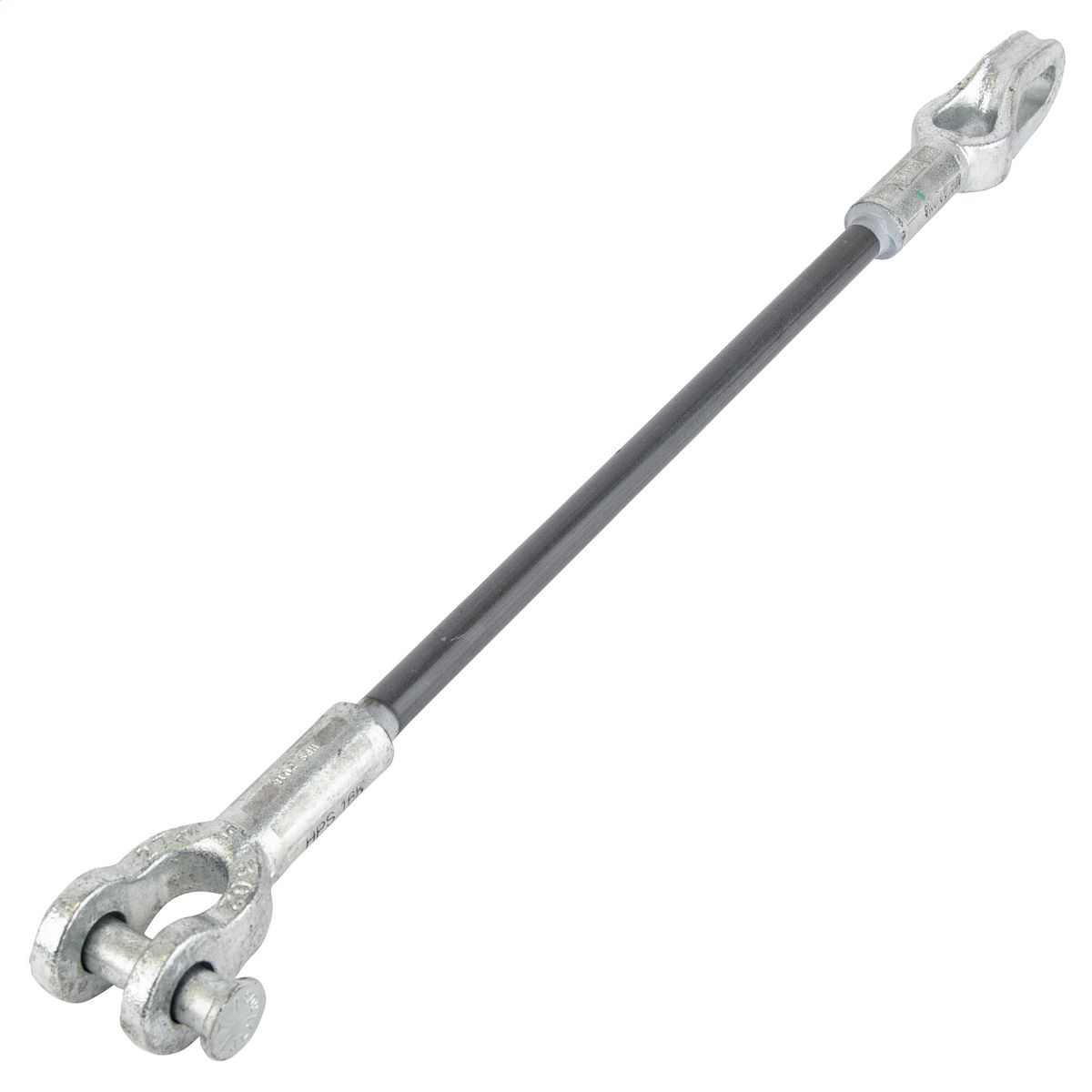
Guy Strain Insulator
- Egg / “Johnny ball” and fibreglass guy strain insulators for distribution guys
- Compact strain insulator for smaller down-guys and span guys
- Insulates the reachable guy length from line voltage
- Porcelain egg (interlocking) and fibreglass rod types
- Mechanical strength matched to the guy strand
- Quick to fit in a guy with grips or clamps
Technical Specifications
| Catalog | Type | Length (mm) | Strength (kN) | For Strand | Material |
|---|---|---|---|---|---|
| RAX-GE-1 | Egg / Johnny ball | 64 | 20 | 5/16 in | Porcelain |
| RAX-GE-2 | Egg / Johnny ball | 76 | 30 | 3/8 in | Porcelain |
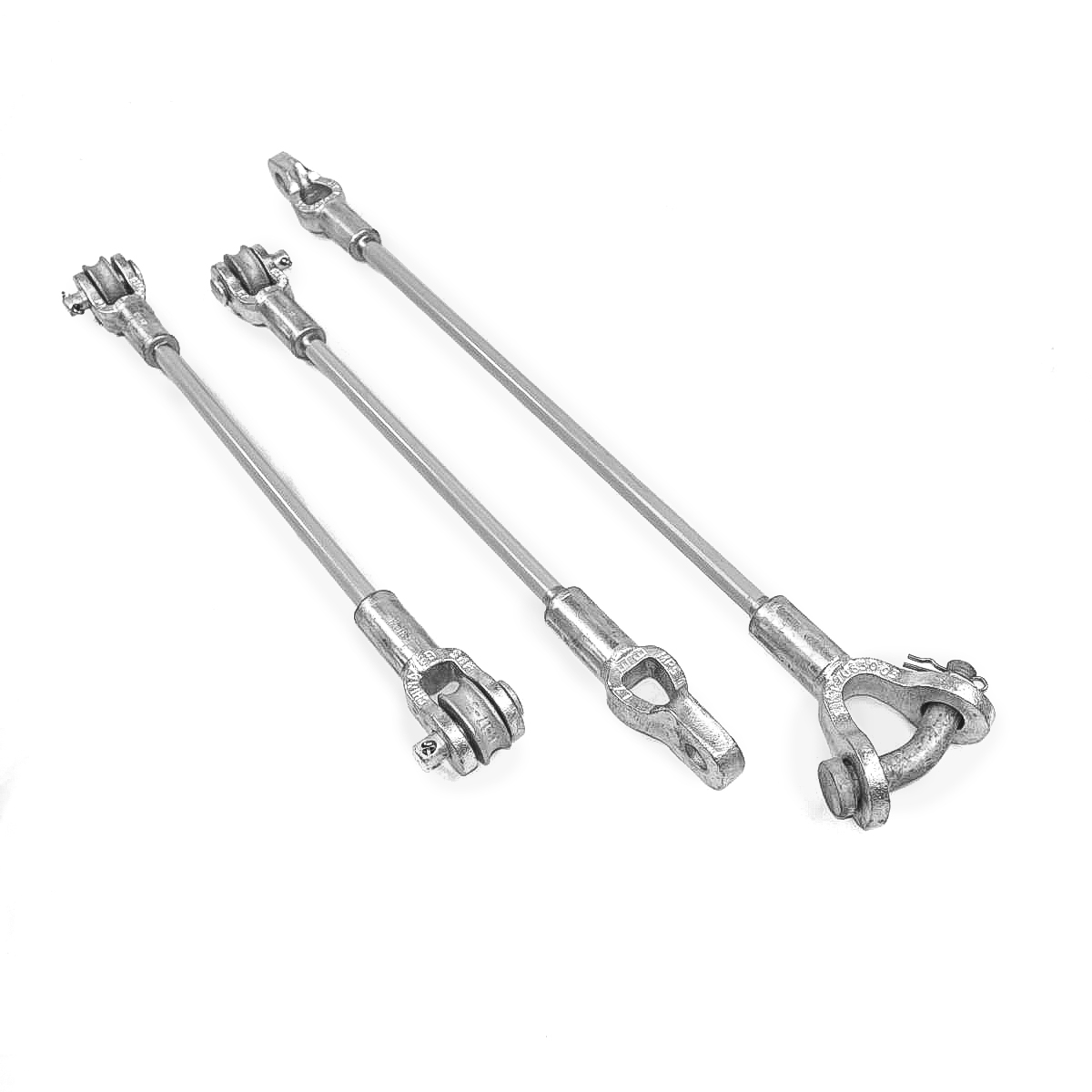
| RAX-GF-1 | Fibreglass rod | 254 | 45 | 3/8 in | FRP / silicone |
| RAX-GF-2 | Fibreglass rod | 356 | 70 | 7/16 in | FRP / silicone |
| Custom | Other sizes / configurations — send your conductor & structure spec | ||||
Application & Installation
Where it is used
The guy strain insulator inserts into a down-guy or span-guy to keep the reachable, ground-side length at earth potential. The compact porcelain “egg” (Johnny ball) type interlocks the guy ends so it holds even if broken; the fibreglass-rod type is lighter, longer-leakage and unbreakable for modern distribution guys.
Installation sequence
- Select the egg or fibreglass type for the guy strand and load.
- Cut the guy where the insulator will sit.
- Thread / fit the guy ends through the insulator.
- Form the guy ends back with grips or clamps.
- Confirm the insulator holds the guy load and interlocks.
Buyer’s Guide: Guy Strain Insulator
1. What a Guy Strain Insulator Is
A guy strain insulator is a small strain insulator fitted into a guy wire to break it electrically — keeping the lower, reachable portion of the guy at ground potential. It is the distribution-scale version of a stay insulator, in compact porcelain egg or fibreglass-rod form.
2. Egg (Johnny Ball) vs Fibreglass
The porcelain egg / Johnny ball is the traditional compact type: two guy ends loop through at right angles and interlock, holding even if the porcelain shatters. The fibreglass-rod type is lighter, gives more leakage distance, and will not break — preferred on new builds.
3. Why Insulate a Guy
A guy near energised conductors can pick up voltage by contact or induction. The strain insulator keeps the reachable ground-side length safe at earth potential for people and stock at the anchor.
4. Strength Matching
Mechanical strength (20–70 kN) must be at least that of the guy strand it sits in. Match the type to the strand size so the insulator is never the weak link in the guy.
5. Guy Strain vs Stay Insulator
The terms overlap; we list the compact distribution types (egg, fibreglass rod) here and the larger interlocking porcelain blocks under the stay insulator. Pick by guy size and the leakage / strength you need.
6. Placement
Fit at the height the safety code requires so the energised portion is out of reach. Order with the matching guy grips or clamps to form the guy ends.