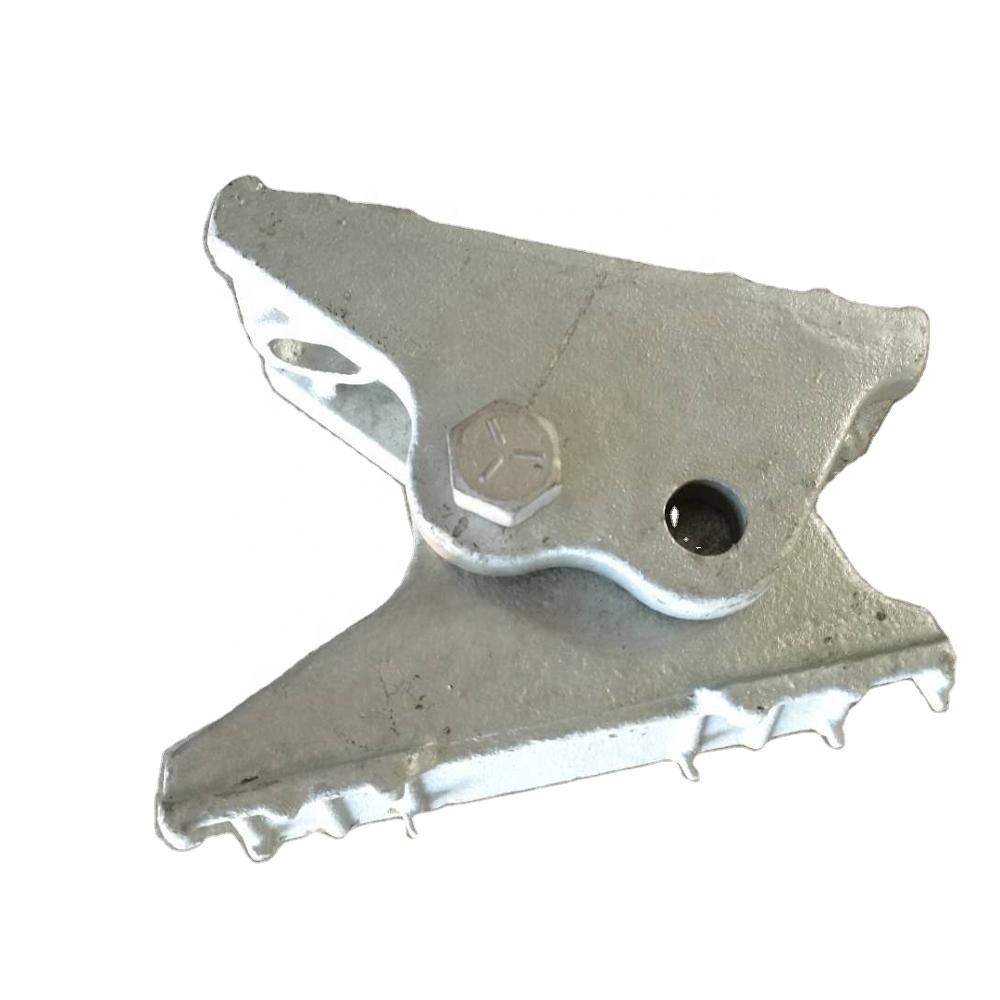
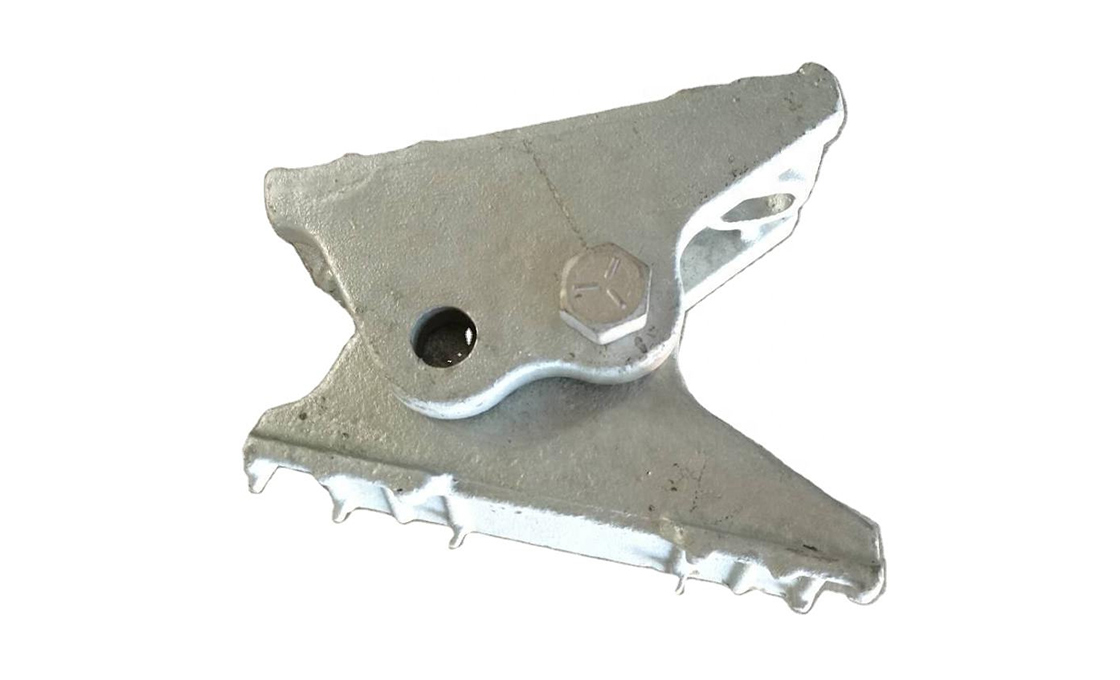
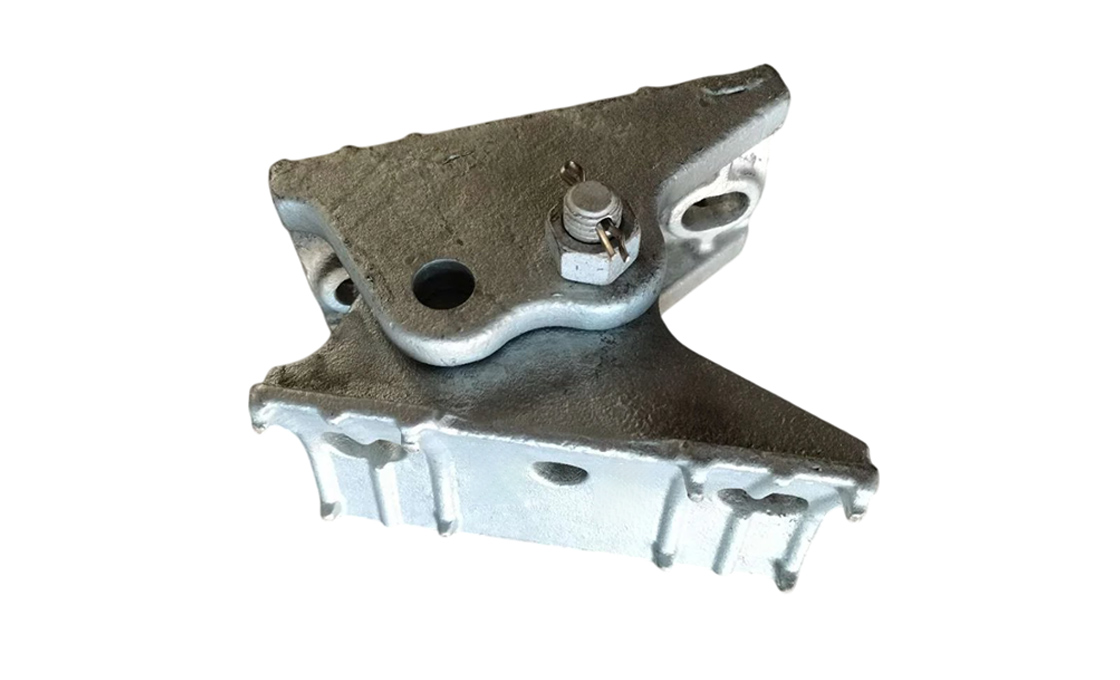
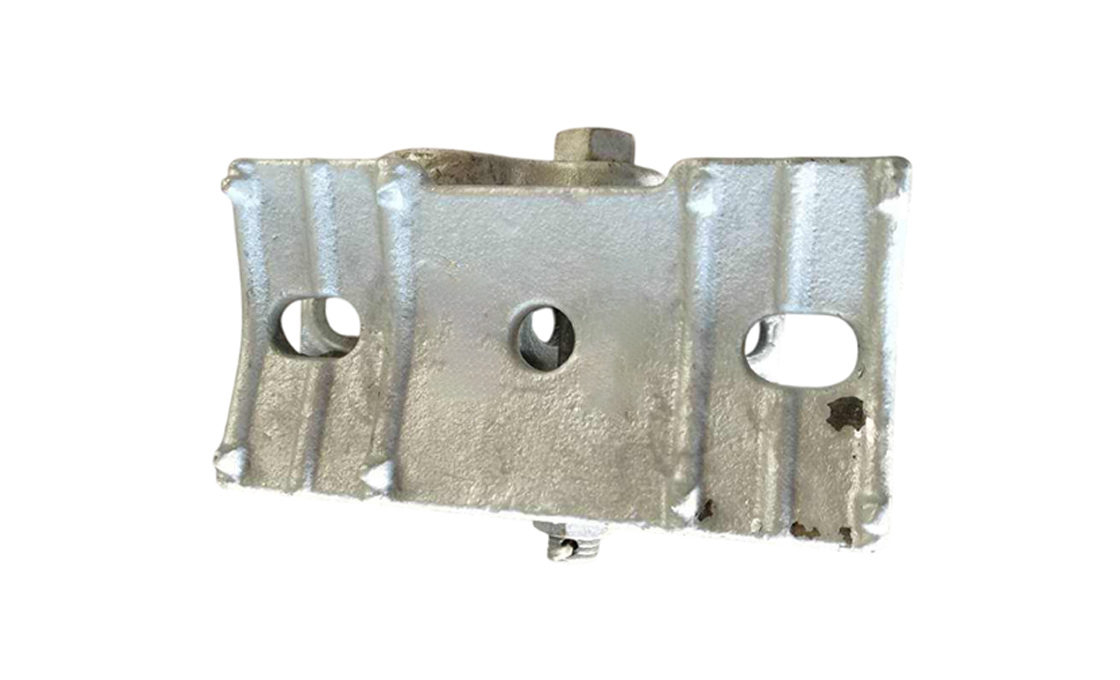
Push Pole Brace
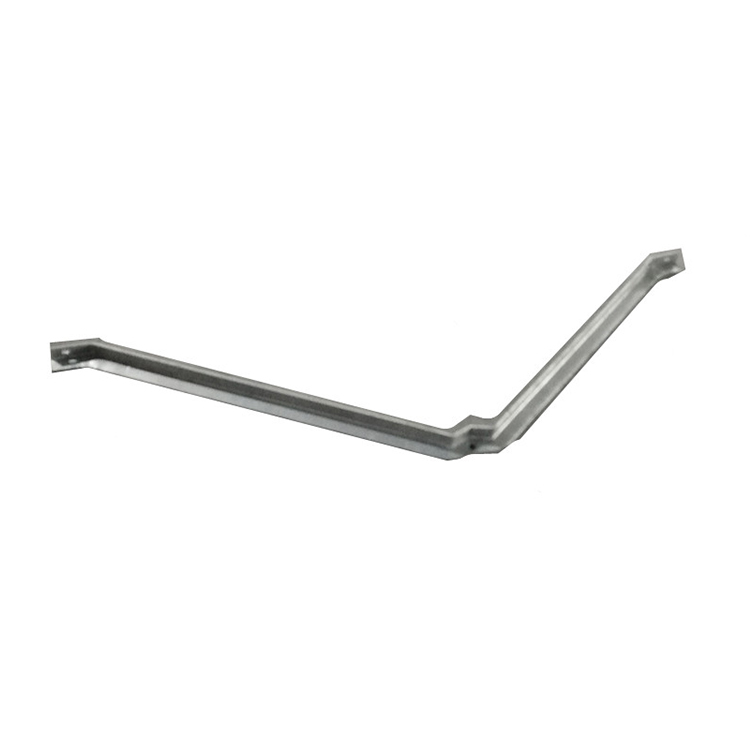
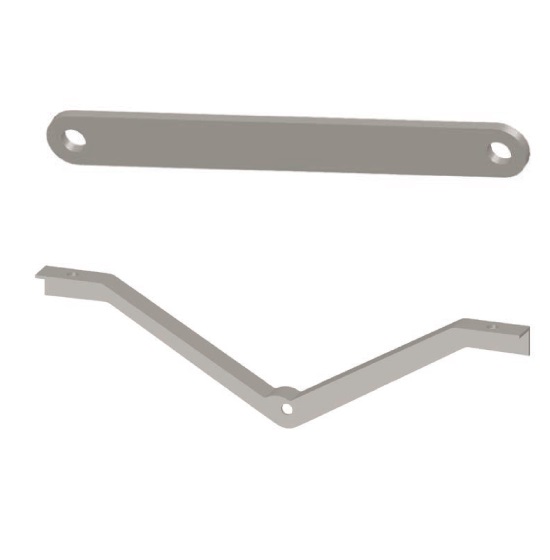
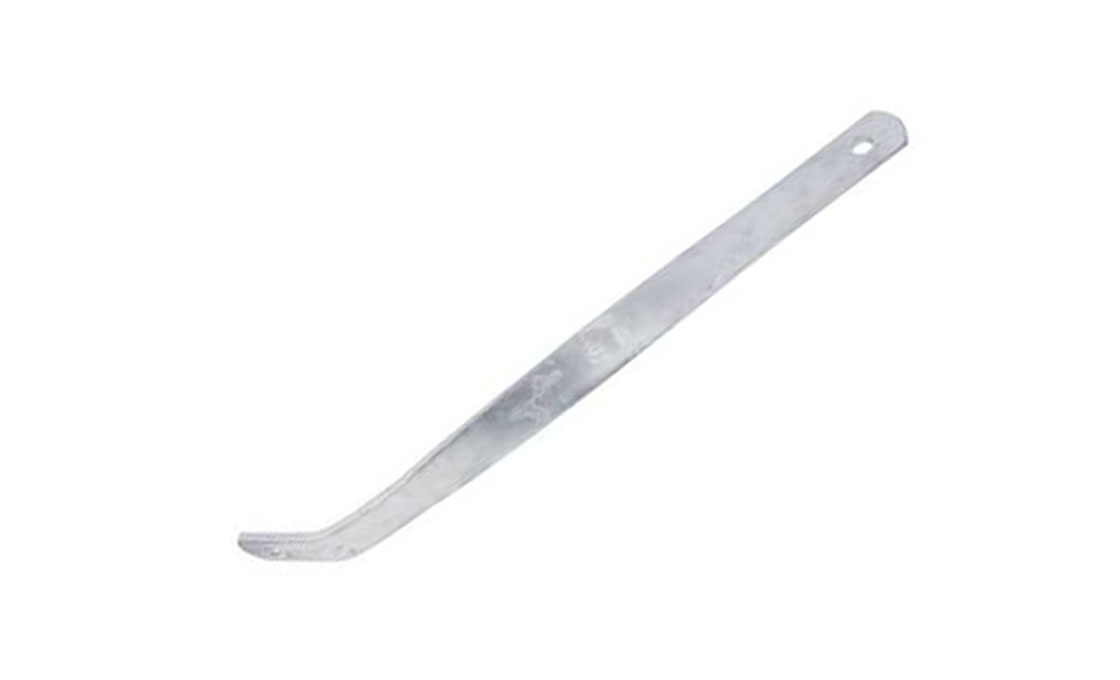
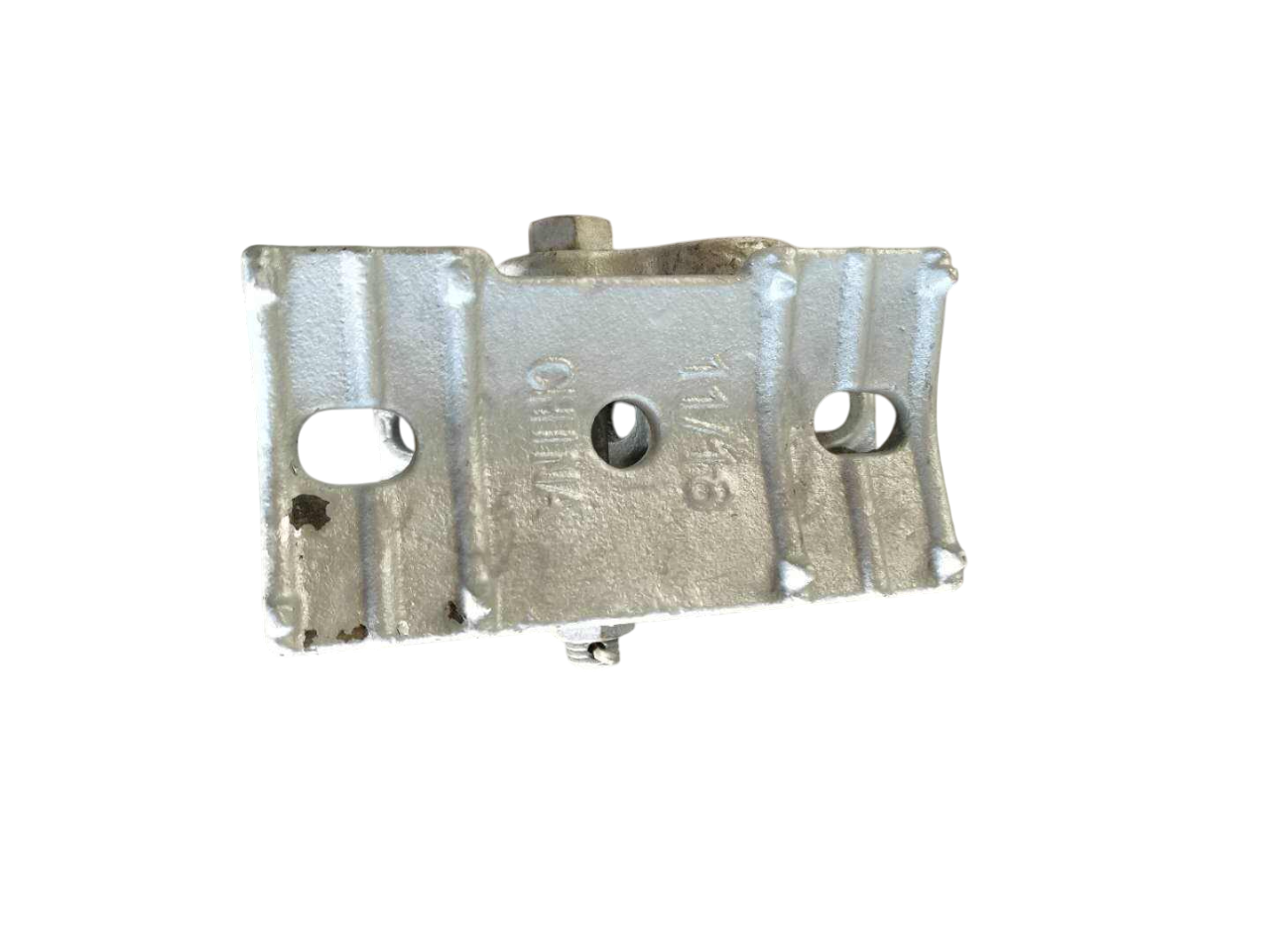
- Adjustable ductile-iron bracket joining a diagonal push pole to the upright pole
- 3 sizes covering 6 to 14 inch pole diameter, 0–90° adjustable angle
- ASTM A-536 ductile iron, hot-dip galvanized; fasteners per ASTM A-153
- Hubbell SG611 series equivalent
Technical Specifications
| Catalog No. | Pole Ø Range | Base Size | Mounting Holes | Material | Weight (lb) | Use Case |
|---|---|---|---|---|---|---|
| RAX-PPB-6 | 6–8 in (152–203 mm) | 4" × 8" | 6 × 3/4 in | Ductile iron A-536 | ≈14 | Distribution pole |
| RAX-PPB-9 | 8–11 in (203–279 mm) | 4" × 8" | 6 × 3/4 in | Ductile iron A-536 | ≈15 | Transmission pole |
| RAX-PPB-11A | 11–14 in (279–356 mm) | 5" × 10" | 6 × 7/8 in | Ductile iron A-536 | ≈18 | Heavy transmission, extended range |
Application & Installation
Where it is used
- Right-of-way constrained installations where guy wire is not allowed (property lines, traffic clearance)
- Distribution & transmission line angles needing lateral support without anchor space
- Substation perimeter poles where guying would conflict with security clearances
- Dead-end poles in restricted-space alleys and narrow streets
- Temporary construction support during line work
Installation sequence
- Set the diagonal push pole at the planned angle (typically 30–60° from vertical).
- Mount the bracket on the upright pole using two 3/4 in through-bolts.
- Position the adjustable saddle to align with the push pole’s contact angle.
- Tighten the saddle clamp bolts to engage the integral teeth against the pole surface.
- Install the connecting bolt between the bracket and push-pole’s bearing plate.
- Verify the adjustable mechanism is locked — the saddle should not rotate under load.
- Inspect galvanizing and touch up any field-cut surfaces with cold galvanizing compound.
Buyer’s Guide: Push Pole Brace
1. When Do You Need a Push Pole Brace?
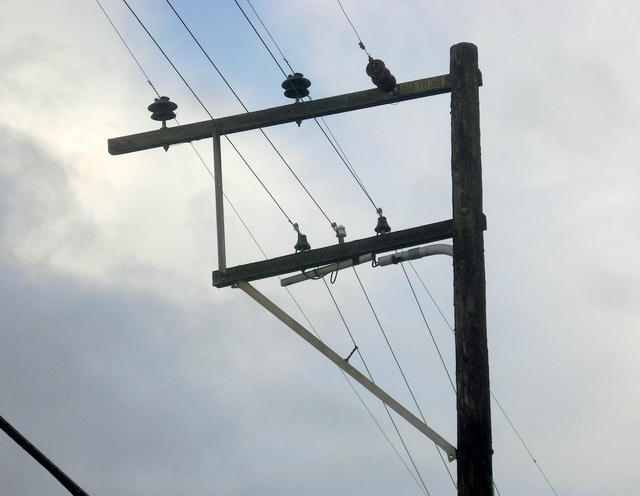
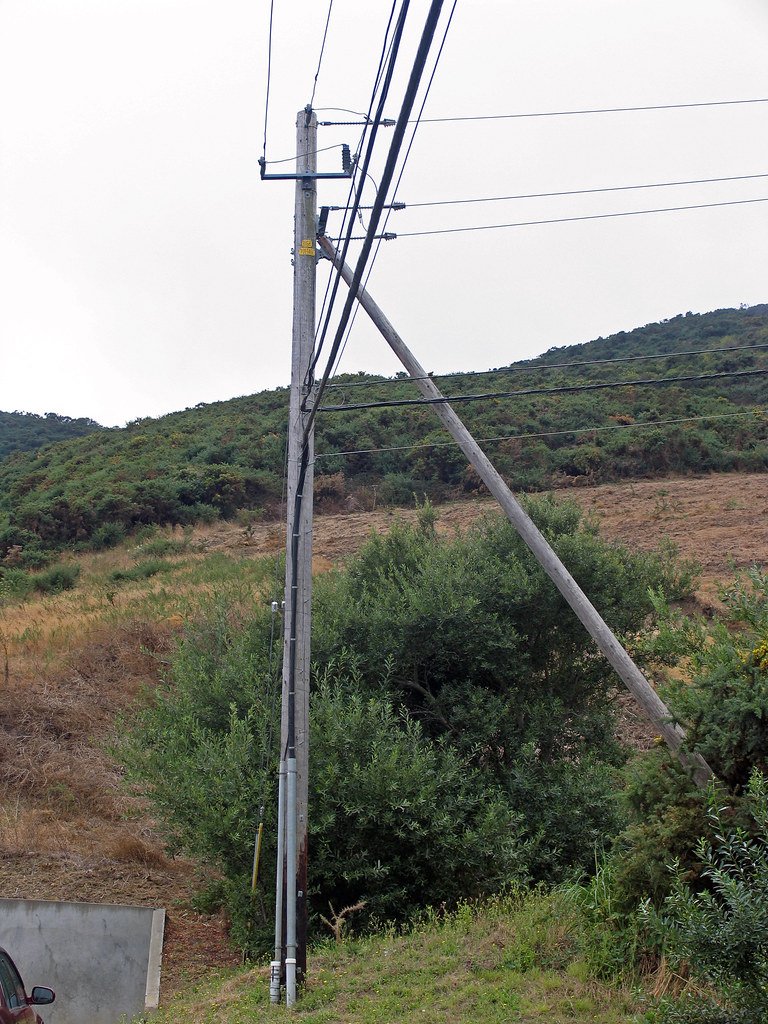
A push pole brace is a heavy-duty adjustable bracket connecting a diagonal "push pole" (typically wood or steel, installed at 30–60°) to the upright utility pole it supports. It’s the structural alternative to a guy wire — used where right-of-way limits or traffic clearance forbid a tension anchor.
The classic situation: your pole sits at a dead-end or large line angle that needs lateral support, but the ground in the direction the conductor is pulling has no guy-anchor space — private property, a sidewalk, a road right-of-way, or a substation security perimeter all rule out a conventional guy. The structural answer is to install a second (diagonal) pole pushing back against the upright pole. Unlike a guy wire (which works in tension), the push pole works in compression, physically pushing against the upright pole to resist conductor pull. The brace transfers this compressive load through a single bolted connection that’s adjustable for both angle and pole diameter. Equivalent to Hubbell SG611 series in catalog dimensions and function.
2. How to Choose the Right Size
Size by the upright pole’s diameter at the bracket mount elevation.
- RAX-PPB-6 — fits 6 to 8 in poles — standard distribution
- RAX-PPB-9 — fits 8 to 11 in poles — heavy distribution and standard transmission
- RAX-PPB-11A — fits 11 to 14 in poles, larger base for extreme loads — heavy transmission
Measure the pole diameter at the planned bracket elevation, not at the base — tapered poles can lose 1.5–2 inches of diameter every 20 ft up. All three sizes are field-adjustable 0–90°, so one catalog number covers a range of push-pole angles. The integral cast-in teeth on the saddle grip the pole surface; on softer wood poles, expect 1/8 inch of bite into the wood, which is normal and increases grip security. Custom pole diameters or special base patterns available with 10–14 day tooling, 200-piece minimum.