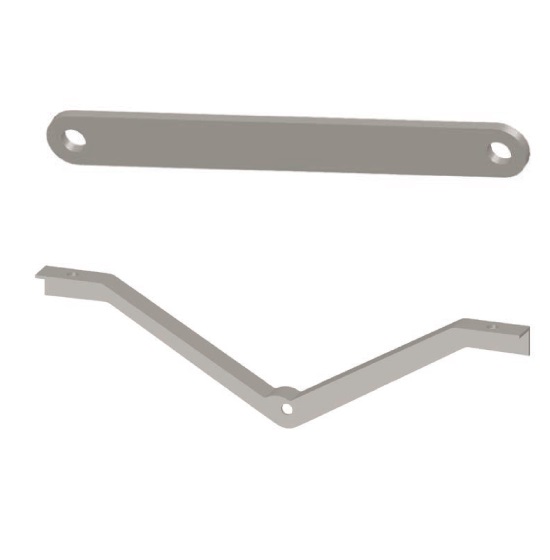
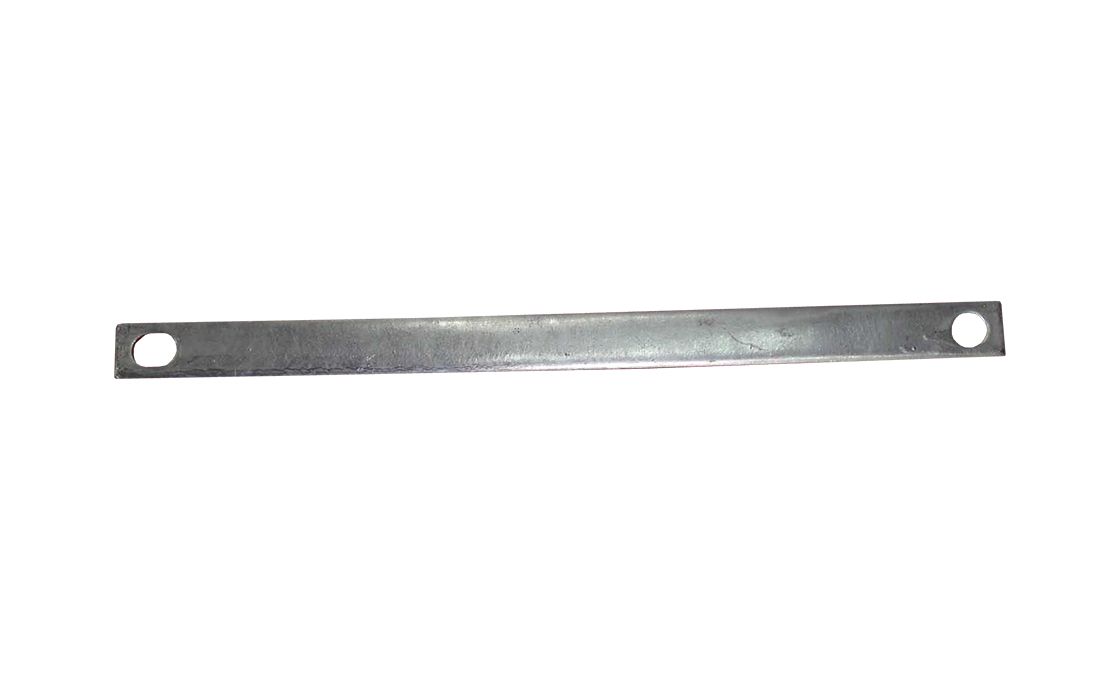
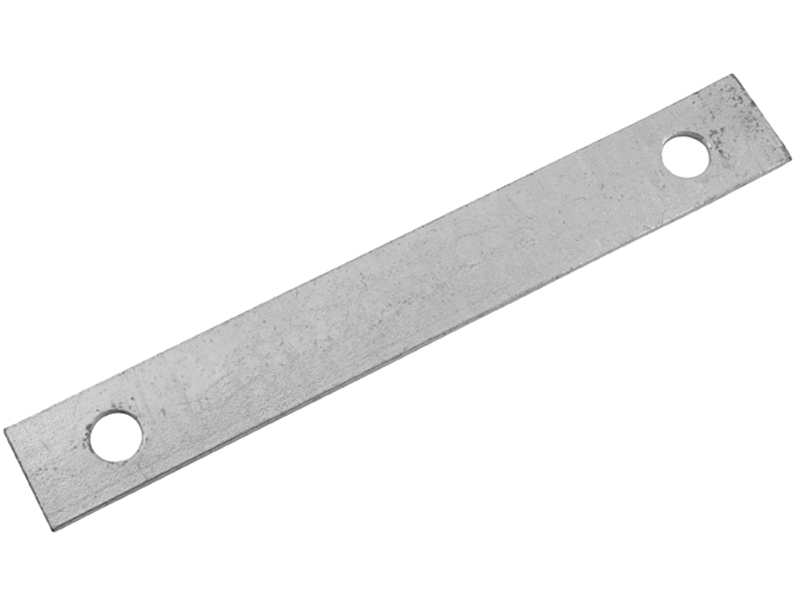
Flat Steel Crossarm Brace
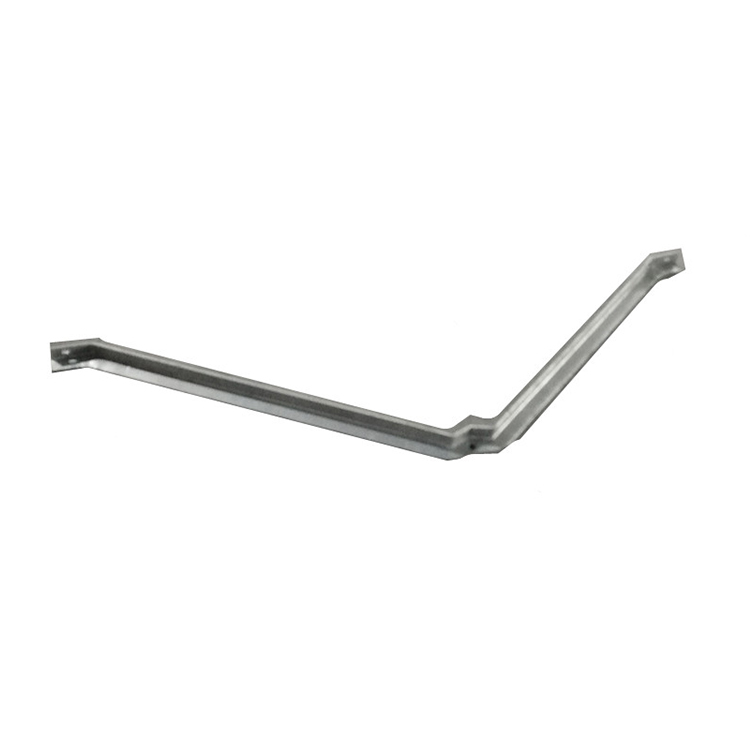
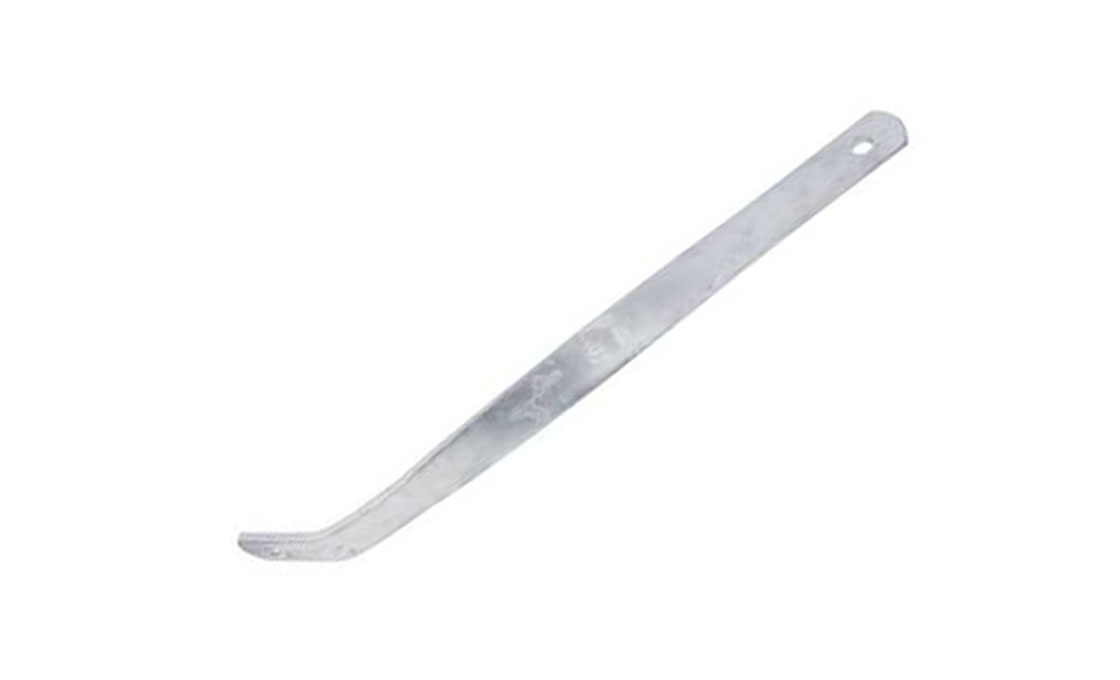
- Standard flat-steel brace used in pairs to support a crossarm
- 5 lengths: 20 / 26 / 28 / 30 / 32 inch — matches Hubbell 7020/7128/7130/7132
- Hot-dip galvanized to ASTM A-153 / ISO 1461
- Mill cert + galvanizing report with every shipment
Technical Specifications
| Catalog No. | Length (in / mm) | Hole Spacing | Material Section | Weight (kg) | US Equivalent |
|---|---|---|---|---|---|
| RAX-CB-20 | 20 / 508 | 18 in | 7/32" × 1-7/32" | 0.85 | Hubbell 7020 |
| RAX-CB-26 | 26 / 660 | 24 in | 1/4" × 1-1/4" | 1.13 | (Asian OEM match) |
| RAX-CB-28 | 28 / 711 | 26 in | 1/4" × 1-1/4" | 1.20 | Hubbell 7128 |
| RAX-CB-30 | 30 / 762 | 28 in | 1/4" × 1-1/4" | 1.23 | Hubbell 7130 |
| RAX-CB-32 | 32 / 813 | 30 in | 1/4" × 1-1/4" | 1.32 | Hubbell 7132 |
Application & Installation
Where it is used
- Standard tangent distribution lines — the workhorse crossarm support
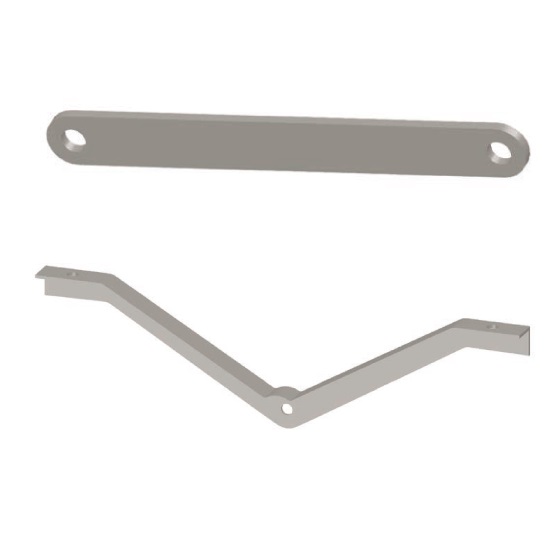
- Light-to-medium distribution where V-type braces are not required
- Service drops & secondary conductor runs
- Telecom & cable-TV crossarms
- RUS-spec rural distribution construction
Installation sequence
- Position the crossarm on the pole at the specified elevation and bolt in place.
- Mark pole-mounting points 12–18 in below the crossarm, one on each side.
- Through-bore at 9/16 in (or drive 1/2 in lag screws).
- Position one brace on each side of the pole — flat against pole, rounded end up.
- Drive 3/8 in crossarm bolt through the 7/16 in upper hole into the crossarm underside.
- Tighten both braces evenly — do not over-torque; flat steel will deform if forced.
Buyer’s Guide: Flat Steel Crossarm Brace
1. When Do You Need a Flat Steel Crossarm Brace?
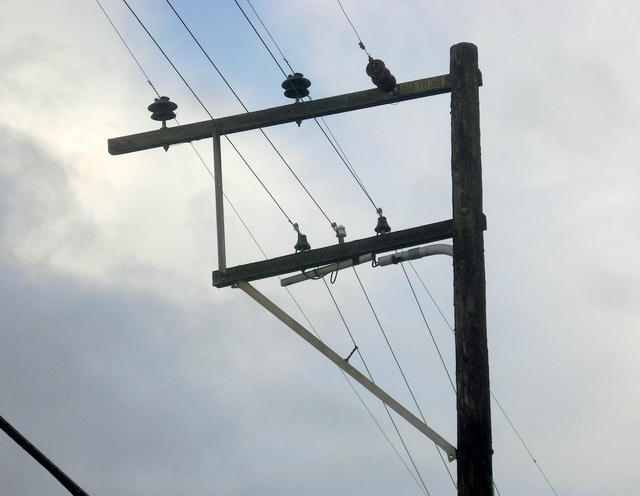
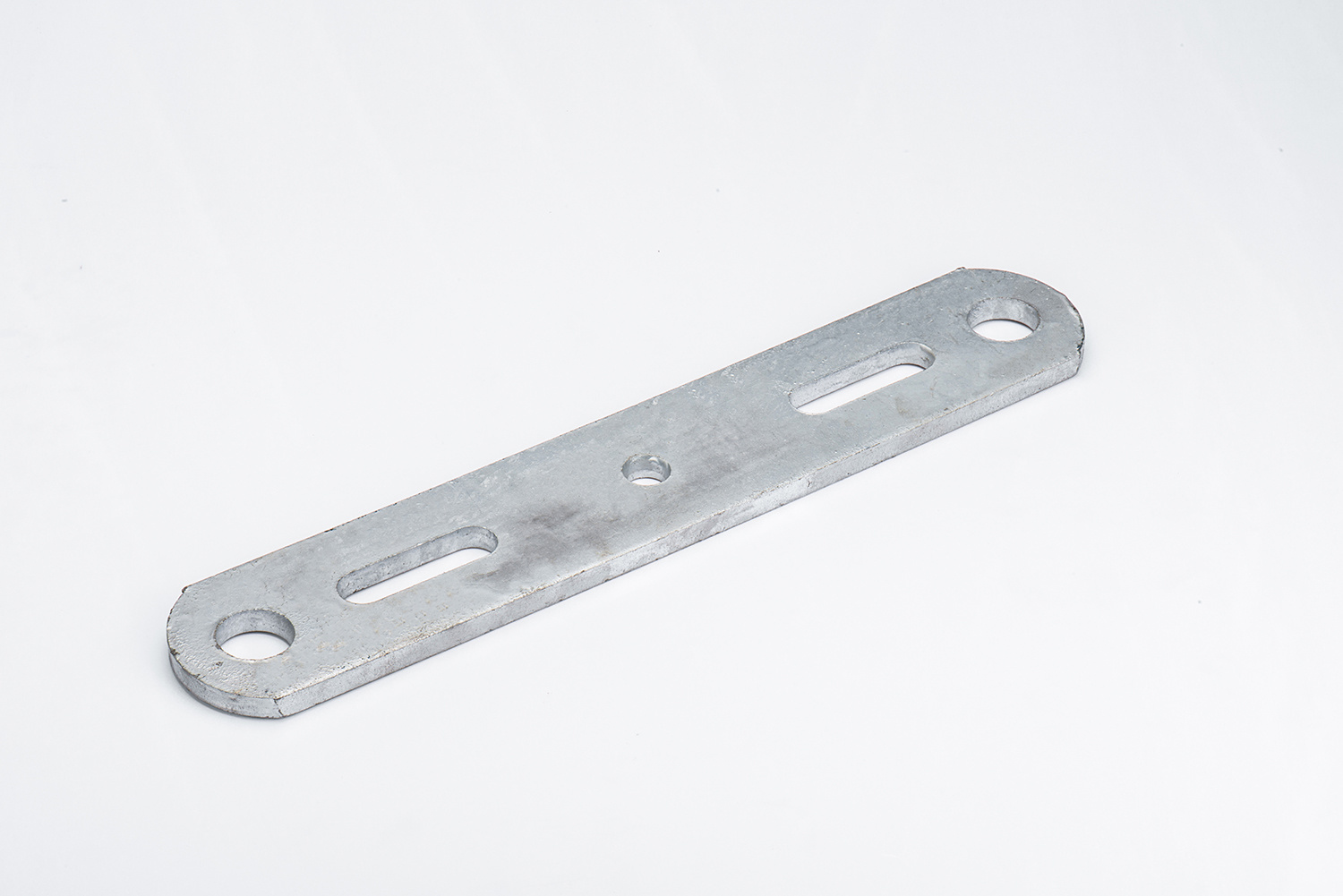
A flat-steel crossarm brace is a strap of hot-rolled flat carbon steel cut to length and punched with two mounting holes. It supports a crossarm diagonally from below to the pole at roughly 45 degrees. Flat braces are always installed in pairs — one on each side of the pole — to balance lateral load.
This is the workhorse brace for routine distribution: simple to fabricate, light to ship, fast to install. A standard 28 inch / 1/4 inch × 1-1/4 inch flat-brace pair carries roughly 52 kN ultimate tensile, well above the load class for 12–24.9 kV distribution with up to 1/0 ACSR conductor. The cost-effective answer when V-type angle braces would be overkill. The most common installation error is over-torquing the bolts — flat steel will deform if forced past finger-tight-plus-half-turn. For heavier loads (transmission, dead-ends, large transformers), upgrade to a V-type angle brace.
2. How to Choose the Right Size
Length depends on the crossarm-to-pole drop and your project drawing’s specification.
- RAX-CB-20 — minimum-clearance distribution, light-duty
- RAX-CB-26 — standard rural distribution
- RAX-CB-28 — the most-ordered size, matches Hubbell 7128
- RAX-CB-30 — standard urban distribution, matches Hubbell 7130
- RAX-CB-32 — long crossarm or heavier conductor, matches Hubbell 7132
Selection rule of thumb: brace length should equal the crossarm-to-pole drop plus 4–6 inches for bolt clearance. For a standard 14 inch crossarm spacing dropped 14 inches below the arm, the 28 inch RAX-CB-28 is correct. If your drawing already specifies a Hubbell catalog number, use the cross-reference column. Custom lengths (16–40 in) available with 5–7 day tooling, 500-pair minimum.