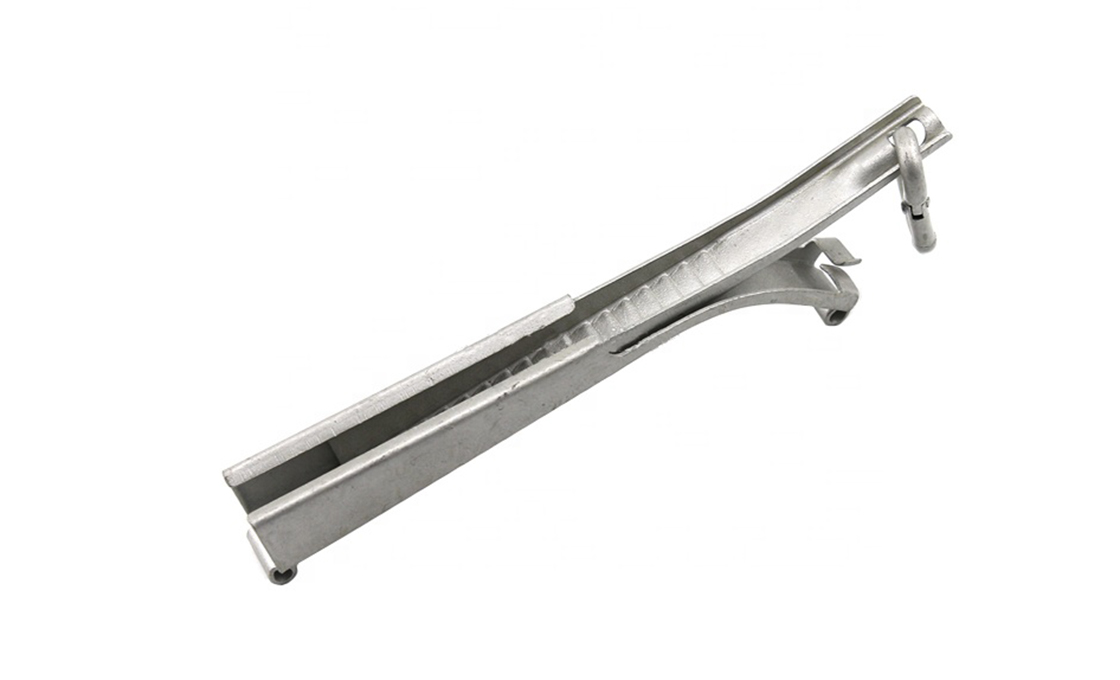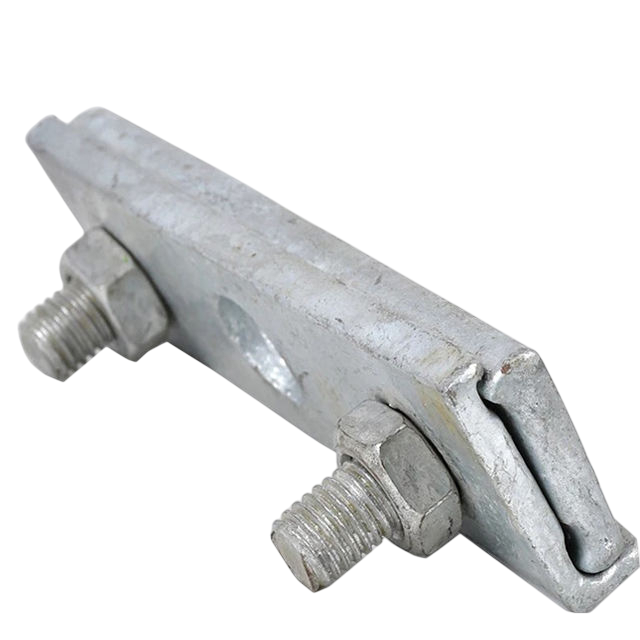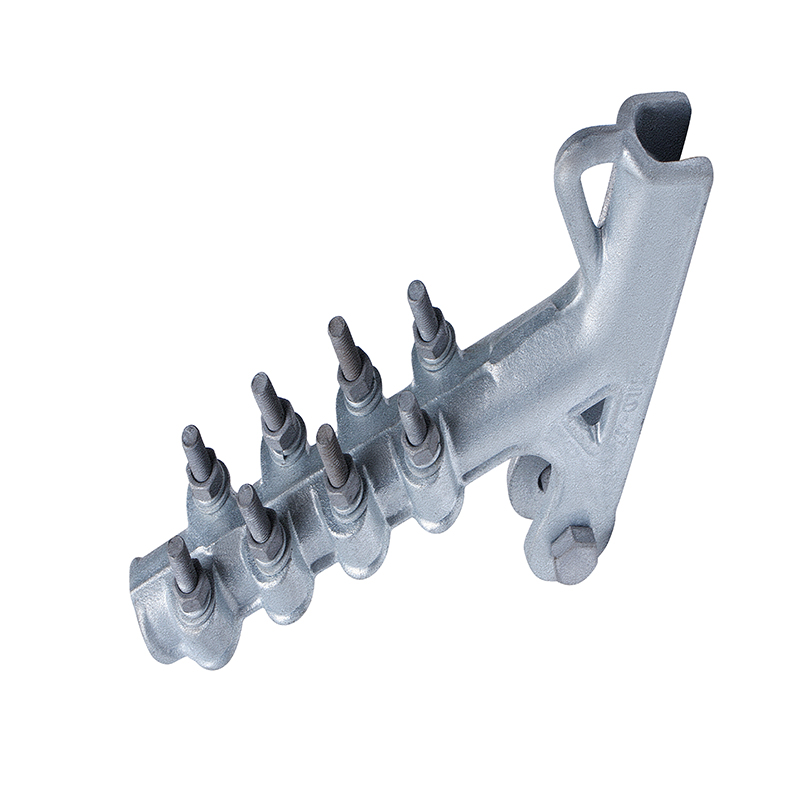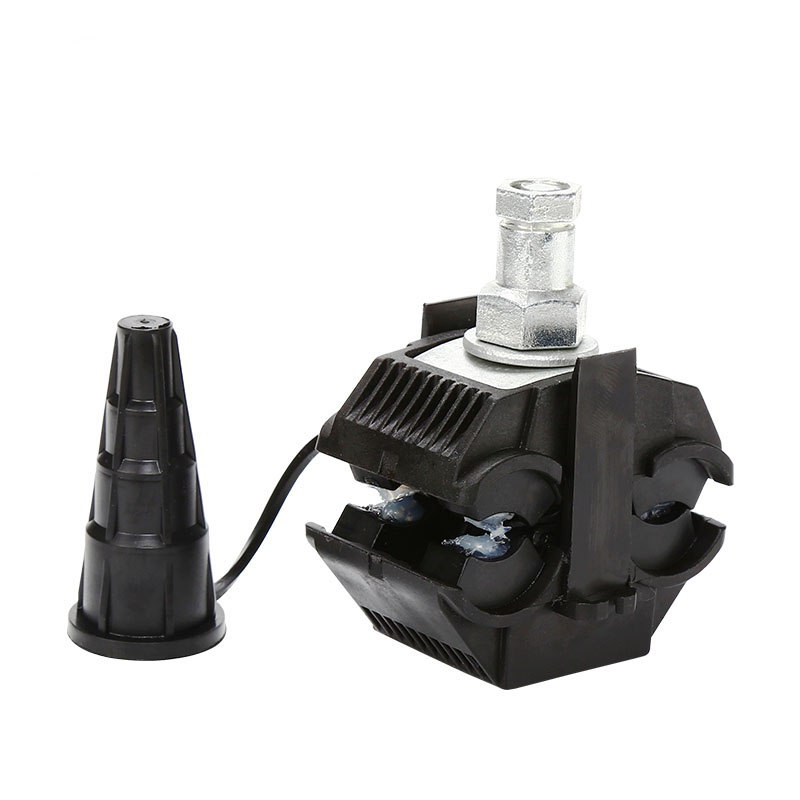
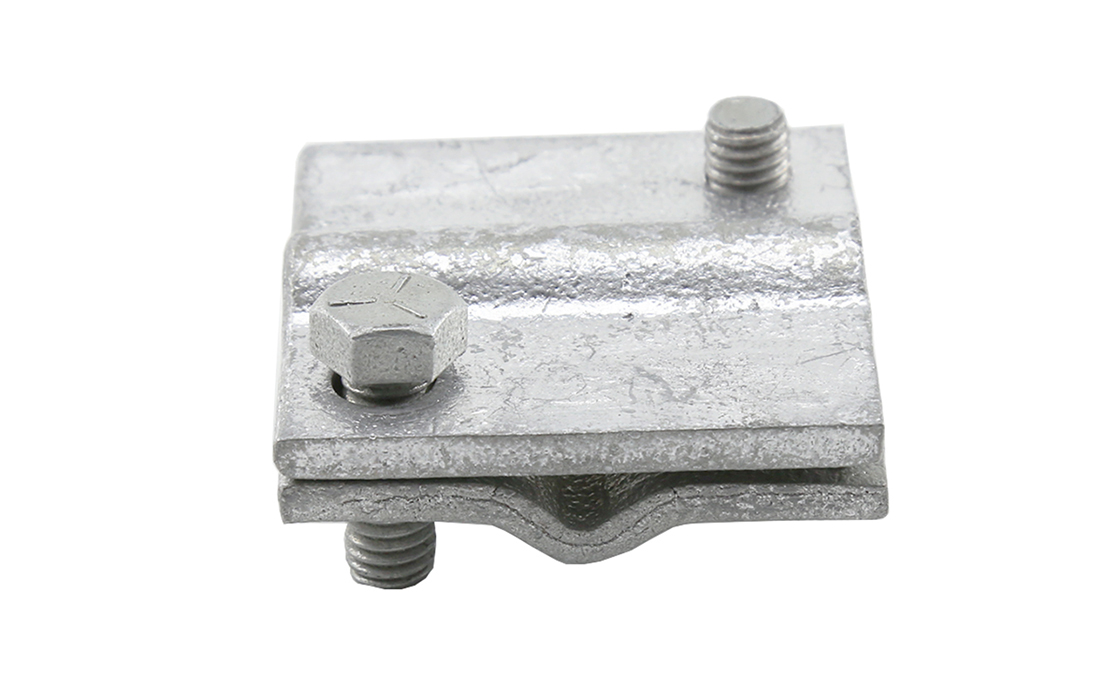
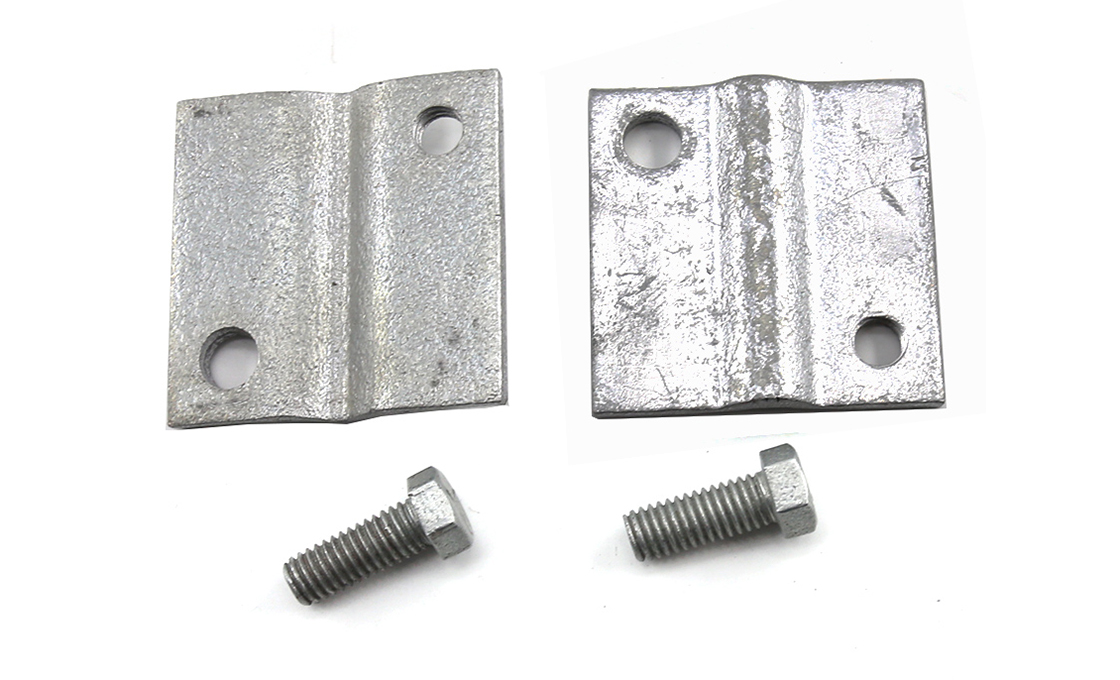
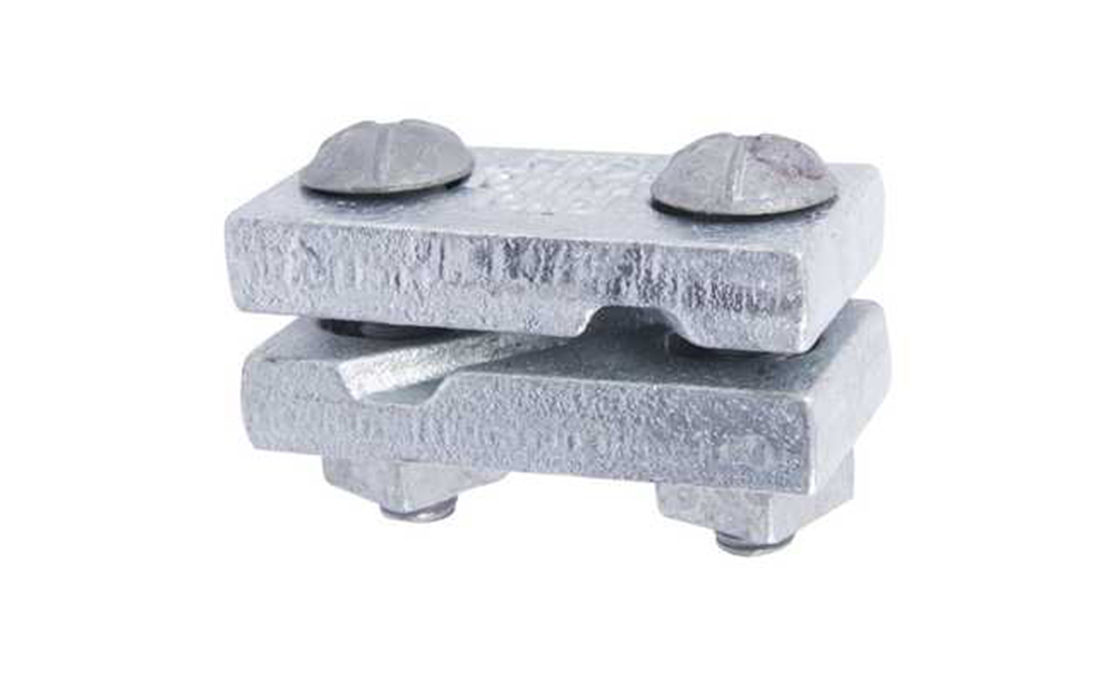
Crossover Clamp
- Holds two crossing or parallel conductors at a fixed spacing
- Insulating spacer keeps phases apart at crossings & taps
- Prevents clashing of conductors in wind
- Bolted body with insulated separator
- For distribution crossings, risers and jumper management
- Galvanized steel / aluminium with polymer insulator
Technical Specifications
| Catalog | Conductor Ø (mm) | Spacing (mm) | Insulation | Body | Surface |
|---|---|---|---|---|---|
| RAX-CX-1 | 6–14 | 100–200 | Polymer | Aluminium | Al / HDG |
| RAX-CX-2 | 10–20 | 150–300 | Polymer | Aluminium | Al / HDG |
| RAX-CX-3 | 16–25 | 200–400 | Polymer | Steel | HDG |
| Custom | Other sizes / configurations — send your conductor & structure spec | ||||
Application & Installation
Where it is used
The crossover clamp fixes two conductors at a set spacing where they cross or run close — at line crossings, riser poles and congested jumper arrangements. An insulating spacer between the two grips keeps the conductors from clashing together in wind while maintaining the required phase clearance.
Installation sequence
- Select the clamp for the conductor sizes and required spacing.
- Fit each grip onto its conductor.
- Set the insulated spacer to the design clearance.
- Torque the clamp bolts.
- Confirm the conductors cannot swing into contact.
Buyer’s Guide: Crossover Clamp
1. What a Crossover Clamp Does
A crossover clamp ties two conductors together at a fixed, insulated spacing. It is used wherever two conductors cross or run close enough to clash in wind — holding the geometry so the required clearance is kept under all conditions.
2. Maintaining Phase Clearance
The insulated spacer sets the distance between conductors and stops them touching during galloping or gusts. The spacing is chosen from the system voltage and the clearance the design calls for.
3. Sizing by Conductor & Spacing
Select by conductor diameter (6–25 mm) and the spacing needed (100–400 mm). Both grips must close on their conductors and the spacer must hold the clearance under load.
4. Insulated Separator
The polymer spacer both separates and insulates, so the clamp can join different phases or a phase and a guy without a fault path. Inspect the polymer for UV degradation over long service.
5. Where It Fits
Common at distribution line crossings, riser poles and where jumpers are congested. Order the spacing to your structure drawing.
6. Material
Aluminium or galvanized-steel grips with a UV-stable polymer spacer, for long outdoor life at crossings and risers.