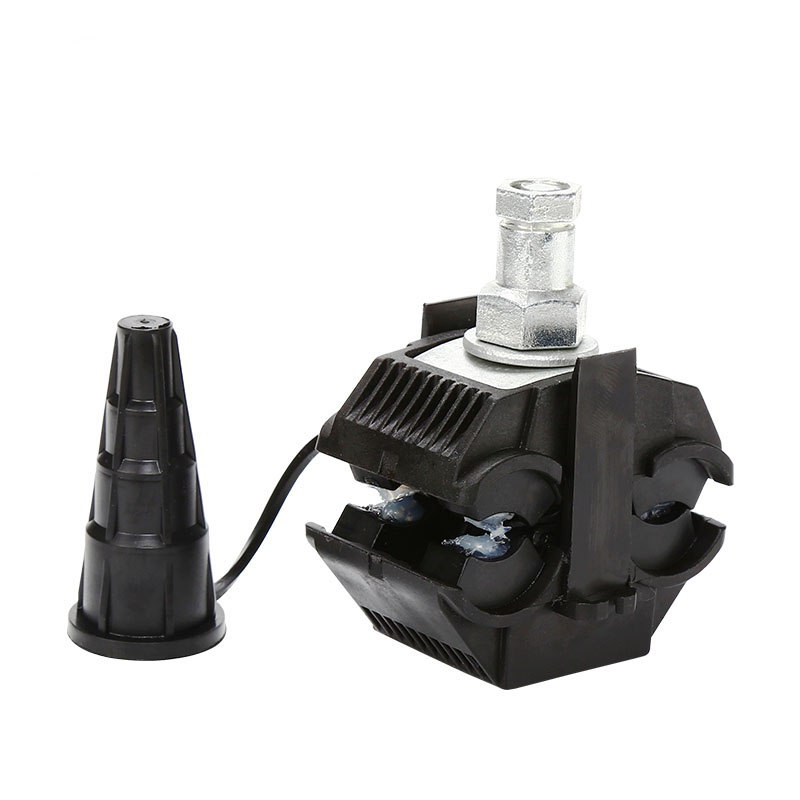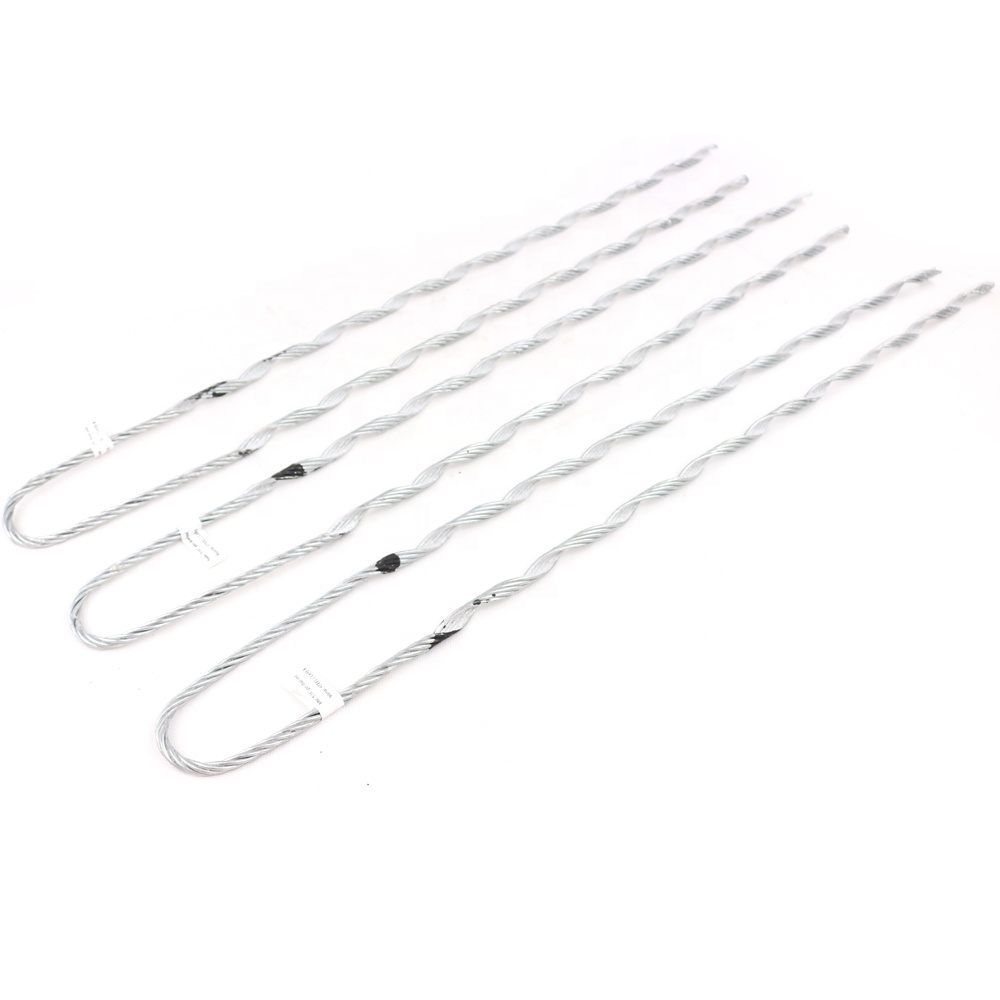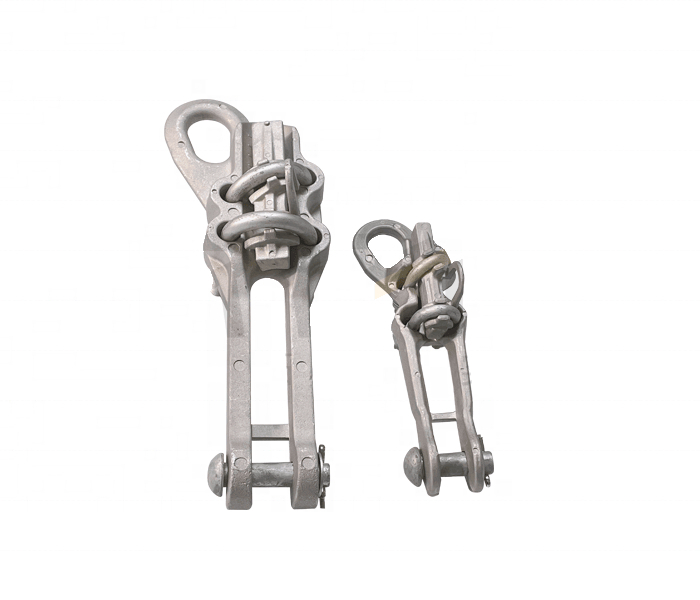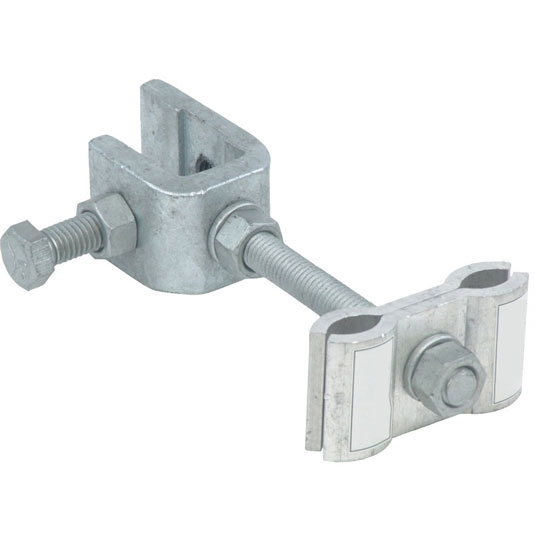
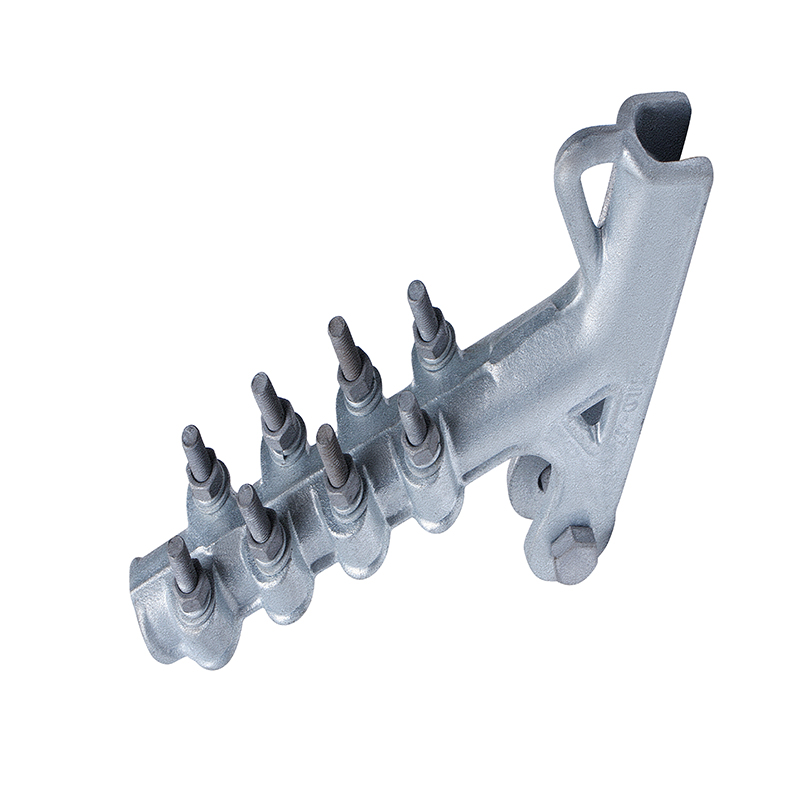
Bolt Type Tension Clamp
- Field-installable dead-end — grips the conductor with U-bolts, no press needed
- NLD (malleable iron) and NLL (aluminium) series
- Conductor 10.6–36 mm; holds 90–95% of conductor RTS
- 2–4 U-bolts depending on size; integral jumper terminal pad
- Hot-dip galvanized iron or aluminium alloy body
- GB / DL/T, BS 3288-2 compatible
Technical Specifications
| Catalog | Conductor Ø (mm) | Holding (% RTS) | U-Bolts | Body | Weight (kg) | Surface |
|---|---|---|---|---|---|---|
| NLD-1 | 10.6–14.5 | 90 | 2 | Malleable iron | 0.9 | HDG |
| NLD-2 | 14.5–19.0 | 90 | 3 | Malleable iron | 1.4 | HDG |
| NLD-3 | 19.0–26.0 | 95 | 3 | Malleable iron | 2.0 | HDG |
| NLD-4 | 26.0–36.0 | 95 | 4 | Malleable iron | 3.1 | HDG |
| NLL-3 | 19.0–26.0 | 95 | 3 | Aluminium | 1.5 | Al / HDG |
| Custom | Other conductor sizes / aluminium body — send your conductor type & RTS | |||||
Application & Installation
Where it is used
The bolt-type tension clamp dead-ends the conductor where crews need a field-installable termination — distribution angle poles, terminal structures and smaller transmission. It grips the conductor between a body and keeper plate pulled together by U-bolts, so no hydraulic press or dies are required on site.
Installation sequence
- Pick the NLD / NLL size for the conductor diameter.
- Lay the conductor in the body groove and fit the keeper.
- Torque all U-bolts evenly to the specified value.
- Connect the clamp eye to the dead-end string / yoke.
- Bolt the jumper loop to the terminal pad.
Buyer’s Guide: Bolt Type Tension Clamp
1. What a Bolt-Type Tension Clamp Is
A bolt-type tension clamp is a mechanical dead-end: the conductor is clamped between body and keeper by U-bolts rather than pressed in a compression barrel. It is the practical choice wherever crews lack a hydraulic press or need to re-terminate in the field.
2. Why Bolt-Type Over Compression
Bolt-type installs with hand tools, can be inspected and re-torqued, and suits distribution and smaller transmission conductors. Compression gives higher holding for the largest conductors but needs a press and matched dies. For most lines below transmission backbone, bolt-type is faster and serviceable.
3. Holding 90–95% RTS
Sized correctly, the clamp holds 90–95% of the conductor RTS — the conductor fails before the termination slips. The U-bolt count rises with size (2 to 4) to spread the grip without crushing the strands.
4. Sizing by Conductor Diameter
NLD-1 through NLD-4 cover 10.6–36 mm. Match the clamp band to the actual stranded OD of your conductor; the groove must close on the conductor without flattening it.
5. NLD vs NLL Material
NLD malleable iron is strong and economical for ACSR and galvanized lines; NLL aluminium avoids bimetallic corrosion on all-aluminium conductors and is lighter. Match to the conductor metallurgy.
6. Jumper Terminal & Maintenance
An integral terminal pad takes the jumper loop. Because the clamp is bolted, crews can re-torque it on inspection — an advantage over compression for lines that see thermal cycling or vibration.