Rectangular Cross Arm
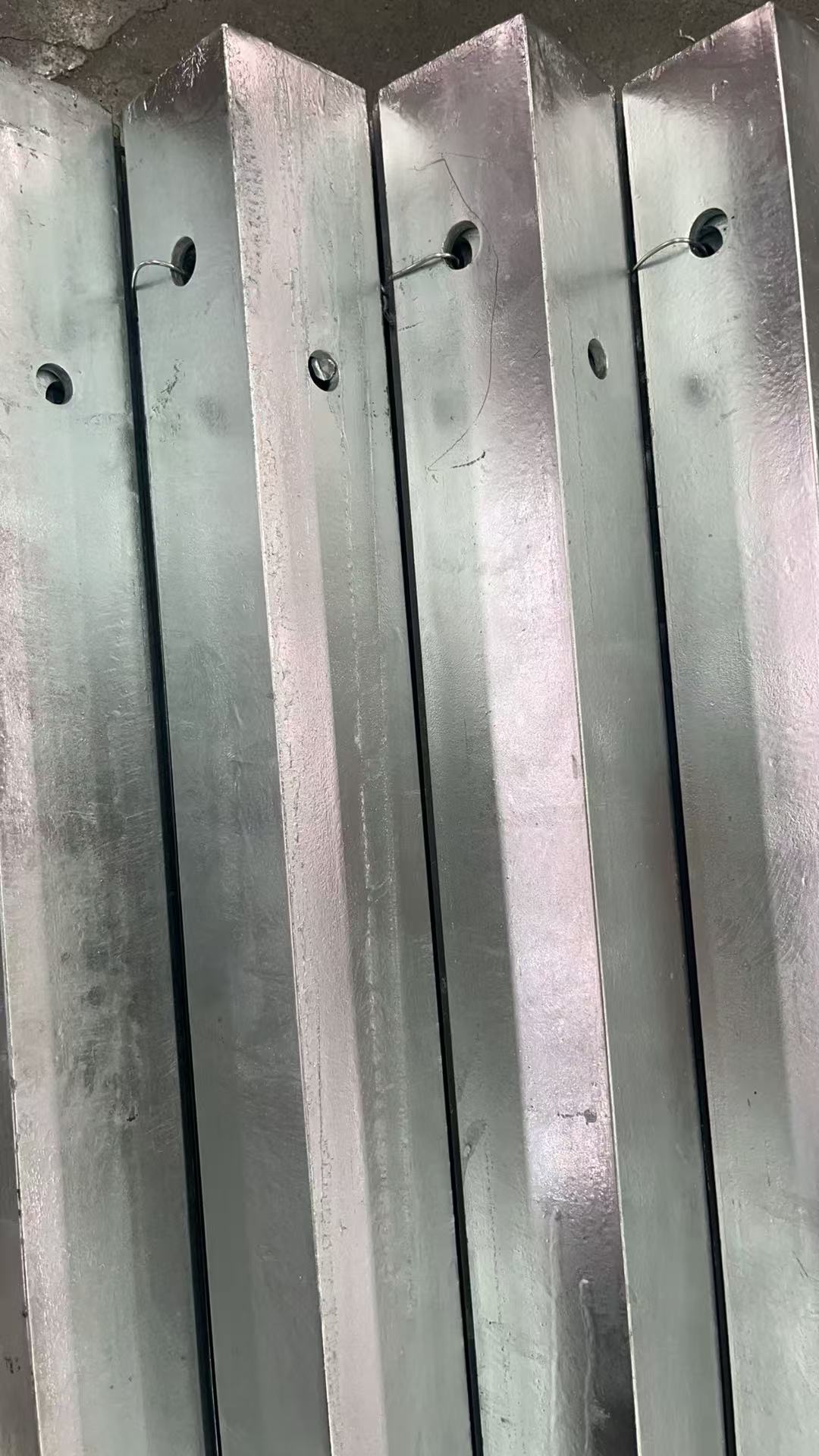
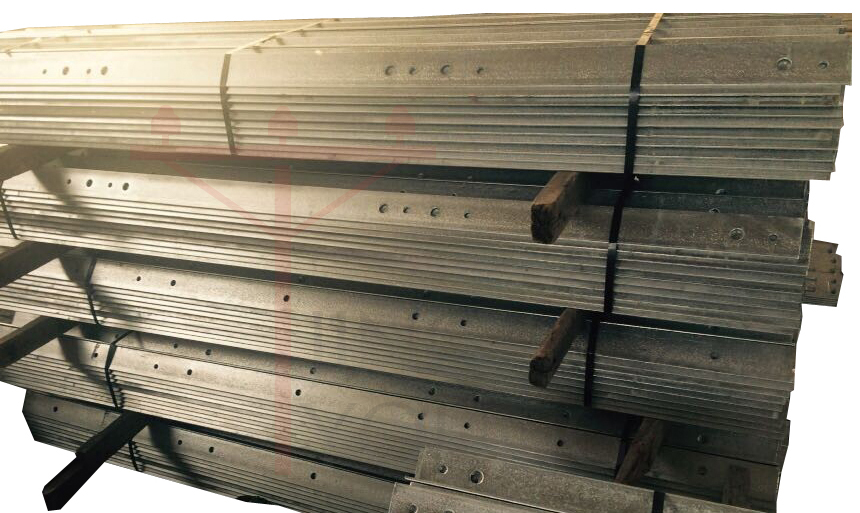
- Hollow rectangular tube (HSS) cross arm — heavy-duty for transmission and substation
- 4 sizes: 6 / 8 / 10 / 12 ft lengths in 100×50 to 150×100 mm tube section
- Hot-dip galvanized to ASTM A-123 (≥86 μm)
- 1.5–2× bending capacity of equivalent-weight angle steel
Technical Specifications
| Catalog No. | Length (ft / mm) | Tube Section | Weight | Standard |
|---|---|---|---|---|
| RAX-RCA-6FT-100X50 | 6 / 1,830 | 100 × 50 × 4 mm (~4" × 2") | 14 kg | ANSI C135.6 / ASTM A500 |
| RAX-RCA-8FT-120X60 | 8 / 2,440 | 120 × 60 × 5 mm (~5" × 2.5") | 22 kg | ANSI C135.6 / ASTM A500 |
| RAX-RCA-10FT-150X75 | 10 / 3,050 | 150 × 75 × 6 mm (~6" × 3") | 38 kg | ANSI C135.6 / ASTM A500 |
| RAX-RCA-12FT-150X100 | 12 / 3,660 | 150 × 100 × 8 mm (~6" × 4") | 67 kg | ANSI C135.6 / ASTM A500 |
Application & Installation
Where it is used
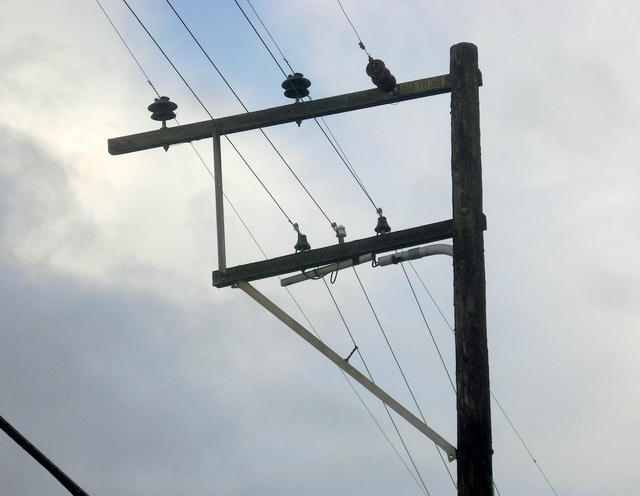
- Transmission line crossarms (34.5–138 kV)
- Substation egress poles with multiple incoming circuits
- Heavy distribution at large spans or unbalanced conductor configurations
- Dead-end and large-angle positions where bending moment exceeds angle-steel capacity
- RUS 1728F-810 / 1728F-811 transmission construction
Installation sequence
- Position the crossarm at the pole-top elevation per drawing.
- Align the two center holes with the pole’s pre-drilled mounting points.
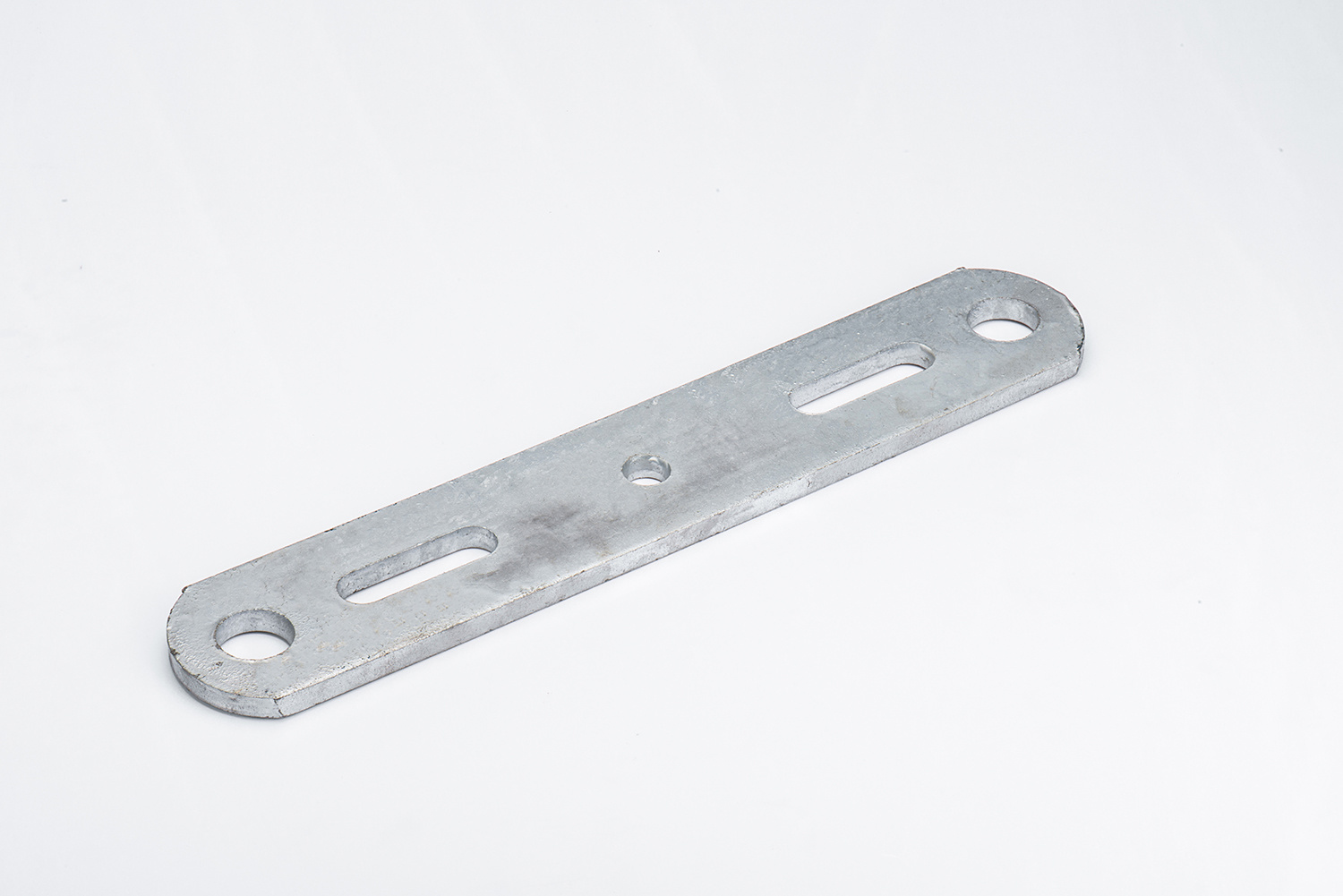
- Install a U-bolt or through-bolt assembly with square washers and 4 nuts (ANSI C135.1).
- Verify the arm is level both ways before final torque.
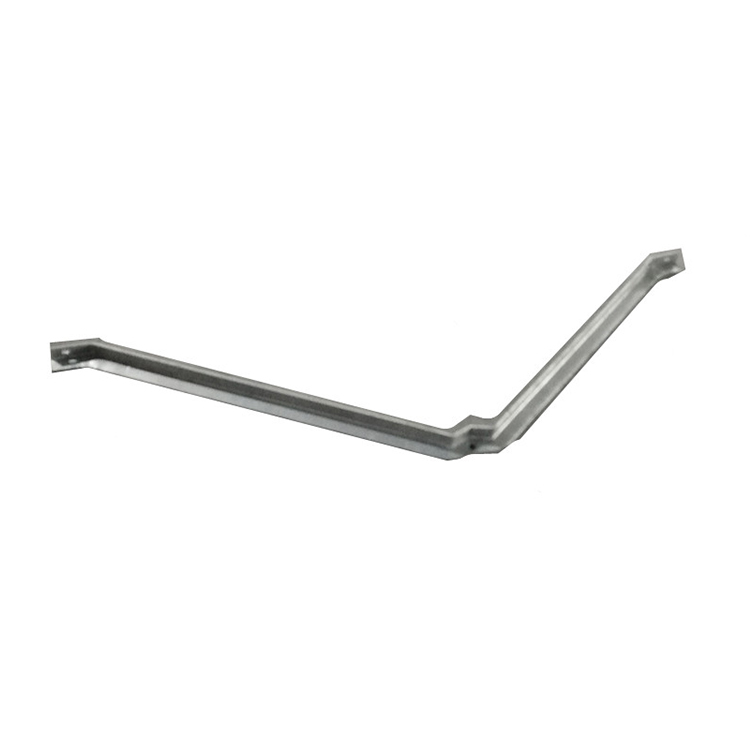
- Install the supporting brace (V-type for transmission, flat-pair only for the lightest sizes).
- Mount insulator pins into the pre-punched top-face holes.
Buyer’s Guide: Rectangular Cross Arm
1. When Do You Need a Rectangular Cross Arm?
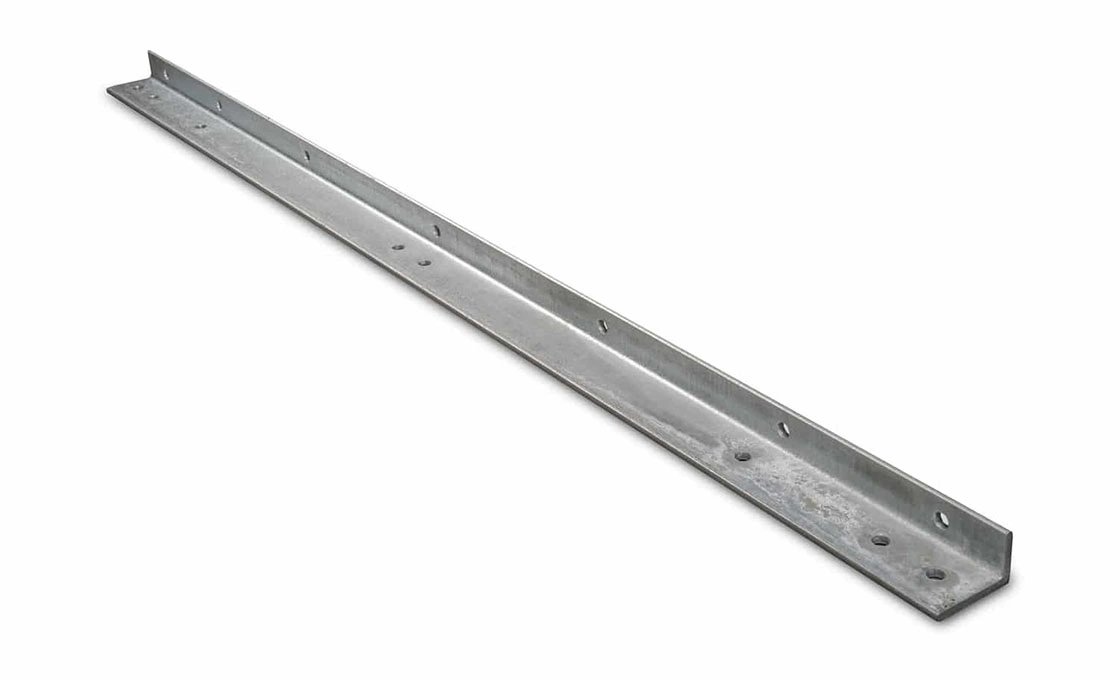
A rectangular cross arm is a hollow-section steel tube (HSS) cross arm — the heavy-duty option in the cross arm family. Compared to the angle-steel Power Pole Cross Arm, the closed rectangular section has roughly 1.5–2× the bending moment capacity at equivalent weight, because the closed geometry resists twist and bending in both axes.
The mechanical advantage is real: an open L-section’s polar moment of inertia is bottlenecked by its single-axis stiffness, so an angle-steel arm twists under unbalanced load even when its bending strength is technically sufficient. A closed HSS tube has a torsional constant orders of magnitude higher, which matters at any pole where conductors apply asymmetric load — multi-circuit transmission, line-angle turns, and substation egress poles with multiple incoming feeders. Standard at transmission voltages (34.5–138 kV) and at substation poles where conductor count or span length exceeds an angle-steel arm’s load class. For routine 11–24.9 kV distribution, the angle-steel Power Pole Cross Arm is more cost-effective and equally durable.
2. How to Choose the Right Size
Length and tube section together set the load class.
- 6 ft / 100×50 — heavy distribution & light transmission
- 8 ft / 120×60 — standard transmission (34.5 kV)
- 10 ft / 150×75 — heavy transmission, multi-circuit (69 kV)
- 12 ft / 150×100 — extra-heavy transmission, dead-end positions (115–138 kV)
A practical sizing exercise: at 69 kV with 3 conductors at 8 ft phase spacing on a tangent pole, the 10 ft / 150×75 mm HSS handles up to 600 ft spans with #4/0 ACSR conductors comfortably. At a 30° line angle with the same conductor, drop to 8 ft span or step up to the 12 ft / 150×100 section. For loads beyond what these four sizes cover — H-frame transmission, 138 kV+ dead-ends, multi-circuit substation egress — request a project-specific section quote. Custom lengths (4–16 ft) and non-standard sections available with 5–7 day tooling, 100-piece minimum.