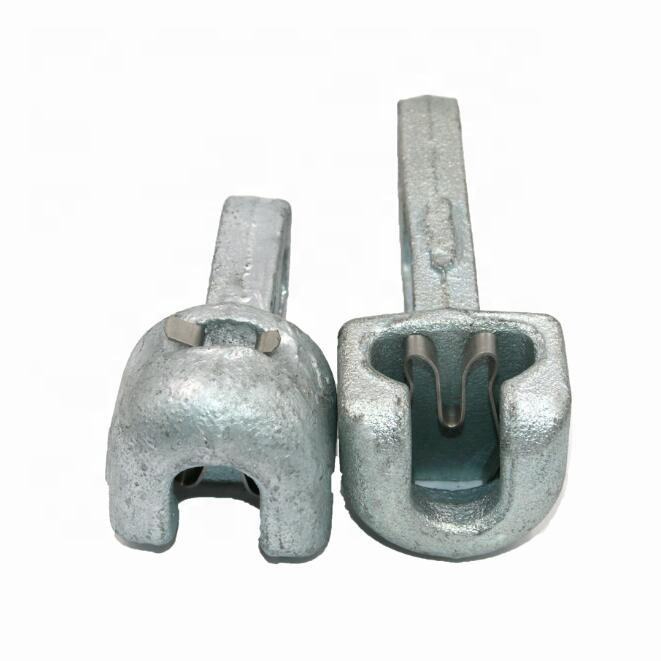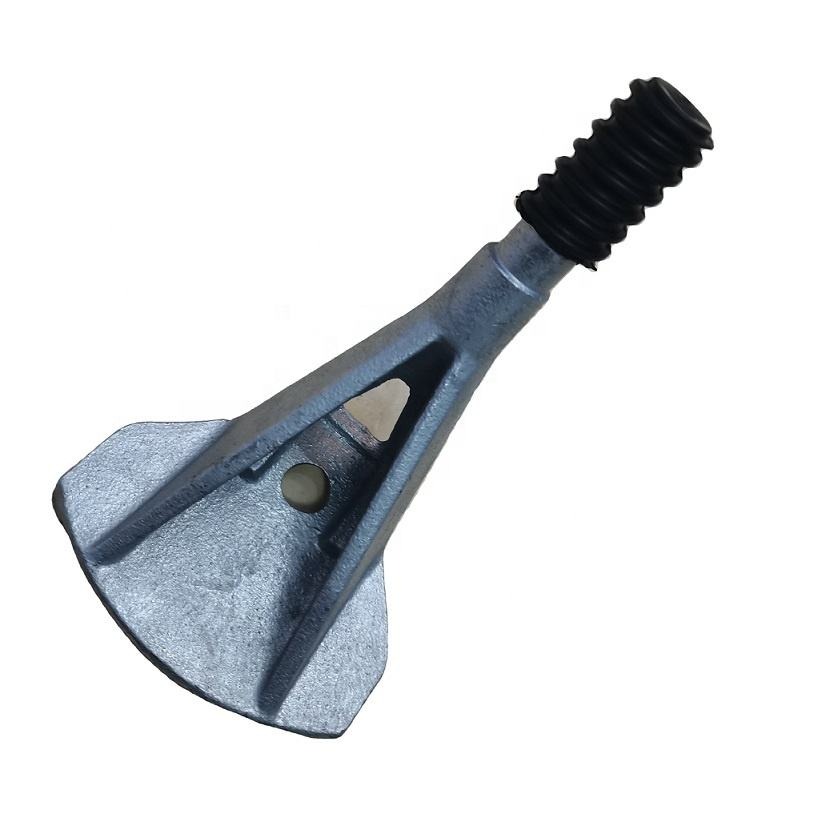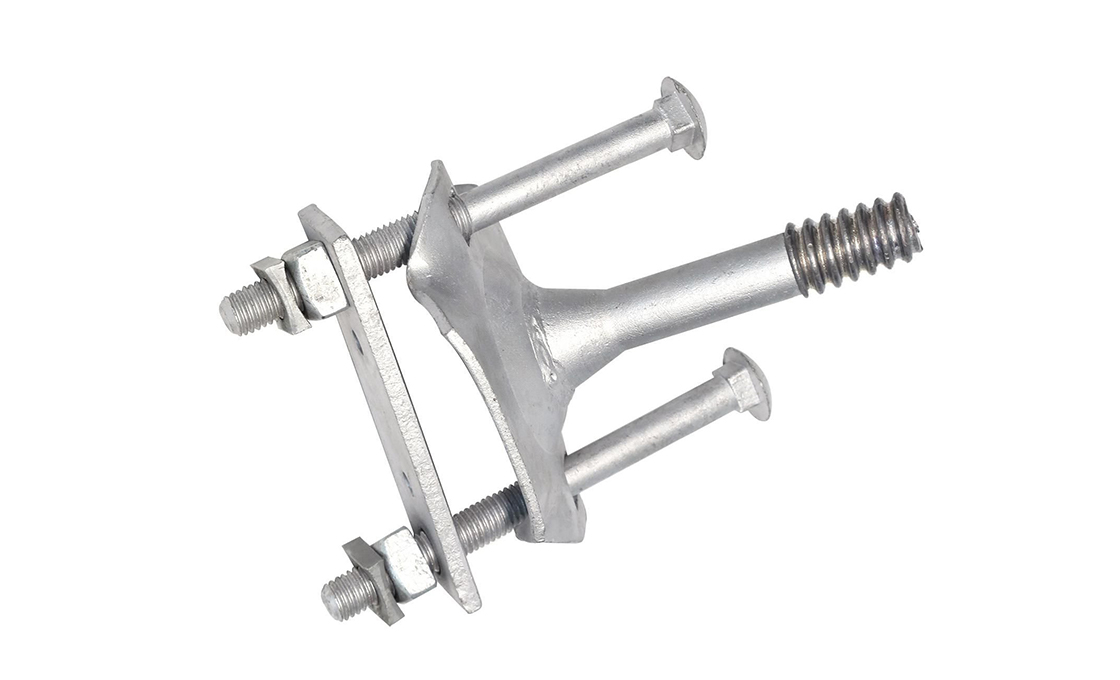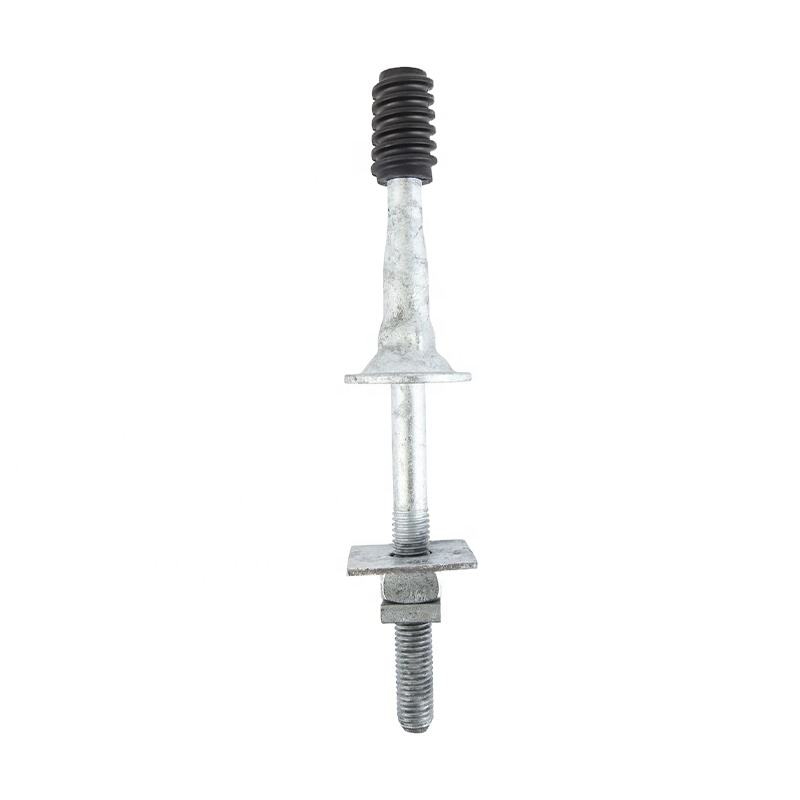
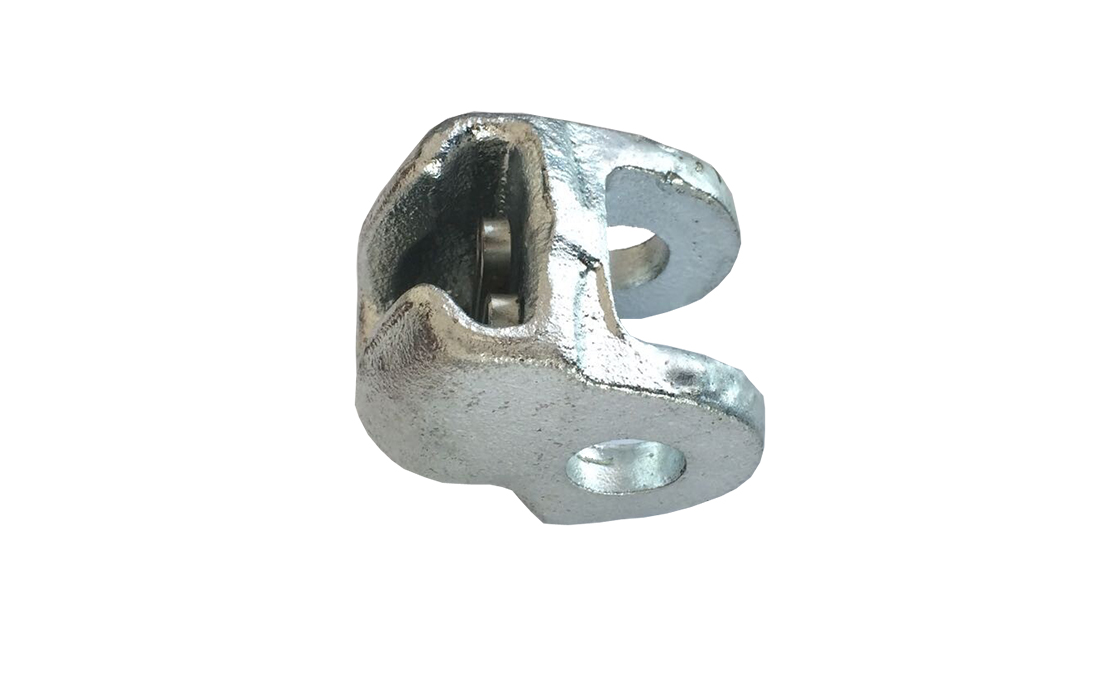
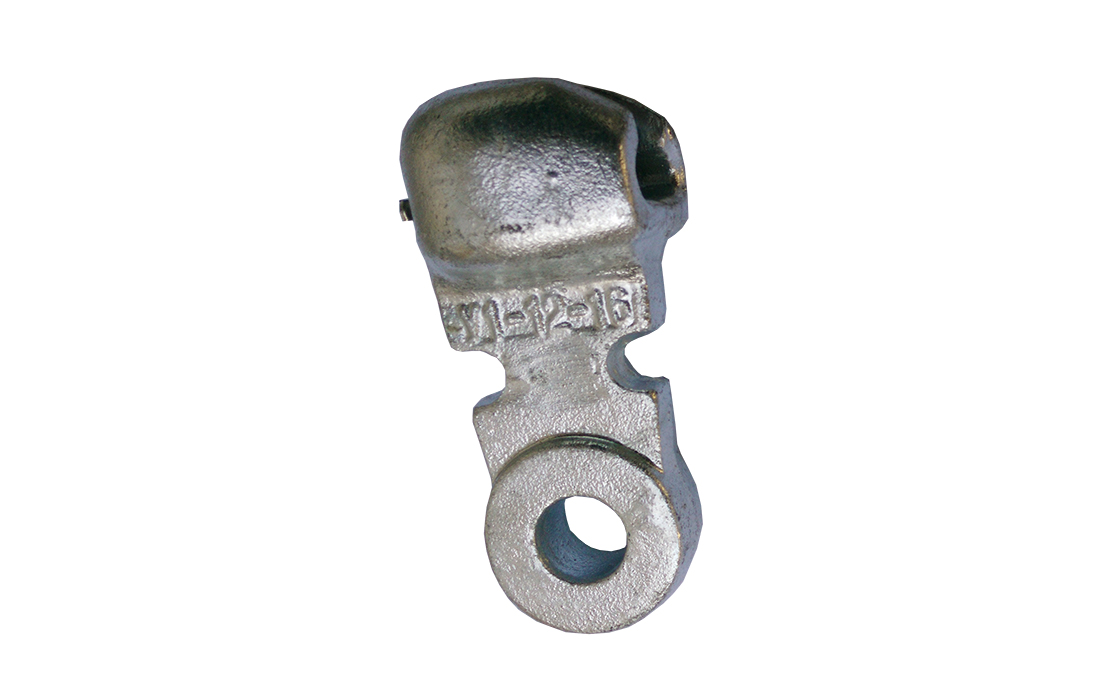
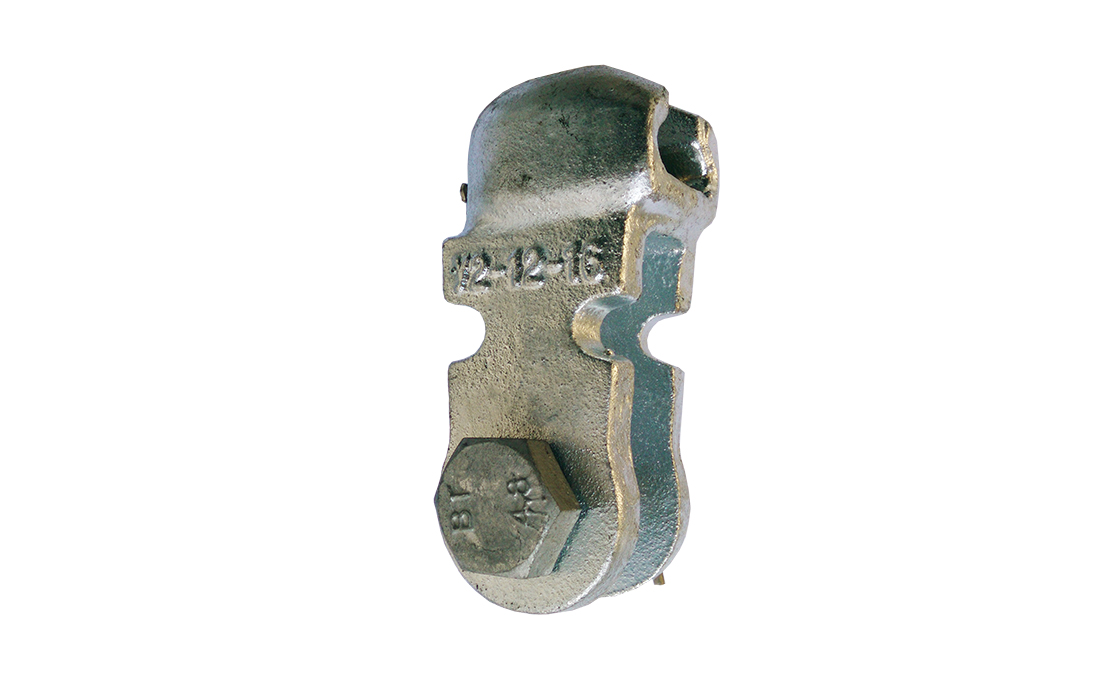
Socket Clevis
- Couples a ball-and-socket insulator to clevis-type tension / suspension clamps
- Socket on one end, flat clevis tongue on the other — the mirror of a ball clevis
- IEC 60120 coupling sizes 16 / 20 / 24 mm; rated load 70–300 kN
- Forged / malleable-iron body, stainless-steel cotter & security clip
- Hot-dip galvanized to ISO 1461 / BS 729 for long outdoor life
- Interchangeable with ANSI C29.2 Class 52-3 / 52-5 string hardware
Technical Specifications
| Catalog | Coupling | Rated Load (kN) | Length h (mm) | Tongue b (mm) | Weight (kg) | Surface |
|---|---|---|---|---|---|---|
| W-7A | 16 mm | 70 | 70 | 16 | 0.80 | HDG |
| W-7B | 16 mm | 70 | 115 | 16 | 0.92 | HDG |
| W1-10 | 16 mm | 100 | 85 | 18 | 0.90 | HDG |
| W1-12 | 16 mm | 120 | 90 | 20 | 1.30 | HDG |
| W-12 | 20 mm | 120 | 90 | 20 | 1.40 | HDG |
| W-30 | 24 mm | 300 | 110 | 32 | 3.50 | HDG |
| Custom | Other coupling sizes & loads per IEC 60120 / ANSI C29.2 — send your insulator class | |||||
Application & Installation
Where it is used
The socket clevis — also called a socket tongue — connects the socket end of a cap-and-pin insulator to a clevis-type tension or suspension clamp. It is the standard transition between a ball-and-socket insulator string and the clamp that grips the conductor, used on distribution and transmission dead-ends, angles and tangent suspensions.
Installation sequence
- Match the socket coupling size (16 / 20 / 24 mm) to the insulator ball.
- Seat the insulator ball fully into the socket.
- Insert the W-pin / split cotter / R-clip and spread it per IEC 60372.
- Pin the clevis tongue to the tension / suspension clamp with the clevis pin and cotter.
- Confirm the locking key is fully engaged before tensioning the conductor.
Buyer’s Guide: Socket Clevis
1. What a Socket Clevis Is — the Mirror of a Ball Clevis
A socket clevis (socket tongue) has a socket on one end that captures the ball of a cap-and-pin insulator, and a flat clevis tongue on the other for a pin connection. Where a ball clevis presents a ball to the insulator's socket, the socket clevis presents a socket to the insulator's ball — the two are chosen by which end of the insulator string you are terminating.
2. Coupling Size 16 / 20 / 24 mm — Match the Insulator, Not the Conductor
The socket bore is standardized under IEC 60120 to 16, 20 or 24 mm. It must match the insulator ball designation; 16 mm corresponds to ANSI Class 52-3 (15,000 lb) and 20 mm to Class 52-5 (25,000 lb). Order by the insulator class and the socket fits first time.
3. Length Variants — W-7A vs W-7B
At the same 70 kN / 16 mm rating we offer a short body (W-7A, 70 mm) and a long body (W-7B, 115 mm). The long version adds reach where the clamp needs clearance from the insulator skirt; the short version keeps the string compact. Both share the same socket and tongue, so they are drop-in alternatives.
4. Forged vs Malleable Iron — Load Threshold
Lower-load socket clevises (70–120 kN) can be malleable-iron cast with full ductility; the 300 kN W-30 is drop-forged carbon steel. The security clip is bronze or stainless steel and the cotter pin stainless, so the locking parts never seize from corrosion in the field.
5. The Locking Device — Keeping the Ball Seated
The socket slot takes a security W-pin, cotter or spring R-clip to IEC 60372. This key is what stops the insulator ball backing out under line vibration. We supply the matching locking device and can ship the stainless R-clip for high-vibration or theft-prone spans.
6. Pairing With Insulators and Clamps
A socket clevis pairs the socket insulator above it with a clevis-tongue tension or suspension clamp below. Because the coupling follows IEC 60120 / ANSI C29.2 it mates with Hubbell, MacLean and PLP insulators of the same designation — handy for mixed-vendor repairs.