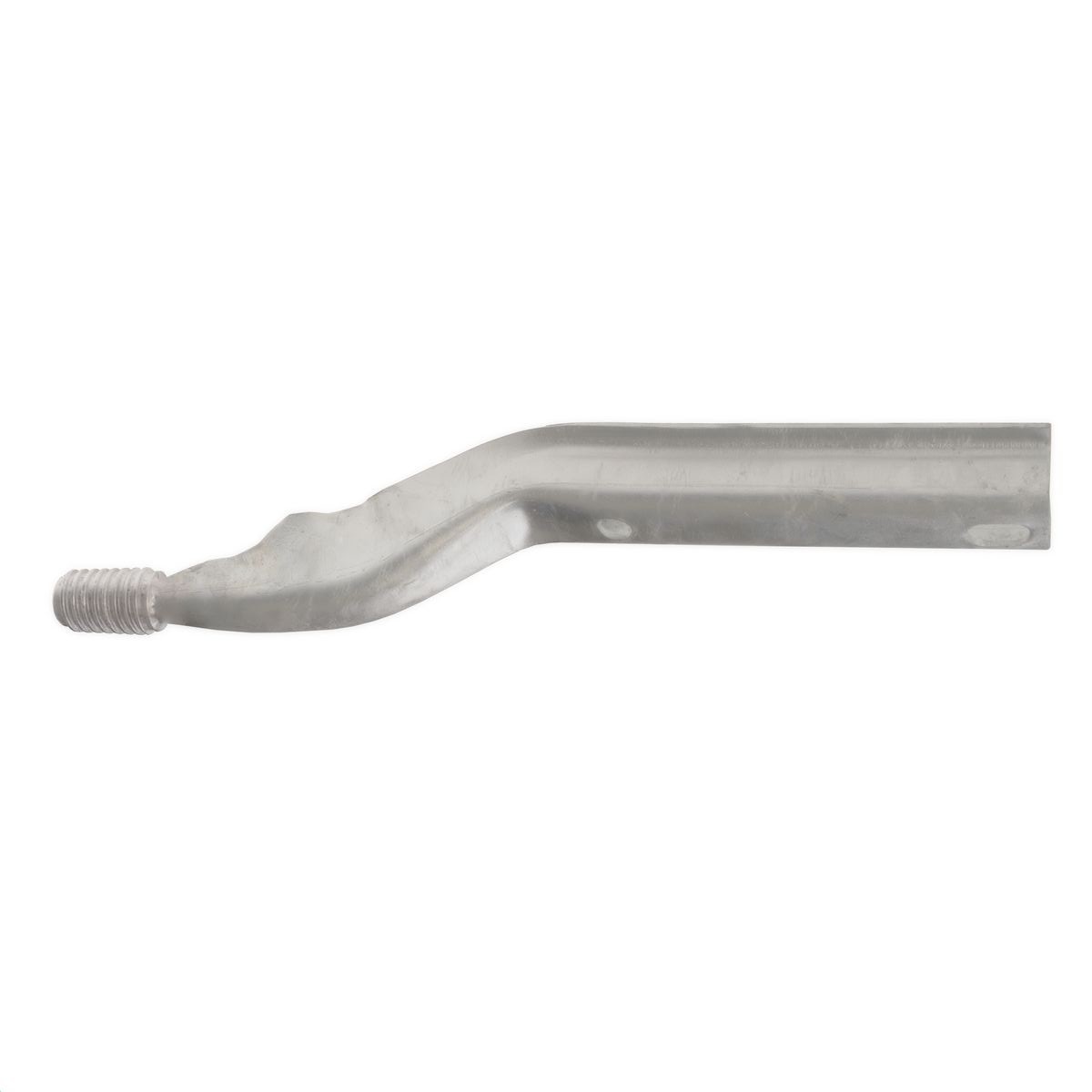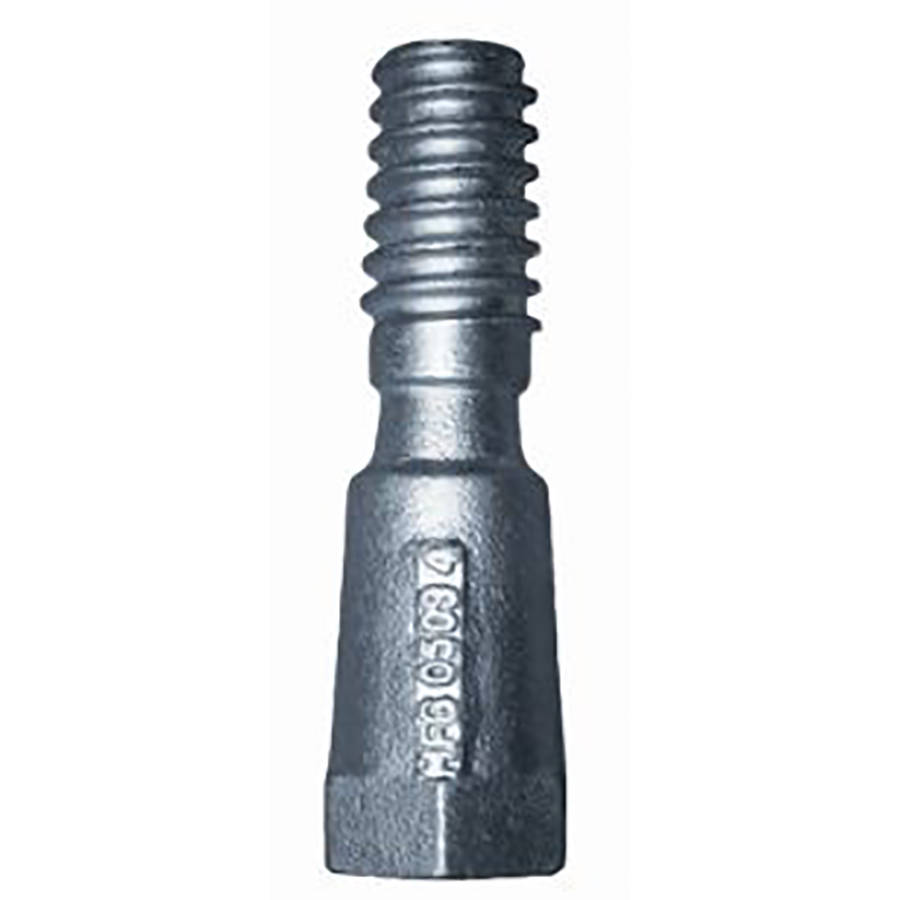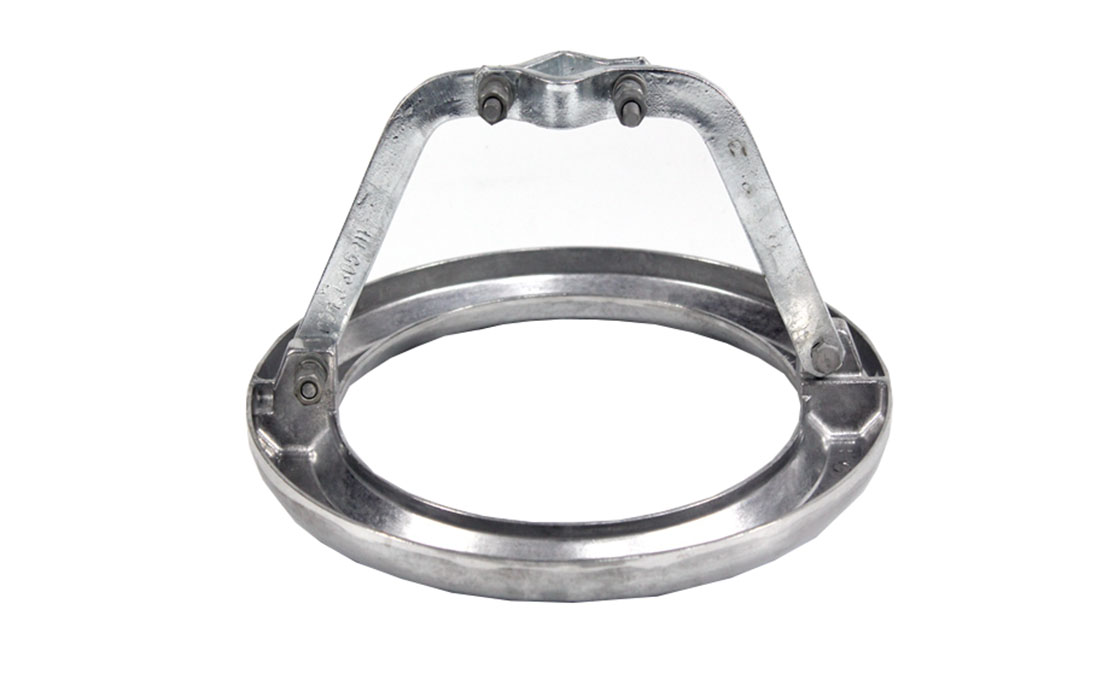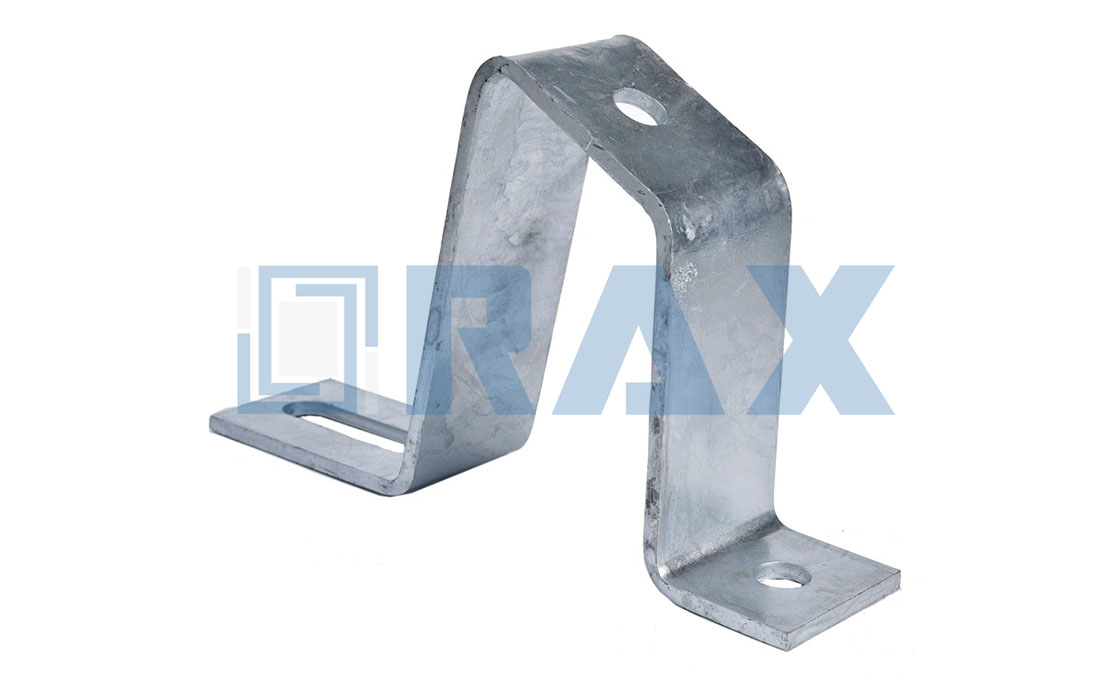
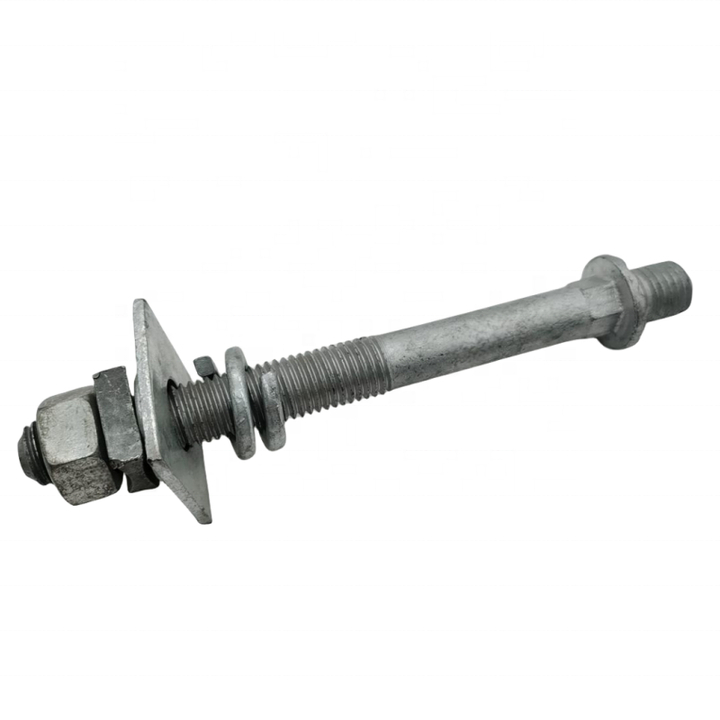
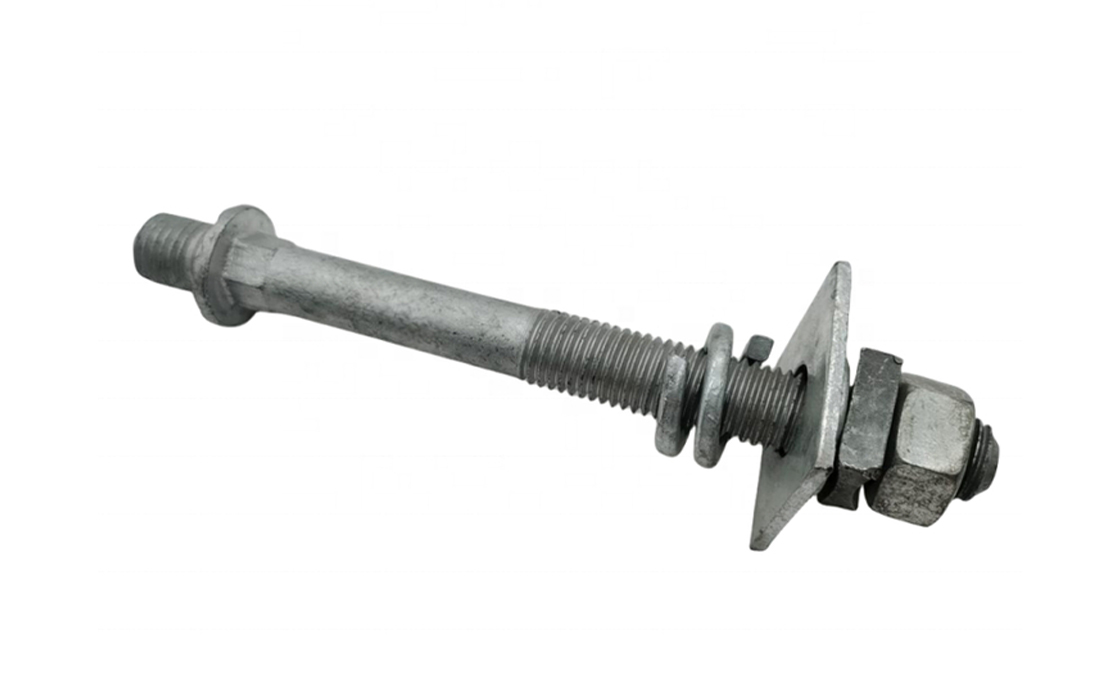
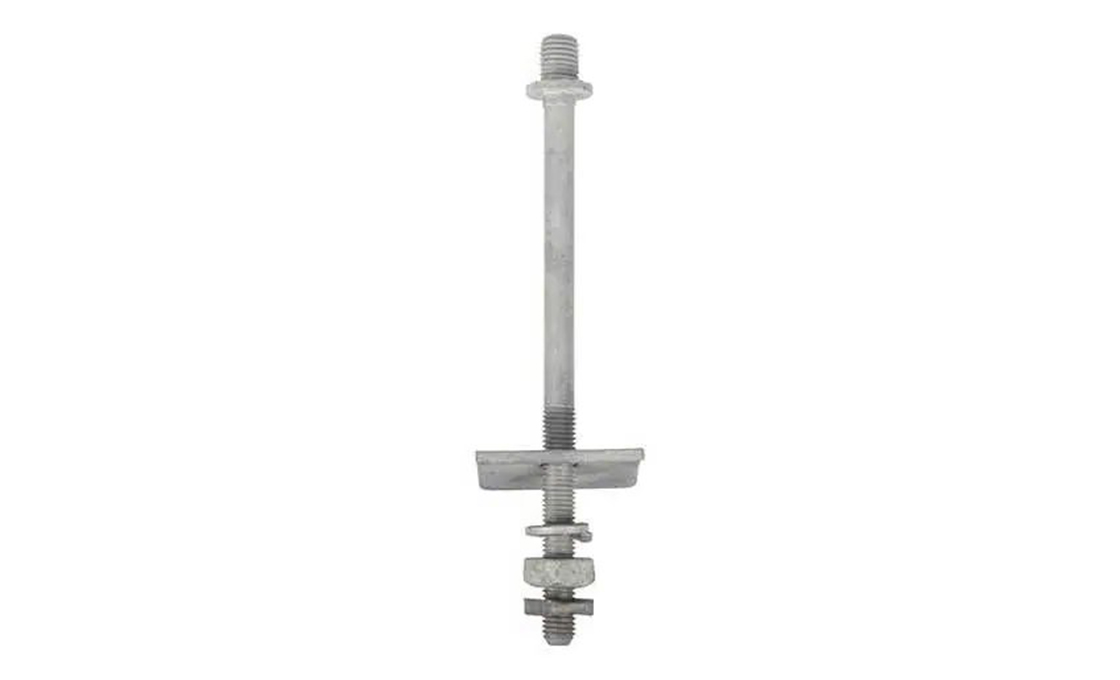
Line Post Stud
- Threaded stud that bolts a line-post insulator to a steel crossarm or bracket
- Standard 5/8 in and 3/4 in studs; long-shank versions for thicker arms
- Tensile strength 3,000 lb thread / cantilever to match line-post insulator
- Forged / galvanized steel, ASTM A-153; TDG option for severe corrosion
- Gain or flat-face base to seat square on the arm
- Hubbell DF19M2 long-shank class equivalent
Technical Specifications
| Catalog | Stud | Length | Base | Thread Tensile (lb) | US Equivalent | Surface |
|---|---|---|---|---|---|---|
| RAX-LPS-58 | 5/8 in | 5 in | Flat face | 3,000 | Hubbell DF19M1 | HDG |
| RAX-LPS-58L | 5/8 in | 7 in | Flat face | 3,000 | Hubbell DF19M2 | HDG |
| RAX-LPS-58T | 5/8 in | 7 in | Flat face | 3,000 | Hubbell DF19M2TDG | TDG |
| RAX-LPS-34 | 3/4 in | 7 in | Gain base | 4,000 | heavy-duty | HDG |
| Custom | Other stud / length / base — send your insulator and arm spec | |||||
Application & Installation
Where it is used
The line-post stud is the threaded rod that fastens a line-post insulator to a steel crossarm, bracket or pole-top plate. Unlike a pin-type spindle, it does not thread into the insulator porcelain — the line-post insulator has its own base, and the stud bolts that base solidly to the structure.
Installation sequence
- Select the stud length for the arm / bracket thickness.
- Pass the stud through the mounting hole; seat the base flat or in the gain.
- Secure with the supplied nut and lock washer.
- Bolt the line-post insulator base onto the stud.
- Torque to the insulator maker's specification.
Buyer’s Guide: Line Post Stud
1. What a Line-Post Stud Does
A line-post stud is the threaded fastener that mounts a line-post insulator to its support. Line-post insulators carry their own base flange; the stud's job is to bolt that base rigidly to a steel arm, bracket or pole-top plate so the insulator stands as a cantilever.
2. Stud Diameter & Length
5/8 in is the common distribution size; 3/4 in for heavier line-post insulators. Length (5–7 in) is set by the arm or bracket thickness plus the insulator base — long-shank studs suit thick steel arms and stacked hardware.
3. Flat-Face vs Gain Base
A flat-face base seats on a flat steel arm; a gain base sits into a routed gain on a wood arm so the insulator stands square. Pick to match your structure so the line-post insulator is not pre-loaded off-axis.
4. Thread Tensile & Cantilever
Studs are rated to 3,000 lb thread tensile and matched to the line-post insulator's cantilever class. The stud must not be the weak link — size it to the insulator so the assembly meets its published cantilever.
5. HDG vs TDG Corrosion Protection
Standard hot-dip galvanizing (ASTM A-153) suits most environments; a TDG (thermal-diffusion galvanized) option gives a harder, more uniform coating for coastal and high-corrosion lines. Specify TDG where salt or industrial exposure is severe.
6. Material & Hardware
Forged or rolled steel stud, galvanized, supplied with nut and lock washer. Built for 30+ year service carrying line-post insulators on distribution and sub-transmission structures.