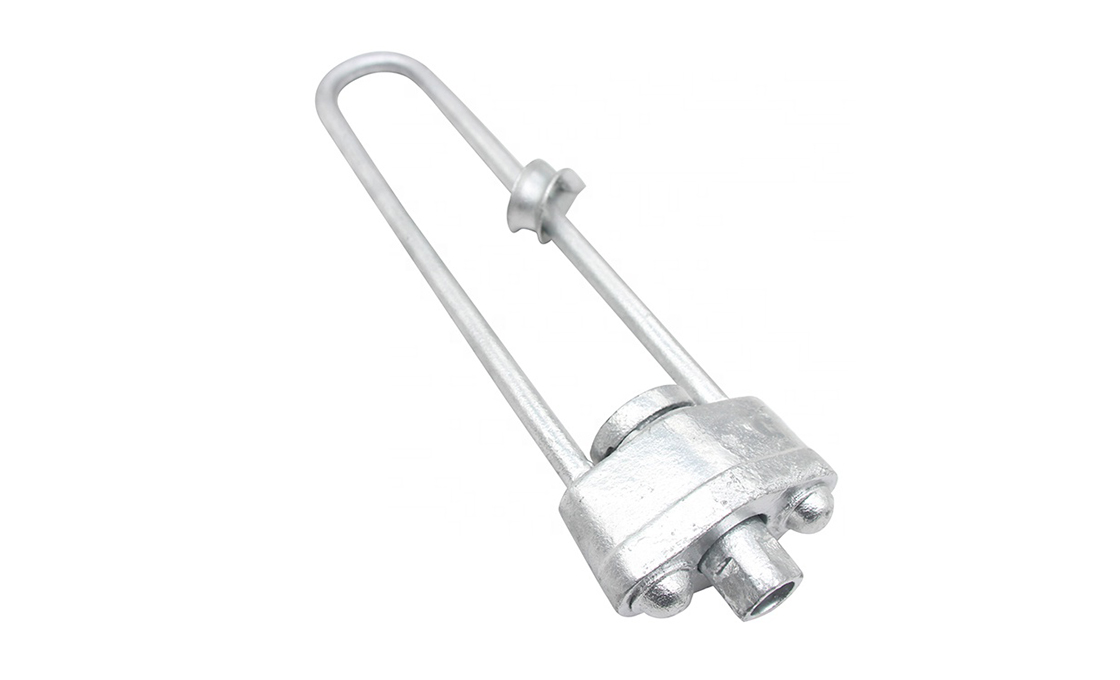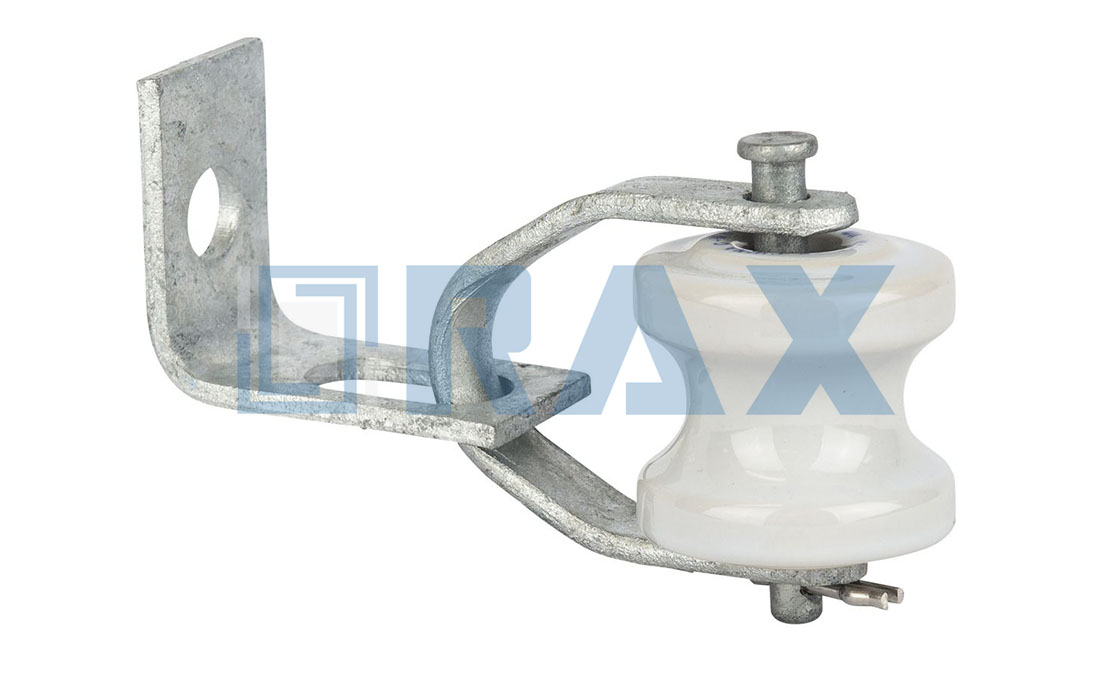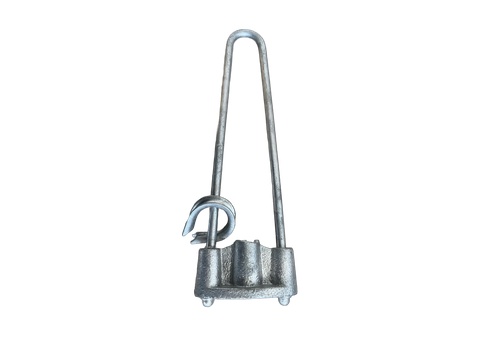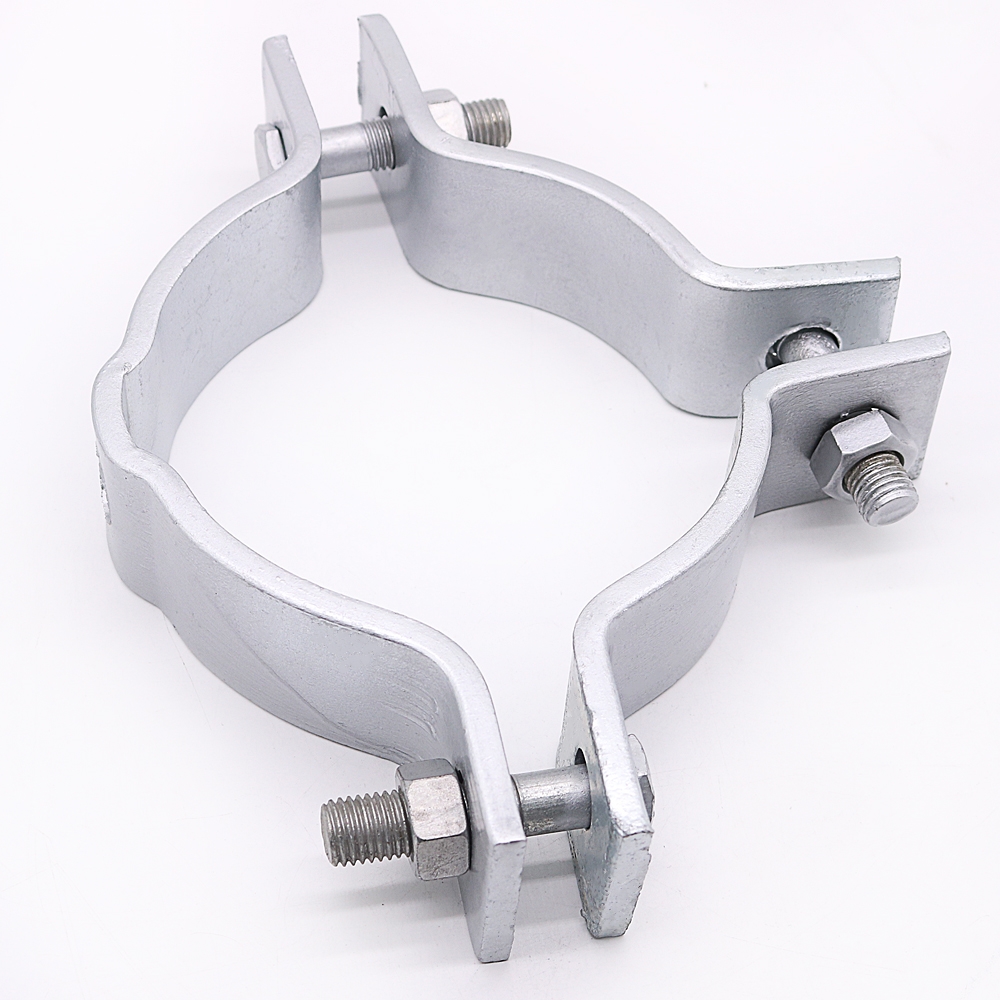
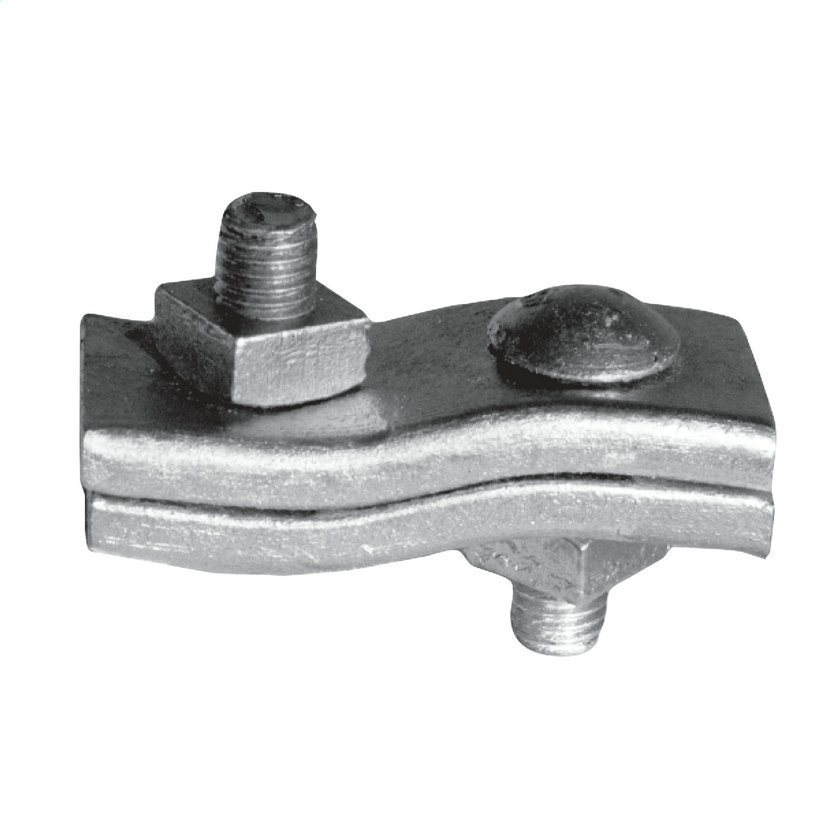
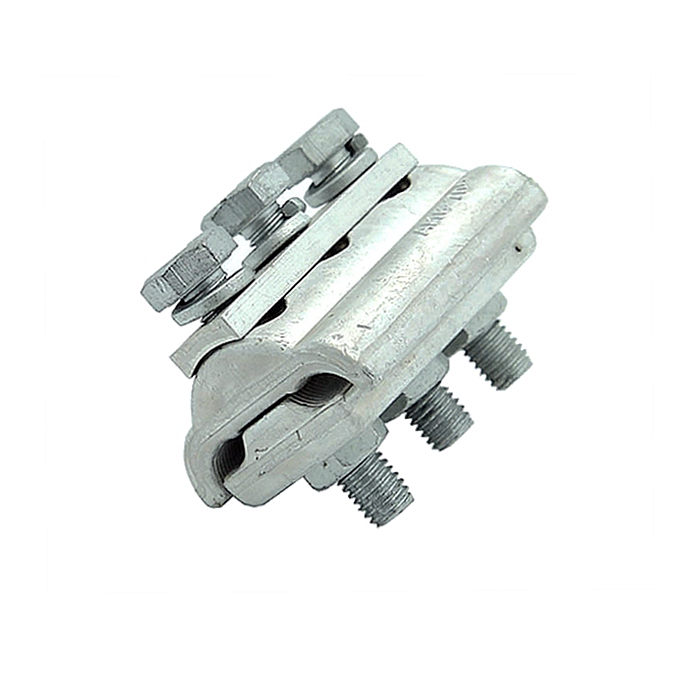
Guy Clamp
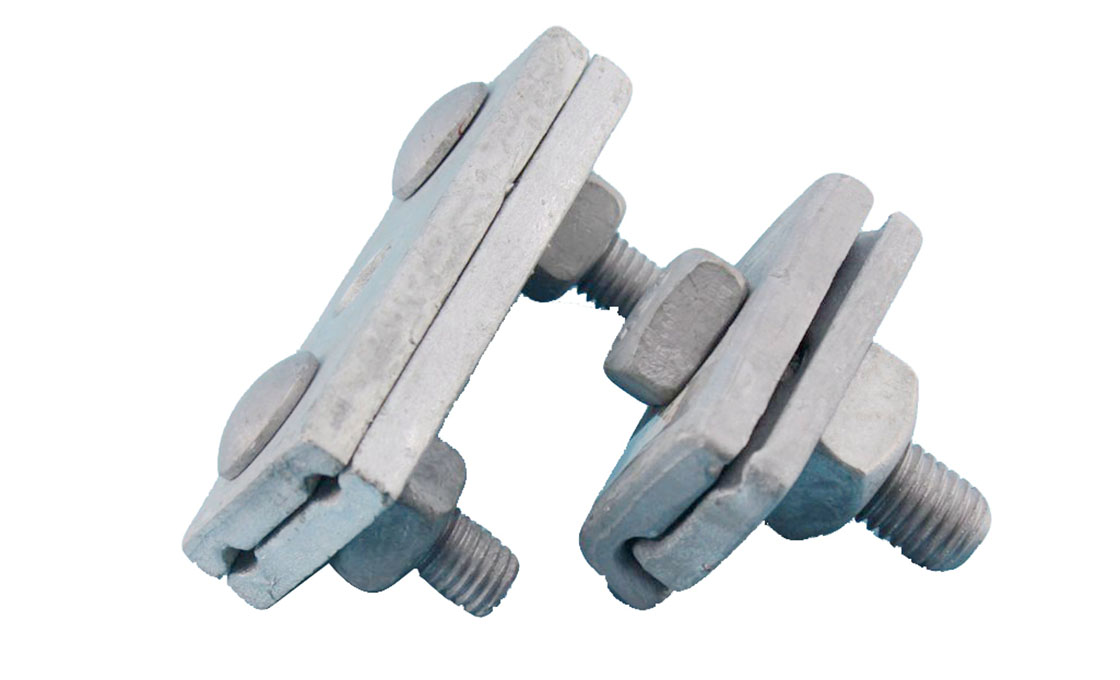
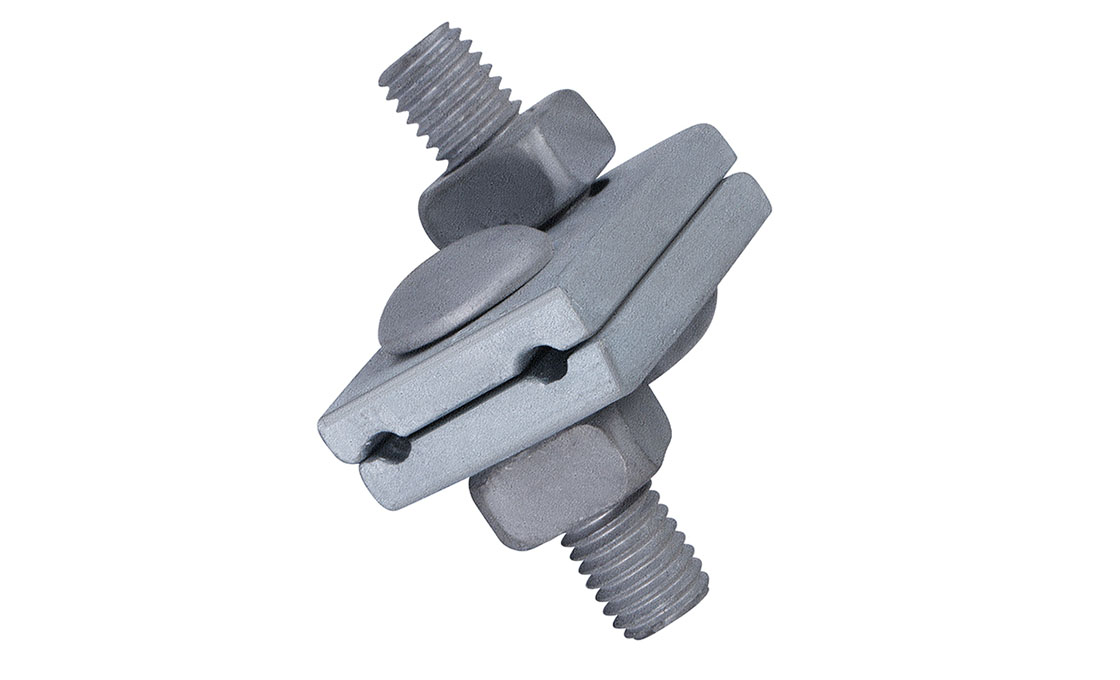
- Bolt-on clamp that terminates a guy wire loop at the pole or anchor end
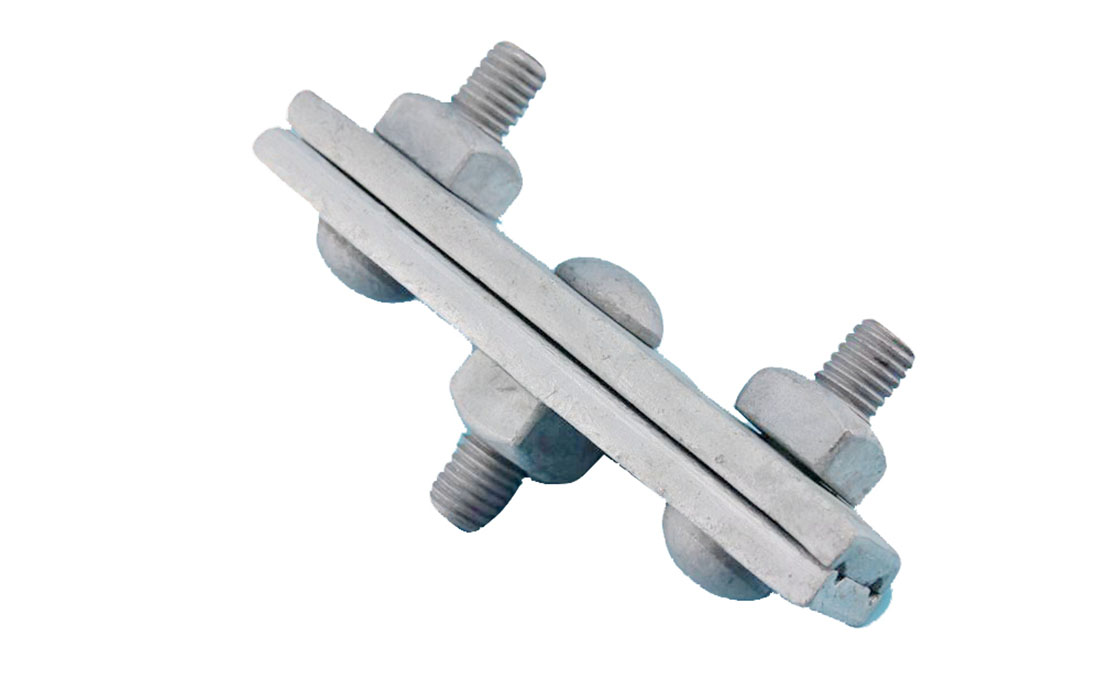
- 4 types: 1, 2, and 3-bolt configurations for 1/4 to 5/8 in (6–16 mm) strand
- Drop-forged carbon steel, hot-dip galvanized to ASTM A153
- Hubbell 6460 & 6461 dimensional equivalent
Technical Specifications
| Catalog | Bolts | Strand Size Range | Working Load | Bolt | Weight (kg) | Use Case |
|---|---|---|---|---|---|---|
| RAX-GC-1B-516 | 1-Bolt | 1/4 in – 5/16 in (6–8 mm) | 1,500 lb (6.7 kN) | M10 | 0.15 | Service drops, light secondary |
| RAX-GC-2B-38 | 2-Bolt | 5/16 in – 3/8 in (8–10 mm) | 3,000 lb (13 kN) | M12×2 | 0.30 | Standard distribution |
| RAX-GC-3B-12 | 3-Bolt | 5/16 in – 1/2 in (8–13 mm) | 5,000 lb (22 kN) | M16×3 | 0.55 | Heavy distribution (Hubbell 6461) |
| RAX-GC-3B-58 | 3-Bolt | 3/8 in – 5/8 in (10–16 mm) | 8,000 lb (36 kN) | M16×3 | 0.80 | Transmission (Hubbell 6460) |
Application & Installation
Where it is used
- Guy wire loop terminations at the pole side (top of stay rod)
- Guy wire loop terminations at the anchor side (bottom of stay rod)
- Service-drop strand deadends at customer poles (1-bolt and 2-bolt)
- Cable TV and telecom messenger wire terminations
- Aerial strand splices and crossover points
Installation sequence
- Form a loop in the strand around the thimble or eye nut.
- Position 2–3 clamps on the loose end of the loop, NOT the load-bearing side.
- Orient each clamp with the U-bolt saddle facing the LIVE strand (this is critical — reversed clamps slip).
- Space clamps at 4–6 inch intervals along the loose end.
- Tighten bolts evenly in a star pattern; torque to 40–60 ft-lb (M12) or 60–90 ft-lb (M16).
- Tension the guy and verify no slippage at the clamps after 30 minutes.
Buyer’s Guide: Guy Clamp
1. What’s Inside a Complete Guy Clamp Kit?
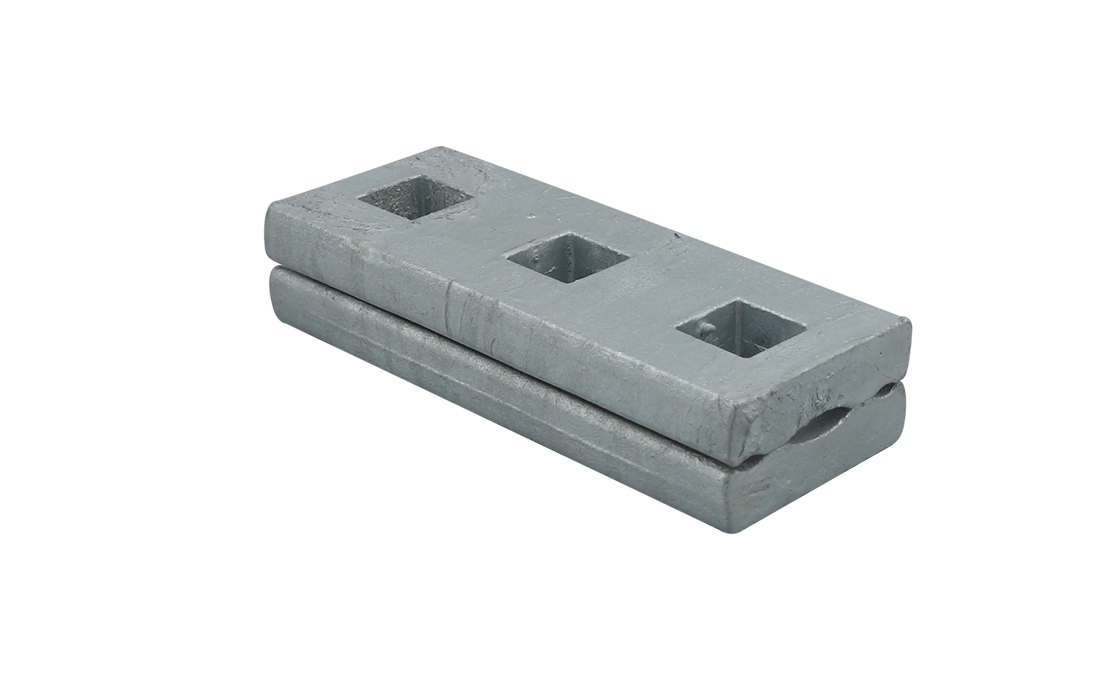
Each guy clamp ships as a complete bolt-on kit: two cast-iron plates with parallel grooves machined to match the strand diameter, the through-bolts (1, 2, or 3 depending on size class), matching hex nuts, and flat washers. The two plates clamp around the strand like jaws — the parallel grooves trap the strand without crushing it, while the bolts provide the clamping force that prevents slippage. Cast iron is preferred over stamped steel here because the groove geometry is hard to stamp precisely; cast gives a clean, matched fit to the strand’s twist pattern. Ordering the wrong combination is a common procurement error — some Asian-OEM listings show only the plates and expect you to source bolts separately, but the matched bolt set is critical because non-standard bolt grades won’t develop the rated clamping force.
2. 1-Bolt vs 2-Bolt vs 3-Bolt — Which Configuration?
Bolt count corresponds to working load. 1-bolt clamps handle up to 1,500 lb — service drops, residential customer drops, telecom messenger at light tension. 2-bolt clamps double that to 3,000 lb — standard distribution guy terminations, multi-tenant residential, cable TV trunks. 3-bolt clamps reach 5,000–8,000 lb depending on strand size — the standard for primary distribution and transmission guy installations, matching Hubbell 6460/6461 catalog. Critical engineering note: the working load is the safe sustained tension, with a 4:1 safety factor to ultimate slip. For tension calculations, use peak loading (wind + ice combined) not just nominal conductor tension.
3. Strand Size Compatibility — Imperial & Metric Crossover
Guy strand sizes are spec’d by overall diameter (not gauge). The most common North American sizes:
- 5/16 in (8 mm) — standard distribution and telecom messenger, paired with RAX-GC-1B or -2B
- 3/8 in (10 mm) — heavy distribution, primary guy, paired with RAX-GC-2B or -3B-12
- 1/2 in (13 mm) — transmission and substation, paired with RAX-GC-3B-12
- 5/8 in (16 mm) — heavy transmission and dead-ends, paired with RAX-GC-3B-58
The clamp’s strand-size range is a safe window, not just a maximum. Using a 5/8 in-rated clamp on 5/16 in strand will allow the strand to spin inside the grooves under load, which dramatically reduces holding capacity. Match the clamp’s lower bound to within 1/16 in of your actual strand diameter.
4. How Many Clamps Per Guy Termination?
Industry standard: 3 clamps per loop for primary distribution and transmission, 2 clamps minimum for light secondary and service drops. The clamps sit on the dead end of the loop (the loose end, not the load-bearing side), spaced 4–6 inches apart. The critical orientation rule: the U-bolt saddle (the curved underside) must face the LIVE side of the strand — "Never saddle a dead horse" is the industry mnemonic. Reversed clamps will let the strand slip under sustained tension. Project drawings should specify the count and orientation explicitly; if not, default to 3 clamps for any guy carrying primary conductor load.
5. Drop-Forged vs Cast Iron vs Stamped Steel
Three construction methods, in order of strength: drop-forged carbon steel (best, ~40% more expensive, dimensional accuracy ±0.5 mm, used for transmission-grade RAX-GC-3B-58), cast iron (most common, good groove geometry, paired with forged bolts, RAX-GC-3B-12 and below), and stamped sheet steel (avoid — these are sometimes sold cheap but the groove geometry is poor and they crush strand under sustained load). Specify drop-forged at order if your project requires Hubbell or MacLean equivalence; specify cast iron for the cost-effective default. We never ship stamped construction.
6. Galvanizing for Strand Service: ASTM A153
Guy clamps are exposed to wind, rain, and UV but NOT buried, so the galvanizing requirement is less stringent than for stay rods. ASTM A153 Class C governs the plates (minimum 86 μm coating); Class B governs the bolts (90 μm). The clamp interfaces directly with the galvanized strand, so dissimilar-metal corrosion is not a concern — both are zinc-coated steel. For coastal or industrial environments (C4–C5), add a duplex coating (paint over galvanizing) or specify stainless construction. Service life with standard galvanizing: 30+ years in C3 atmosphere, 20–25 years in C4.