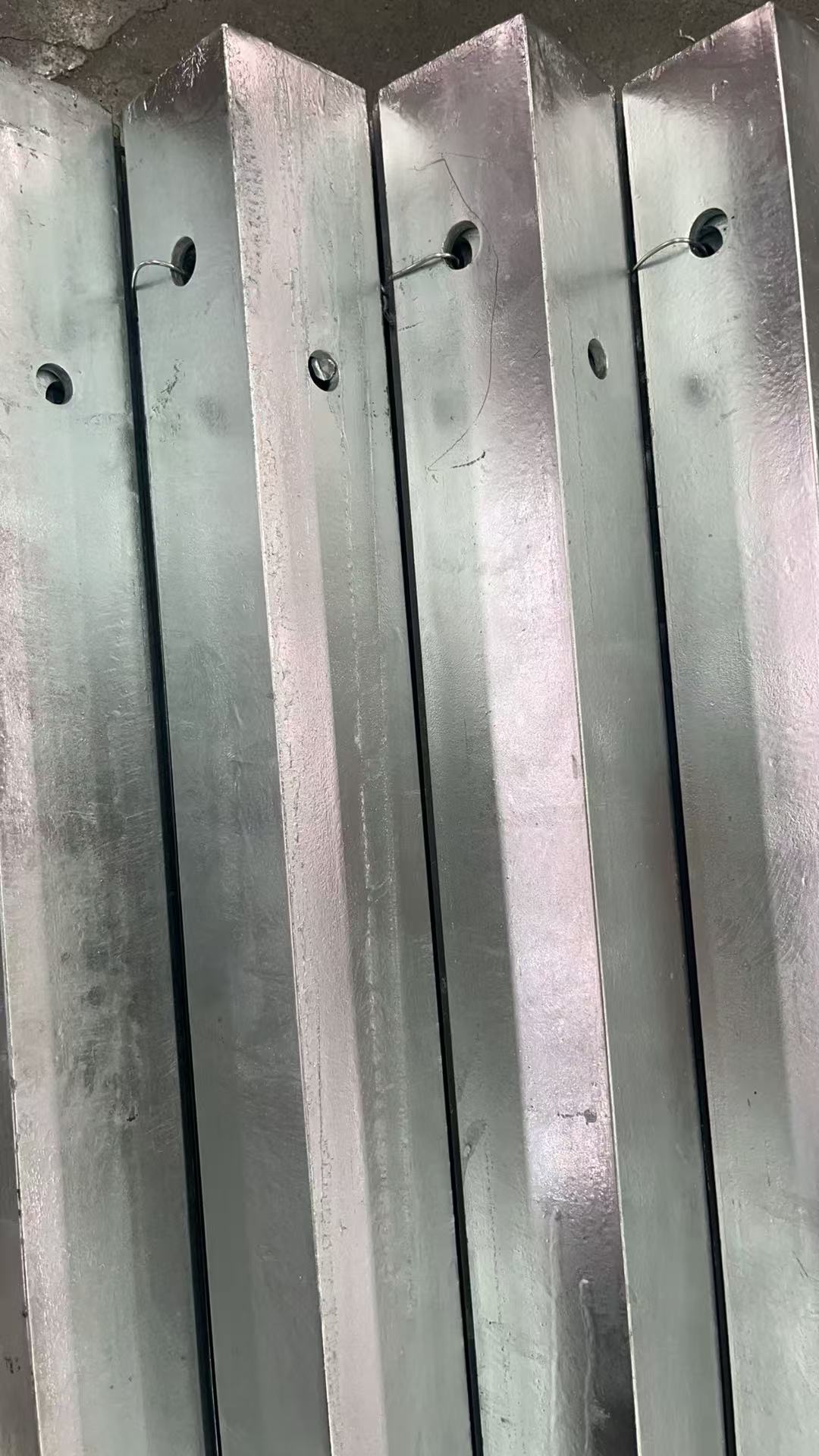
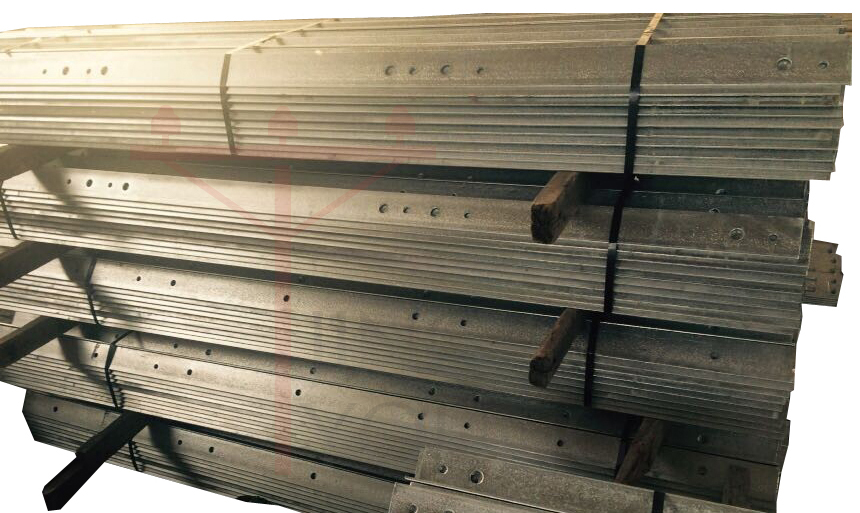
Power Pole Cross Arm
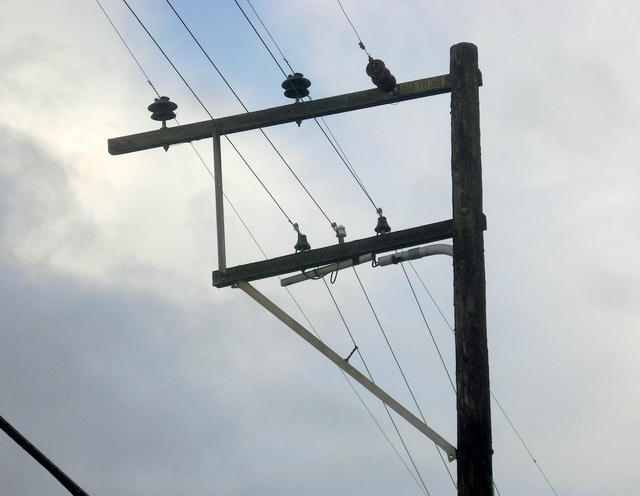
- Main horizontal arm at the top of a utility pole — the part insulators bolt to
- 4 sizes: 6 / 8 / 10 / 12 ft lengths in L75 to L100 angle section
- Hot-dip galvanized to ASTM A-123 (≥86 μm)
- Mill certificate + galvanizing report with every shipment
Technical Specifications
| Catalog No. | Length (ft / mm) | Angle Section | Insulator Pin Holes | Weight (kg) | Standard |
|---|---|---|---|---|---|
| RAX-PPCA-6FT-L75 | 6 / 1,830 | L75 × 75 × 6 | 6 holes | 12.5 | ANSI C135.6 / ASTM A-123 |
| RAX-PPCA-8FT-L75 | 8 / 2,440 | L75 × 75 × 6 | 8 holes | 17.0 | ANSI C135.6 / ASTM A-123 |
| RAX-PPCA-10FT-L90 | 10 / 3,050 | L90 × 90 × 6 | 10 holes | 25.0 | ANSI C135.6 / ASTM A-123 |
| RAX-PPCA-12FT-L100 | 12 / 3,660 | L100 × 100 × 8 | 12 holes | 44.0 | ANSI C135.6 / ASTM A-123 |
Application & Installation
Where it is used
- Standard distribution lines (11 / 14.4 / 24.9 kV)
- Light transmission lines (34.5 / 69 kV)
- Substation egress poles with multiple incoming circuits
- Rural electrification per RUS 1728F-803 / 1728F-810
- Industrial and utility-yard distribution
Installation sequence
- Position the crossarm horizontally at the pole-top elevation per drawing.
- Align the two center holes with the pole’s pre-drilled mounting points.
- Install a U-bolt or through-bolt assembly with square washers and 4 nuts (per ANSI C135.1).
- Verify the arm is level both ways (front-to-back and side-to-side) before final torque.
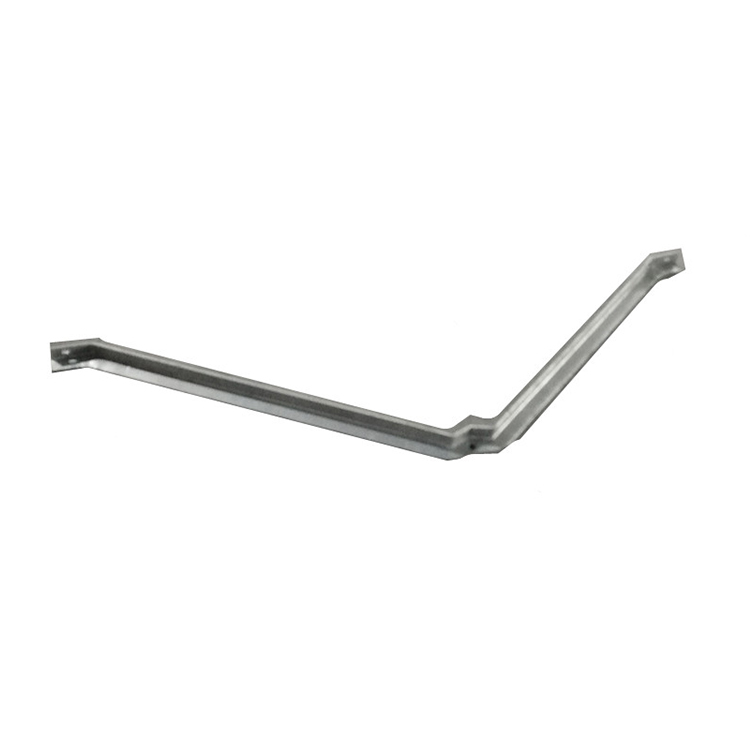
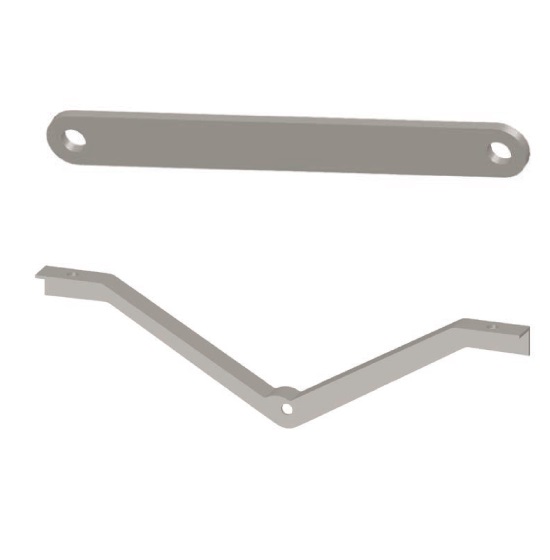
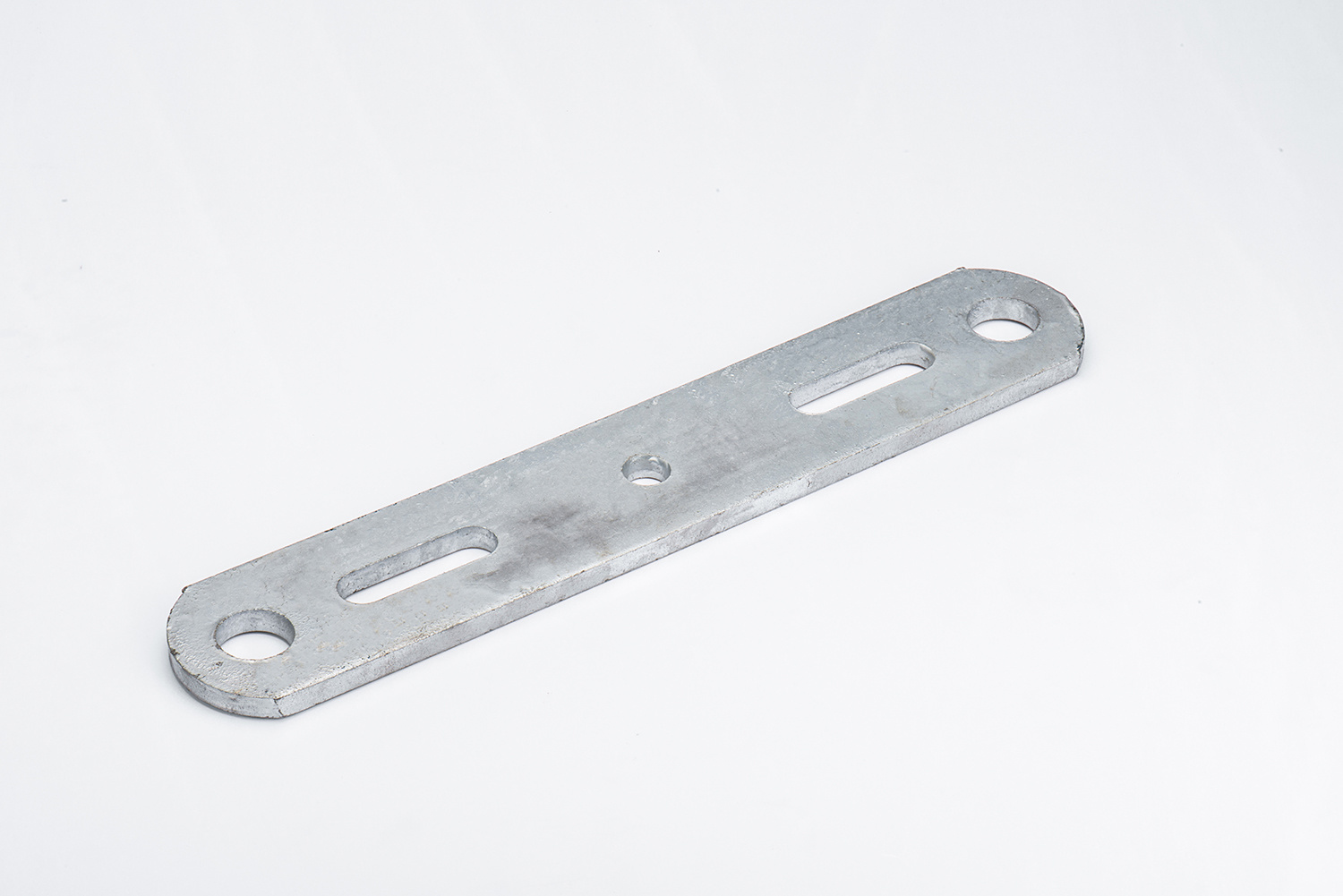
- Install the supporting brace from below (V-type for heavy load, flat-steel pair for distribution).
- Mount insulator pins into the pre-punched holes; thread and torque to manufacturer spec.
Buyer’s Guide: Power Pole Cross Arm
1. When Do You Need a Power Pole Cross Arm?
A power pole cross arm is the main horizontal structural member at the top of a utility pole — the part the insulators bolt to and the conductors run from. Raxsteel makes it in hot-rolled angle steel, hot-dip galvanized for 30+ year outdoor service.
Steel is the standard choice over wood for industrial, substation, and transmission applications, and increasingly for coastal or chemically harsh distribution lines where treated wood degrades quickly. The trade-off: treated wood is cheaper up front (often 30–50% less) and lighter to lift, but its service life in C3 (industrial) or C4 (coastal) atmospheres is typically 15–20 years before serious rot or insect damage shows up. Hot-dip galvanized angle steel passes 30+ years in the same environment with no maintenance beyond visual inspection. For long-life rural distribution or any project where pole-replacement labor is the dominant lifetime cost, steel pays back inside 10 years. Every brace product on raxsteel (V-type, flat-steel, alley, double arming plate) exists to support this component.
2. How to Choose the Right Size
Length and angle section together set the load class.
- 6 ft / L75 — light distribution, single circuit (11–15 kV)
- 8 ft / L75 — standard distribution, the most-ordered size (15–24.9 kV)
- 10 ft / L90 — heavy distribution, multiple circuits
- 12 ft / L100 — light transmission (34.5–69 kV)
Rule of thumb for length: arm length should equal pole-top conductor spread plus 12 inches of overhang on each end for the outermost insulator. For 3-phase distribution at 5 ft phase spacing, that’s 5 + 12 + 12 = 7 ft minimum — round up to 8 ft. For section, the L75 (3 inch) covers most distribution; L90 (3.5 inch) is for heavier multi-circuit; L100 (4 inch) is for the largest transmission distribution. Custom lengths (4–16 ft) and non-standard angle sections (L60 through L120) available with 5–7 day tooling, 200-piece minimum.