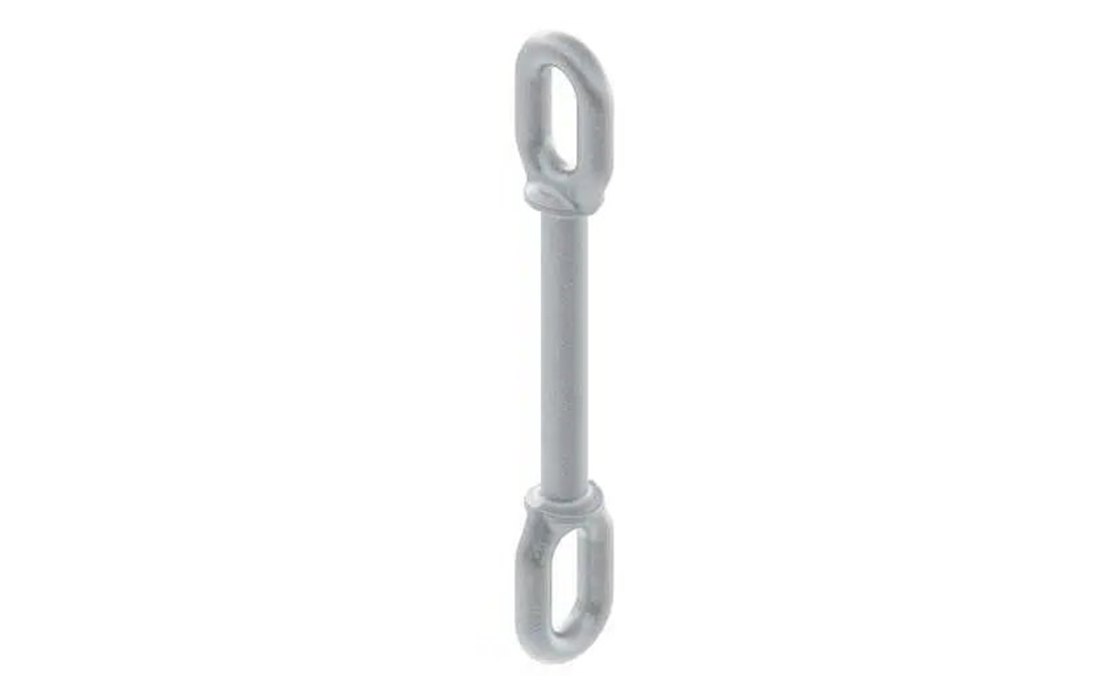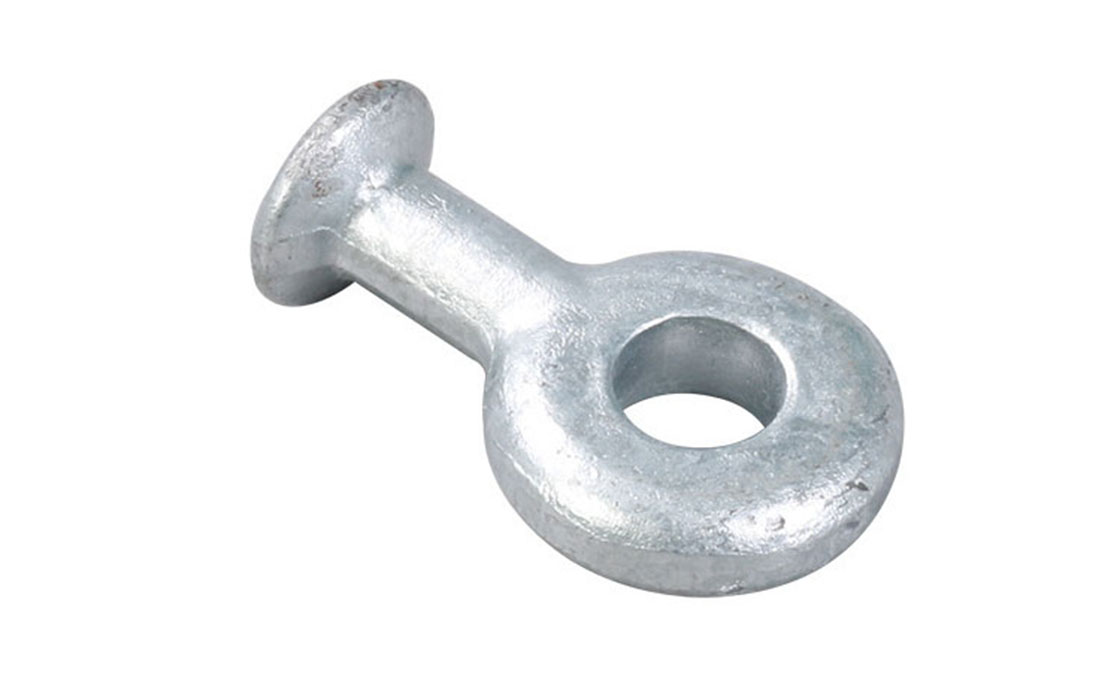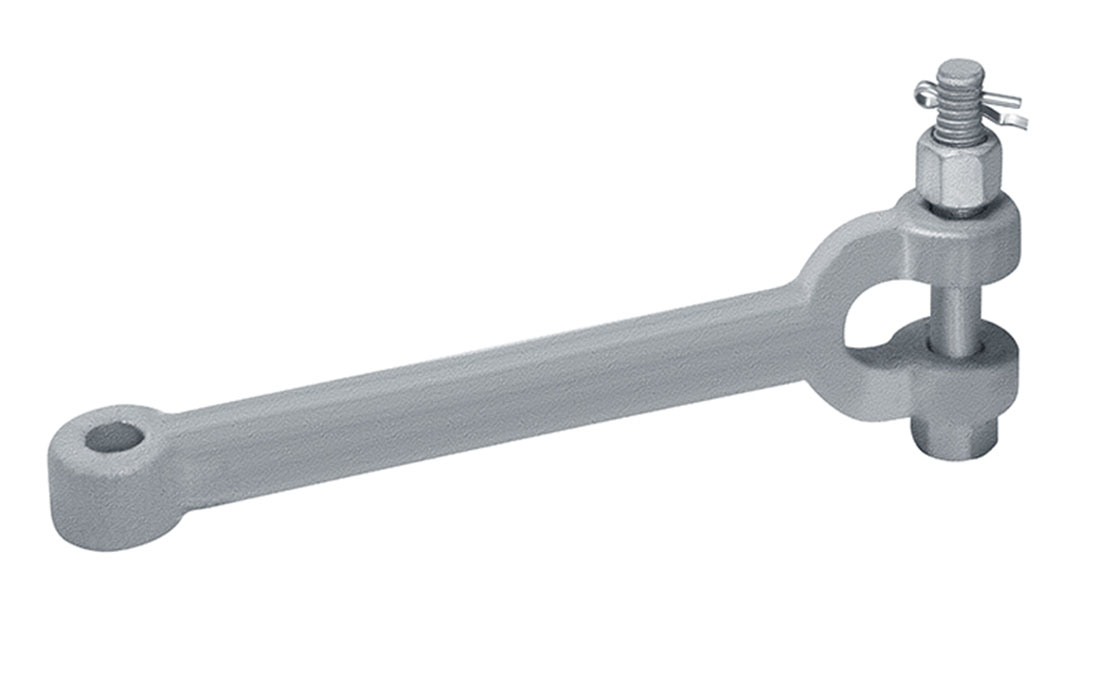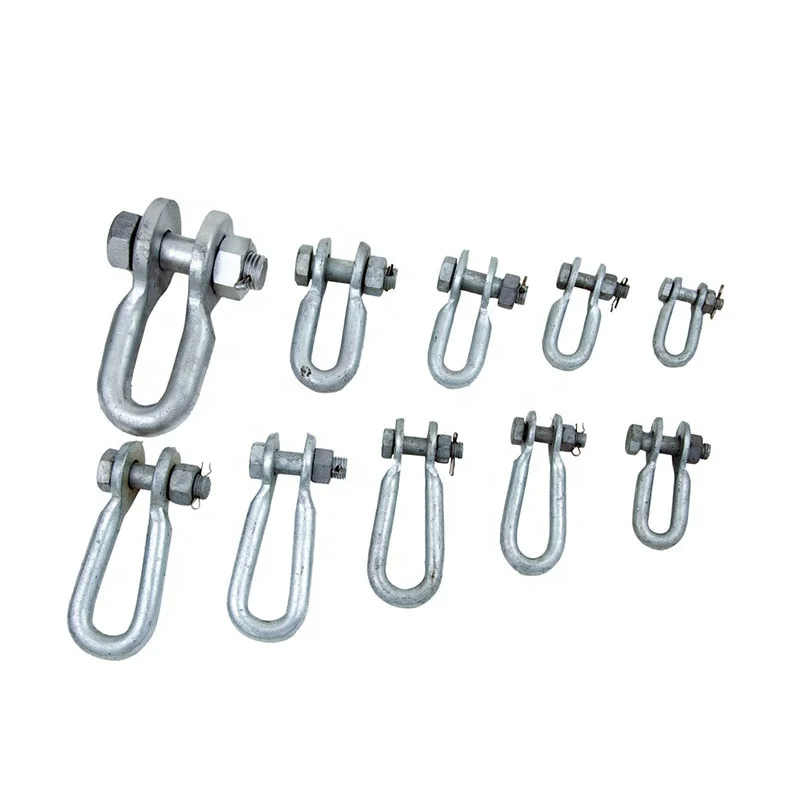
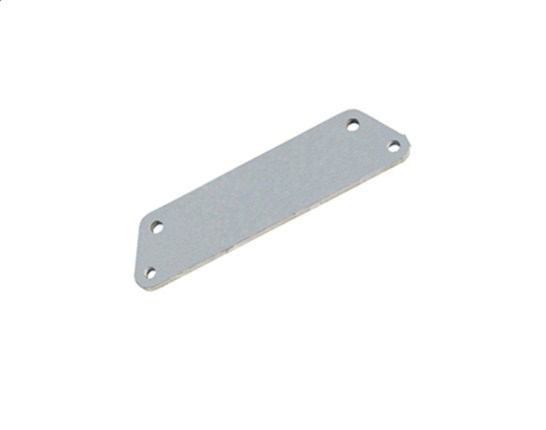
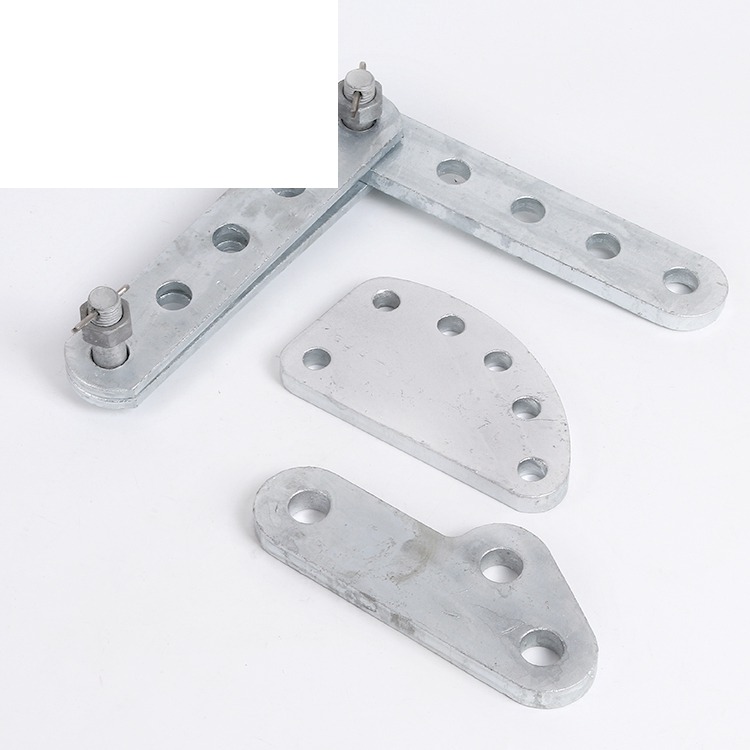
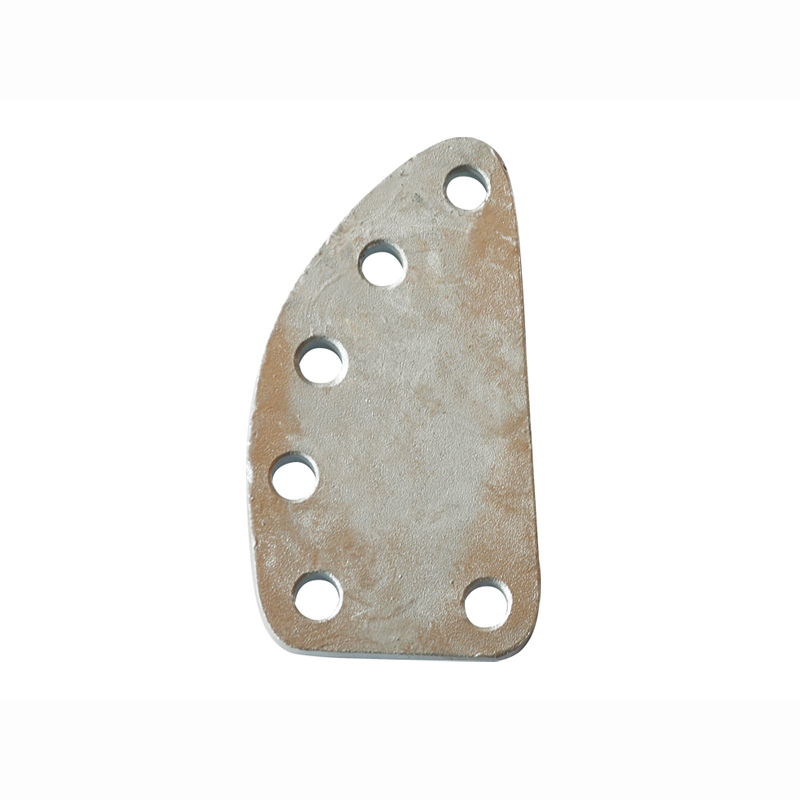
Yoke Plate
- Connecting plate that splits / joins insulator-string and conductor loads
- Distributes load across twin or quad sub-conductor bundles
- Rated failing load 400–550 kN across the L series
- Carbon steel plate 16–32 mm thick, hot-dip galvanized
- Multiple hole patterns for V-strings, double-tension & bundle yokes
- GB / IEC link-fitting dimensions, ANSI-string compatible
Technical Specifications
| Catalog | Failing Load (kN) | Thickness b (mm) | Length h (mm) | Hole d (mm) | Weight (kg) | Surface |
|---|---|---|---|---|---|---|
| L-1040 | 400 | 16 | 70 | 20 | 4.43 | HDG |
| L-1640 | 400 | 18 | 100 | 26 | 5.80 | HDG |
| L-2052 | 520 | 16 | 100 | 30 | 8.00 | HDG |
| L-2055 | 550 | 16 | 200 | 30 | 11.8 | HDG |
| L-4255 | 550 | 24 | 250 | 45 | 24.4 | HDG |
| L-6050 | 500 | 32 | 250 | 51 | 23.3 | HDG |
| Custom | Other loads / hole patterns for bundle & V-string yokes — send your string drawing | |||||
Application & Installation
Where it is used
The yoke plate (connecting plate) is the load-splitting member of a transmission insulator string. It takes a single attachment from the tower or string above and divides it to two or more points below — the parallel insulators of a V or double-tension set, or the sub-conductors of a twin / quad bundle. It is the part that keeps load shared evenly across the assembly.
Installation sequence
- Select the plate by failing load and the hole pattern of your string.
- Pin the single (apex) hole to the string / tower fitting above.
- Pin each lower hole to its insulator clevis or clamp.
- Fit all clevis pins and stainless cotters.
- Confirm the plate hangs square so load shares evenly.
Buyer’s Guide: Yoke Plate
1. What a Yoke Plate Does
A yoke plate is a thick steel connecting plate drilled to split one load path into several. In a V-string it ties the two insulator legs to a common point; in a bundle dead-end it spreads the pull across twin or quad sub-conductors. It is the junction that turns a single string attachment into a balanced multi-point one.
2. Sizing by Failing Load
The L series runs 400–550 kN. Because the plate carries the combined string load, size it to the total — not the per-leg load — with margin for unequal sharing under wind and ice. Plate thickness grows with load, from 16 mm to 32 mm.
3. Hole Pattern Drives Selection
Yoke plates differ mostly in hole layout: two-hole for a simple V, multi-hole for quad bundles or double-tension sets. The pattern must match your insulator and clamp spacing exactly, so order by the string drawing, not just the load.
4. Plate Thickness & Hole Diameter
Thickness (16–32 mm) sets bearing strength at the pins; hole diameter (20–51 mm) must match the clevis / Y-clevis pins of the fittings it joins. Confirm both so the pins seat without slop.
5. Where It Sits in the String
Typically just below the tower attachment on a V or double string, or at the conductor end of a bundle dead-end. It pairs with U / Y clevis links, ball / socket fittings and tension clamps to complete the assembly.
6. Material & Galvanizing
Cut and drilled from carbon steel plate, hot-dip galvanized to ISO 1461 for 30+ year life. Edges are dressed so the galvanizing covers cleanly and the plate does not chafe the fittings it links.