Cable Extension Bolt
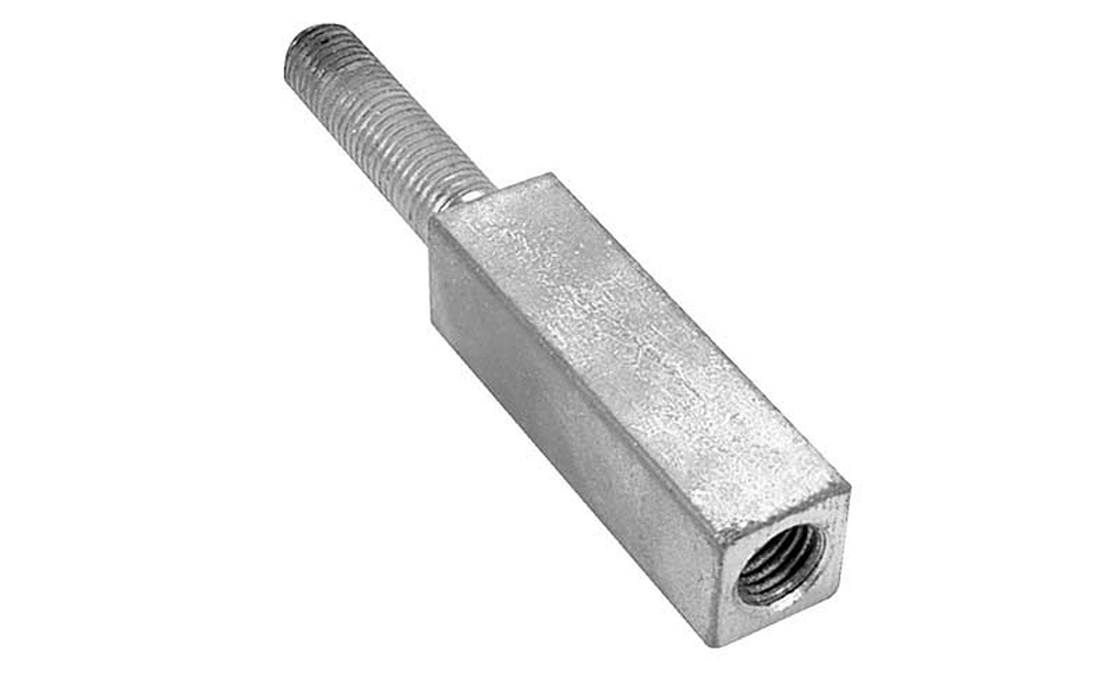
- Long extension bolt that carries a clamp or fitting clear of the pole
- Threaded end takes the clamp; shoulder seats on the bracket
- ANSI pole-line, hot-dip galvanized to ASTM A-153
- 5/8 / 3/4 in thread; lengths for the needed standoff
- Spaces secondary clamps and racks off the pole face
- For drop-wire, secondary and standoff applications
Technical Specifications
| Catalog | Thread | Length (in) | Standoff (mm) | Min. Tensile (kg) | Surface |
|---|---|---|---|---|---|
| RAX-CXB-58 | 5/8 in | 6–12 | 120–280 | 6,800 | HDG |
| RAX-CXB-34 | 3/4 in | 8–18 | 180–400 | 9,000 | HDG |
| Custom | Other sizes / configurations — send your conductor & structure spec | ||||
Application & Installation
Where it is used
The cable extension bolt is a long bolt that holds a clamp, rack or fitting at a set distance off the pole or bracket face. It gives the conductor or secondary cable clearance from the pole — for maintenance access and to prevent abrasion where the cable would otherwise rub the pole surface.
Installation sequence
- Select the thread and length for the standoff needed.
- Bolt the base end to the pole or bracket.
- Seat the shoulder so the bolt stands square.
- Mount the clamp / rack on the threaded end.
- Tighten and confirm the cable clears the pole.
Buyer’s Guide: Cable Extension Bolt
1. What a Cable Extension Bolt Does
A cable extension bolt stands a clamp, rack or fitting off the pole face by a fixed distance. It creates clearance for the conductor or secondary cable so the line is not against the pole — easing maintenance and preventing the cable from chafing the pole.
2. Setting the Standoff
The bolt length sets how far the cable stands off (120–400 mm). Choose the standoff for the clearance the cable needs at the band, transformer or rack — enough for the cable to move and for crews to work.
3. Thread & Strength
5/8 in and 3/4 in threads carry the clamp at the end; minimum tensile ~6,800–9,000 kg covers the secondary loads it sees. The shoulder keeps the bolt square under that load.
4. Galvanizing
Hot-dip galvanized to ASTM A-153, with the nut tapped to run over the zinc, for long service holding the standoff.
5. Where It Fits
At secondary racks, drop-wire supports and transformer leads where the cable must stand clear of the pole. Order with the clamp or rack it carries.
6. Vs a Bracket
Where a fixed bracket gives the standoff, use that; the extension bolt is the simpler answer where only one fitting needs spacing off the pole.