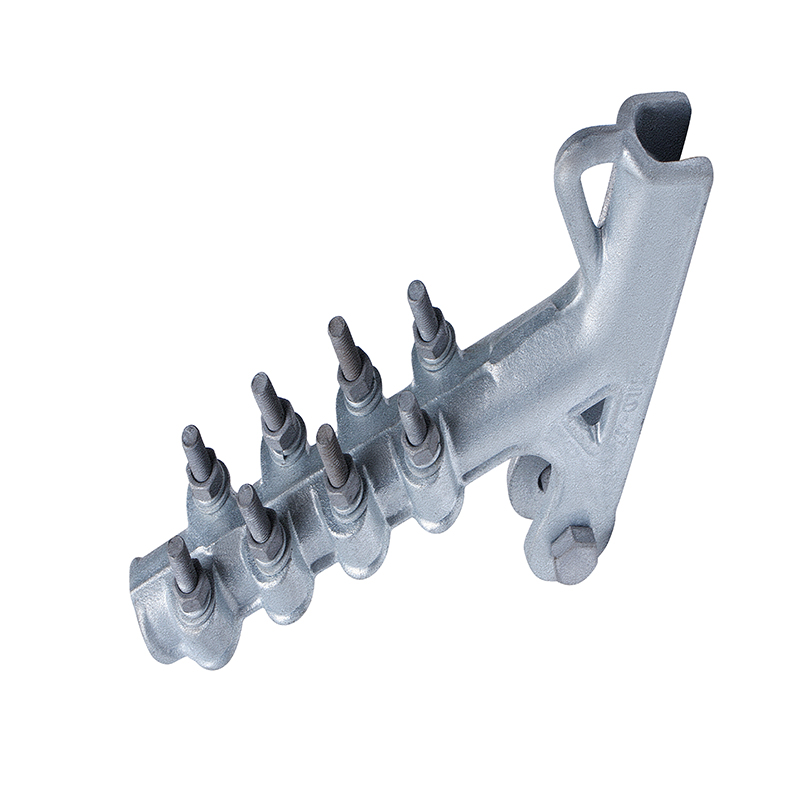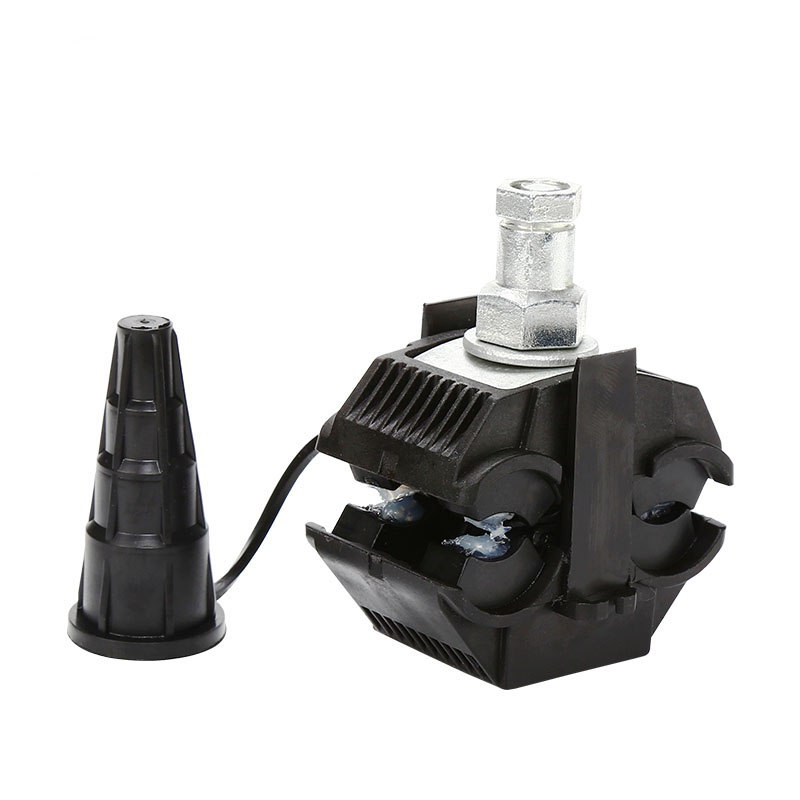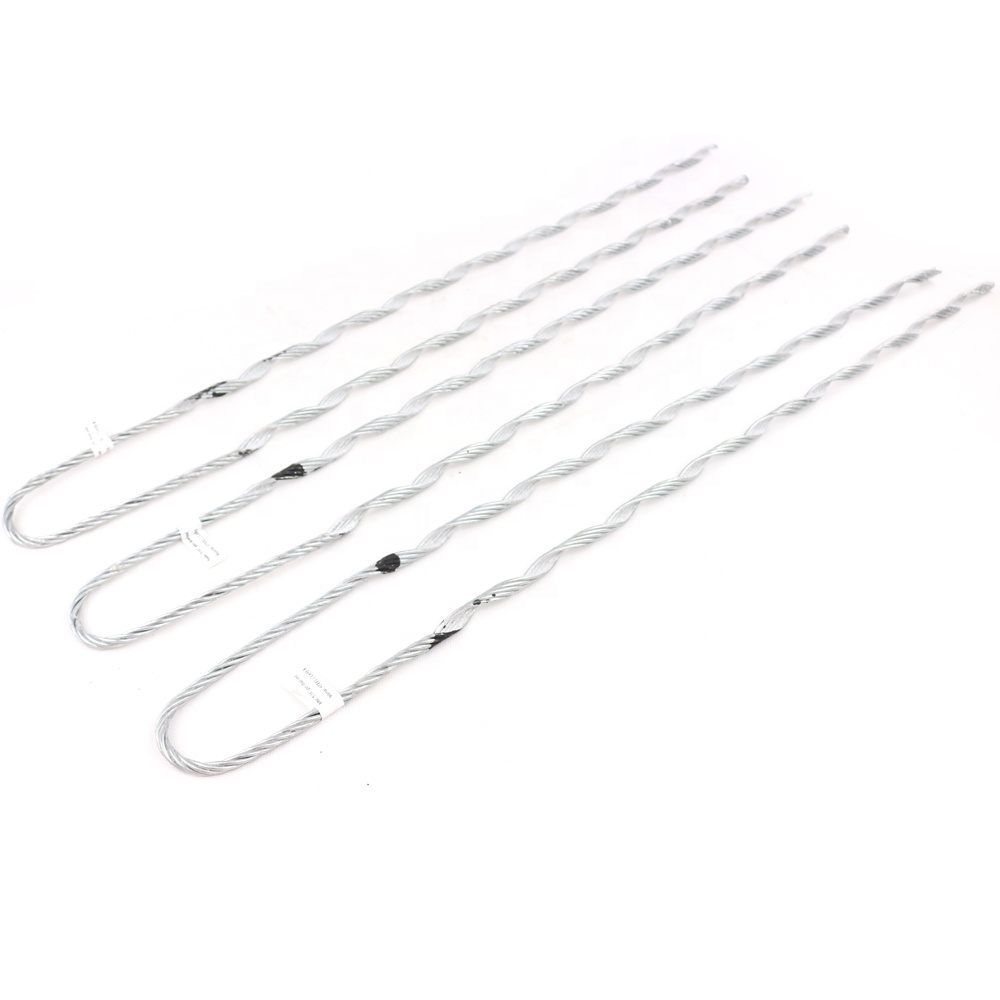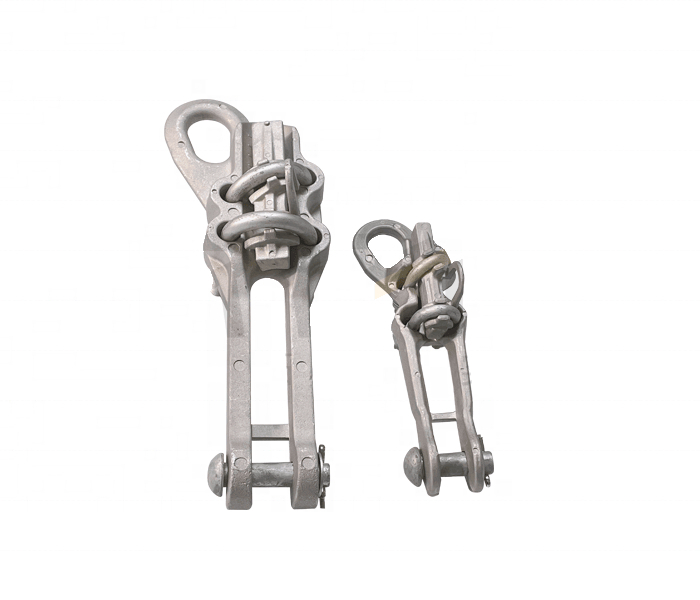
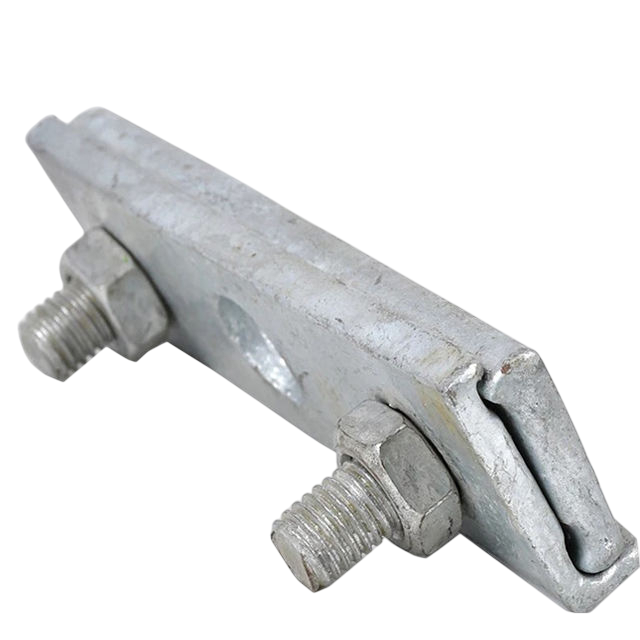
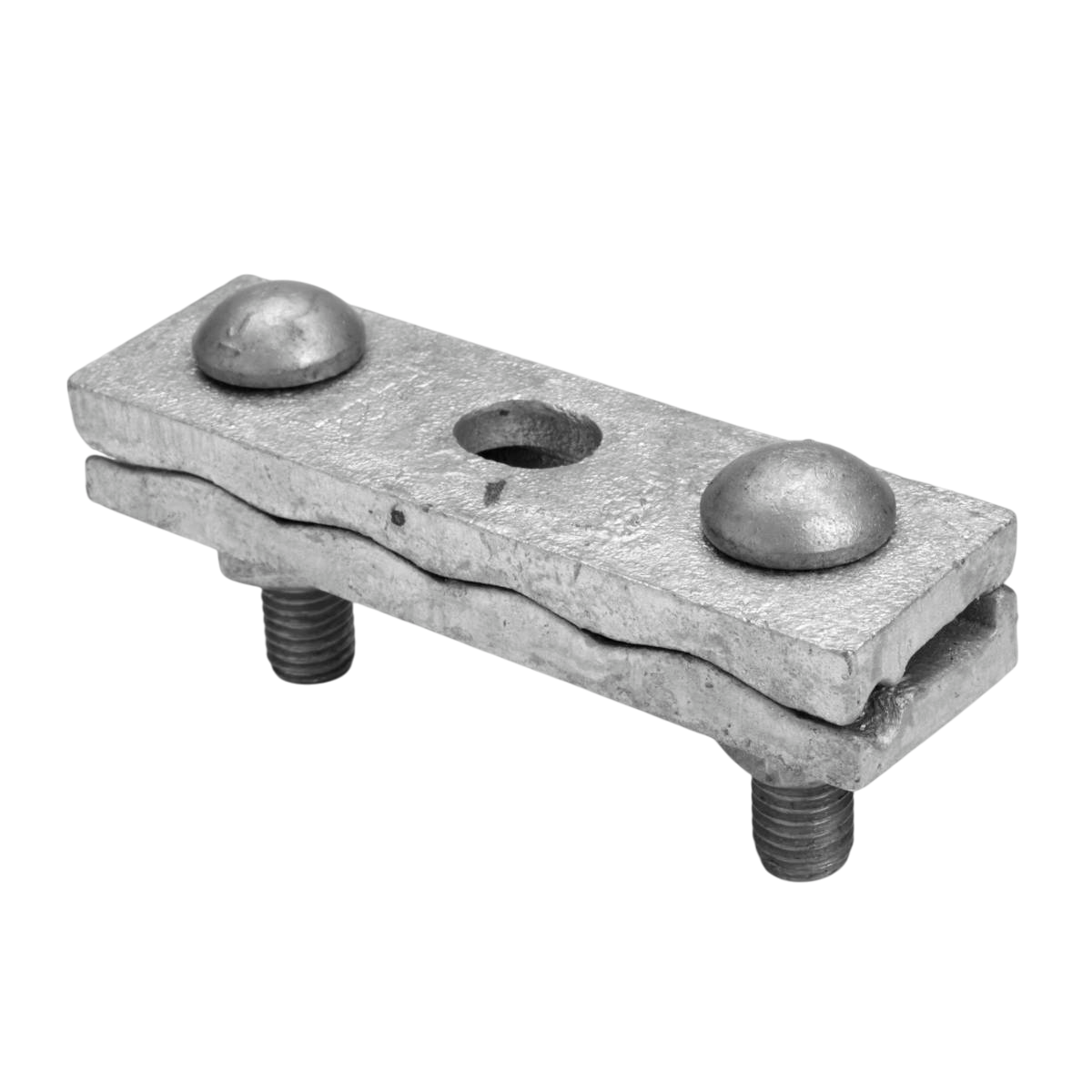
Suspension Clamp
- Supports the conductor at tangent and light-angle suspension points
- CGU / XGU series — aluminium body, U-bolt keeper
- Conductor range 10–36 mm; slip strength 12–30 kN
- Grip ≥ 25% RTS (earthwire) / ≥ 30% RTS (ACSR) per GB
- Aluminium body, galvanized U-bolt, stainless R-pin
- Hung from the string with a clevis / socket fitting above
Technical Specifications
| Catalog | Conductor Ø (mm) | Slip Strength (kN) | Bolts | Body | Weight (kg) | Surface |
|---|---|---|---|---|---|---|
| CGU-1 | 10–18 | 12 | 2 × U | Aluminium | 0.6 | Al / HDG |
| CGU-2 | 16–24 | 20 | 2 × U | Aluminium | 0.9 | Al / HDG |
| CGU-3 | 21–28 | 25 | 2 × U | Aluminium | 1.2 | Al / HDG |
| CGU-5 | 26–36 | 30 | 2 × U | Aluminium | 1.6 | Al / HDG |
| XGU-3 | 21–28 | 25 | 2 × U (swing) | Aluminium | 1.3 | Al / HDG |
| Custom | Other conductor ranges / hanging fittings — send your conductor type & OD | |||||
Application & Installation
Where it is used
The suspension clamp carries the conductor at tangent and small-angle structures, hanging from the insulator string so the line can swing and slip safely under wind, ice and unequal span tension. It is the standard support at every non-dead-end pole or tower on a transmission or distribution line.
Installation sequence
- Match the clamp size to the conductor outside diameter.
- Hang the clamp from the insulator string clevis / socket above.
- Lay the conductor in the groove and fit the keeper.
- Torque the U-bolts evenly to the specified value.
- Fit the stainless R-pins and confirm the line can swing freely.
Buyer’s Guide: Suspension Clamp
1. What a Suspension Clamp Does
A suspension clamp holds the conductor at a tangent support without dead-ending it. The conductor passes through the clamp groove and continues; the clamp lets the line swing with wind and slip slightly under unbalanced tension, protecting both conductor and structure. It is the most common single fitting on any overhead line.
2. Sizing by Conductor Diameter
Each CGU / XGU size covers a conductor OD band (10–36 mm). Pick the clamp whose range brackets your conductor so the groove grips correctly — too large a clamp slips, too small will not close. Order by the actual conductor type and stranded OD.
3. Slip Strength & Grip Requirement
Slip strength is the axial load at which the conductor begins to move in the clamp: 12–30 kN across the range. GB practice requires the grip to be ≥ 25% of the earthwire RTS and ≥ 30% of the ACSR conductor RTS, so the clamp holds the line in unbalanced spans without crushing it.
4. Fixed (CGU) vs Swing (XGU)
The CGU is a fixed-body clamp; the XGU swings on a trunnion so the conductor angle self-aligns at locations with longitudinal load. Use the swing type where adjacent spans differ greatly or on long tangent runs prone to galloping.
5. Aluminium Body & Galvanized Bolts
The body and keeper are aluminium alloy — light, conductive and kind to the conductor surface; the U-bolts are hot-dip galvanized steel and the R-pins stainless. The aluminium groove avoids the bimetallic wear a steel clamp would cause on an aluminium conductor.
6. Pairing With the String
The clamp hangs from the insulator string via a clevis or socket fitting. Order it with the matching ball / socket clevis and yoke so the hanging point and pin sizes line up — we supply the complete suspension set.