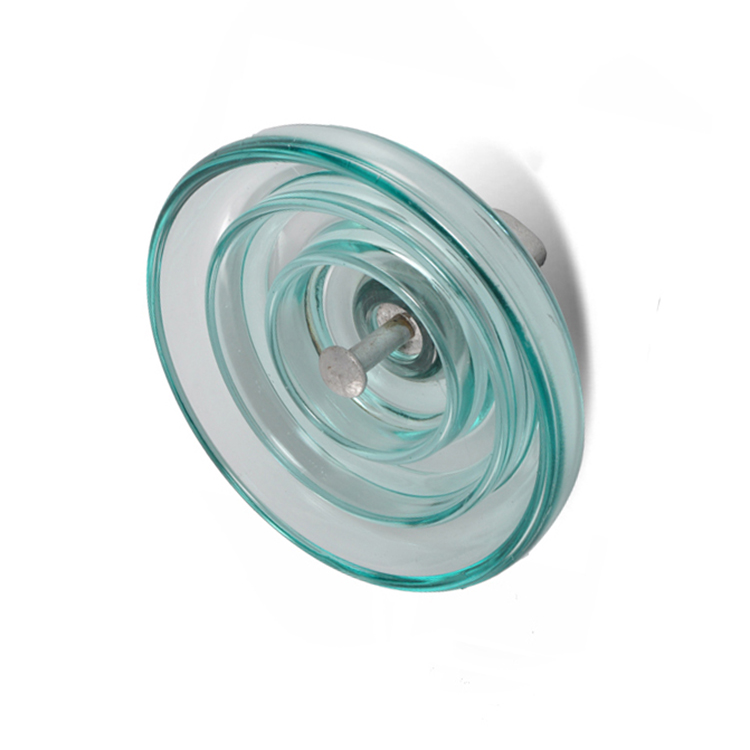
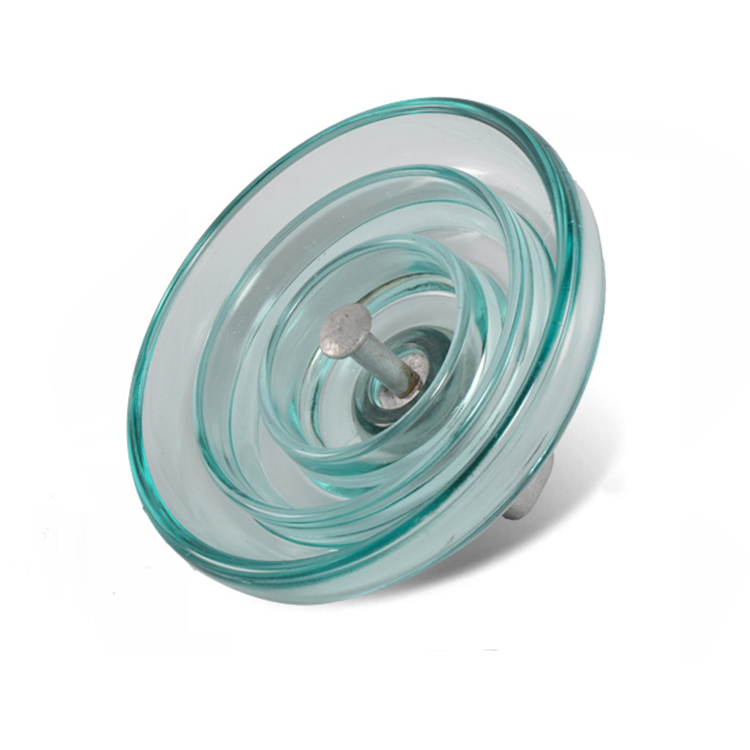
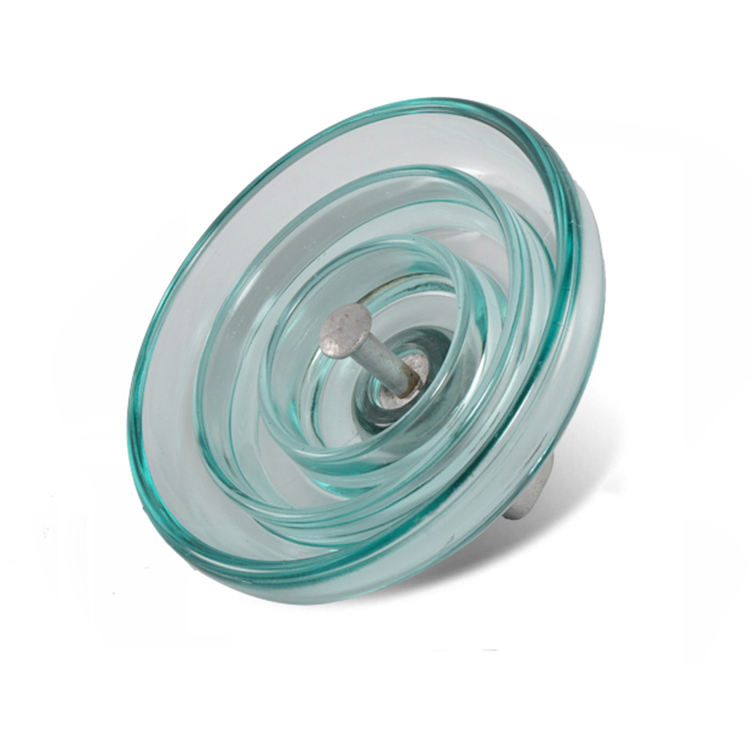
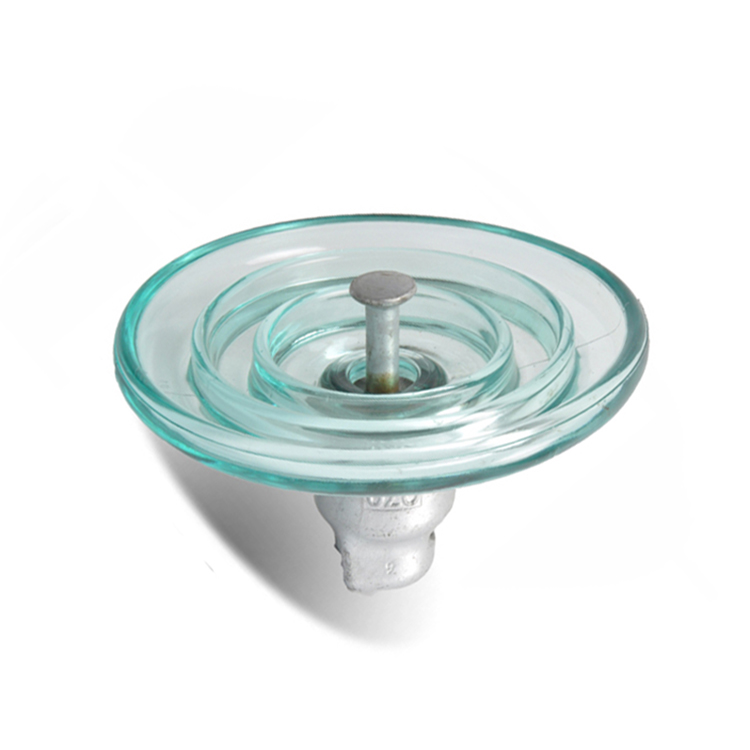
Glass Suspension Insulator
- Toughened-glass ball-and-socket disc for suspension & tension strings
- Shatters visibly when punctured — faulty discs spotted from the ground
- ANSI 52-3 (70 kN) / 52-5 (120 kN) M&E
- IEC 60120 16 / 20 mm ball-and-socket coupling
- Self-cleaning glass surface; long maintenance-free life
- For distribution to EHV by stacking discs
Technical Specifications
| Catalog | ANSI Class | M&E (kN) | Disc Ø (mm) | Spacing (mm) | Creepage (mm) |
|---|---|---|---|---|---|
| RAX-GS-70 | 52-3 | 70 | 255 | 146 | 320 |
| RAX-GS-100 | 52-4 | 100 | 255 | 146 | 320 |
| RAX-GS-120 | 52-5 | 120 | 280 | 170 | 370 |
| RAX-GS-160 | 52-8 | 160 | 280 | 170 | 440 |
| Custom | Other sizes / configurations — send your conductor & structure spec | ||||
Application & Installation
Where it is used
The glass suspension insulator is a toughened-glass cap-and-pin disc that links into strings like the porcelain disc, but with one big advantage: a punctured or cracked disc shatters its glass shell visibly, so faulty units are spotted from the ground without testing. It serves distribution to EHV by stacking discs.
Installation sequence
- Select the disc class (M&E) for the line tension.
- Count the discs for the system voltage and pollution.
- Couple the discs ball-into-socket and fit the locking keys.
- Connect the string to the tower via a ball / socket clevis.
- Inspect visually — a shattered shell flags a failed disc.
Buyer’s Guide: Glass Suspension Insulator
1. What a Glass Suspension Insulator Is
A glass suspension insulator is a toughened-glass cap-and-pin disc that couples into strings exactly like the porcelain type. The toughened glass shell is the insulating element; the steel cap and pin carry the load through a ball-and-socket coupling.
2. The Visible-Failure Advantage
When a glass disc is punctured by an electrical fault, the thermally-toughened shell shatters and falls away, leaving the bare cap and pin. A lineman or a drive-by patrol can see the failed disc from the ground — no testing needed, unlike porcelain where a puncture can be invisible.
3. M&E Class & Voltage
Same ANSI 52-3 (70 kN) / 52-5 (120 kN) / 52-8 (160 kN) classes as porcelain, stacked to the system voltage. Match the class to line tension and the disc count to voltage and pollution.
4. Self-Cleaning Surface
Glass is hard and smooth, so rain washes contamination off readily and the surface resists ageing — long, low-maintenance life even in polluted air.
5. Glass vs Porcelain
Choose glass where ground-level fault detection and long maintenance-free life matter; porcelain where impact robustness or local supply favour it. Both share ANSI classes and IEC 60120 coupling, so strings can even be mixed.
6. Pairing
Build the string with ball / socket clevises, a yoke plate for V / double strings, and the suspension or tension clamp at the conductor end — all matching the coupling size.