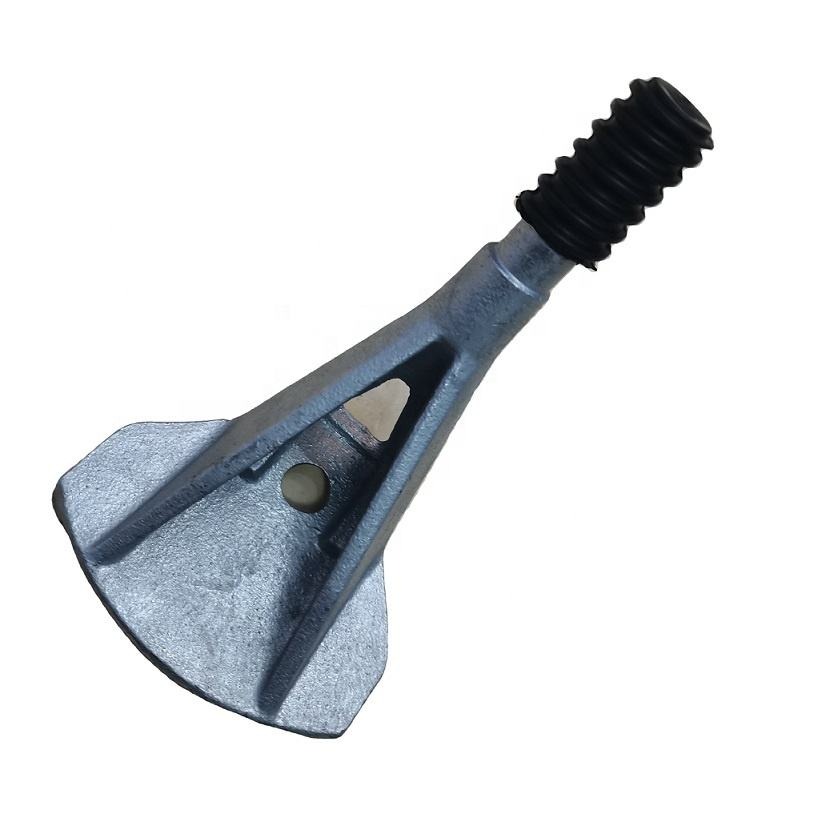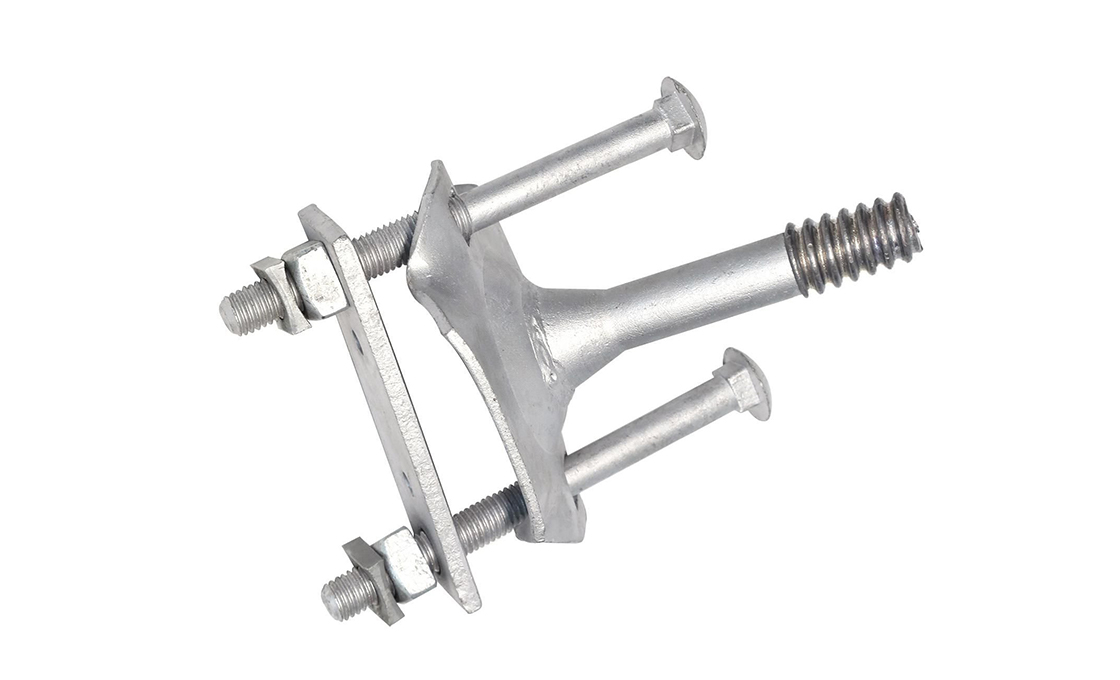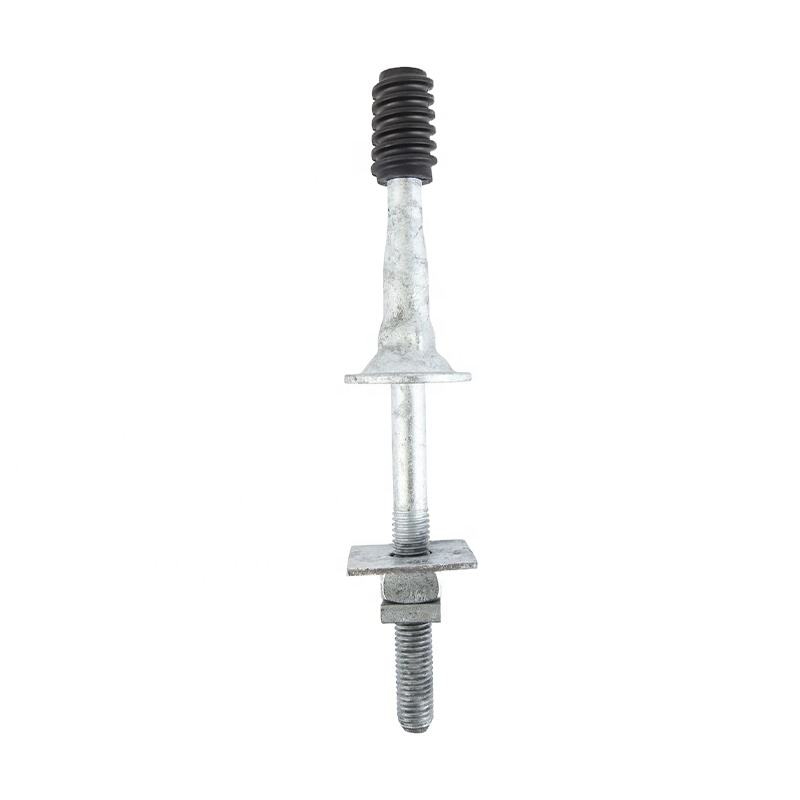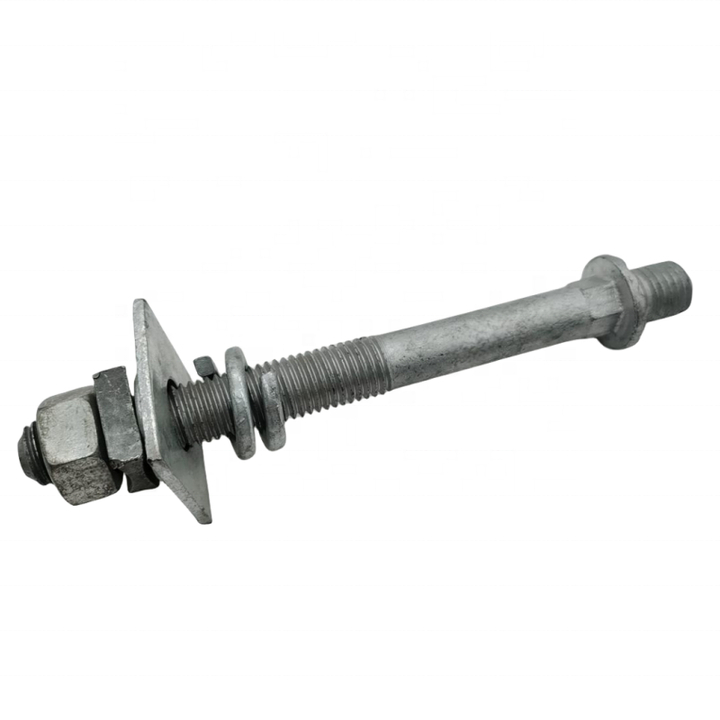
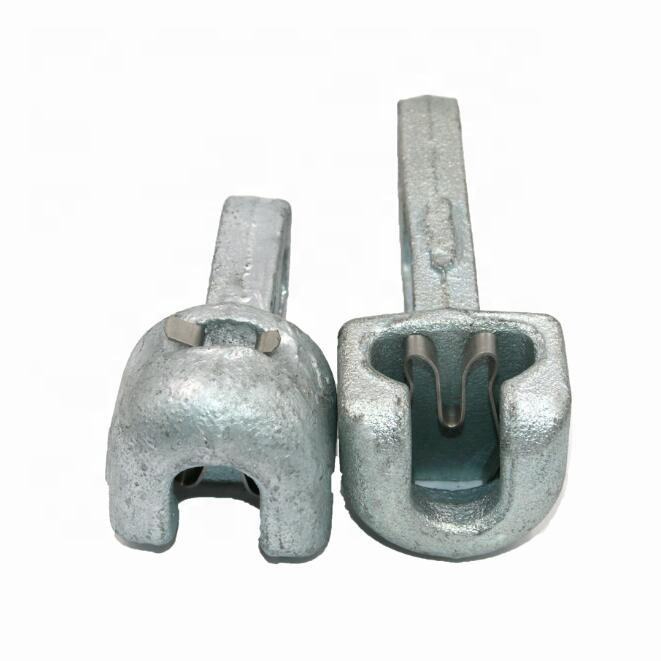
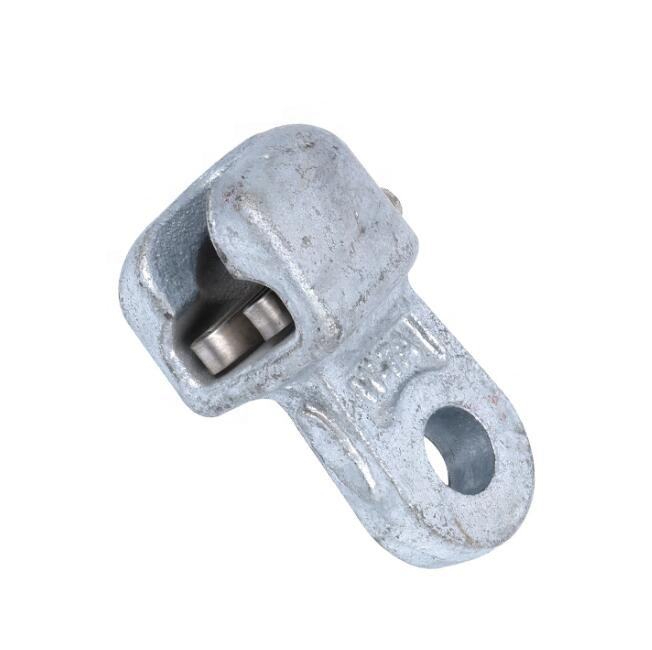
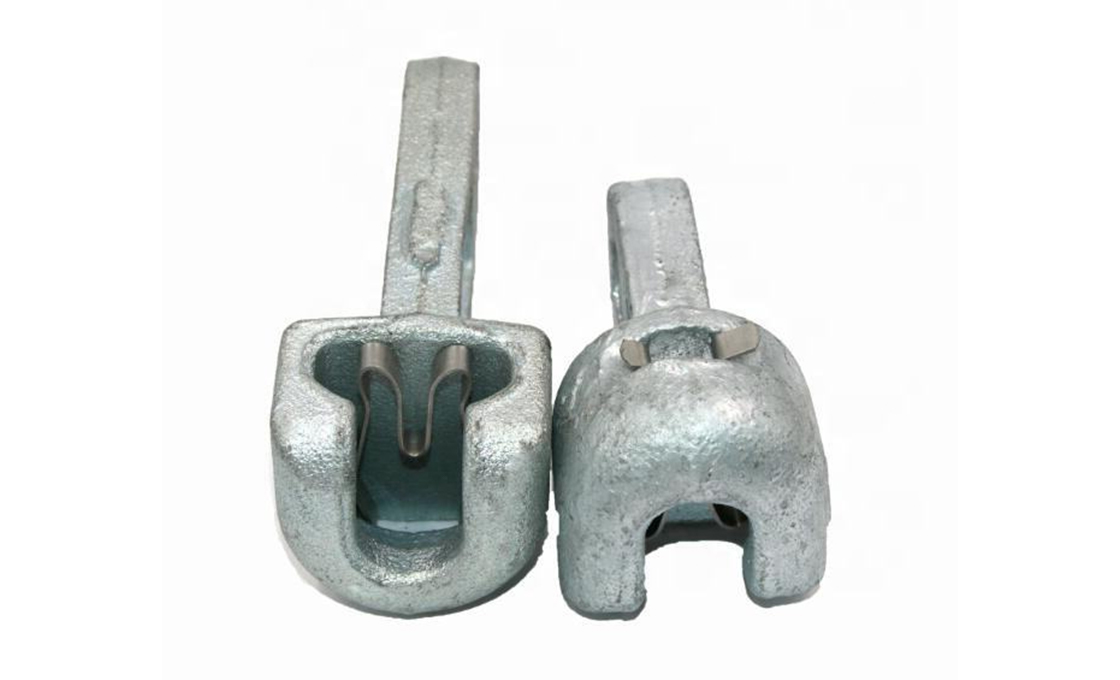
Socket Eye
- Socket on one end, round eye on the other — links a ball-socket insulator to eye fittings
- Receives the ball of cap-and-pin insulators; pairs with bolts, shackles and clamp eyes
- IEC 60120 coupling 16 / 20 / 24 mm; rated failing load 70–300 kN
- Forged medium-carbon steel, hot-dip galvanized to ISO 1461 / BS 729
- Short and long body options at the same rating (W-7A / W-7B)
- ANSI C29.2 Class 52-3 / 52-5 compatible
Technical Specifications
| Catalog | Coupling | Rated Load (kN) | Body h (mm) | Eye Ø (mm) | Weight (kg) | Surface |
|---|---|---|---|---|---|---|
| W-7A | 16 mm | 70 | 70 | 20 | 0.80 | HDG |
| W-7B | 16 mm | 70 | 115 | 20 | 0.92 | HDG |
| W1-10 | 16 mm | 100 | 85 | 20 | 0.90 | HDG |
| W1-12 | 16 mm | 120 | 90 | 24 | 1.30 | HDG |
| W-12 | 20 mm | 120 | 90 | 24 | 1.40 | HDG |
| W-30 | 24 mm | 300 | 110 | 39 | 3.50 | HDG |
| Custom | Other coupling sizes & loads per IEC 60120 / ANSI C29.2 — send your insulator class | |||||
Application & Installation
Where it is used
The socket eye captures the ball of a cap-and-pin insulator on one end and presents a round eye on the other, terminating a ball-and-socket string into an eye / bolt / shackle connection. It is used at the top of suspension strings into a tower-arm eye, and on dead-ends into a strain-clamp eye.
Installation sequence
- Match the socket coupling size (16 / 20 / 24 mm) to the insulator ball.
- Seat the insulator ball fully into the socket.
- Insert the W-pin / cotter / R-clip and spread it per IEC 60372.
- Pass the eye over the mating bolt, shackle pin or clamp eye and pin it.
- Confirm all locking keys are engaged before raising the string.
Buyer’s Guide: Socket Eye
1. What a Socket Eye Is
A socket eye is the eye-ended member of the ball-and-socket family: a socket that receives the insulator ball, joined to a round oval eye for the next fitting. Where a socket clevis ends in a clevis tongue, the socket eye ends in an eye — chosen when the mating part is a bolt, shackle or clamp eye rather than a tongue.
2. Coupling Size 16 / 20 / 24 mm
The socket bore follows IEC 60120: 16 mm for distribution / light transmission (ANSI 52-3), 20 mm for medium-heavy transmission (ANSI 52-5), 24 mm for EHV. Always order by the insulator ball designation so the socket fits the first time.
3. Short vs Long Body — W-7A and W-7B
At 70 kN / 16 mm we offer a compact 70 mm body (W-7A) and a 115 mm long body (W-7B). The long body adds clearance from the insulator skirt; the short body keeps the string tight. Both share the same socket and eye, so they are direct substitutes.
4. Forged Steel & Locking
Socket eyes are forged from medium-carbon steel for grain flow and impact strength, then hot-dip galvanized to ISO 1461 / BS 729. The socket is held closed by a W-pin, cotter or stainless R-clip per IEC 60372, which prevents the ball backing out under vibration.
5. Socket Eye vs Ball Eye
Both end in an eye, but a socket eye receives a ball (it has the socket) while a ball eye presents a ball (it needs a socket on the insulator). Read which end your insulator offers — ball or socket — and pick the complementary fitting.
6. Cross-Vendor Interchangeability
The IEC 60120 / ANSI C29.2 coupling means a same-designation RAX socket eye mates with Hubbell, MacLean and PLP insulators and fittings — convenient for repairs and mixed-vendor stock.