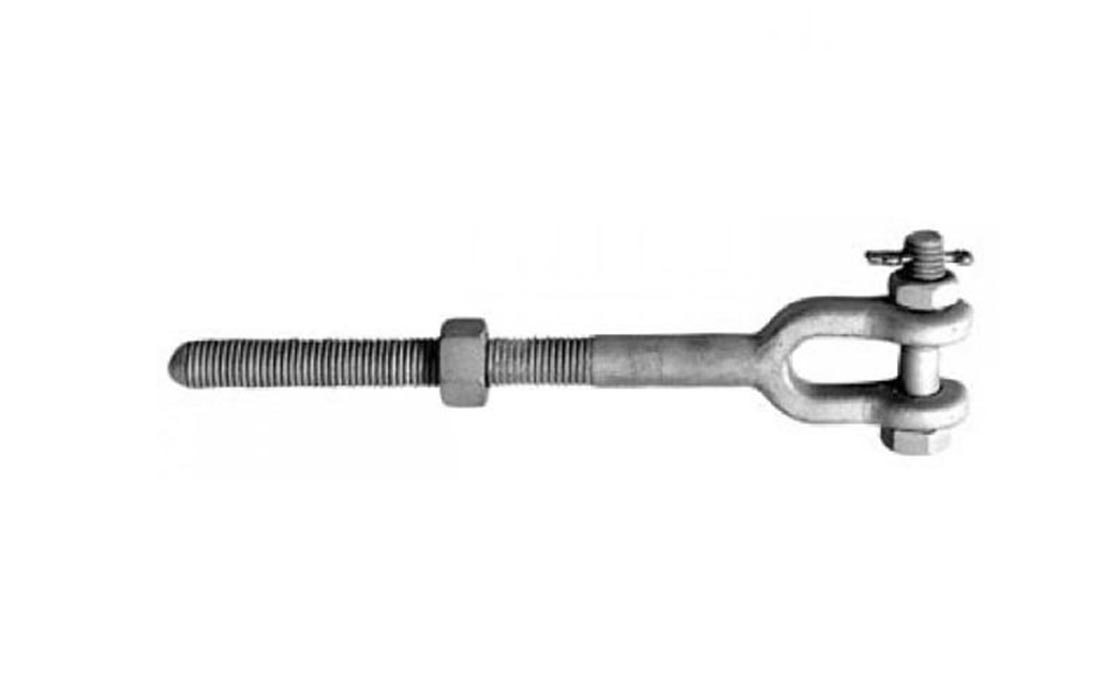
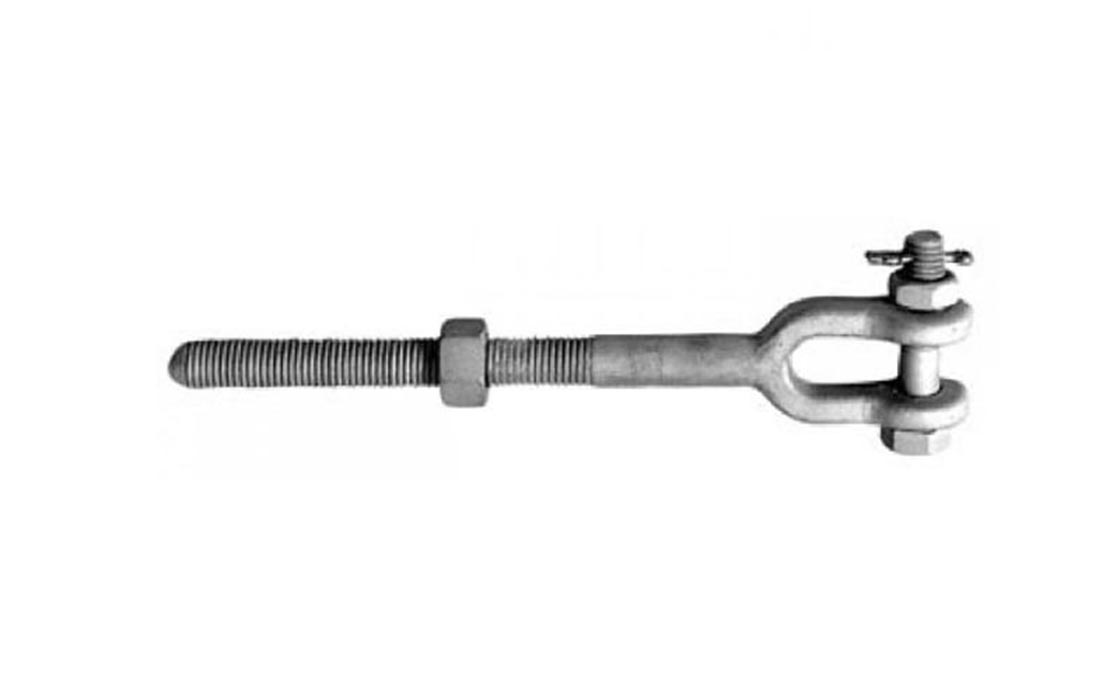
Clevis Bolt
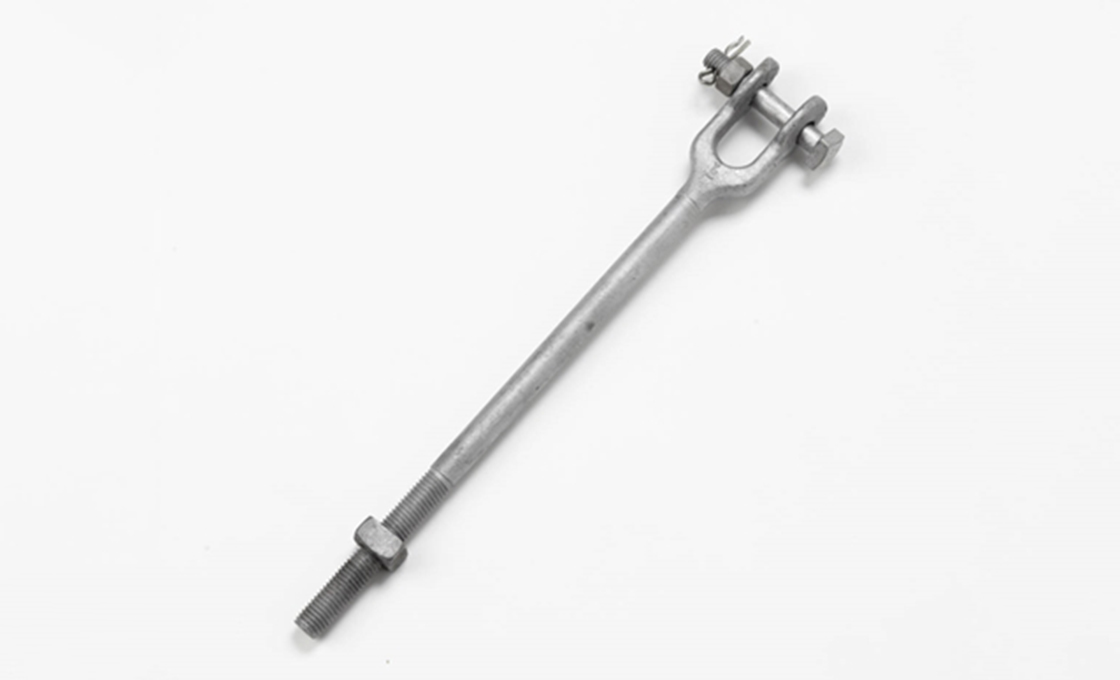
- Bolt with a forged clevis (forked) head to pin a tongue fitting
- Clevis head takes a clevis pin — links to clamps and plates
- ANSI pole-line hardware, galvanized to ASTM A-153
- Thread 5/8 / 3/4 in shank with square nut
- Joins a bolted structure to a clevis-tongue fitting
- For dead-end, clamp and yoke connections
Technical Specifications
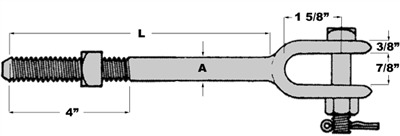
| Catalog | Thread | Clevis Pin (mm) | Length (in) | Min. Tensile (kg) | Surface |
|---|---|---|---|---|---|
| RAX-CB-58 | 5/8 in | 16 | 4–12 | 6,800 | HDG |
| RAX-CB-34 | 3/4 in | 19 | 6–14 | 9,000 | HDG |
| Custom | Other sizes / configurations — send your conductor & structure spec | ||||
Application & Installation
Where it is used
The clevis bolt has a forged clevis (forked) head on a threaded shank. The shank bolts through a member while the clevis head pins to a tongue fitting — a clamp, plate or strap — giving a pinned, articulating connection between a bolted structure and clevis-type hardware.
Installation sequence
- Select the thread and clevis-pin size for the mating fitting.
- Bolt the shank through the member with the square nut.
- Align the tongue fitting in the clevis jaw.
- Insert the clevis pin and fit the cotter.
- Confirm the joint articulates freely.
Buyer’s Guide: Clevis Bolt
1. What a Clevis Bolt Is
A clevis bolt combines a threaded bolt shank with a forged clevis head. It fixes to a member like a bolt, but presents a clevis jaw that pins to a tongue fitting — turning a plain bolted point into an articulating, pinned connection.
2. Where It Is Used
At points where a bolted structure must connect to a clevis-tongue fitting: a strain clamp, yoke plate or strap that ends in a tongue. The clevis bolt is the adapter between the two.
3. Pin & Cotter
The clevis jaw takes a clevis pin held by a cotter, giving a hinged joint that can be opened for maintenance. Match the pin size (16 / 19 mm) to the tongue fitting.
4. Thread & Strength
5/8 in and 3/4 in shank threads, with minimum tensile matched to the connection (~6,800–9,000 kg). The forged clevis head is as strong as the shank.
5. Galvanizing
Hot-dip galvanized to ASTM A-153, with a stainless cotter so the pinned joint can be opened years later without seizing.
6. Pairing
Pins to clamps, yoke plates, straps and any clevis-tongue fitting. Order with the matching tongue hardware and pin size.