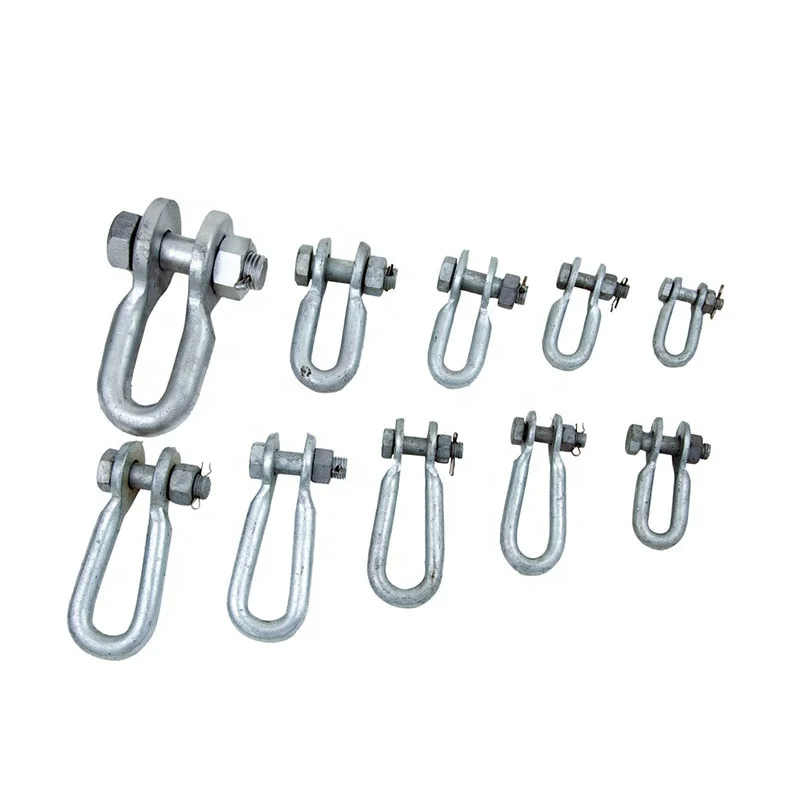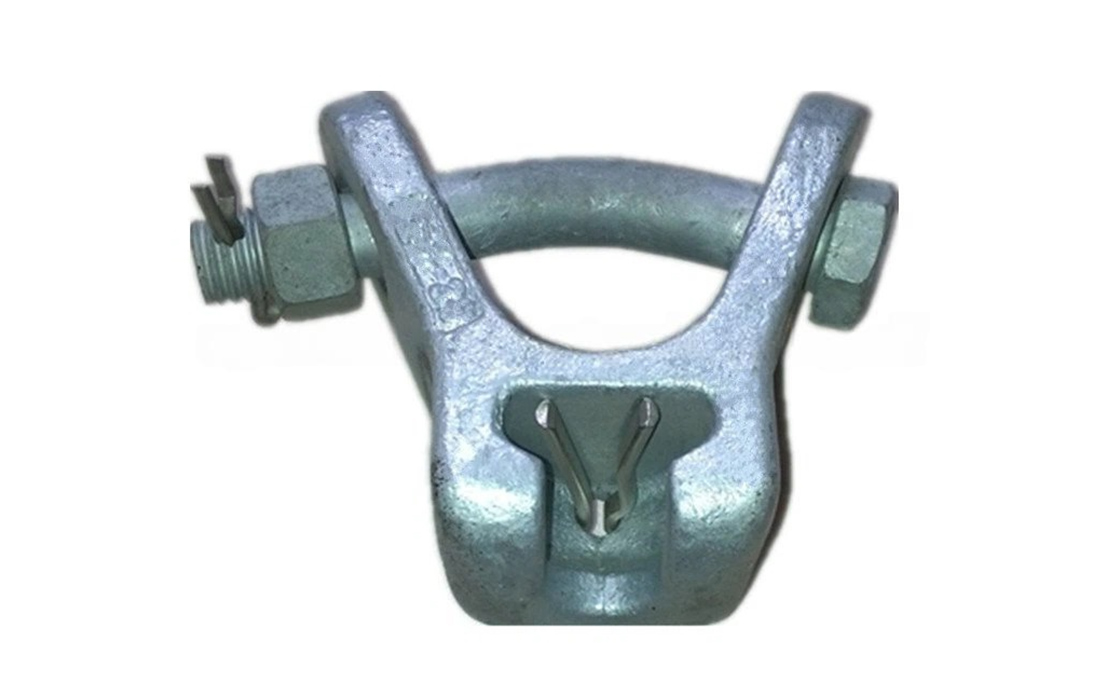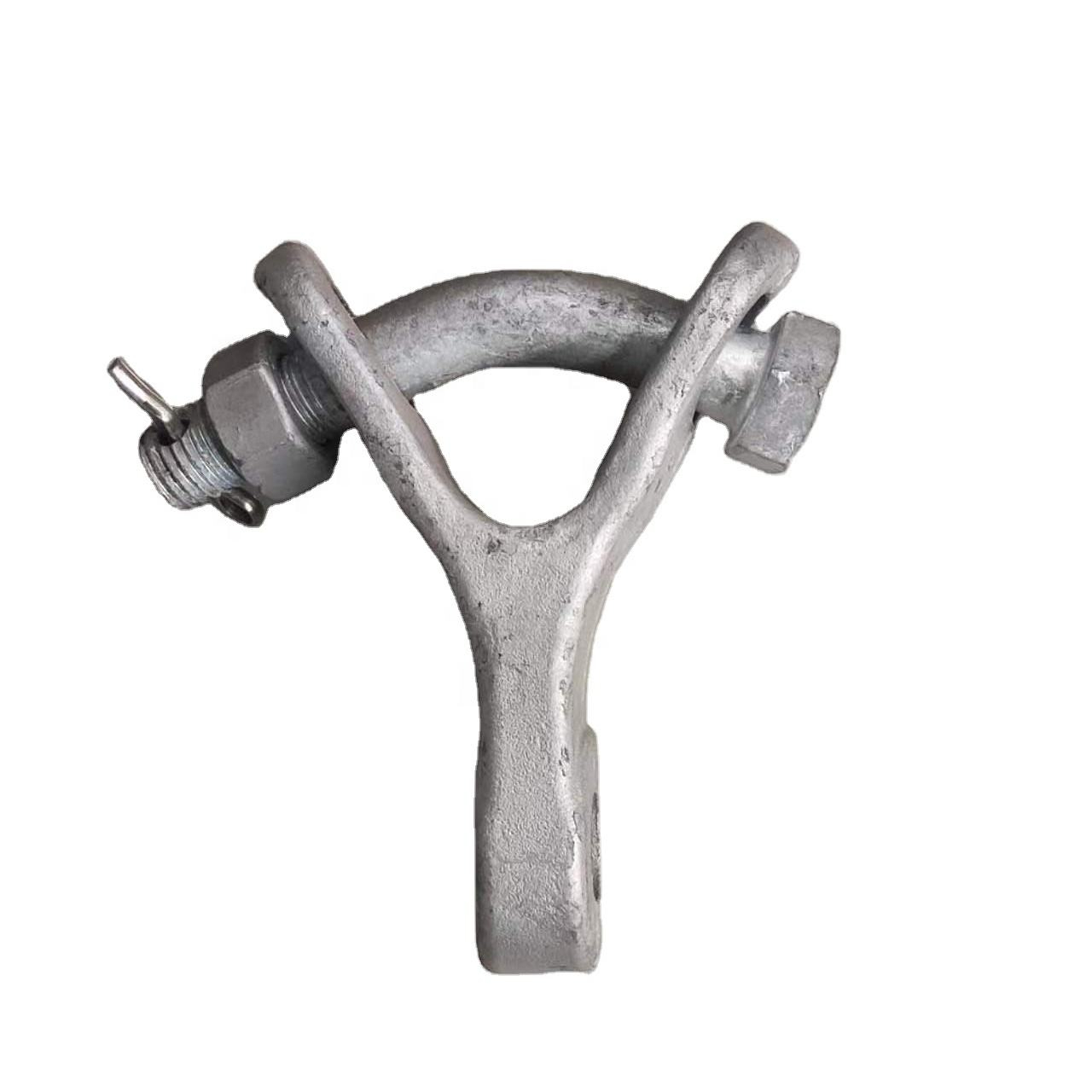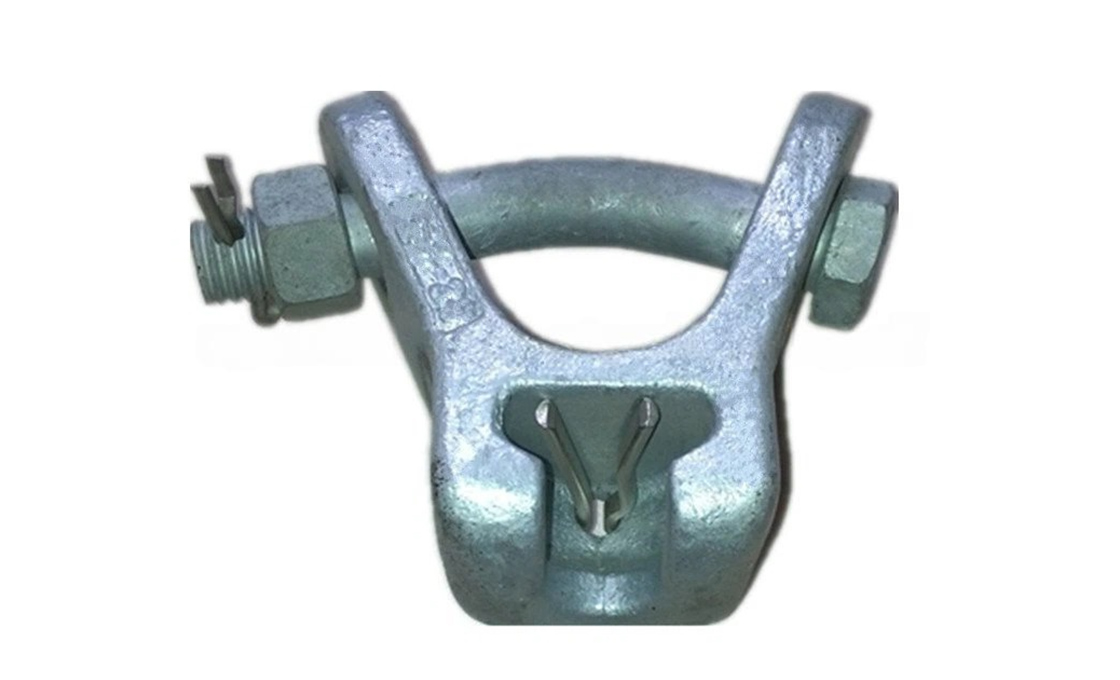
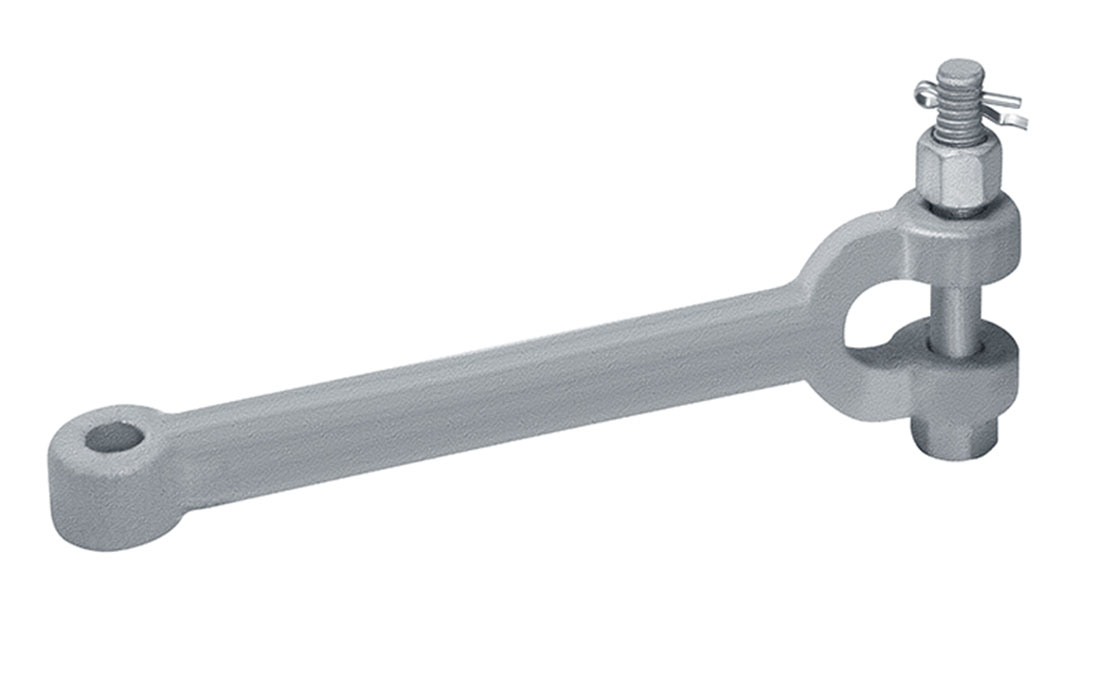
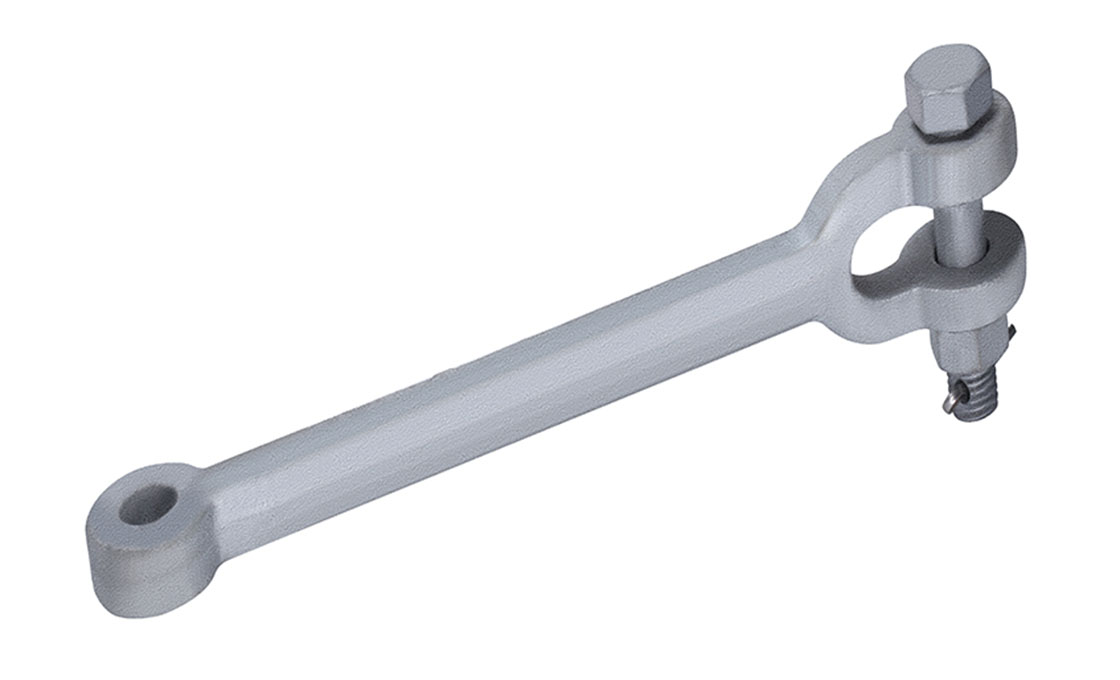
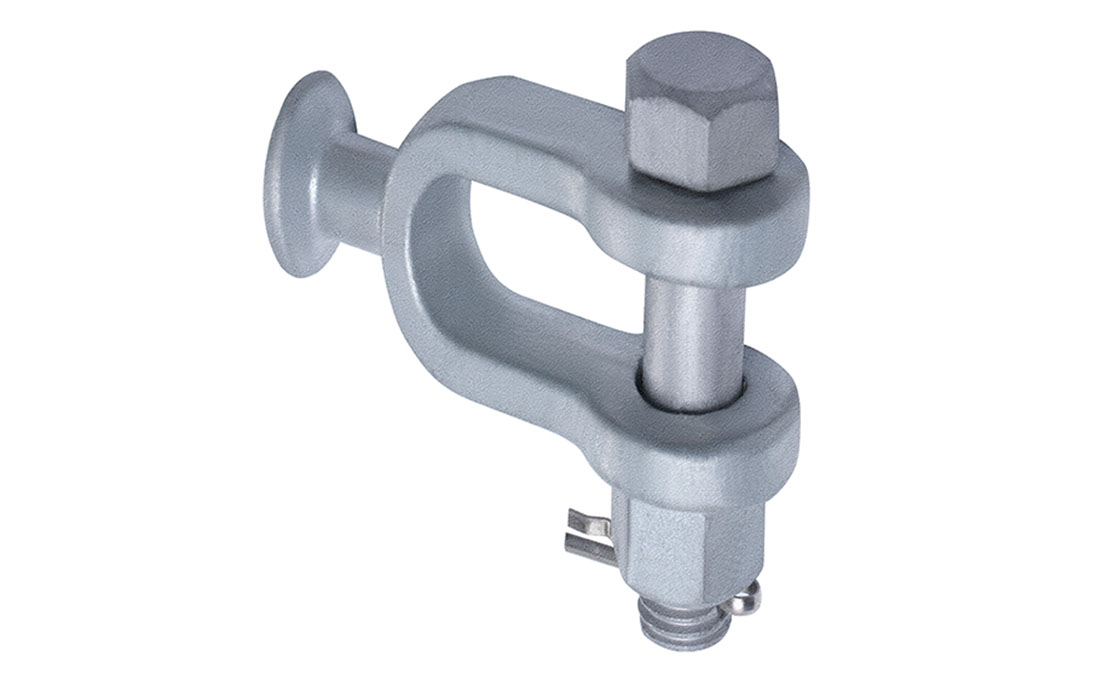
Ball Clevis
- Couples the ball end of cap-and-pin / ball-and-socket insulators to clevis-type string fittings
- IEC 60120 standard coupling sizes — 16 / 20 / 24 mm, interchangeable across vendors
- Rated failing load 70–300 kN; drop-forged steel at 45 kN and above
- Hot-dip galvanized to ISO 1461 for 30+ years of outdoor service
- Interchangeable with ANSI C29.2 Class 52-3 / 52-5 insulator hardware
- Matching socket clevis, ball eye and Y-clevis available as a complete string set
Technical Specifications
| Catalog | Coupling | Rated Load (kN) | Pin Ø d1 (mm) | Socket Ø d2 (mm) | Weight (kg) | Surface |
|---|---|---|---|---|---|---|
| Q-7U | 16 mm | 70 | 17 | 33.3 | 0.90 | HDG |
| Q-12U | 16 mm | 120 | 17 | 33.3 | 1.00 | HDG |
| Q-16U | 20 mm | 160 | 21 | 41.0 | 1.00 | HDG |
| Q-16UA | 20 mm | 160 | 21 | 41.0 | 1.12 | HDG |
| Q-21U | 20 mm | 210 | 21 | 41.0 | 1.35 | HDG |
| Q-30U | 24 mm | 300 | 25 | 49.0 | 2.14 | HDG |
| Custom | Other coupling sizes & loads per IEC 60120 / ANSI C29.2 — send your insulator class | |||||
Application & Installation
Where it is used
The ball clevis sits at the end of a suspension or tension insulator string, coupling a ball-and-socket insulator to a yoke plate, shackle, or the clevis tongue of a tension / suspension clamp. It is used on overhead distribution and transmission lines — tangent suspension sets, angle structures and dead-end assemblies — wherever a ball-socket insulator must connect to a clevis-type fitting.
Installation sequence
- Match the clevis coupling size (16 / 20 / 24 mm) to the insulator ball designation.
- Seat the insulator ball fully into the socket of the mating fitting.
- Insert the W-pin / split cotter / R-clip locking device and spread it per IEC 60372.
- Connect the clevis tongue to the yoke plate or clamp with the clevis pin and cotter.
- Confirm the locking key is fully engaged before raising the string.
Buyer’s Guide: Ball Clevis
1. What a Ball Clevis Is in a Ball-and-Socket String
A ball clevis is a forged or cast steel link fitting that converts a ball-and-socket coupling into a clevis (tongue-and-pin) connection. One end is the socket that receives the ball of a cap-and-pin or long-rod insulator; the other is a flat clevis tongue drilled for a clevis pin. It is the part that lets a ball-socket insulator string attach to a yoke plate, shackle, or clamp built for clevis connections.
2. Coupling Size 16 / 20 / 24 mm — Matching the Insulator Class
Ball-and-socket couplings are standardized by ball-pin diameter under IEC 60120: 16, 20 and 24 mm are the common sizes (with 11 and 28 mm at the extremes). The coupling size — not the catalog number — is what must match between insulator and fitting. In ANSI terms, 16 mm pairs with Class 52-3 (15,000 lb) hardware and 20 mm with Class 52-5 (25,000 lb). Always specify the insulator ball designation when ordering so the socket fits.
3. Rated Load vs Ultimate — Sizing by String Tension
Our ball clevis range carries a rated failing load from 70 kN (Q-7U) to 300 kN (Q-30U). Select the fitting so its rated load is at least the insulator string's mechanical rating — not the bare conductor tension alone, since ice, wind and dead-end pull all add to the working load. The string fittings are matched to the insulator's M&E rating so the assembly fails predictably at the insulator, not the steel.
4. Forged vs Cast — When Drop-Forging Is Required
Below about 45 kN a ball clevis can be malleable-iron cast and still meet load and ductility limits. At 45 kN and above — the Q-16U class up — the body must be drop-forged from carbon steel for the grain flow and impact strength transmission service demands. Every RAX ball clevis above 70 kN is drop-forged; we do not substitute cast bodies on high-tension sizes.
5. The Locking Device — W-Pin, Cotter or R-Clip
A ball-and-socket coupling is held closed by a locking key seated in the socket slot per IEC 60372: a security W-pin (split pin), a cotter, or a spring R-clip. The key prevents the ball backing out under vibration. We supply the matching locking device with every fitting and can ship the stainless-steel R-clip variant for high-vibration spans on request.
6. Galvanizing & Cross-Vendor Interchangeability
All bodies are hot-dip galvanized to ISO 1461 (ASTM A153 equivalent) for 30+ year corrosion life. Because the couplings follow IEC 60120 / ANSI C29.2, a RAX ball clevis mates with sockets and balls from Hubbell, MacLean, PLP and other makers of the same designation — useful for repairs and mixed-vendor inventories.