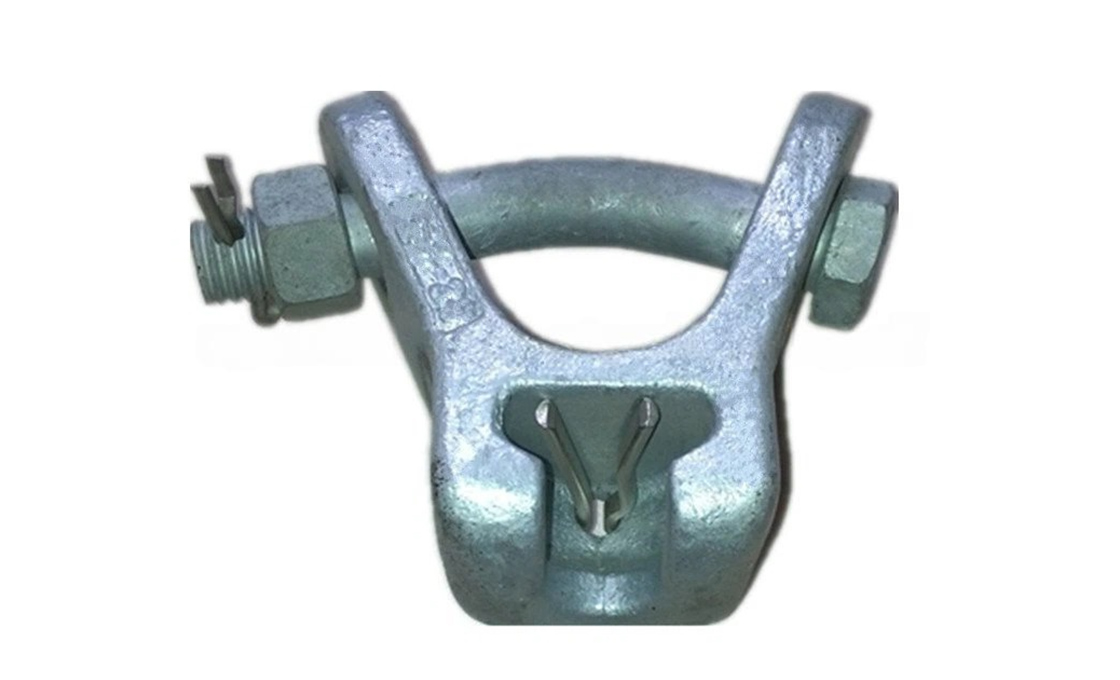
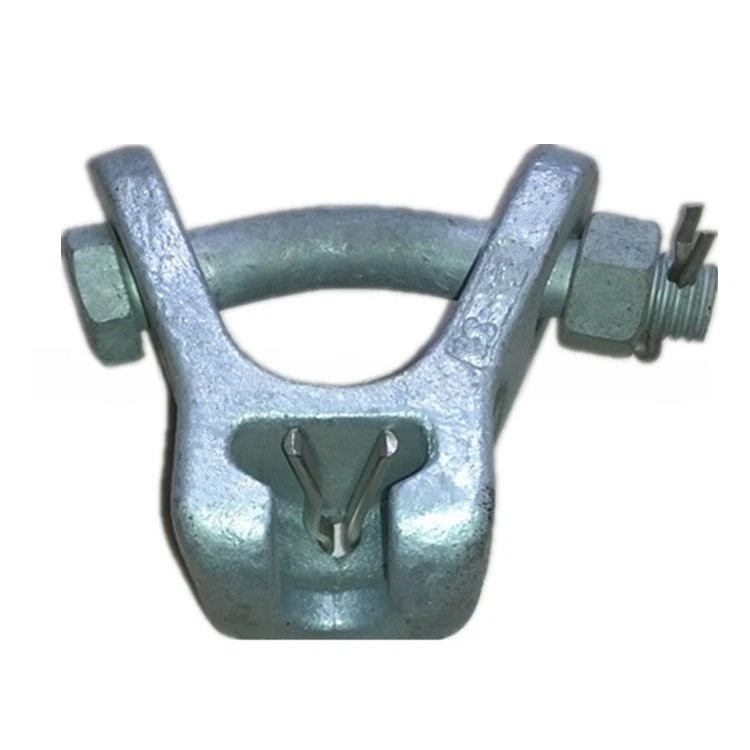
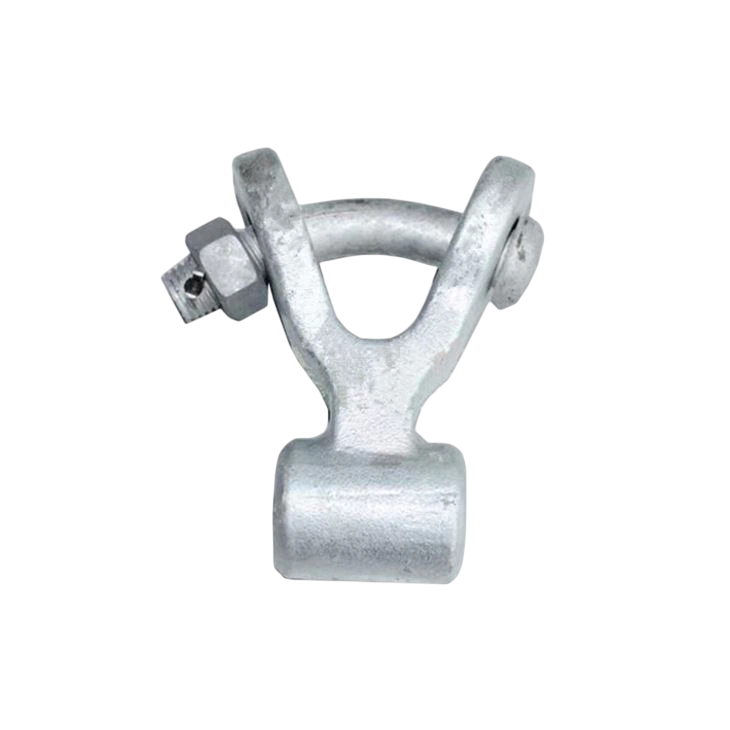
Socket Y-Clevis
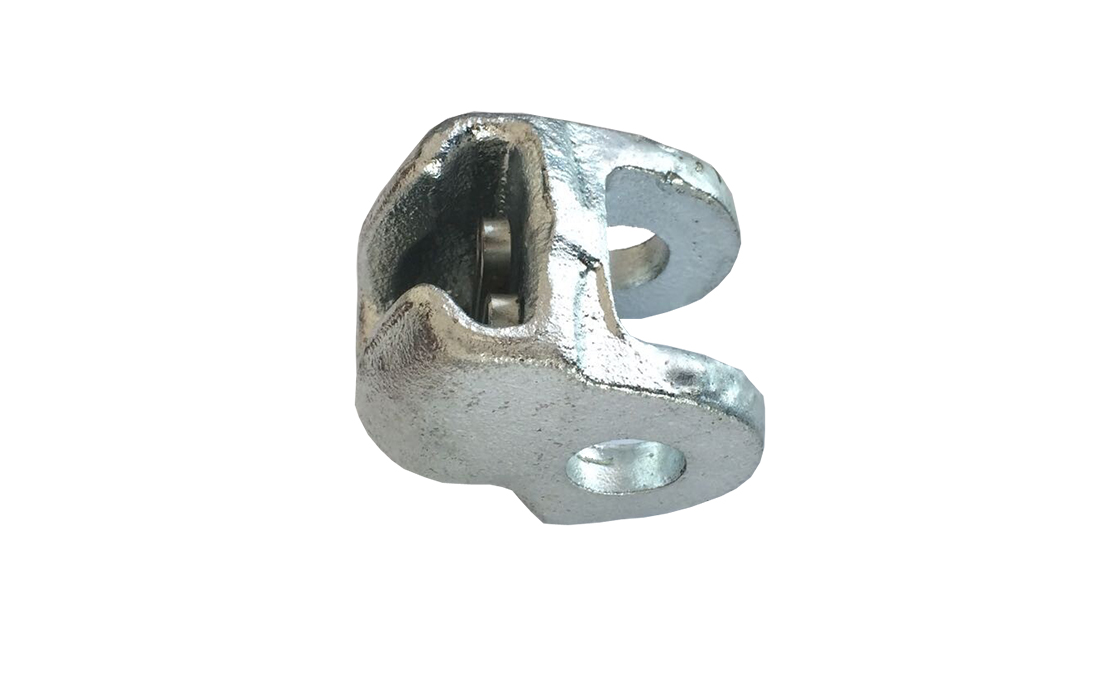
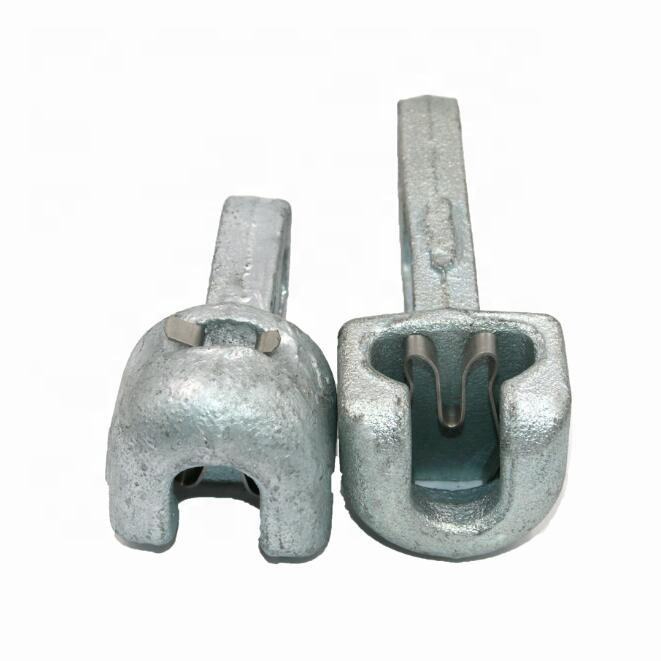
- Socket on one end, clevis tongue on the other — insulator ball to clevis jaw
- Captures a cap-and-pin insulator ball; pins to a clevis-jaw clamp or plate
- IEC 60120 coupling 16 / 20 / 24 mm; rated load 70–300 kN
- Forged / malleable body, stainless cotter and security clip
- Hot-dip galvanized to ISO 1461 / BS 729
- ANSI C29.2 Class 52-3 / 52-5 compatible
Technical Specifications
| Catalog | Coupling | Rated Load (kN) | Pin d (mm) | Length (mm) | Weight (kg) | Surface |
|---|---|---|---|---|---|---|
| WS-7 | 16 mm | 70 | 16 | 90 | 0.85 | HDG |
| WS-10 | 16 mm | 100 | 16 | 95 | 0.95 | HDG |
| WS-12 | 16 mm | 120 | 18 | 100 | 1.30 | HDG |
| WS-16 | 20 mm | 160 | 20 | 105 | 1.45 | HDG |
| WS-21 | 20 mm | 210 | 22 | 115 | 1.95 | HDG |
| WS-30 | 24 mm | 300 | 25 | 130 | 2.90 | HDG |
| Custom | Other coupling sizes & loads per IEC 60120 — send your insulator class | |||||
Application & Installation
Where it is used
The socket Y-clevis captures the ball of a cap-and-pin insulator on one end and presents a clevis tongue on the other, connecting a ball-and-socket insulator directly to a clevis-jaw clamp or yoke plate. It is used on suspension and dead-end strings where the insulator is ball-ended and the conductor clamp is clevis-type.
Installation sequence
- Match the socket coupling size (16 / 20 / 24 mm) to the insulator ball.
- Seat the insulator ball fully into the socket.
- Insert the W-pin / cotter / R-clip and spread it per IEC 60372.
- Pin the clevis tongue to the clamp or yoke jaw; fit the cotter.
- Confirm both locking devices are engaged before tensioning.
Buyer’s Guide: Socket Y-Clevis
1. What a Socket Y-Clevis Is
A socket Y-clevis combines a ball socket and a clevis tongue in one body. It receives a cap-and-pin insulator ball at the top and pins to a clevis-jaw clamp or plate at the bottom — doing in one piece what a socket eye plus a separate clevis link would do in two.
2. Coupling Size 16 / 20 / 24 mm
The socket follows IEC 60120: 16 mm for ANSI 52-3, 20 mm for 52-5, 24 mm for EHV. Order by the insulator ball designation so the socket seats correctly.
3. Why One-Piece Helps
Fewer joints means fewer pins to inspect and a shorter, stiffer string. Where the geometry allows, a socket Y-clevis replaces a socket eye + clevis-clevis link, cutting assembly time and inventory.
4. Forged Body & Locking
The body is forged or malleable iron to its load class, hot-dip galvanized to ISO 1461. The socket takes a W-pin, cotter or stainless R-clip per IEC 60372; the clevis takes a stainless cotter — two independent locks on one fitting.
5. Sizing by Load
The WS series runs 70 kN to 300 kN. Match the fitting's rated load to the insulator's mechanical rating so the assembly fails predictably at the insulator, not the steel.
6. Cross-Vendor Fit
IEC 60120 / ANSI C29.2 couplings let a RAX socket Y-clevis mate with Hubbell, MacLean and PLP insulators of the same designation — useful for repairs and mixed inventories.