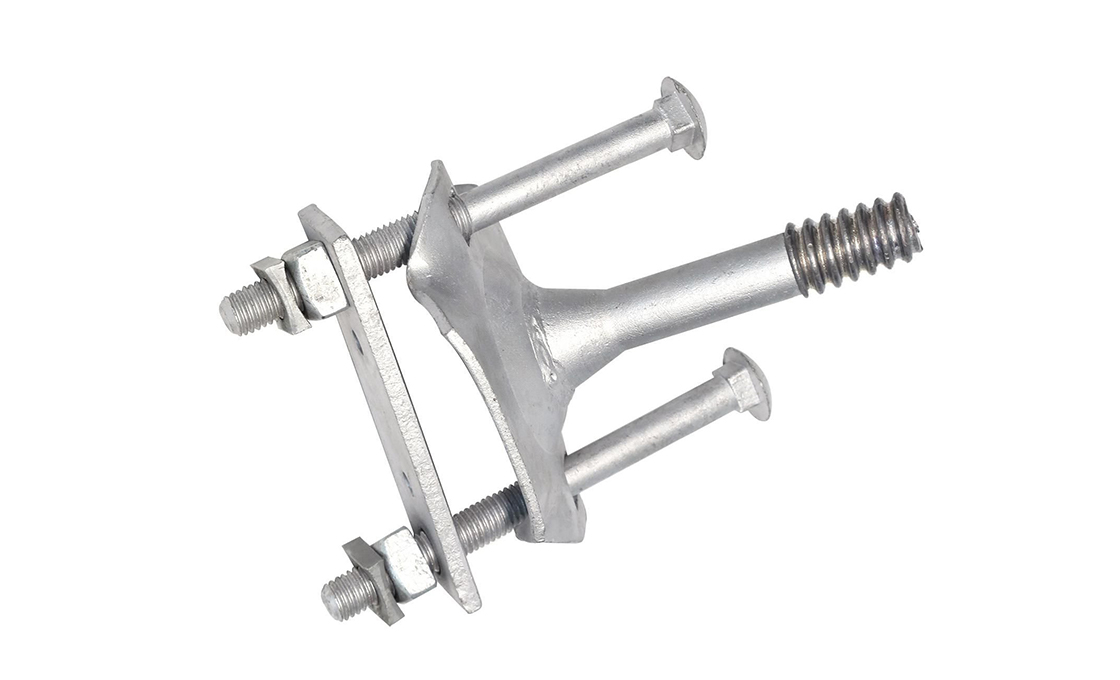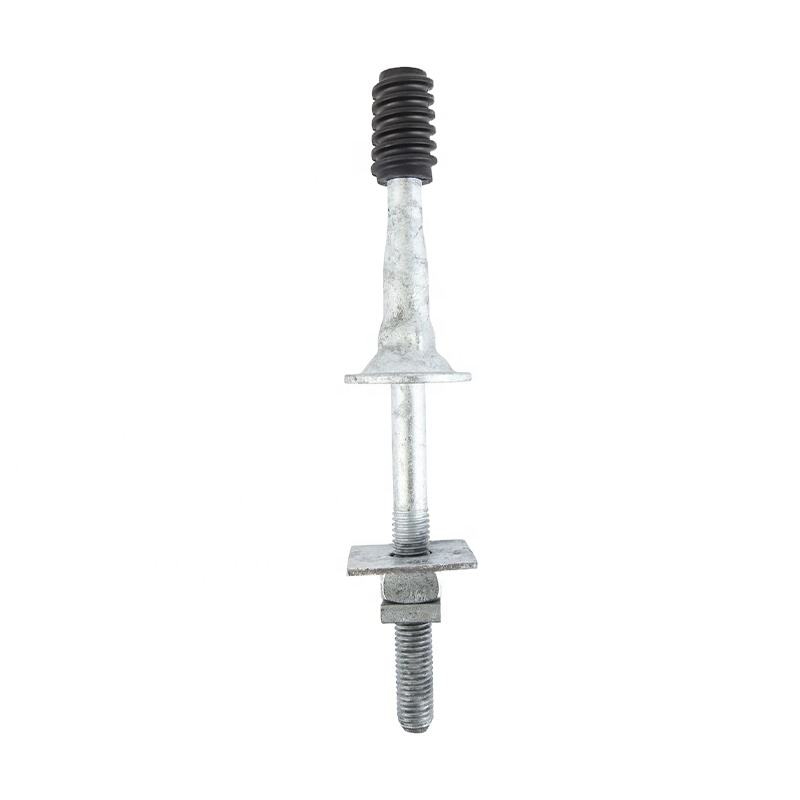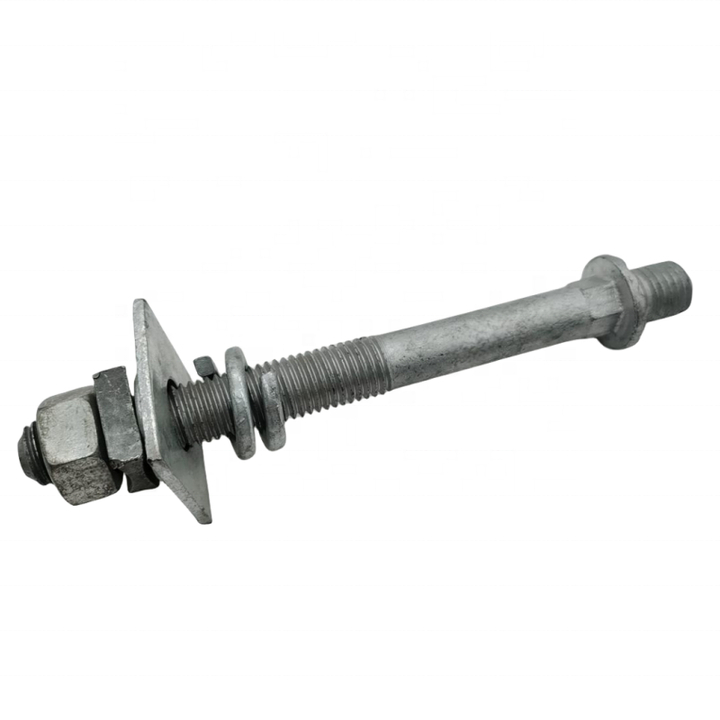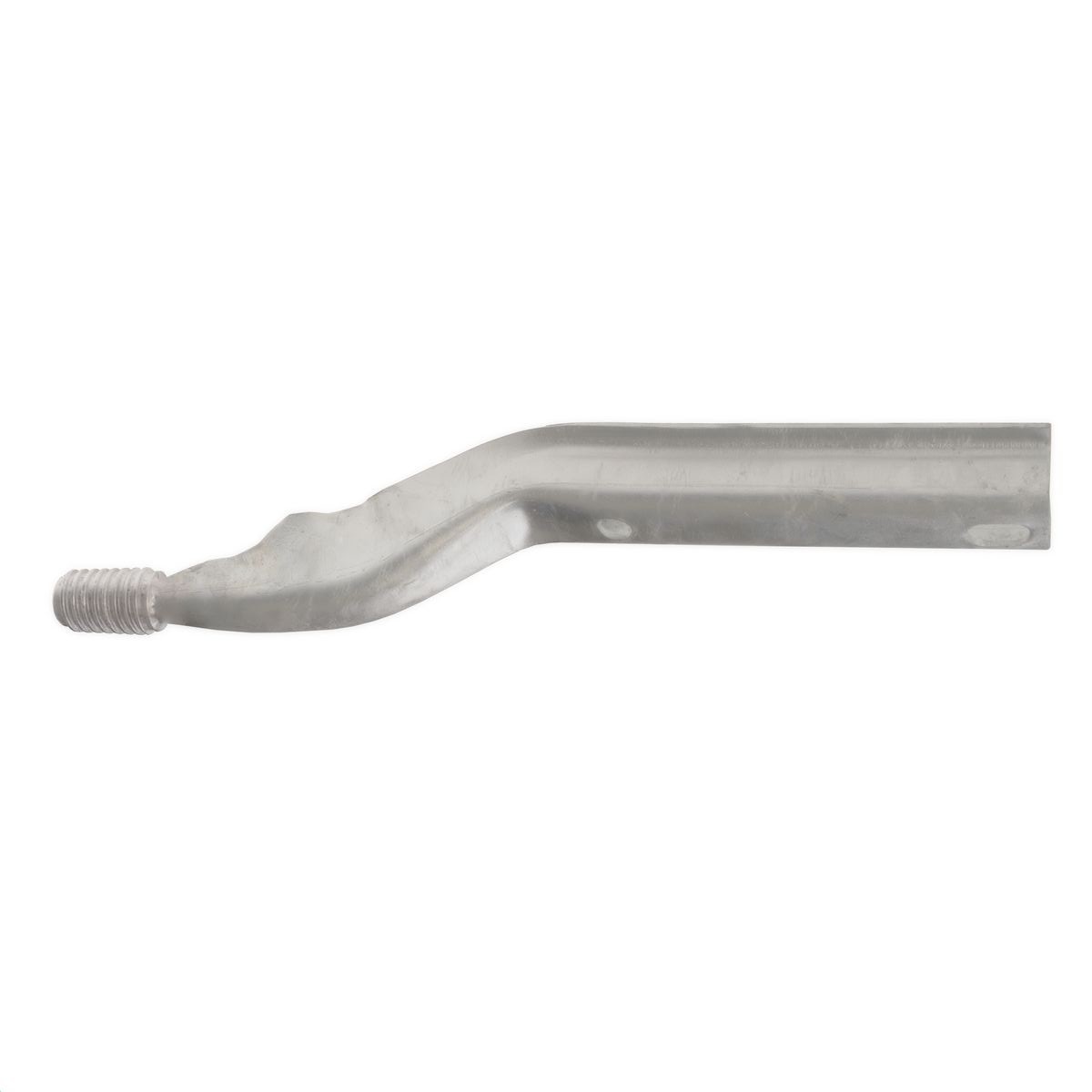
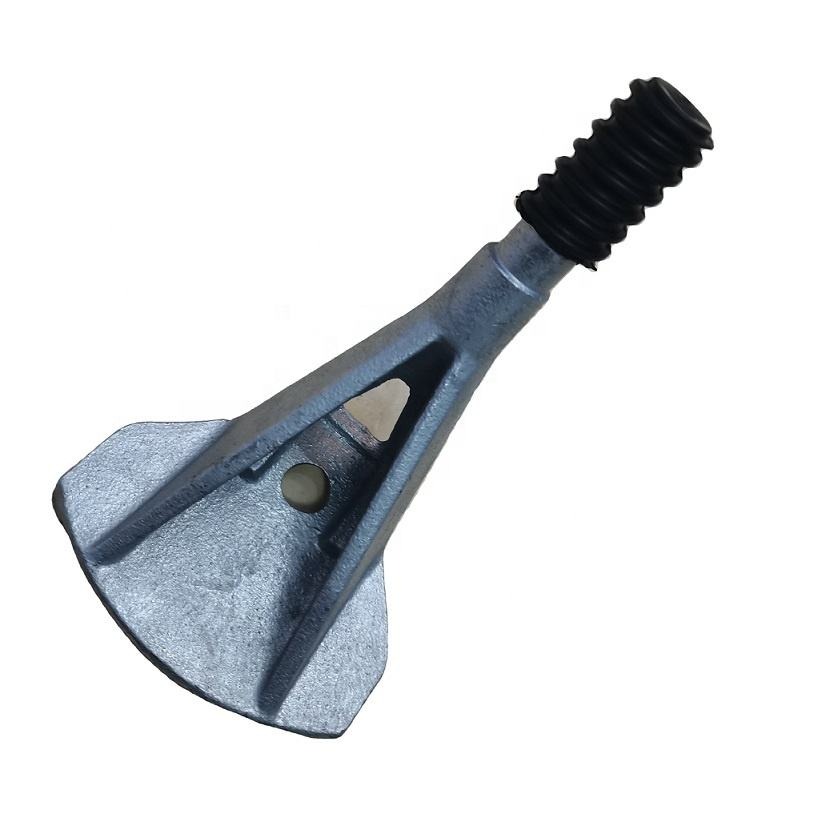
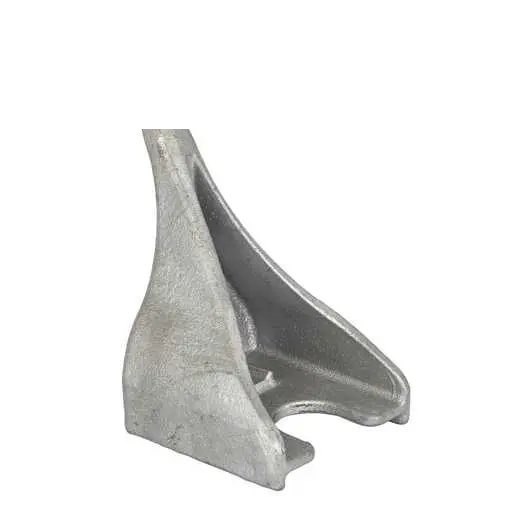
Angle Crossarm Pin
- Offset / angled spindle — carries the insulator clear of the arm at line angles
- 1 in ANSI / NEMA lead or nylon thread for pin-type insulators
- 5 in or 8 in mounting height, bolt-through base
- Cantilever load 1,200–1,500 lb (ANSI/IEEE 10°)
- Cast ductile iron / forged steel, galvanized to ASTM A-153
- Hubbell PS8779 / PSC2061 angle-pin equivalents
Technical Specifications
| Catalog | Thread | Height | Cantilever (lb) | Body | US Equivalent | Surface |
|---|---|---|---|---|---|---|
| RAX-ACP-5 | 1 in lead | 5 in | 1,200 | Ductile iron | Hubbell PS8779 | HDG |
| RAX-ACP-8 | 1 in lead | 8 in | 1,500 | Ductile iron | Hubbell PSC2060 | HDG |
| RAX-ACP-8N | 1 in nylon | 8 in | 1,500 | Ductile iron | Hubbell PSC2061P | HDG |
| Custom | Other heights / offsets — send your line angle and crossarm spec | |||||
Application & Installation
Where it is used
The angle crossarm pin raises and offsets a pin-type insulator above the crossarm so the conductor clears the arm where the line changes direction. The taller 5–8 in body gives the conductor room to swing into the insulator groove at an angle without contacting the arm or pole.
Installation sequence
- Position the base at the angle point on the crossarm.
- Bolt the base through the arm with the supplied hardware.
- Confirm the offset faces the bisector of the line angle.
- Thread the pin-type insulator onto the lead / nylon top.
- Tie the conductor so it seats cleanly at the angle.
Buyer’s Guide: Angle Crossarm Pin
1. What an Angle Crossarm Pin Solves
At a line angle the conductor pulls sideways and can foul the crossarm or pole. An angle crossarm pin lifts the insulator higher (5–8 in) and offsets it so the conductor clears the structure while the line changes direction. It carries the same 1 in ANSI insulator thread as a standard pin.
2. Height Selection by Angle
Sharper angles need more clearance: a 5 in pin suits light angles, an 8 in pin handles larger deviations. Pick the height so the swung conductor stays clear of the arm and pole at the worst-case wind condition.
3. Cantilever Under Angled Pull
The taller body and sideways load mean the cantilever rating matters more than on a tangent pin. Use the 1,200–1,500 lb ratings against the resultant angle tension, not just the conductor's straight-line pull.
4. Lead vs Nylon Thread
The insulator top is cast lead or moulded nylon, both 1 in ANSI. Lead conforms tightly; nylon is lighter and re-threads cleanly. Match your insulator stock.
5. Orientation Matters
Unlike a straight pin, the offset must face the bisector of the line angle so the conductor seats in the groove evenly. Set the orientation before final tightening; a mis-aimed angle pin loads the insulator unevenly.
6. Material & Galvanizing
Cast ductile iron (ASTM A-536) or forged steel, hot-dip galvanized to ASTM A-153, shipped with mounting hardware. Built for 30+ year outdoor service at angle and junction structures.