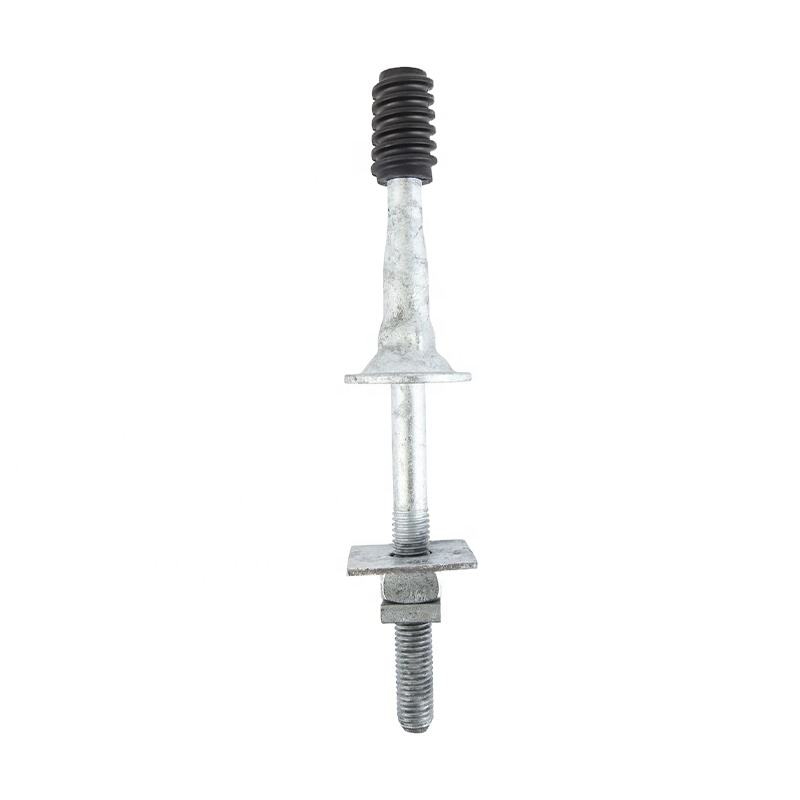
Crossarm Insulator Pin
- Supports a pin-type insulator on a wood or steel crossarm
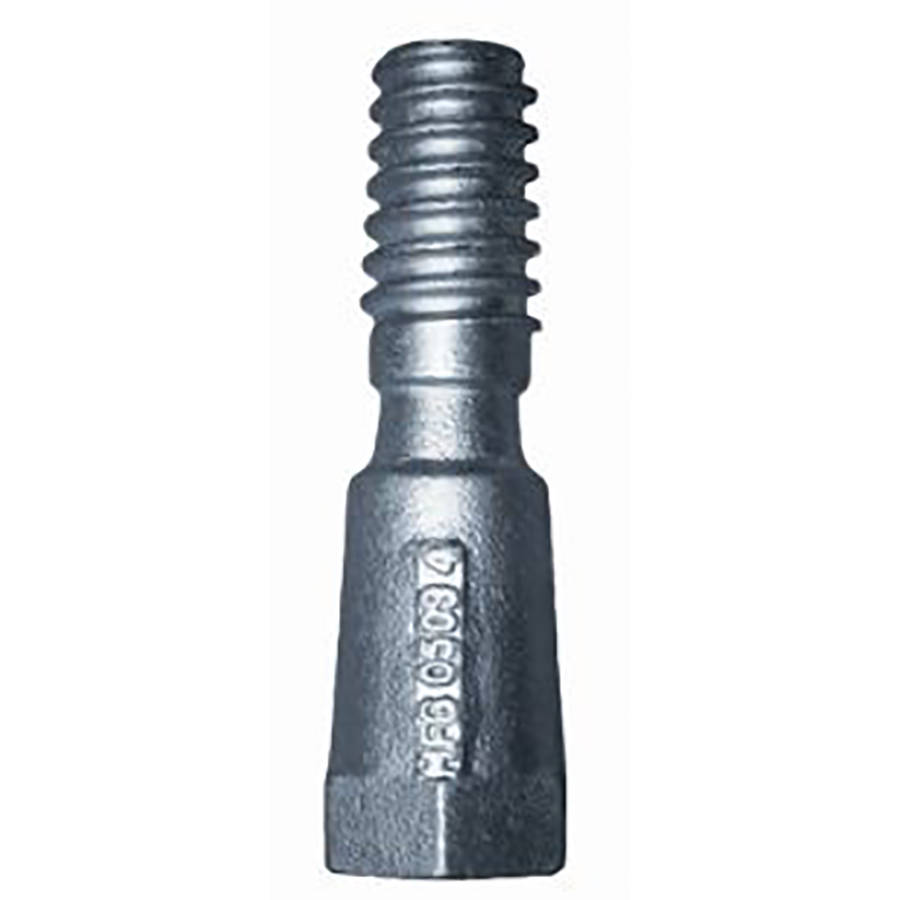
- 1 in ANSI / NEMA thread — cast lead or moulded nylon top
- Cantilever load 1,200–2,500 lb (ANSI/IEEE 10° deflection)
- 3/4 in or 5/8 in shank, bolt-through mount with full hardware kit
- Cast ductile iron / forged steel, galvanized to ASTM A-153
- Hubbell PS890 / 4706 / 881 class equivalents
Technical Specifications
| Catalog | Thread | Shaft Length | Shank | Cantilever (lb) | US Equivalent | Surface |
|---|---|---|---|---|---|---|
| RAX-CP-58 | 1 in lead | 5 in | 5/8 × 5-3/4 in | 1,200 | Hubbell 881 | HDG |
| RAX-CP-58L | 1 in lead | 6 in | 5/8 × 6-1/2 in | 1,400 | Hubbell 881A | HDG |
| RAX-CP-34 | 1 in lead | 6 in | 3/4 × 6-1/2 in | 1,500 | Hubbell 4706 / PS890 | HDG |
| RAX-CP-34N | 1 in nylon | 6 in | 3/4 × 6-1/2 in | 1,500 | Hubbell 4706P | HDG |
| RAX-CP-HD | 1 in lead | 6 in | 3/4 × 6-1/2 in | 2,500 | heavy-duty | HDG |
| Custom | 1-3/8 in thread, other shaft / shank lengths — send your insulator and crossarm spec | |||||
Application & Installation
Where it is used
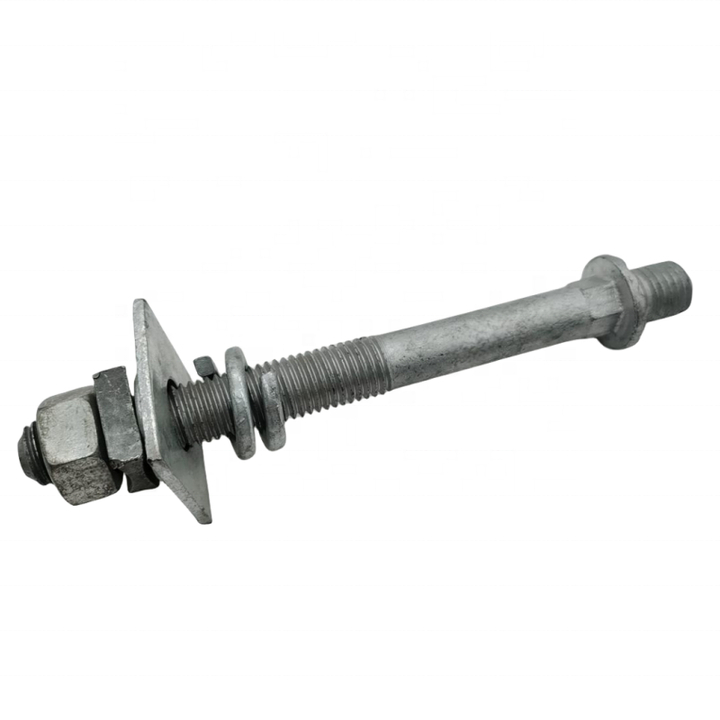
The crossarm insulator pin threads a pin-type insulator onto a wood or steel crossarm, carrying the conductor on tangent and small-angle distribution structures. The pin's 1 in ANSI thread engages the insulator's internal thread; the shank passes through the crossarm and is secured with the supplied bolt, washer plate and lock nut.
Installation sequence
- Drill / select the crossarm hole for the 5/8 or 3/4 in shank.
- Pass the shank through; fit the curved washer plate on top.
- Secure underneath with the square nut and MF lock nut.
- Thread the pin-type insulator down onto the lead / nylon top until seated.
- Tie or clamp the conductor into the insulator groove.
Buyer’s Guide: Crossarm Insulator Pin
1. What a Crossarm Insulator Pin Does
A crossarm insulator pin is the threaded spindle that holds a pin-type insulator on a crossarm. The top carries a 1 in ANSI / NEMA thread that screws into the insulator; the bottom is a shank that bolts through the arm. It is the standard support for pin insulators on tangent and light-angle distribution lines.
2. Lead Thread vs Nylon Thread
The insulator-engaging top comes as a cast lead thread or a moulded nylon thread. Lead conforms tightly and is the long-standing utility default; nylon is lighter, will not cold-flow in heat, and gives a cleaner re-thread. Both are 1 in ANSI — choose to match your existing stock and insulator type.
3. Cantilever Load & ANSI Deflection
Pins are rated by cantilever load at the ANSI/IEEE 10° deflection criterion: 1,200 lb for light service up to 2,500 lb heavy-duty. Pick the rating from the conductor tension and line angle — the pin, not the insulator, is usually the cantilever-limiting part on a pin structure.
4. Shank & Shaft Sizing
Shank diameter (5/8 or 3/4 in) sets the crossarm hole and the strength; shaft length (5–6 in) sets how high the insulator sits above the arm. Heavier conductors and steel arms take the 3/4 in shank; light wood-arm distribution can use 5/8 in.
5. Bolt-Through vs Clamp vs Angle Mount
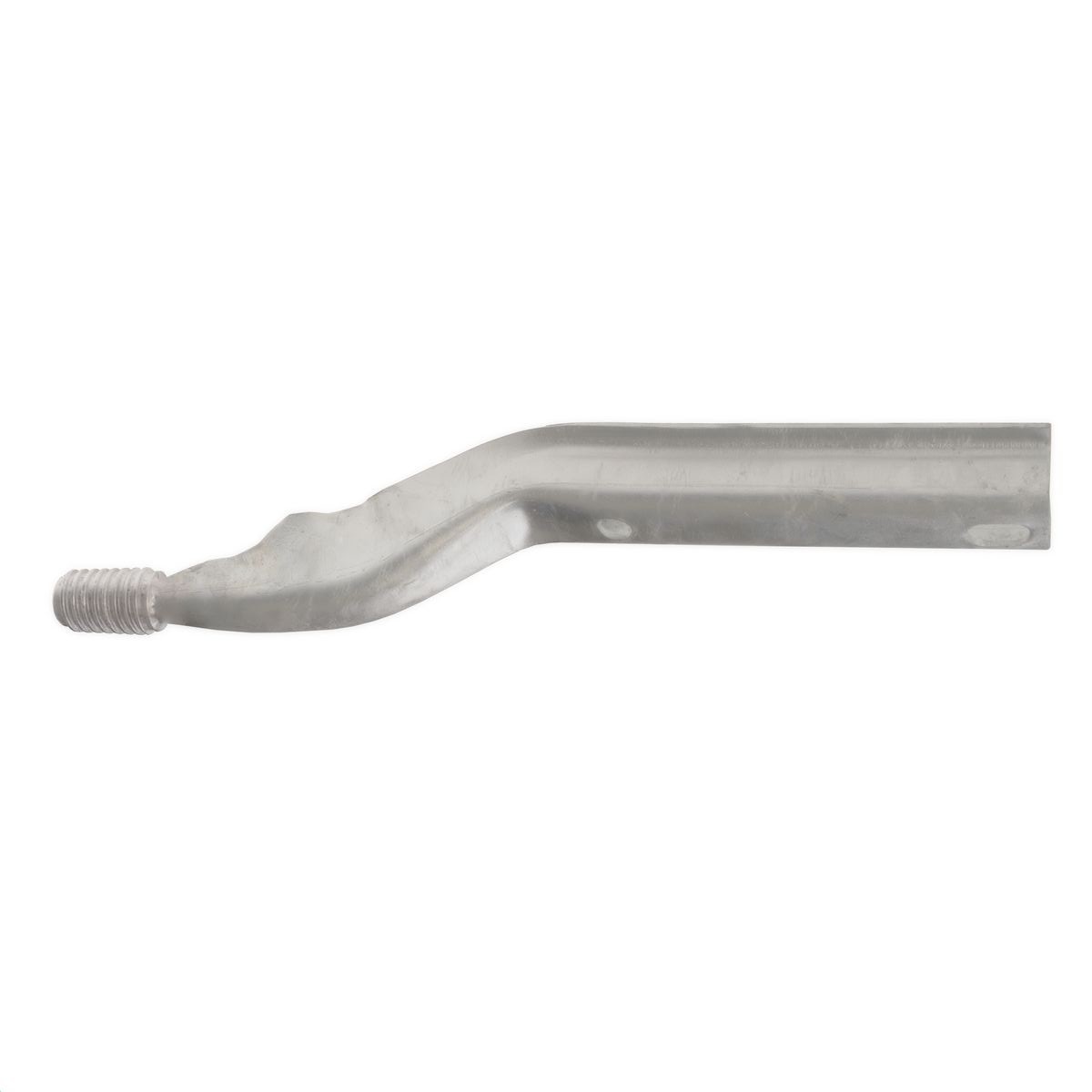
This bolt-through pin suits a drilled crossarm. Where you cannot drill, a clamp-type crossarm pin grips the arm edge; where the conductor pulls at an angle, an angle crossarm pin offsets the insulator. Match the mount to the structure — all three take the same 1 in insulator thread.
6. Galvanizing & Hardware
Bodies are cast ductile iron (ASTM A-536) or forged steel, hot-dip galvanized to ASTM A-153 for 30+ year life. Each pin ships with its mounting bolt, square washer, square nut and lock nut so the crew has a complete kit.